Award-Winning Microeconomics Tutors
serving Fort Worth, TX
Microeconomics
Tutors in Fort Worth
Private 1-on-1 tutoring, weekly live classes for academic support, test prep & enrichment, practice tests and diagnostics, and more to elevate grades and test scores.
Based on 3.4M Learner Ratings
UniversitiesSchools & Universities
DeliveredHours Delivered
ProficiencyGrowth in Proficiency
Who needs tutoring?
No obligation. Takes ~1 minute.
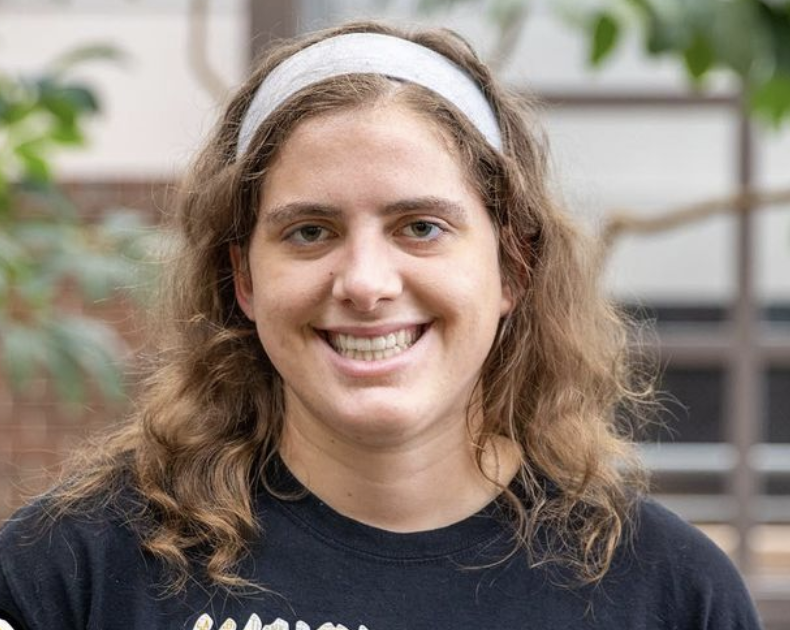
Hi y'all! I hold my Master of Science in Psychology of Sport and my Bachelor of Science in both Psychology and Applied Human and Sport Physiology. I have many years of tutoring under my belt, working with people of all levels from elementary school through college in hard science subjects (Biology, Chemistry, and Mathematics), a few social sciences (History, Psychology, Economics), and language arts. When not tutoring, I love playing soccer and I even coach a youth team. I love encouraging students to learn, grow, and think critically for themselves.

I am qualified to tutor many subjects, my favorite subject by far is math, specifically calculus. Math is a subject almost universally hated, and I believe that is mainly due to the narrow way in which it is taught. I have ADHD, and I often don't understand things the first time they are explained to me, meaning over the years I have had to figure out different ways of looking at information. Oftentimes, all a student needs is for something to be explained in a different way, and I love watching people finally understand a concept. Everyone learns differently, but everyone can learn.
Supply curves, marginal cost, and market structures like monopolistic competition can feel like a blur of overlapping graphs if nobody explains the intuition behind them. Tanner approaches micro through the lens of an actual entrepreneur — someone who's priced products, evaluated costs, and watched consumer behavior firsthand across three startups. That real-world grounding makes abstract models concrete.
As an economics major at Dartmouth, Eric studies microeconomic models — game theory, firm pricing strategies, consumer optimization — with the formal rigor of a top program, not just a survey-level overview. His strong quantitative background (1520 SAT, heavy calculus coursework) means he can walk through the math behind indifference curves or profit maximization while keeping the economic intuition front and center. Rated 5.0 by students.
David's sociology research at Columbia and Chicago trained him to model how individuals make decisions under constraints — which is exactly what microeconomics formalizes with utility functions, budget lines, and optimization problems. His computer science background adds fluency with the quantitative side, from setting up cost minimization equations to interpreting the slopes of indifference curves. Rated 4.9 by students.
Supply and demand curves are just the entry point — the real challenge in microeconomics is applying them to problems involving market structures, consumer choice, and externalities. Adi's economics training means he can walk through the intuition behind utility maximization or Nash equilibrium without losing students in the math, or without skipping it entirely.
Duy's economics degree means he didn't just pass through micro — he studied the formal models of consumer behavior, firm strategy, and market structure that most students encounter for the first time and find abstract. His rhetoric training adds an unexpected edge: he teaches students to argue through economic reasoning verbally, which is exactly what short-answer and essay-based econ exams demand. That combination of analytical depth and clear communication earned him a 34 ACT composite.
Environmental statistics — Alex's concentration at Rice — is fundamentally about modeling how variables interact under constraints, the same quantitative thinking that drives microeconomic analysis of supply, demand, and resource allocation. His geography training adds a spatial dimension that's surprisingly useful for understanding topics like land markets, location-based pricing, and how regional factors shape firm behavior.
The leap from understanding basic supply and demand to tackling consumer optimization, production functions, and market structure trips up a lot of students. Chikaneme's economics degree from Johns Hopkins means he can unpack concepts like marginal utility, price elasticity, and Nash equilibrium with real precision — showing not just how to solve the problem but why the math represents actual decision-making. He holds a 5.0 rating across his students.
I am a graduate of Barnard College, Columbia University where I received my Bachelor of Arts in Mathematics and Economics. My academic interests while at Barnard were focused on microeconomics and statistical research. I am a believer that a strong education can propel you to achieve your goals. I think that anyone can learn math and logical thinking with a little help. I have experience tutoring high school students in Algebra I and was always helping my fellow classmates with their economics problem sets in college. While working professionally, my job demanded strong technical skills in data programming. Each year, I taught my coworkers the necessary programming skills both through classroom setting lectures and through one-on-one tutoring. In my free time I love going to spin class, learning how to cook, and watching MSNBC!
Computer science at Columbia means Jeremy spends most of his time on optimization and decision logic — skills that map cleanly onto microeconomic problems like constrained utility maximization and how firms choose output levels under different market structures. His perfect 1600 SAT reflects the kind of precise, systematic reasoning that keeps the math and the economic intuition connected when students are working through elasticity calculations or game theory setups.
Elasticity, consumer surplus, and the behavior of firms under perfect competition versus monopoly power — microeconomics asks students to think precisely about how individuals and markets make decisions. David tackles these topics by building up from core intuitions about scarcity and trade-offs, leveraging his economics coursework at Clemson to make the math behind the models feel purposeful.
Classics majors spend years dissecting how ancient societies organized trade, taxation, and resource allocation — the same questions microeconomics answers with formal models. Wyatt applies that historical intuition to concepts like supply and demand, market structures, and government intervention, giving students a narrative thread through material that can otherwise feel like disconnected graphs. He holds a 5.0 rating from students.
Elasticity, marginal utility, and market structures each require a slightly different way of thinking, which is where most intro micro students get tripped up. Lee walks through each concept with concrete examples — pricing decisions, consumer trade-offs, cost curves — so students can reason through problems instead of memorizing graph shapes.
I am a avid sports fans: Go Cowboys!
I am a Harvard University law student, professional composer, and dedicated mentor with a strong academic background. I completed 20+ AP courses, earned multiple AP scores of 5, graduated with a 4.0 GPA, and participated in an Honors College program. I focus on helping students build confidence, master concepts, and develop effective study skills through personalized and engaging instruction.
I am currently a rising Senior at Rice University from Alexandria, Virginia. I'm studying Political Science and Latin American Studies with a minor in Politics, Law and Social Thought. After I graduate I hope to go to law school to become an immigration lawyer.
I am currently a student at Baylor University in the Alpha Lambda Delta Honor Society for exceptional performance. My whole life I have loved helping people learn and am dedicating my life to assisting others in their pursuit of knowledge. This is why I am majoring in All-Level Special Education and will be certified to teach all-level special education, elementary education, and ESL. My SAT score was in the 97th percentile and have received the AP Scholar with Honors award from the College Board. I am a dedicated tutor with a passion for watching my students learn! I have many years experience teaching students and my main goal is always to lead my clients to success.
My name is Raghav and I am excited to be your tutor. With years of experience, I've uncovered valuable strategies that helped me excel, and I'm eager to share them with you. Tutoring is my passion, and I'm dedicated to helping students like you reach their academic goals. Having successfully worked with over 100 students from various countries and subjects for over a year, I'm confident I can assist you in achieving your goals. Since each student learns differently, I adapt my teaching to your unique learning style, ensuring that you grasp the material thoroughly. At the moment, I am studying Aerospace Engineering at the University of Illinois at Urbana-Champaign and I am a private pilot working on my instrument rating(I'd love to chat about it with you). With me as your tutor, you will get someone patient and willing to explain everything in detail. I am particularly specialized in Math such as AP Calculus amd beyond, Sciences such as AP Physics, and AP Economics as well as SAT/ACT.
Supply and demand curves are simple enough on the surface, but microeconomics gets tricky fast once students hit elasticity calculations, game theory matrices, and market failure models. Laura studied economics at the undergraduate level and brings real fluency to topics like consumer surplus, price discrimination, and production cost analysis. She connects the math behind each graph to the economic intuition it represents, which makes problem sets far less mechanical.
Supply and demand curves are just the starting point — Clark digs into the trickier territory of elasticity, market structures, and consumer choice theory where most microeconomics students start to struggle. His MBA coursework in financial management means he can connect abstract models like marginal cost pricing to real business decisions, making the logic behind each graph click.
Consumer choice theory, production functions, and game theory matrices each demand a slightly different way of thinking — and that's where most micro students get stuck. Albert tackles each framework on its own terms, drawing on his MBA economics training to show why firms price-discriminate, how externalities distort market outcomes, and what happens when you shift from perfect competition to oligopoly.
Elasticity, market structures, and consumer theory can feel abstract until someone walks you through the logic behind each graph. Noah breaks down microeconomic models step by step, connecting concepts like marginal cost curves and deadweight loss to concrete examples so the intuition clicks before the exam.
From elasticity calculations to the nuances of monopolistic competition, microeconomics requires students to think graphically and verbally at the same time. David breaks down each market structure by walking through the firm's decision-making process step by step — where marginal cost meets marginal revenue, why profits shrink in the long run, and what happens when assumptions change. His entrepreneurship background means these aren't hypothetical firms to him.
Supply and demand curves are just the starting point — the real challenge in microeconomics is applying them to consumer theory, production costs, and market structures like oligopoly and monopolistic competition. Ezra's economics degree gives him deep fluency with these models, and his finance background means he can connect textbook graphs to actual pricing and strategy decisions students find intuitive.
Consumer theory, producer surplus, price discrimination, game theory — microeconomics is full of elegant models that fall apart if you don't understand the assumptions underneath them. Celestine's doctoral work in Applied Economics gave her deep fluency with these tools, and she teaches students to reason through optimization problems rather than just memorize graphs.
Elasticity, market structures, consumer surplus — microeconomics is full of concepts that seem straightforward on the surface but get tricky the moment you apply them to problem sets. Jack's Northwestern economics training means he can walk through the math behind each model while keeping the bigger economic intuition in focus. He holds a 5.0 rating from students.
The jump from understanding supply and demand to tackling consumer surplus, deadweight loss, and game theory is where most microeconomics students struggle. Neil breaks these concepts down using the same analytical framework he relied on as an investment analyst — evaluating trade-offs, marginal costs, and strategic behavior in real markets. His 5.0 rating speaks to how well that approach translates to the classroom.
The jump from supply-and-demand basics to producer theory and game theory is where most micro students struggle. Shih digs into the math behind indifference curves, cost minimization, and Nash equilibria, drawing on his finance coursework at UGA to show how these models map onto real firm decisions and market structures like oligopoly and monopolistic competition.
Reading The Economist for fun is one thing — Mark actually digs into the microeconomic logic underneath the headlines, connecting how firms price goods or respond to regulation back to the models students see in class. His bioengineering grad work is heavily quantitative, so he's comfortable walking through the calculus behind profit maximization or cost minimization problems that trip up students in intermediate micro.
Consumer choice theory, production functions, and market structures like oligopoly all require students to think in graphs and marginal terms simultaneously. Idara's engineering management training at Stanford built exactly that kind of analytical fluency, and her finance career keeps her sharp on how firms actually make the pricing and output decisions microeconomics describes.
Testimonials
Because the right Microeconomics tutor makes all the difference.
Average Session Rating – Based on 3.4M Learner Ratings
Nearby Microeconomics Tutors
Other Fort Worth Tutors
Related Business Tutors in Fort Worth
Frequently Asked Questions
Microeconomics focuses on individual economic actors—consumers, businesses, and markets—and how they make decisions about production and consumption. Students often struggle because it requires both mathematical reasoning and conceptual understanding of abstract economic principles like supply and demand, elasticity, and consumer behavior. Many students find the shift from memorization to analytical problem-solving challenging, especially when applying theories to real-world scenarios.
Fort Worth students typically struggle with understanding how graphs represent economic relationships, applying calculus to optimization problems, and connecting abstract theories to practical examples. Many also find it difficult to interpret supply and demand curves, calculate elasticity correctly, or understand market equilibrium concepts. Personalized tutoring helps break down these complex topics into manageable pieces and shows how each concept builds on previous knowledge.
In a typical Fort Worth classroom with a 15:1 student-teacher ratio, instructors must move at a pace that works for the average student, which can leave some behind. Personalized tutoring allows tutors to identify exactly where your understanding breaks down—whether it's the math, the logic, or the real-world application—and focus on those specific gaps. This targeted approach means you spend less time on concepts you already understand and more time mastering the areas that challenge you most.
During an initial session, a tutor will assess your current understanding of key microeconomic concepts, identify which topics feel most confusing, and learn about your learning style and goals. They'll likely work through a practice problem or two to pinpoint exactly where misconceptions exist. This diagnostic approach helps create a focused plan for future sessions that addresses your specific needs rather than starting from scratch.
Varsity Tutors connects you with tutors who have deep expertise in microeconomic principles and understand how they're taught across different curricula—whether you're in an AP Economics course, a college-level intro class, or an advanced microeconomics seminar. Tutors familiar with Fort Worth schools understand the specific expectations and pacing of local programs, which helps them align their instruction with what you're learning in class.
Many students see noticeable improvement in understanding and confidence within 3-4 sessions, especially if they're working on specific problem areas like graphing or optimization. Measurable grade improvements typically follow within 2-3 weeks as concepts click and problem-solving becomes more automatic. The timeline depends on your starting point and how frequently you meet, but consistent personalized practice accelerates progress significantly compared to classroom learning alone.
Yes, tutors can work with you on advanced topics including game theory, information asymmetry, market failures, and welfare economics. These concepts build on foundational understanding of supply, demand, and consumer/producer behavior, so tutors often strengthen those fundamentals first before moving into more complex analysis. Personalized instruction is especially valuable for advanced topics since they require both conceptual clarity and the ability to apply sophisticated reasoning to novel problems.
Varsity Tutors matches you with expert tutors based on your specific needs, schedule, and learning goals. You'll provide information about your current level, what topics you need help with, and your availability, and we'll connect you with tutors who have strong microeconomics expertise and experience working with students at your level. You can start with an initial session to see if the fit is right before committing to ongoing tutoring.
Let’s find your perfect tutor
Answer a few quick questions. We’ll recommend the right plan and match you with a top 5% tutor.