Award-Winning Business Statistics Tutors
serving Dallas, TX
Business Statistics
Tutors in Dallas
Private 1-on-1 tutoring, weekly live classes for academic support, test prep & enrichment, practice tests and diagnostics, and more to elevate grades and test scores.
Based on 3.4M Learner Ratings
UniversitiesSchools & Universities
DeliveredHours Delivered
ProficiencyGrowth in Proficiency
Who needs tutoring?
No obligation. Takes ~1 minute.

Regression analysis, hypothesis testing, confidence intervals — business statistics is where many students first confront serious applied math. Muhammad's engineering coursework means he uses these statistical tools daily, so he can explain not just how to run a t-test but why a particular test applies to a given business scenario. He builds intuition around probability distributions so students stop second-guessing which formula to reach for.
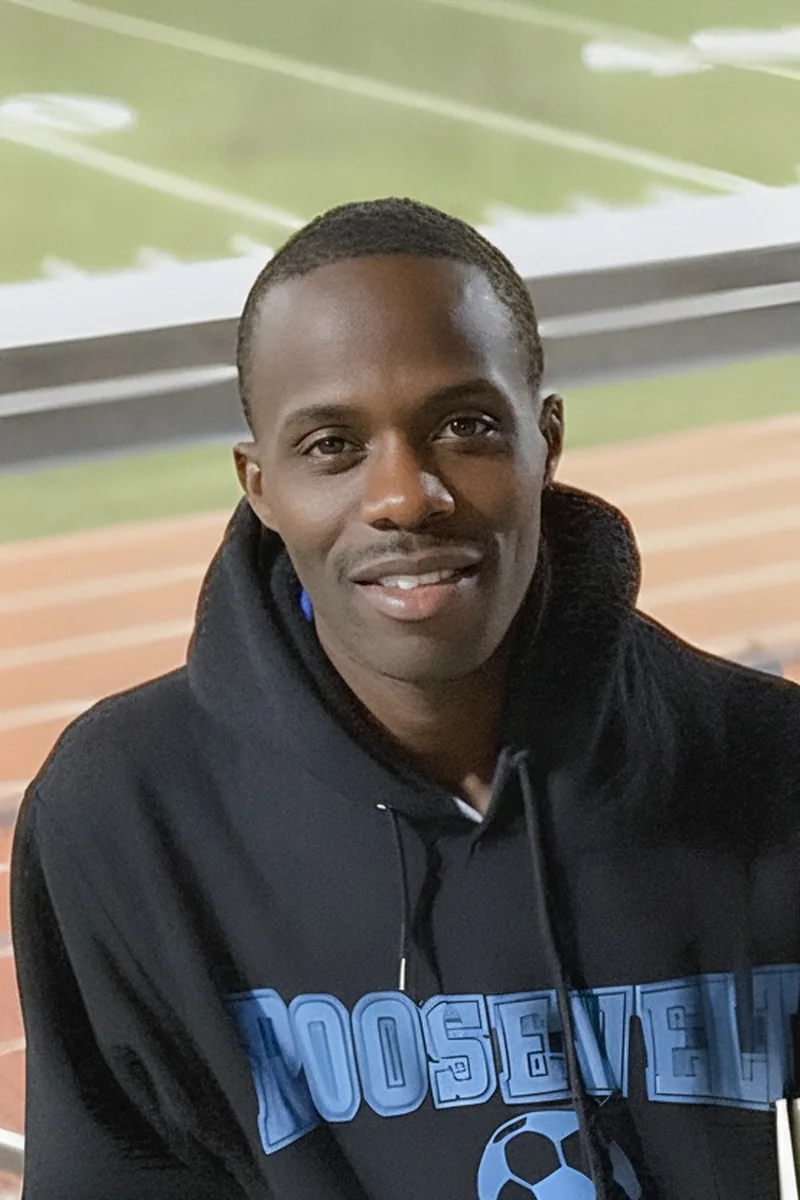
Probability distributions, hypothesis testing, and regression analysis look different when the dataset comes from a market report instead of a textbook exercise. Adeyemi's master's-level training in biostatistics translates directly to business statistics — the core methods are identical, and he's skilled at walking through problems using real-world data contexts that make concepts like p-values and confidence intervals click.
Probability distributions, hypothesis testing, and regression analysis are tools that show up constantly in finance and marketing — and Maftuna teaches them that way. Instead of presenting formulas in isolation, she connects each statistical method to the business question it answers, like forecasting sales or evaluating campaign performance. Her finance degree means the examples she uses are grounded in actual applications.
I like mathematics. It is easy and beautiful, you can get lost in it sometimes, but you will always find your way if you think long enough. I like teaching mathematics. It is a lot of fun to explain things and make them very clear to somebody else.
Probability distributions, hypothesis testing, regression analysis — business statistics is where raw data becomes actionable insight, and it trips up students who breezed through earlier math courses. David tackles these concepts through an economist's lens, tying each statistical method back to the kind of business question it actually answers. Rated 4.8 by students, he's comfortable with both the formulas and the interpretation side.
I enjoy helping students by explaining concepts in ways that make sense to them, by eliciting their feedback and tailoring my approach to their individual needs, and by conveying my enthusiasm for the learning process. It's great to see the light come on and to see their progress. I have an undergraduate degree in Politics from Princeton, a post-baccalaureate certificate in Quantitative Studies for Finance from Columbia, and an MBA from London Business School. I served as an officer in the Marine Corps and have worked in a number of academic and private-sector positions. I founded and am currently running an analytics-focused consulting practice.
I am a graduate of the University of Waterloo, with a PhD in Geography-Water, one semester as a sessional instructor, and several semesters as a teaching assistant. I also hold a PhD in agricultural hydrology, along with five years of teaching experience as an assistant professor. These experiences have deepened my passion for teaching and my ability to communicate complex concepts effectively. I believe that while education provides knowledge, it is passion that fosters success. My mission as an educator is to make difficult subjects, such as statistics and mathematics, accessible and engaging for students. By breaking down complex ideas, I aim to create a learning environment where students feel confident and inspired. I am also enthusiastic about teaching in hydrology and environmental sciences and am committed to helping students succeed in these critical areas.
Regression analysis, probability distributions, and hypothesis testing become far less intimidating when someone can explain both the formula and the business question it answers. Professor Florence's quantitative background in applied mathematics pairs naturally with her MBA training, so she walks through concepts like confidence intervals and chi-square tests using real market and financial data rather than abstract examples.
As a University of Waterloo Mathematics graduate with distinction, I bring 2 years of teaching experience and 6 years as a data scientist. My areas of expertise include Statistics, Calculus, and Algebra. Throughout my career, I've helped numerous people turn complex mathematical and statistical concepts into clear, intuitive, and engaging explanations. With a versatile teaching approach, I tailor lessons to your individual learning preferences and needs. By drawing on a wide range of teaching methods, such as visual explanations, memorable analogies, creative examples, guided questioning, and strategic problem-solving techniques, I help deepen your understanding, strengthen your foundations, cultivate independent thinking, equip you with transferable reasoning frameworks and prepare you strategically for exams - ultimately advancing you from not knowing where to start to reasoning through unfamiliar problems on your own, even in future areas of mathematics.
I am a law student, but I took an unusual route to get there. I used to attend medical school but had a change of heart in my career path. Part of this was due to my political science major (double major with biology) in college as well as a number of Spanish and other courses that I took. Tutoring is something, I feel, that has come naturally to me, even back to my high school days. My goal is to help you learn as much as you can and reach your true potential. I will work hard to make sure that this happens, as long as you put in the work, too! We will work together to tailor your learning experience to your needs.
Probability distributions, hypothesis testing, and regression analysis all click faster when someone can connect them to real decisions — like whether a marketing campaign actually moved the needle or just got lucky. Andrea's engineering coursework at Drexel is heavy on applied statistics, so she walks through concepts like p-values and confidence intervals with practical examples rather than abstract proofs.
Master's grad with 10+ YOE teaching Artificial Intelligence, Agentic Programming, Math, Economics, Econometrics, Statistics and Data Science programming from middle school to University. I'm an economist with multiple areas of expertise, and experience helping students achieve their goals in academic and professional life. My sessions are structured, goal-oriented, and designed to help students improve quickly, whether they are preparing for exams, struggling with weekly problem sets, or working on data-based assignments.
I am a firm believer of this and, as such, I do not spoon feed students during sessions but rather guide them to figure out how to answer their own questions and solve their own problems. Thus, I focus not only on what to do, but how and why to do it. One of the most significant drivers of independent learning is curiosity, and this is one of the primary traits I aim to cultivate in students.
Probability distributions, hypothesis testing, regression — business statistics asks students to think quantitatively about decisions in a way their other courses don't. Bradley pairs his business administration background at Babson with genuine comfort in math to connect each statistical method to a business question it actually answers. He's especially useful for students who understand the formulas but freeze when a word problem asks them to choose the right test.
Regression analysis, hypothesis testing, and probability distributions hit differently when you can tie them to actual business decisions — and that's exactly how Aaron teaches them. His double focus in Finance and Business Information Systems at the University of Pittsburgh, plus a statistics minor, means he's applying these tools in his own coursework every week. Rated 5.0 by students.
Regression analysis, hypothesis testing, and probability distributions make a lot more sense when you can tie them to real business decisions — and Timothy does exactly that, drawing on his Duke MBA coursework and his economics background from Emory. He breaks down tools like ANOVA and chi-square tests by grounding them in the kinds of market and operations questions students will actually face in their careers. Rated 5.0 by students.
Christopher's finance and business analytics coursework at Indiana University means he's actively working through the same statistical methods — sampling distributions, hypothesis testing, regression — that show up in business statistics classes, and he pairs that with hands-on Microsoft Excel tutoring on campus. That combination lets him teach not just the conceptual side but also how to actually build and interpret statistical output in a spreadsheet, which is where most business statistics assignments live.
Testimonials
Because the right Business Statistics tutor makes all the difference.
Average Session Rating – Based on 3.4M Learner Ratings
Nearby Business Statistics Tutors
Other Dallas Tutors
Related Business Tutors in Dallas
Frequently Asked Questions
Business Statistics applies statistical methods to real-world business problems—from analyzing sales trends and market data to making data-driven decisions. It bridges mathematics and practical business applications, helping students understand how companies use data to forecast, optimize operations, and evaluate performance. For students in Dallas pursuing business, economics, or management careers, mastering these concepts is essential for college and professional success.
Many students struggle with translating real-world business scenarios into statistical problems—especially interpreting word problems and deciding which analytical method to use. Others find it difficult to move beyond memorizing formulas to understanding the reasoning behind statistical tests, probability distributions, and hypothesis testing. Building confidence with data visualization, regression analysis, and statistical software can also be challenging without personalized guidance that connects concepts to actual business applications.
Personalized 1-on-1 instruction allows tutors to identify whether you're struggling with the underlying math concepts or the application to business scenarios—and address both. Tutors can break down complex problems into manageable steps, show you multiple problem-solving strategies, and help you see the patterns that connect probability, sampling, regression, and hypothesis testing. This targeted approach builds conceptual understanding rather than just memorizing procedures, so you can confidently tackle unfamiliar problems on exams and in real business contexts.
Business Statistics courses vary—some emphasize theoretical foundations, others focus on software application (Excel, R, Python, or Minitab), and curriculum can differ by school district and college program. Tutors work with your specific textbook, course materials, and teacher's approach to ensure alignment with what you're learning in class. Whether your course emphasizes manual calculations, statistical software, or conceptual understanding, personalized instruction adapts to your exact curriculum and learning goals.
Your first session focuses on understanding your specific challenges, course materials, and goals. A tutor will likely review a recent assignment or exam, ask about concepts that feel unclear, and assess whether you need help with foundational math skills, interpreting statistical methods, or applying them to business problems. This diagnostic conversation helps create a personalized plan so your next sessions target exactly what will help you most—whether that's rebuilding confidence, mastering hypothesis testing, or preparing for an exam.
Many students feel intimidated by statistics because it combines mathematical formulas with abstract concepts, but personalized tutoring breaks this down into manageable, understandable pieces. Working 1-on-1 with a tutor creates a judgment-free space to ask questions, work through problems at your own pace, and celebrate progress—building confidence as you see concepts click. When you understand not just how to calculate something, but why it works and when to use it in business contexts, anxiety naturally decreases and engagement increases.
In Business Statistics, showing your work demonstrates your reasoning—not just your final answer. Teachers and professors want to see that you understand which statistical method to use, how you set up the problem, and what your results mean in business terms. Tutors help you develop clear problem-solving strategies and communication skills so you can explain your statistical thinking step-by-step, which strengthens your understanding and often improves exam performance even if you make a calculation error.
Varsity Tutors connects you with expert tutors for students in Dallas who specialize in Business Statistics. You can describe your specific needs—whether you need help with regression analysis, probability, hypothesis testing, or exam preparation—and get matched with a tutor whose expertise aligns with your course and goals. The personalized matching process ensures you work with someone who understands your curriculum and can help you build both conceptual understanding and problem-solving confidence.
Let’s find your perfect tutor
Answer a few quick questions. We’ll recommend the right plan and match you with a top 5% tutor.