Award-Winning College Physics Tutors
serving Memphis, TN
College Physics
Tutors in Memphis
Private 1-on-1 tutoring, weekly live classes for academic support, test prep & enrichment, practice tests and diagnostics, and more to elevate grades and test scores.
Based on 3.4M Learner Ratings
UniversitiesSchools & Universities
DeliveredHours Delivered
ProficiencyGrowth in Proficiency
Who needs tutoring?
No obligation. Takes ~1 minute.
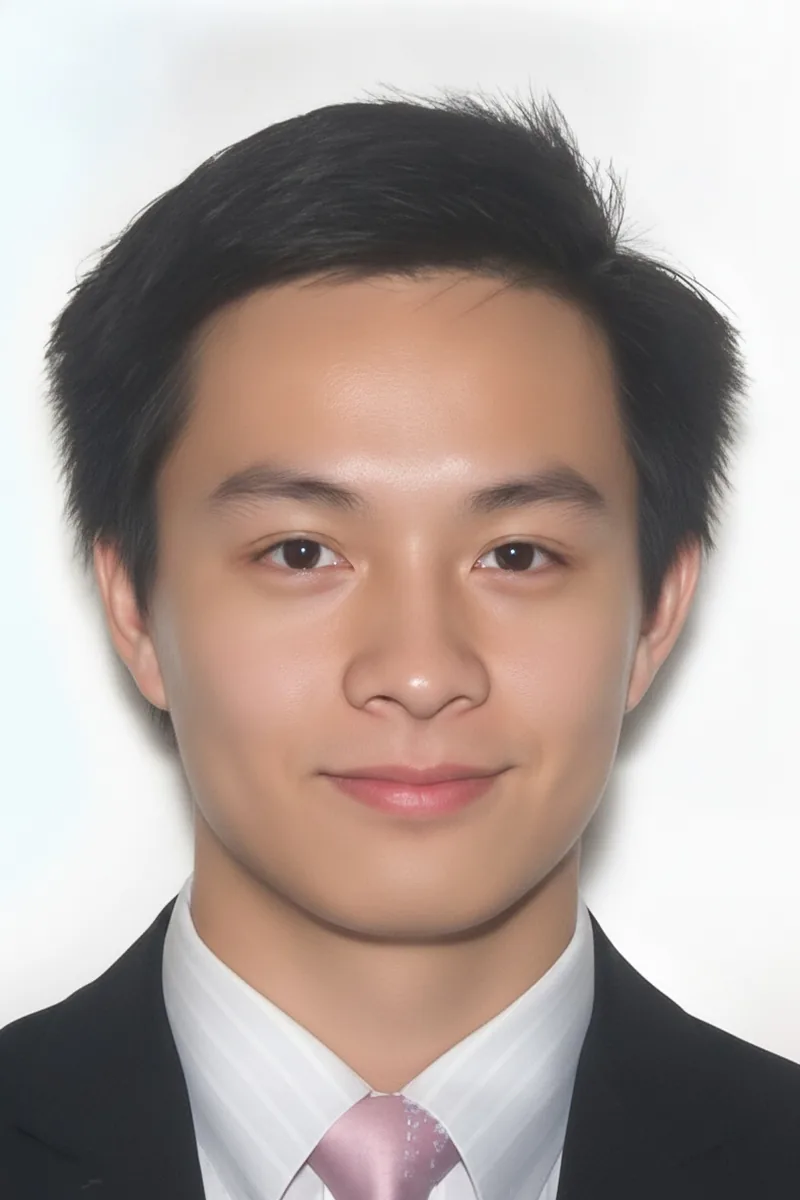
A chemistry degree from Rhodes College means Eric spent semesters in the same calculus-based physics courses his students are navigating now — mechanics, electromagnetism, thermodynamics — and he remembers which conceptual leaps actually trip people up. He connects the physical reasoning to the chemistry he knows cold, so when a problem involves energy conservation or pressure in a system, he can ground the physics in molecular-level intuition that makes the math click.
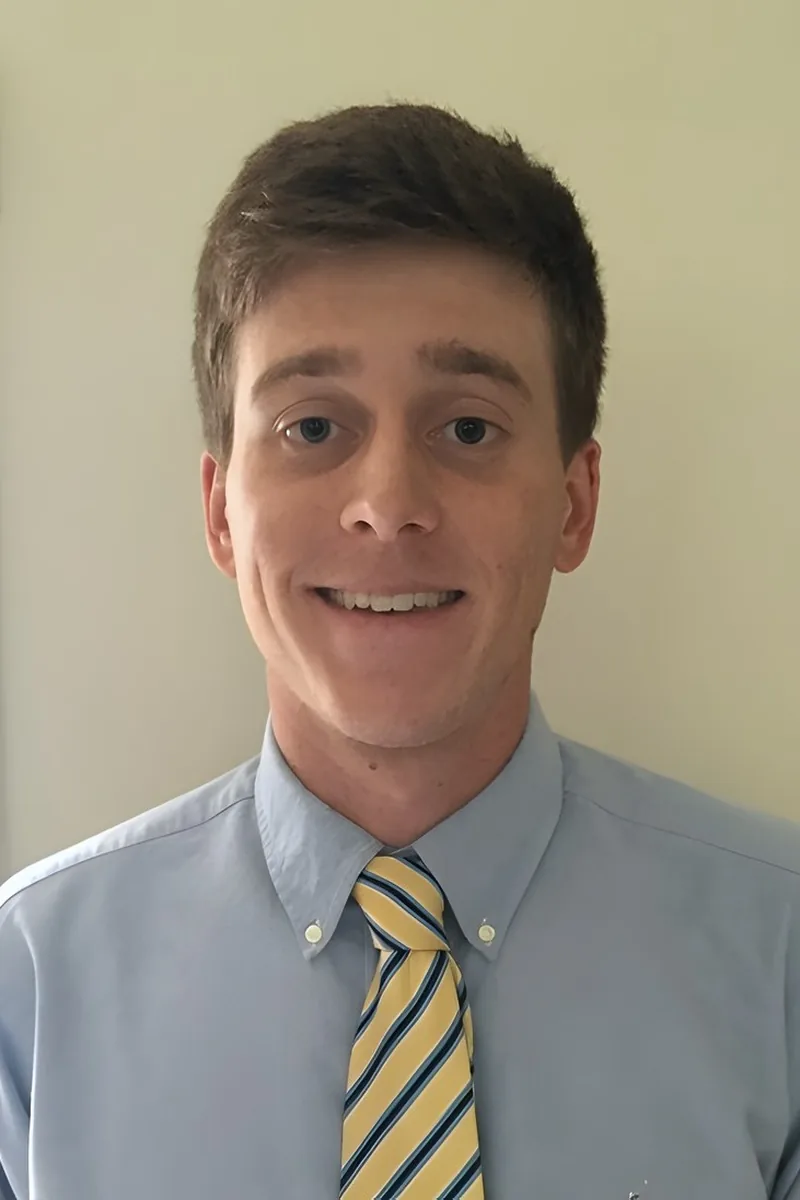
Biology majors often hit college physics expecting it to feel foreign, but Andrew knows exactly where the two fields talk to each other — pressure in circulatory systems is fluid dynamics, nerve impulses are electrical circuits, and biomechanics is just Newton's laws wearing a lab coat. His 32 ACT and 5.0 tutoring rating back up his ability to break down force diagrams and energy conservation problems for students who think more naturally in living systems than abstract vectors.
Electromagnetism, optics, and thermodynamics all clicked for Jackson during his chemistry degree, where physics wasn't just a prerequisite — it was the foundation for understanding molecular behavior. He teaches students to set up free-body diagrams and energy conservation problems by connecting each concept to a physical scenario they can visualize. His "Learn One, Do One, Teach One" approach means students don't just watch him solve problems — they explain the reasoning back.
College-level physics ramps up fast, especially when courses introduce calculus-based mechanics or electromagnetism for the first time. Charles works through these topics as part of his mechanical engineering curriculum at Yale, so he can walk through derivations of torque, moment of inertia, or Gauss's law with the fluency of someone who applies them in lab and design projects regularly.
Graduate work in Chemical and Physical Biology at Vanderbilt meant Dennis spent years applying thermodynamics, fluid dynamics, and electromagnetism to biological systems — the same core physics concepts that fill college problem sets, just in a research context where getting the physics wrong meant failed experiments. He breaks down force, energy, and field problems by connecting them to the physical intuition behind the math, which is especially useful for pre-med and life science students navigating calculus-based physics for the first time. Holds a 5.0 rating.
Calculus-based physics was Elsa's daily language as a chemistry major at Vanderbilt — thermodynamics in physical chemistry, mechanics in lab design, electromagnetism in spectroscopy — so she teaches college physics with an intuitive sense for how these concepts actually get used beyond the problem set. She's tutored students through the full introductory sequence and zeroes in on translating word problems into free-body diagrams and energy equations, which is where most students lose their footing.
Pre-med coursework and a biology degree mean Jakobi has sat through the same calculus-based physics gauntlet his students are navigating — mechanics, electricity, optics — and he remembers which concepts felt like hitting a wall. He leans on that recent experience to unpack tricky topics like conservation of momentum or circuit analysis, connecting the physics to biological systems whenever it makes the material click faster.
Aerospace engineering is applied physics with higher stakes — orbital mechanics, fluid dynamics over airfoils, structural loads during launch — and Matthew's degree means he solved those problems rigorously before ever stepping into a tutoring session. He breaks down college physics topics like projectile motion, rotational dynamics, and thermodynamic cycles by connecting them to the engineering contexts where they actually matter. Rated 5.0 by students.
Free-body diagrams, torque calculations, and energy balance problems aren't abstractions for Matthew — they're the bread and butter of his mechanical engineering training, where getting the physics wrong means a design fails. He breaks down college physics problems by connecting each one to the underlying principle first, whether that's Newton's laws in a pulley system or conservation of energy in a collision. Rated 5.0 by students.
Behavioral neuroscience at Lehigh meant Katherine spent semesters immersed in the physics of biological systems — action potentials as RC circuits, fluid dynamics in blood flow, pressure and wave mechanics in sensory organs — giving her a concrete handle on the concepts that fill college physics problem sets. She's particularly good at walking through the problem-setup phase, teaching students to sketch the physical situation and identify governing principles before touching an equation. Rated 5.0 by students.
Biomedical engineering at the undergraduate level means Kevin spent semesters applying mechanics to musculoskeletal systems, fluid dynamics to blood flow, and circuit models to bioelectric signals — all grounded in the same calculus-based physics that fills college problem sets. He breaks down force diagrams and energy methods by tying them to tangible biomedical scenarios, which gives abstract derivations a concrete anchor. His 33 ACT and 1550 SAT point to the quantitative fluency that keeps pace with fast-moving, problem-heavy courses.
Studying mathematics while also teaching AP Physics 1 and programming gives Lawton an unusual vantage point on college physics — he sees the calculus, the physical reasoning, and the computational modeling as three facets of the same problem. When a student gets stuck on, say, differential equations in damped oscillation or vector decomposition in projectile motion, he can pinpoint whether the gap is in the math, the physics intuition, or both. Rated 5.0 by students.
I am an Applied Physics Major with an Emphasis in Mechanical Engineering at Brigham Young University. I love to share the joy I have in the sciences and math to show truly the applications are so far-reaching.
Civil engineering coursework at the master's level is essentially college physics with consequences — Kacey has applied statics, dynamics, and fluid mechanics to real structural and hydraulic design problems, which means she can explain not just how to solve a free-body diagram but what happens when you get it wrong. Her 32 ACT reflects strong quantitative chops, and her engineering training keeps her fluent in the calculus-based reasoning that separates college physics from the high school version.
Dissecting cow eyes and sheep hearts at NSLC wasn't just memorable — it forced Nicole to explain the optics of lens refraction and the fluid dynamics of circulatory pressure to high schoolers in real time, which is exactly the kind of conceptual grounding that makes college physics click. Her biology degree from Baylor means she's comfortable with the calculus-based mechanics and thermodynamics that overlap heavily with life science coursework, and she leans into that interdisciplinary angle when walking through force diagrams or energy conservation problems.
I am currently a Junior at The University of Alabama pursuing degrees in both Mathematics & Economics. After I graduate, I intend to stay at Alabama to get an M.A. in Economics. I have been tutoring both Math and ACT Prep since I was a Sophomore in High School. After 4 years of experience, I continue to enjoy tutoring these subjects, and the constant challenge of improving my abilities and techniques. I get a great sense of satisfaction in helping those I tutor improve their grades, test scores, and overall understanding of the subjects I am teaching them. Not only do I focus on the subject matter being taught, but I also focus on helping students develop the study skills and habits that are imperative to success later in their academic careers. Through my four years of tutoring, I have developed the ability to mold my tutoring style around however the student learns best whether that be visually, through examples, etc. This allows me to provide an individualized tutoring session to each person I tutor. I believe no two students should be tutored the same was; every student has different learning methods and I view it as my responsibility to modify my tutoring style to fit each individual student.
Studying computer science means Braden spends his days translating real-world problems into logical, step-by-step solutions — a habit that transfers directly to setting up free-body diagrams or applying conservation laws in college physics. His calculus coursework keeps the mathematical machinery fresh, so he can walk through the integration and vector work that makes mechanics and wave problems click rather than feel like abstract symbol-pushing. Holds a 5.0 rating.
Biomedical engineering at Johns Hopkins means Christine solves physics problems daily that most students only see in textbooks — fluid dynamics in blood flow, pressure gradients across membranes, mechanics of prosthetic joints — giving her a concrete, application-heavy lens for the material. She's particularly strong on the thermodynamics and mechanics portions of college physics, where her coursework overlaps most directly with standard problem sets. Holds a 5.0 rating.
Studying civil engineering at Cornell means Ryan solves physics problems for a living — calculating load distributions, analyzing force vectors in structural systems, and applying fluid mechanics principles that come straight out of college physics coursework. He scored a 35 ACT, which speaks to the quantitative precision he brings when breaking down mechanics or electromagnetism problems step by step. Rated 4.7 by students.
Molecular biology might seem like a different world from physics, but Annabel's coursework lives in the overlap — understanding diffusion requires thermodynamics, membrane potentials are voltage problems, and imaging techniques depend on wave optics and electromagnetism. She brings that life-sciences lens to college physics topics like energy conservation and fluid dynamics, making the material click for pre-med students who need to see why these concepts matter beyond the problem set.
Studying computer science and applied math at Harvard means Derek uses physics constantly — from electromagnetism in circuit design to mechanics in computational modeling. He tackles college-level topics like Lagrangian dynamics and wave equations by connecting the math to physical intuition, making dense derivations feel less abstract.
College-level physics demands comfort with calculus-based reasoning — deriving equations of motion, integrating force over a path for work, or applying differential equations to oscillations. Kathleen's math degree from Washington University and her experience teaching through multivariable calculus mean she can unpack both the physics intuition and the mathematical machinery simultaneously.
College-level physics ramps up quickly, especially once calculus-based mechanics and electromagnetism enter the picture. Richard's time as a course assistant in Harvard's math department gave him deep comfort with the calculus underpinning topics like electric flux integrals and differential equations of motion. He teaches the physics and the math simultaneously, so students aren't left wondering where a derivation came from.
TA-ing MIT's Physics II course gave Cori front-row experience with the stumbling blocks college students face — from applying Maxwell's equations to navigating multi-step problems in mechanics and thermodynamics. She approaches each topic by building physical intuition first, then layering on the math. Her engineering background means she can also show how these principles appear in real material systems and design problems.
Biomedical engineering at Brown means Phillip solves physics problems with real biological stakes — modeling fluid flow through vessels, analyzing stress on implant materials, calculating electrical signals in tissue. That daily overlap with mechanics, thermodynamics, and electromagnetism gives him a practical fluency that makes college physics problem sets feel less abstract and more like puzzles with actual answers. Rated 5.0 by students.
Dylan has taken both college mechanics and electricity/magnetism at Northwestern's engineering school, so he's worked through the exact problem sets — free-body diagrams, circuit analysis, wave optics — that trip up most college physics students. His computer science background also means he's comfortable walking through the math-heavy derivations that make physics click rather than feel like guesswork. Rated 5.0 by students.
Working at an ExxonMobil refinery before MIT Sloan meant Caroline spent years applying thermodynamics, fluid mechanics, and force analysis to real industrial systems — the same physics that fills college problem sets, except with actual consequences for getting the math wrong. Her mechanical engineering M.S. from WashU (magna cum laude) gave her deep fluency with calculus-based derivations, so she can walk through everything from torque problems to heat transfer without skipping the steps that textbooks gloss over. Rated 5.0 by students.
Chemical engineering at Vanderbilt means Greg solves physics problems daily — fluid mechanics, heat transfer, thermodynamics, and force balances are baked into every core course, so his explanations come from repeated, hands-on application rather than textbook summaries. His math double major gives him the calculus fluency to walk through derivations cleanly, especially when problems involve integration over continuous systems or solving second-order differential equations of motion. Rated 5.0 by students.
Studying mechanical engineering at Harvard means Christopher applies physics daily — from free-body diagrams and torque calculations to thermodynamic cycles and fluid dynamics. He breaks down multi-step problems by identifying which conservation law applies and walking through the math from there, so the problem-solving process becomes repeatable rather than mysterious.
Testimonials
Because the right College Physics tutor makes all the difference.
Average Session Rating – Based on 3.4M Learner Ratings
Nearby College Physics Tutors
Other Memphis Tutors
Related Science Tutors in Memphis
Frequently Asked Questions
College Physics builds on foundational concepts but introduces abstract thinking that many students find challenging—like visualizing forces, fields, and motion in multiple dimensions. Beyond conceptual understanding, students often struggle with unit conversions, balancing equations, and applying mathematical reasoning to physical problems. Many also find it difficult to connect theoretical concepts to real-world applications, which is essential for truly grasping the material rather than just memorizing formulas.
Personalized 1-on-1 instruction allows tutors to identify exactly where your understanding breaks down—whether it's the physics concepts themselves, the math involved, or how to apply both together. Tutors can use diagrams, real-world examples, and step-by-step problem-solving to help you visualize abstract concepts and develop the scientific reasoning skills that go beyond memorization. This targeted approach helps you build confidence and tackle increasingly complex problems with clarity.
Your first session is about understanding where you are and where you need to go. Expect to discuss your current coursework, specific topics that are giving you trouble, and your goals—whether that's improving your grade, preparing for an exam, or building foundational understanding. The tutor will likely work through a practice problem or concept with you to understand your learning style and identify the best approach for your needs.
Yes. Tutors can help you understand the scientific method, design experiments, interpret data, and connect lab results back to the theoretical concepts you're learning in lecture. They can also help you prepare for lab reports by explaining how to present findings clearly and discuss what your results mean in the context of physics principles.
Rather than just showing you the answer, tutors teach you a systematic approach: identifying what's given, what you need to find, which physics principles apply, and how to set up equations correctly. They help you practice unit conversions, dimensional analysis, and checking whether your answer makes physical sense. Over time, this builds your ability to tackle unfamiliar problems with confidence.
Effective exam prep involves reviewing key concepts, working through practice problems under timed conditions, and identifying weak areas before test day. Tutors can help you create a study plan, explain concepts you're still unsure about, and work through old exams or practice tests to build familiarity with the question format. This targeted preparation helps you manage test anxiety and perform at your best.
Varsity Tutors connects you with expert tutors who have strong backgrounds in physics and experience helping students master College Physics. You can discuss your specific needs—whether you need help with mechanics, thermodynamics, waves, or another topic—and get matched with someone who fits your learning style and schedule. The goal is finding a tutor who can explain complex concepts clearly and help you build real understanding.
Physics is about understanding how the universe works, not just remembering formulas. When you truly understand concepts like Newton's laws or energy conservation, you can apply them to new situations you've never seen before. Memorization alone leaves you stuck when exam questions ask you to apply concepts in different contexts, which is why tutors focus on building conceptual understanding alongside problem-solving skills.
Let’s find your perfect tutor
Answer a few quick questions. We’ll recommend the right plan and match you with a top 5% tutor.