Award-Winning AP Environmental Science Tutors
serving Memphis, TN
AP Environmental Science
Tutors in Memphis
Private 1-on-1 tutoring, weekly live classes for academic support, test prep & enrichment, practice tests and diagnostics, and more to elevate grades and test scores.
Based on 3.4M Learner Ratings
UniversitiesSchools & Universities
DeliveredHours Delivered
ProficiencyGrowth in Proficiency
Who needs tutoring?
No obligation. Takes ~1 minute.

Eileen's neuroscience coursework at Vanderbilt — tracing how disruptions propagate through biological systems — gives her a useful lens for APES topics like bioaccumulation, feedback loops in climate systems, and how environmental toxins affect organisms at multiple scales. She scored a 36 on the ACT and brings that same precision to the data-interpretation and calculation questions that catch students off guard on exam day.
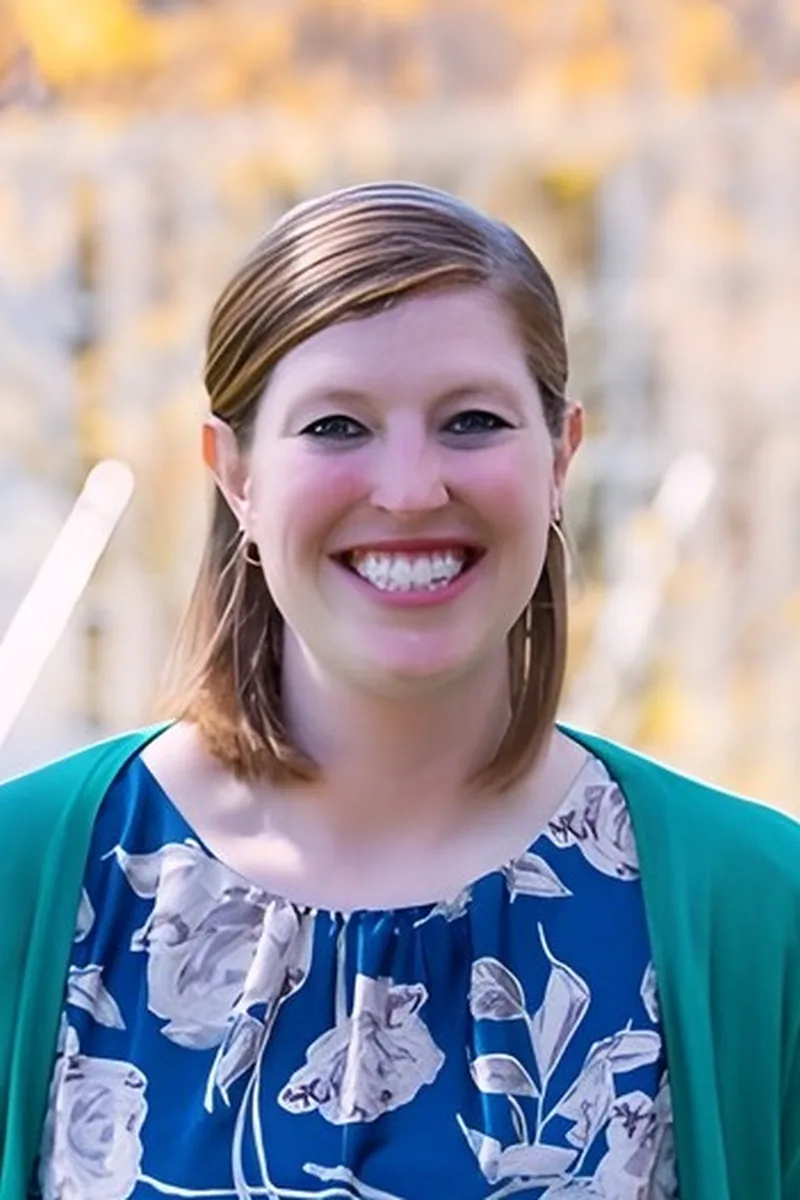
Katie holds a master's in science education and a bachelor's in natural resources and conservation — meaning she didn't just study APES topics like land use, biodiversity, and resource management as exam content; they were her actual field of study. She teaches students to think in cause-and-effect chains across units, connecting deforestation to soil erosion to water quality decline, which is exactly the kind of multi-step reasoning the free-response rubrics reward. Rated 5.0 by students.
Studying neuroscience at Vanderbilt means Elliot spends his coursework tracing how organisms respond to environmental stressors at the biological level — a perspective that sharpens his teaching of APES topics like toxicology, bioaccumulation, and dose-response relationships. His chemistry minor adds depth when unpacking biogeochemical cycles and the math behind pollution concentration problems, areas where students who rely on vocabulary alone tend to lose free-response points.
Cellular and molecular biology at Johns Hopkins means Christopher studies the biochemical machinery behind processes like photosynthesis, decomposition, and nitrogen fixation — the same mechanisms that drive the ecosystem-level concepts APES tests on. He bridges that molecular understanding to big-picture topics like climate feedback loops and biodiversity loss, giving students the mechanistic "why" behind each environmental process instead of just a surface-level definition.
I am a sophomore at UIUC studying agricultural and biological engineering. Eventually, I hope to work on environmental engineering related projects concerning the improvement of ecosystem management and reducing the harmful effects of pollutants in the environment. As an aspiring engineer, my favorite subjects to teach students are math and science. I've been working with kids as a swim instructor and music teacher for the past six years now. As I've begun developing experience tutoring students, my favorite part about helping students learn math and science concepts is teaching them how these different concepts interconnect and later helping them to develop critical thinking skills to work through difficult material.
Biochemistry gives Don a molecular-level understanding of the processes APES only scratches the surface of — he can explain why dissolved oxygen drops downstream of a nutrient spill by walking through the actual chemistry of eutrophication and aerobic decomposition, not just labeling a diagram. That depth, plus a 35 ACT and 5.0 rating from students, makes him especially sharp on the exam's quantitative pieces like calculating biomass transfer between trophic levels or interpreting water quality data sets.
Biomedical engineering trains you to think about how biological systems interact with their surroundings — and Huan brings that lens to APES topics like bioaccumulation, toxicology, and how pollutants move through food webs and water systems. His chemistry-focused coursework strengthens the quantitative side students often stumble on, from pH calculations in acid deposition problems to interpreting LD50 data on the free-response section. Rated 5.0 by students.
Between his Biology Honors program at UIUC and his time hiking and studying ecosystems firsthand, Ian tackles AP Environmental Science with both academic rigor and genuine enthusiasm for the material. He breaks down FRQ-heavy topics like biogeochemical cycles, biodiversity loss, and environmental legislation so students can construct the kind of evidence-based arguments the exam rewards.
Most APES students can memorize vocabulary lists but freeze when a free-response question asks them to explain how a neurotoxin moves through a food web or why bioaccumulation affects top predators disproportionately — Jhonatan's neuroscience specialization means he actually understands those biological mechanisms at the molecular level. He teaches students to trace environmental disruptions through living systems rather than treating each unit as isolated content, which is the connective thinking the exam scores highest. Rated 5.0 by students.
Computer science and environmental science don't often overlap — until the APES exam asks students to interpret large data sets on biodiversity indices, model population growth curves, or analyze trends in atmospheric CO₂ concentrations, which is where Firas's PhD-level data analysis and machine learning research at Princeton becomes genuinely useful. He teaches students to read graphs and tables with the systematic precision of a data scientist, breaking down the quantitative free-response questions that catch memorization-focused students off guard. Rated 5.0 by students.
Stanford's Science, Technology, and Society major sits at the exact intersection APES lives in — where ecological science meets human systems, policy decisions, and technological trade-offs. Rithika's IB and National AP Scholar background means she's already navigated the kind of interdisciplinary, essay-heavy exams that APES models itself on, and she uses that experience to teach students how to connect scientific evidence to real-world environmental consequences in their free-response answers.
A physics degree builds the kind of systems thinking that translates directly to APES — understanding energy budgets, thermodynamic constraints on ecosystems, and how to set up the quantitative problems around resource depletion or atmospheric carbon that the exam loves to test. Nima applies that physics-trained rigor to topics like global energy flow and climate modeling, where students who only memorize vocabulary tend to lose points on calculation-heavy free-response questions.
Sofia's ecology concentration at the University of Chicago means AP Environmental Science isn't a subject she just studied — it's her field. She unpacks FRQ-heavy topics like biogeochemical cycles, biodiversity loss, and energy resource tradeoffs with the depth of someone who does research in a neurobiology lab and thinks about ecosystems professionally. That firsthand scientific context makes the difference between memorizing vocabulary and actually understanding environmental systems.
Pharmacy students spend semesters on toxicology, chemical fate in biological systems, and dose-response relationships — concepts Amy applies directly to APES units on pollution, bioaccumulation, and human health impacts. Her biology minor at Northeastern reinforces the ecological side, from nutrient cycling to population dynamics, and a 1550 SAT signals the quantitative precision needed for the exam's calculation-heavy free-response questions. Rated 4.9 by students.
Having earned her bachelor's in Environmental Science, Patricia didn't just survey APES topics — she studied biogeochemical cycles, soil science, and ecosystem dynamics at the college level they're drawn from. She zeroes in on the quantitative side students often underestimate, like calculating energy transfer efficiency or interpreting species diversity indices, while also sharpening the cause-and-effect reasoning the free-response section demands.
Testimonials
Because the right AP Environmental Science tutor makes all the difference.
Average Session Rating – Based on 3.4M Learner Ratings
Practice AP Environmental Science
Free practice tests, flashcards, and AI tutoring for AP Environmental Science
Nearby AP Environmental Science Tutors
Other Memphis Tutors
Related Science Tutors in Memphis
Frequently Asked Questions
Your first session is all about understanding where you stand. A tutor will assess your current knowledge of environmental systems, identify which units or concepts feel shaky, and learn about your AP exam goals and timeline. This helps create a personalized study plan that targets your specific weak areas—whether that's ecosystems, energy flow, or environmental policy—so you make the most of every session.
Score improvement depends on where you're starting and how consistently you engage with tutoring and practice. Many students see meaningful gains—often 1-3 points on the 1-5 scale—when they work with a tutor to fill knowledge gaps and practice the specific skills the AP exam tests. The key is identifying weak units early, practicing with real AP questions, and refining your approach to both the multiple-choice and free-response sections.
Many students struggle with the breadth of content—APES covers ecology, chemistry, geology, and policy all in one course. The free-response questions also trip up test-takers because they require you to apply concepts to real-world scenarios, not just recall facts. Additionally, the quantitative problems involving calculations, graphs, and data interpretation can be challenging if you're not comfortable with math. A tutor can break down complex topics, show you how to tackle FRQ prompts strategically, and build your confidence with the numbers.
The AP exam gives you 3 hours total: 90 minutes for 80 multiple-choice questions (about 1 minute per question) and 90 minutes for 3 free-response questions (roughly 30 minutes each). The trick is not getting stuck on hard MC questions—skip and return to them later. For FRQs, spend a few minutes outlining your answer before writing to ensure you address all parts of the prompt. Practice tests are essential for building this pacing muscle, and a tutor can help you identify where you're losing time and adjust your strategy.
Read the prompt carefully and underline what's being asked—FRQs often have multiple parts (a, b, c, d), and missing even one part costs points. Use scientific vocabulary and connect your answer to the specific scenario in the question rather than giving generic textbook definitions. Before writing, jot down a quick outline to organize your thoughts. Working through past AP FRQs with a tutor helps you understand what graders are looking for and builds the habit of structuring thorough, well-supported answers.
Aim for at least 3-4 full-length practice tests under timed conditions in the weeks leading up to the exam. The first one helps you establish a baseline and identify weak units; the later ones let you track improvement and refine your test-taking strategy. After each practice test, review every question you missed—not just the answer, but why you got it wrong. A tutor can help you analyze your practice test results to spot patterns (like consistently missing ecology questions or struggling with calculations) and target those areas in your remaining study time.
All eight units appear on the exam, but some carry more weight: Unit 1 (The Living World: Ecosystems) and Unit 2 (The Living World: Biodiversity) are foundational and appear frequently in both MC and FRQ sections. Unit 3 (Populations) and Unit 4 (Earth Systems and Resources) are also heavily tested. That said, you can't skip any unit—the exam is designed to test breadth. A tutor can help you prioritize your study time by focusing extra attention on units where you're weakest while maintaining solid coverage across all topics.
Look for tutors with strong science backgrounds—ideally with experience teaching or tutoring AP Environmental Science, biology, chemistry, or environmental science. They should know the current AP curriculum and exam format inside out, and be able to explain complex concepts (like nutrient cycles or population dynamics) in ways that stick. Varsity Tutors connects you with expert tutors who have proven success helping students master APES content and boost their exam scores.
Let’s find your perfect tutor
Answer a few quick questions. We’ll recommend the right plan and match you with a top 5% tutor.