Award-Winning Literature Tutors
serving Chattanooga, TN
Literature
Tutors in Chattanooga
Private 1-on-1 tutoring, weekly live classes for academic support, test prep & enrichment, practice tests and diagnostics, and more to elevate grades and test scores.
Based on 3.4M Learner Ratings
UniversitiesSchools & Universities
DeliveredHours Delivered
ProficiencyGrowth in Proficiency
Who needs tutoring?
No obligation. Takes ~1 minute.

I'm currently a student at Northeastern University. Originally from Tennessee, I attended an all-male boarding and day school for high school, and was given a lot of opportunities to pursue advanced coursework and opportunities that weren't available to 99% of students in the area. As a result, I've joined Varsity Tutors as an effort to give back and try to help students get excited about learning various subjects, employing many of the methods that allowed me to succeed. While I tutor a wide range of subjects, I am most passionate about standardized test prep, math (all levels), writing, and economics.
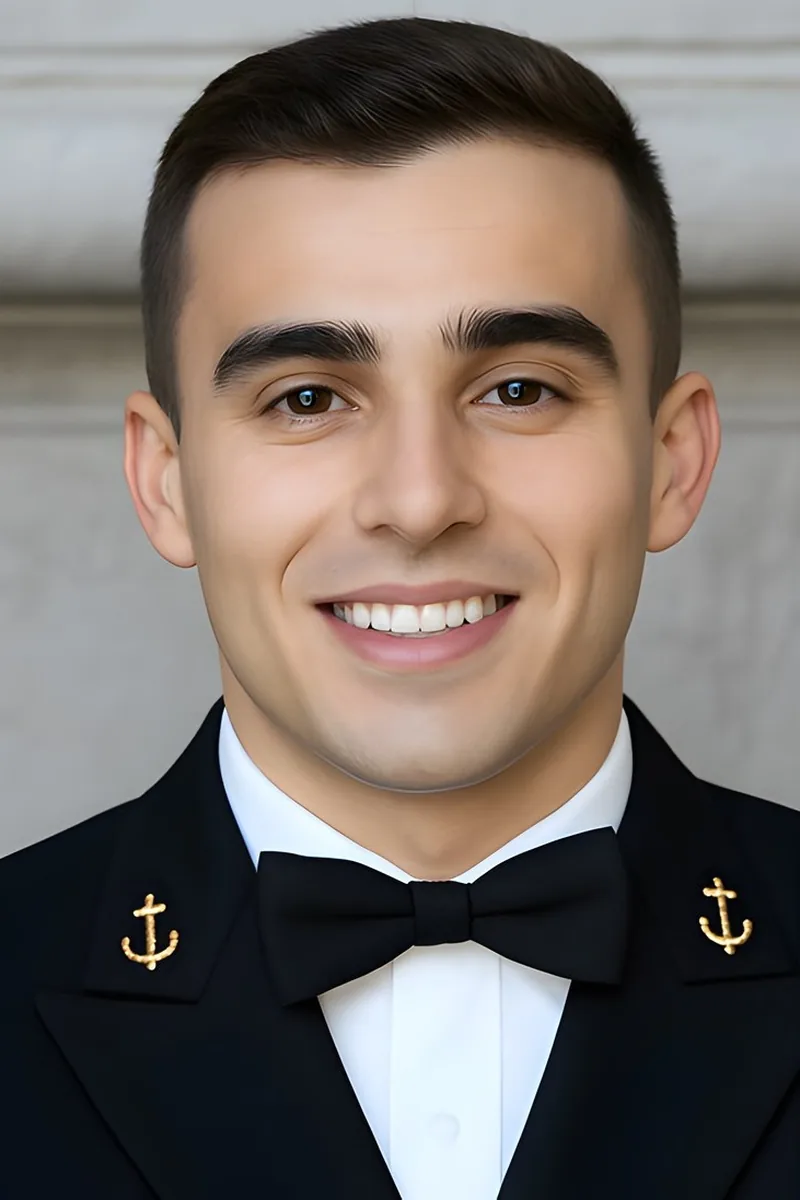
An avid reader who lists books among his main hobbies, Charles approaches literature by teaching students to build arguments from the text itself — tracing how a symbol shifts meaning across chapters or how an author's sentence structure creates tone. His analytical engineering mindset pairs surprisingly well with close reading, since both demand careful attention to how small details support a larger structure.
Reading literature well means doing more than summarizing plot — it means noticing how an unreliable narrator shifts tone, or why an author chooses fragmented structure over linear storytelling. Brittney studied Comparative Literature at Princeton, which trained her to analyze texts across traditions, periods, and languages. She teaches students to build interpretive arguments that hold up under scrutiny.
Reading literature analytically is surprisingly similar to reading a scientific paper: both demand close attention to structure, evidence, and the argument underneath the surface. Dennis brings that cross-disciplinary lens to poetry, novels, and drama, teaching students to trace motifs, unpack figurative language, and build interpretive claims that hold up under scrutiny. His genuine interest in philosophy and literary tradition keeps discussions grounded in the text rather than floating in vague impressions.
Reading a novel closely — tracking symbols, unreliable narrators, shifts in tone — is a skill that clicks once someone shows you what to look for. Kerr treats literature as an exercise in argument-building, teaching students to move from a gut reaction to a thesis they can defend with textual evidence. His analytical mindset, sharpened by studying economics and computer science at Vanderbilt, brings a refreshingly structured approach to literary analysis.
Studying sociology and anthropology has given Lisa a sharp lens for analyzing how texts reflect power, identity, and culture — exactly the kind of critical reading that literature courses demand. She teaches students to build arguments around literary devices like symbolism, narrative structure, and point of view rather than just summarizing plot. Whether it's a Shakespeare play or a contemporary novel, she connects the themes to broader human questions that make the reading stick.
Reading a poem or novel closely means asking what the author is doing with structure, imagery, and tone — not just summarizing what happens. Eileen teaches students to annotate with purpose, tracing how a metaphor develops across a passage or how an unreliable narrator shifts meaning. She connects these analytical skills to both classroom discussion and timed literary analysis writing.
Jeremy's background in philosophy and years of academic writing give him a particular lens for literature: he teaches students to build an argument about a text rather than simply summarize it. Whether the assignment involves close reading a poem or analyzing a novel's thematic structure, he pushes students to identify what a passage is doing and articulate why it matters.
Reading literature as a history major means Alexander never treats a text in isolation — he connects novels, plays, and poems to the political and cultural moments that shaped them. Whether it's unpacking the colonialism embedded in Conrad's *Heart of Darkness* or tracing how Romantic poetry responded to industrialization, he brings context that makes literary analysis richer and more grounded.
Reading a poem or novel closely means noticing what the author chose not to say as much as what's on the page. Nat approaches literature by teaching students to identify literary devices like motif, tone shifts, and unreliable narration, then connect those observations into a coherent interpretation. His analytical training in math and CS actually sharpens this skill — breaking a text into parts and reasoning about how they fit together.
Living in France and England shaped how Heather reads — she naturally draws connections between cultural context and literary meaning, whether analyzing a Victorian novel or a contemporary short story. Her background in writing and language gives her a sharp eye for how authors use structure, voice, and symbolism to build layered arguments beneath the surface of a narrative.
Studying political science at Vanderbilt means Kit spends most of his time inside dense, argument-driven texts — skills that translate directly to literary analysis. He teaches students to move past surface-level plot summary and into the mechanics of how authors use structure, imagery, and point of view to build meaning in a work.
Rhamy approaches literature by teaching students to build arguments from the text itself — identifying motifs, analyzing character development, and connecting authorial choices to broader themes. His background at Thomas Jefferson High School for Science and Technology included rigorous humanities coursework that trained him to read critically and defend interpretations with evidence.
Kelly approaches literature by teaching students to build arguments from the text itself — identifying motifs, tracking character development, and connecting authorial choices to larger themes. Her engineering training gives her an unusually structured way of breaking down complex passages, which clicks especially well for students who think analytically but struggle with open-ended literary analysis.
Reading literature closely — pulling apart metaphor, tracking character development, identifying narrative structure — requires a kind of patience that Christina developed through years of teaching reading comprehension across different grade levels and language backgrounds. Her Vanderbilt training in English language education gives her practical strategies for making challenging texts feel approachable, whether the student is analyzing poetry or working through a novel.
I am a freshman at Vanderbilt University studying biochemistry and involved in analytical chemistry research. Despite my studies being very science oriented, I also enjoy studying English and the humanities. I'd be happy to tutor you in any of these areas!
Literary analysis asks students to do something counterintuitive: slow down, re-read, and argue about what a text means using evidence from the text itself. Mary's honors research on linguistic relativity trained her to examine how language shapes meaning — a skill she now applies to teaching students how to unpack symbolism, narrative structure, and authorial intent in everything from Shakespeare to contemporary fiction.
A sociology degree sharpens the ability to read texts through multiple lenses — power dynamics, cultural context, narrative structure — and that's exactly what Michelle brings to literature analysis. She teaches students to build arguments about a text by connecting close reading of language and imagery to broader thematic claims, whether they're tackling a Shakespeare play or a contemporary novel.
I'm a 24 year old student of life that graduated from Vanderbilt University in 2014. My first experience with tutoring came 5 years ago when I opened a branch of ACT prep tutoring for Revolution Prep. At that time, I taught small classes of 5-9 students and also worked as a private tutor. I absolutely love to learn and am fulfilled by guiding students to reach their maximum potential.
Reading literature well means making an argument about a text, not just summarizing what happened. Daniel teaches students to zero in on specific literary devices — an unreliable narrator, a recurring symbol, a shift in tone — and build interpretive claims around them. His own writing-intensive coursework at Vanderbilt keeps close-reading and thesis construction fresh in his approach.
Elsa's minor in African American Studies at Vanderbilt involved close reading across genres — analyzing arguments in essays, symbolism in fiction, and historical context in primary texts. She teaches students to slow down and interrogate what an author is doing structurally, which transforms surface-level summaries into the kind of interpretive analysis that literature courses demand.
Reading widely across nonfiction is one of Ruiy's genuine hobbies, and she brings that curiosity to literature tutoring by connecting texts to the bigger questions they're wrestling with — power, identity, morality. Whether a student is annotating a Shakespeare soliloquy or writing a close reading of Toni Morrison, she teaches them to trace how literary devices like imagery, irony, and narrative structure carry meaning beyond the surface plot.
Megan approaches literary analysis the way she approaches engineering problems: by breaking a text into its components — imagery, narrative structure, character motivation — and examining how they work together. Her interdisciplinary background across STEM, economics, and the humanities at Vanderbilt gives her a practical, analytical lens that clicks for students who don't consider themselves "English people."
Monika treats literature analysis like solving a proof: identify the claim, trace the evidence, and build a coherent argument. Her background spans texts from multiple cultural traditions, having studied at top universities in both India and the U.S. She teaches close reading techniques that turn vague impressions into specific, defensible interpretations.
Analyzing literature is a lot like diagnosing a problem — you gather evidence from the text, weigh competing interpretations, and build an argument. Jakobi brings that analytical mindset from his science background to close reading, teaching students to trace themes, dissect an author's choices, and support claims with precise textual evidence.
AP Literature and AP Language are two of Leanna's core specialties, and she digs into texts at the level those courses demand — analyzing narrative structure, rhetorical strategy, and the way an author's choices create meaning. Whether a student is unpacking a Shakespeare soliloquy or building a thesis about Toni Morrison, she teaches close reading as a skill that transfers across every text.
Reading literature well means doing more than summarizing plot — it means asking why an author chose this metaphor, this structure, this narrator. Karen's European history studies at Vanderbilt have sharpened her ability to place texts in their cultural and political contexts, which adds depth to analysis of everything from Shakespeare to postcolonial fiction. She teaches students to build interpretive arguments grounded in the text itself.
Reading literature well means doing more than summarizing plot — it means tracing how an author uses imagery, narrative voice, or symbolism to build meaning across a text. Miah's interdisciplinary studies at Vanderbilt, spanning political science to Russian studies, give her a knack for pulling thematic connections out of novels, poetry, and drama that students might otherwise miss.
Reading a novel closely is a lot like analyzing scientific data — you're looking for patterns, questioning assumptions, and building an interpretation from evidence. Caroline earned an English minor at Vanderbilt and applies that analytical rigor to poetry, fiction, and drama, teaching students to unpack themes, literary devices, and authorial choices in their own words rather than borrowing SparkNotes summaries.
Years of studying philosophy alongside science taught Danzo to read texts on multiple levels — tracking argument, symbolism, and historical context simultaneously. He applies that same close-reading discipline to literature, whether a student is unpacking metaphor in a Shakespeare play or analyzing narrative structure in a modern novel. The goal is always for students to build their own interpretations and defend them with evidence from the text.
I'm pursuing a double major in Mathematics and English at Vanderbilt University. I have been tutoring math since High School and have native proficiency in Mandarin Chinese. I am dedicated to helping students explore the study methods that will fit their individual needs.
An avid reader herself, Jamie treats literature not as a set of symbols to decode but as an argument the author is making through character, structure, and language. She teaches students to build interpretive claims about a text — whether it's a Shakespeare play or a contemporary novel — and support them with close reading rather than plot summary. That skill translates directly to stronger essays and class discussions.
Reading literature well means doing more than summarizing plot — it means noticing how an unreliable narrator shifts your trust, or why Toni Morrison places a particular image at the end of a chapter instead of the beginning. Kaitlyn, a creative writing major at Vanderbilt, analyzes texts from a writer's perspective, teaching students to ask not just what a work means but how it creates that meaning. Rated 5.0 by students.
Reading widely is a genuine hobby for Jacob, and he brings that to literature tutoring by teaching students to analyze texts on their own terms — tracking motifs, dissecting narrative structure, and building interpretive arguments from textual evidence. His economics training also sharpens his approach to close reading, since both disciplines demand careful attention to how an argument is constructed.
Reading literature closely is really about building an argument — identifying a theme in a passage, gathering textual evidence, and explaining why it matters. Zeeshan's policy and economics background trained him to dissect complex texts and construct tightly reasoned analyses, skills he applies when walking through poetry, novels, or short fiction with students.
Katie treats literature as an exercise in close reading and argumentation: identifying how an author's choices — imagery, structure, point of view — create meaning on the page. She walks through passages line by line, teaching students to build textual evidence into interpretive claims they can defend in essays and class discussions.
Reading a novel closely means noticing what an author does with structure, voice, and imagery — not just summarizing what happens. Elena's background in art history at Vanderbilt sharpens her eye for how creators build meaning through deliberate choices, a skill she brings directly to literary analysis. She teaches students to build arguments around textual evidence rather than vague impressions.
Reading literature well means doing more than following the plot — it means noticing how an author's choices in diction, structure, and point of view shape interpretation. Marjorie approaches texts by teaching students to ask specific analytical questions: why does the narrator shift tense here, what does this recurring image accumulate across chapters, how does dialogue reveal what exposition doesn't. Her background in biology also gives her an unusual lens on science fiction and naturalist literature.
Reading literature at the doctoral level means going beyond plot summary to interrogate how a text produces meaning — examining narrative structure, rhetorical strategy, and historical context simultaneously. Patrick's exchange year at the Ecole Normale Superieure exposed him to French and comparative literary traditions, giving him a wider lens for analyzing everything from Shakespeare to Toni Morrison. He teaches close reading as an active, argumentative skill.
Reading a novel is one thing; analyzing how an unreliable narrator reshapes meaning or how a motif builds across chapters is another skill entirely. Rachel's comparative literature background and love of reading give her a deep toolkit for teaching close reading, literary analysis, and the kind of interpretive writing that literature courses demand.
Testimonials
Because the right Literature tutor makes all the difference.
Average Session Rating – Based on 3.4M Learner Ratings
Nearby Literature Tutors
Other Chattanooga Tutors
Related English Tutors in Chattanooga
Frequently Asked Questions
Varsity Tutors matches Chattanooga students with expert Literature tutors for 1-on-1 instruction. We pair each student with a tutor based on their specific needs, learning style, and goals.
Whether you need homework help, exam prep, or want to get ahead, our Literature tutors are ready to help.
Common challenges include gaps from earlier material, difficulty with specific concepts, and trouble applying learning to new problems. These issues can snowball quickly in Literature.
A tutor identifies where you're stuck, fills in gaps, and provides targeted practice. The 1-on-1 format means you get help exactly where you need it.
Tutors work with your student's actual coursework—homework assignments, class notes, and upcoming tests. This keeps tutoring directly relevant to what's happening in the classroom.
When you share information about your student's school and curriculum, we can match you with a tutor who has relevant experience.
All tutors complete background checks, credential verification, and teaching evaluation. Many of our Literature tutors hold advanced degrees or have years of teaching experience.
You can review tutor profiles to find someone with the right background for your student's level and needs.
Many students see improved grades within a few weeks, along with better understanding of Literature concepts and more confidence tackling challenging material.
Tutors track progress and adjust their approach to ensure continued improvement.
Most students benefit from 1-2 sessions per week. More frequent sessions help if your student is significantly behind or has an important exam coming up.
Your tutor can recommend a schedule based on your student's specific situation and goals.
Tutoring is purchased in packages of hours, with rates varying by tutor experience. Varsity Tutors offers several options to fit different budgets and needs.
You can discuss pricing during your consultation to find what works best.
Your tutor will assess where your student is, discuss goals, and start working on priority areas. Most students bring current homework or upcoming test material to focus on.
By the end, you'll have a clear sense of how the tutor can help and a plan for moving forward.
Let’s find your perfect tutor
Answer a few quick questions. We’ll recommend the right plan and match you with a top 5% tutor.