Award-Winning High School Chemistry Tutors
serving Chattanooga, TN
High School Chemistry
Tutors in Chattanooga
Private 1-on-1 tutoring, weekly live classes for academic support, test prep & enrichment, practice tests and diagnostics, and more to elevate grades and test scores.
Based on 3.4M Learner Ratings
UniversitiesSchools & Universities
DeliveredHours Delivered
ProficiencyGrowth in Proficiency
Who needs tutoring?
No obligation. Takes ~1 minute.
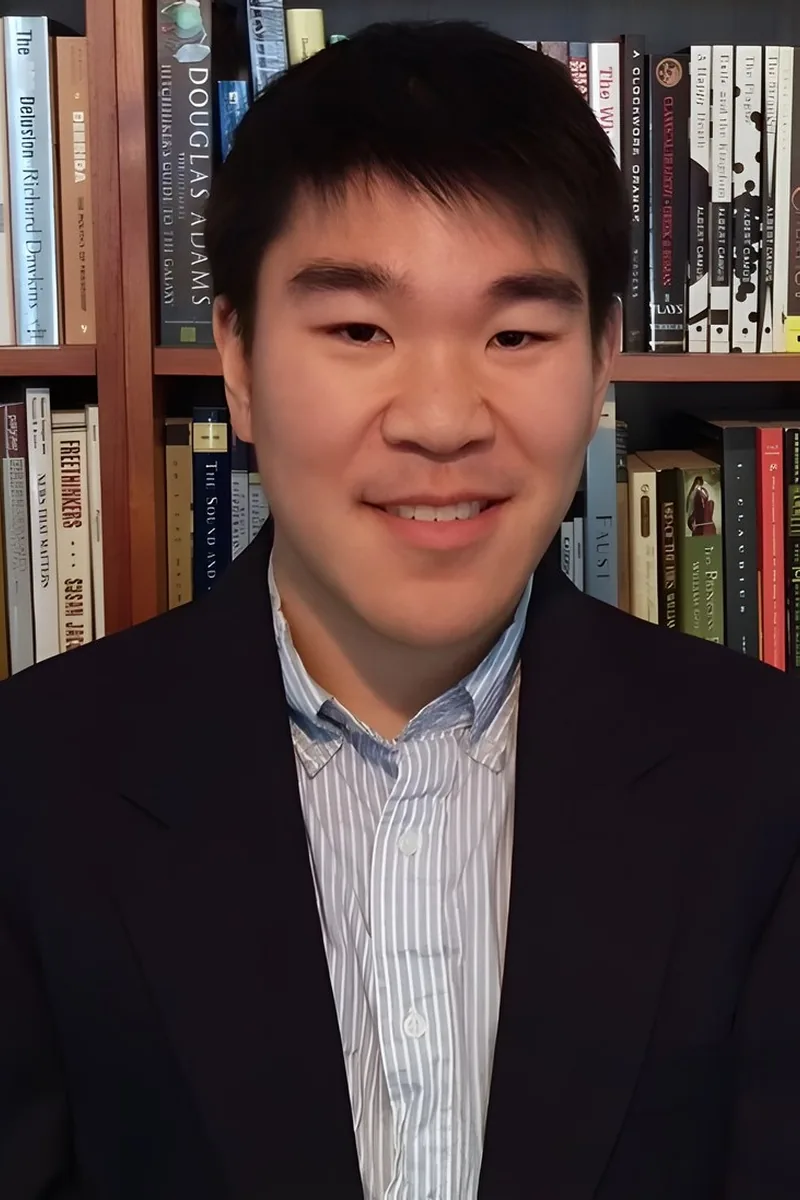
Chemistry clicks when students see the logic underneath the formulas — why electron configurations predict reactivity, or how stoichiometry is really just bookkeeping for atoms. Dennis earned his Masters in Chemical and Physical Biology at Vanderbilt, so he teaches concepts like equilibrium, thermodynamics, and bonding from a place of deep daily familiarity rather than rote textbook review. Rated 5.0 by students.

Teaching college chemistry for years gave Jeremy a clear picture of what high school students actually need before they arrive on a college campus — and where most curricula leave gaps. He zeroes in on the conceptual reasoning behind topics like mole conversions, gas laws, and electron configurations, making sure students can explain *why* an answer is correct, not just arrive at the right number.
Balancing equations, predicting products, and navigating the mole concept are the topics where most high school chemistry students start to struggle. Kelly's chemical engineering training gave her deep fluency with these ideas, and she's the kind of person friends and family still call when they need a chemistry concept explained clearly — a habit she's turned into a 5.0 tutoring rating.
Pursuing a chemistry degree at Vanderbilt means Lawrence isn't just recalling high school material — he's actively building on it in college-level courses every semester, which keeps concepts like stoichiometry, chemical kinetics, and thermodynamics sharp and interconnected. That ongoing immersion lets him explain the reasoning behind problem setups rather than just walking through the steps, especially when students hit the quantitative side of the course. Rated 4.7 by students.
Balancing equations and stoichiometry tend to be the first stumbling blocks in high school chemistry, and Matthew tackles them by teaching students to think in terms of conservation — the same principle that drove much of his engineering coursework. He's especially strong on gas laws and thermochemistry, where his physics intuition adds an extra layer of clarity.
Two biomedical engineering degrees mean Allyson has spent years working with chemistry at the molecular level — understanding how materials interact with biological tissue, how reaction kinetics govern drug delivery, and why thermodynamics matters in device design. That engineering lens gives her a practical way to teach high school topics like stoichiometry and chemical bonding, tying the calculations to problems where getting the chemistry wrong has real consequences. Rated 4.9 by students.
Kathleen's Ph.D. in Molecular Pathology & Immunology from Vanderbilt sits on top of an undergraduate chemistry degree from the University of Arkansas, which means she's never really left chemistry behind — she's just kept applying it at higher and higher levels. That depth shows when she teaches topics like electron orbitals or chemical equilibrium, because she can trace exactly how those high school concepts become the tools that drive real research in biochemistry and medicine.
The jump from memorizing element names to actually solving equilibrium expressions or predicting reaction products is where most high school chemistry students stall. Andrew walks through the logic behind each calculation step — why you flip a Ka expression, how sig figs actually work, what a limiting reagent really means — so the problem-solving becomes repeatable, not random.
Studying biochemistry means Fay doesn't just remember high school chemistry — she's actively building on it, using concepts like equilibrium, reaction energetics, and molecular structure in upper-level coursework right now. That proximity to the material shows when she explains something like gas laws or periodic trends, because she can pinpoint exactly where a concept is headed and why it matters beyond the current chapter. Rated 4.9 by students.
I'm a high school chemistry and biology teacher with a love of languages. I consider myself a lifelong learner and am excited to share and discover new subjects and ideas. I'd love to help you in your learning journey as well! I started tutoring as a college freshman after taking an advanced chemistry course and realizing how much I enjoyed working with my classmates to help them study and solve difficult problems. My college hired me to tutor French, biology, and chemistry students throughout the next three and a half years. I also started meeting with several gifted high school students who needed guidance in preparing the best college applications possible. Having successfully passed seven AP tests as a student, I was able to help them prepare for the most challenging content in the classes and on the AP tests. I was also able to share ACT test strategies and content knowledge from my own experience that helped me achieve a 35 cumulative score and qualify as a national merit scholar on the PSAT. During college, I also had the opportunity to volunteer my time with high school students who were internationally adopted or in foster care while awaiting immigration proceedings. Working with students who were learning math, science, and other subjects in their second language became a passion that drove me to switch career paths and become a teacher in a public school. I speak conversational French and Spanish which has given me such an appreciation for the patience and grace of native speakers willing to help me. This has framed my entire approach to education as science often feels like a foreign language to students who are not yet fluent. With patience, exposure, and practice, I believe every student can be successful at even the most challenging science concepts. Now I teach high school chemistry and AP chemistry, but I'm also certified in and have taught high school biology and physical science. My favorite part of teaching chemistry is the moment of satisfaction students experience when they have struggled and overcome a difficult task. My students may have different journeys to success, but I love celebrating every victory.
Balancing equations, mole conversions, and periodic trends can feel like disconnected topics until someone shows how they all connect. Elizabeth's science degree gave her deep fluency with these foundational chemistry concepts, and she teaches them as a coherent story — atoms behave in predictable ways, and once a student sees the pattern, problems that seemed impossible start solving themselves.
Stoichiometry trips up more high school chemistry students than almost anything else, usually because the dimensional analysis framework wasn't taught clearly the first time. Kristen walks through unit conversions and mole relationships step by step, building the kind of problem-solving routine that carries through to acids and bases, gas laws, and beyond.
Studying chemistry as his actual major — not just a prerequisite to check off — means Nathan lives inside concepts like stoichiometry, equilibrium, and bonding theory semester after semester, building the kind of fluency that makes explaining them second nature. He's particularly sharp at walking through dimensional analysis and mole calculations, two areas where high school students tend to lose the thread between setup and solution. His pre-med trajectory keeps him actively applying these ideas in contexts that go well beyond the textbook.
Balancing equations, understanding molarity, and predicting reaction products are all things Lisa does routinely in her marine biogeochemistry lab at Stony Brook. She approaches high school chemistry by grounding each new topic in a concrete example so students see the logic behind the math, especially in tricky areas like equilibrium and acid-base chemistry.
Matt's neuroscience and chemistry undergraduate work fed directly into a master's in nutrition, so he's traced chemical concepts like bonding, functional groups, and reaction energetics from the introductory level all the way into how they govern biological systems. That layered perspective lets him explain something like electronegativity or intermolecular forces by connecting it to real molecular behavior students can visualize. Rated 5.0 by students.
Amber's path led to theater casting and producing in New York, but her 35 ACT and deep comfort with math and science mean she tackles chemistry topics like stoichiometry and gas laws with the same precision she brings to her strongest subjects. She teaches students to read chemical equations the way she reads a script — pulling apart what each piece is doing and why it's there, so nomenclature and reaction balancing start to follow a logic instead of feeling arbitrary. Rated 5.0 by students.
Balancing equations, understanding molarity, and predicting reaction products all click faster when a student sees the logic underneath the formulas. Li's medical and science background means she can explain why a precipitation reaction happens at the molecular level, then walk through the math step by step.
Stoichiometry and equilibrium take on a different dimension when your tutor uses them every day — Michelle's biochemistry degree from Rice and her current medical coursework at Baylor mean she's constantly translating between chemical equations on paper and what's actually happening at the molecular level. She teaches gas laws and reaction energetics by anchoring the math to the biological chemistry she's immersed in, which gives students a concrete handle on topics that otherwise feel purely abstract.
Working daily with CRISPR-Cas9 and other biochemical tools in a Yale research lab, Matthew sees chemistry in action — the thermodynamics of enzyme reactions, the pH sensitivity of buffer systems, the molecular interactions that make or break an experiment. That hands-on context sharpens how he teaches high school topics like equilibrium, gas laws, and nomenclature, because he can point to exactly where each concept shows up beyond the textbook.
Three science bachelor's degrees — including one specifically in chemistry — mean Sung has spent serious time with everything from electron orbitals to thermochemistry, not just at the introductory level but across multiple disciplinary angles. He digs into the "why" behind concepts like periodic trends and reaction energetics so students can reason through unfamiliar problems on exams instead of relying on memorized shortcuts. Rated 5.0 by students.
A physics major might seem like an unusual pick for chemistry, but Nima's deep comfort with atomic structure, thermodynamics, and quantitative problem-solving maps directly onto the trickiest parts of high school chem — stoichiometry, equilibrium calculations, and electron configurations. He approaches chemical concepts through the lens of why atoms and molecules behave the way they do, not just how to balance the equation.
Pre-med coursework and MCAT preparation mean Mosab has worked through chemistry concepts like stoichiometry, gas laws, and equilibrium recently enough that he remembers exactly where the confusion hits — and what finally made each idea click. He walks through the quantitative reasoning behind problems step by step, connecting the math to the underlying chemical behavior so it stops feeling like arbitrary formula work. Holds a 5.0 rating.
Max earned his chemistry degree at MIT and spent much of high school diving deep into organic chemistry projects — meaning the fundamentals of high school chemistry like stoichiometry, electron configuration, and chemical bonding are second nature to him. He teaches gas law and equilibrium problems by pushing students to derive relationships themselves rather than memorize equations, building intuition that pays off when exam questions don't look like the textbook examples. Rated 5.0 by students.
Priya's math degree at Vanderbilt gives her a real advantage when chemistry turns quantitative — dimensional analysis, molarity calculations, and stoichiometry all come down to setting up ratios correctly, which is exactly how a mathematician thinks. She teaches students to treat these problems as structured logic puzzles rather than chemistry-specific hurdles, so the math never becomes the reason a student falls behind in the course.
Stoichiometry and electron configurations tend to pile up fast in high school chemistry, and students who fall behind on one unit often struggle to catch up in the next. Paula's approach is to anchor each new concept — whether it's Lewis structures or acid-base equilibria — to the periodic table trends that tie the whole course together. She teaches the logic underneath the formulas so students aren't just memorizing steps.
Testimonials
Because the right High School Chemistry tutor makes all the difference.
Average Session Rating – Based on 3.4M Learner Ratings
Nearby High School Chemistry Tutors
Other Chattanooga Tutors
Related Science Tutors in Chattanooga
Frequently Asked Questions
Varsity Tutors matches Chattanooga students with expert High School Chemistry tutors for 1-on-1 instruction. We pair each student with a tutor based on their specific needs, learning style, and goals.
Whether you need homework help, exam prep, or want to get ahead, our High School Chemistry tutors are ready to help.
Common challenges include gaps from earlier material, difficulty with specific concepts, and trouble applying learning to new problems. These issues can snowball quickly in High School Chemistry.
A tutor identifies where you're stuck, fills in gaps, and provides targeted practice. The 1-on-1 format means you get help exactly where you need it.
Tutors work with your student's actual coursework—homework assignments, class notes, and upcoming tests. This keeps tutoring directly relevant to what's happening in the classroom.
When you share information about your student's school and curriculum, we can match you with a tutor who has relevant experience.
All tutors complete background checks, credential verification, and teaching evaluation. Many of our High School Chemistry tutors hold advanced degrees or have years of teaching experience.
You can review tutor profiles to find someone with the right background for your student's level and needs.
Many students see improved grades within a few weeks, along with better understanding of High School Chemistry concepts and more confidence tackling challenging material.
Tutors track progress and adjust their approach to ensure continued improvement.
Most students benefit from 1-2 sessions per week. More frequent sessions help if your student is significantly behind or has an important exam coming up.
Your tutor can recommend a schedule based on your student's specific situation and goals.
Tutoring is purchased in packages of hours, with rates varying by tutor experience. Varsity Tutors offers several options to fit different budgets and needs.
You can discuss pricing during your consultation to find what works best.
Your tutor will assess where your student is, discuss goals, and start working on priority areas. Most students bring current homework or upcoming test material to focus on.
By the end, you'll have a clear sense of how the tutor can help and a plan for moving forward.
Let’s find your perfect tutor
Answer a few quick questions. We’ll recommend the right plan and match you with a top 5% tutor.