Award-Winning Calculus Tutors
serving Chattanooga, TN
Calculus
Tutors in Chattanooga
Private 1-on-1 tutoring, weekly live classes for academic support, test prep & enrichment, practice tests and diagnostics, and more to elevate grades and test scores.
Based on 3.4M Learner Ratings
UniversitiesSchools & Universities
DeliveredHours Delivered
ProficiencyGrowth in Proficiency
Who needs tutoring?
No obligation. Takes ~1 minute.

I'm currently a student at Northeastern University. Originally from Tennessee, I attended an all-male boarding and day school for high school, and was given a lot of opportunities to pursue advanced coursework and opportunities that weren't available to 99% of students in the area. As a result, I've joined Varsity Tutors as an effort to give back and try to help students get excited about learning various subjects, employing many of the methods that allowed me to succeed. While I tutor a wide range of subjects, I am most passionate about standardized test prep, math (all levels), writing, and economics.
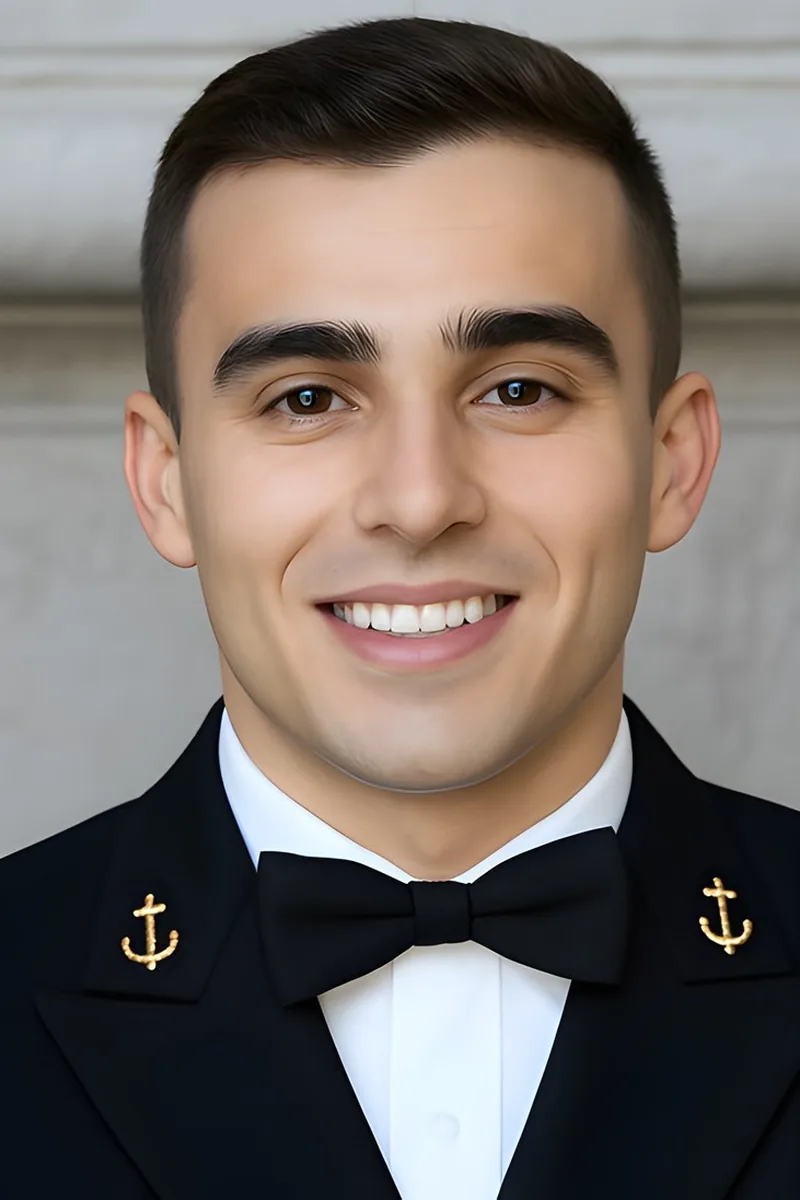
Limits, derivatives, and integrals become far more intuitive when a tutor can point to what they mean in a physical system — velocity as a derivative of position, area under a curve as accumulated work. As a mechanical engineering major at Yale, Charles lives in calculus every day and brings that applied fluency to sessions, whether the topic is chain rule mechanics or setting up a Riemann sum.
Comparative literature at Princeton isn't a typical path to calculus, but the close-reading discipline Brittney developed there — pulling apart layered arguments piece by piece — maps surprisingly well onto unpacking limit definitions and derivative rules where every symbol carries specific meaning. Her 1440 SAT confirms solid quantitative reasoning, and she brings that same meticulous, notation-decoding approach to early calculus concepts. Rated 5.0 by students.
Graduate work in Chemical and Physical Biology at Vanderbilt meant Dennis was neck-deep in calculus — reaction kinetics, thermodynamic modeling, and the differential equations that govern molecular behavior all demanded fluency with derivatives and integrals. That daily, applied use of the material lets him teach concepts like the chain rule or integration by parts through the scientific problems where they naturally arise, not as isolated procedures. Rated 5.0 by students.
Studying neuroscience at Vanderbilt, Eileen applies calculus daily — modeling neural firing rates with derivatives and calculating areas under pharmacokinetic curves with integrals. She teaches differentiation and integration by grounding each technique in what it actually represents, which makes chain rules and u-substitutions feel purposeful instead of arbitrary.
Between a 36 ACT composite and a computer science track at Vanderbilt that runs through multivariable math, Kerr has the quantitative chops to teach calculus with real fluency — not just the mechanics of differentiation and integration, but the underlying logic of why a Riemann sum converges or how the chain rule actually works. His programming background also means he can frame calculus concepts computationally, showing how an algorithm approximates an integral step by step. Rated 4.9 by students.
Lisa's sociology and anthropology degree doesn't scream calculus, but her perfect 1600 SAT score signals the kind of sharp quantitative reasoning that makes tackling derivatives and integration approachable. She breaks down the abstract notation into logical steps, treating each new rule the way a social scientist treats a model — something to understand structurally before applying it.
Political science on a pre-law track isn't a calculus-heavy path, so Kit is straightforward that this isn't his deepest subject. That said, a 1540 SAT reflects strong quantitative reasoning, and his pre-law training in building logical, step-by-step arguments maps surprisingly well onto walking through limit definitions and derivative rules where each piece needs to follow cleanly from the last.
Limits, derivatives, and integrals each build on the last, so a shaky grasp of one concept quietly undermines everything downstream. Rhamy applies calculus constantly in his Vanderbilt engineering courses — from modeling circuit behavior to optimizing systems — and brings that applied perspective into every session. His 5.0 rating speaks to how well that approach translates for students.
Heather's Quantitative Methods minor at Vanderbilt put her squarely in the calculus pipeline — working through derivatives and integrals as tools for statistical modeling and data analysis rather than as isolated textbook exercises. That background means she teaches concepts like the chain rule or area under a curve by connecting them to the quantitative questions they were built to answer. Rated 4.9 by students.
Chemistry PhD work at Yale is surprisingly calculus-heavy — reaction kinetics, thermodynamic modeling, and rate equations all demand fluency with derivatives and integrals in contexts where getting the math wrong means getting the science wrong. Jeremy brings that applied calculus background to tutoring, connecting the mechanics of differentiation and integration to the physical systems they were built to describe.
Preparing for the LSAT while studying history and business at Vanderbilt has sharpened Alexander's ability to break complex logical sequences into manageable steps — a skill that translates directly to walking through limit definitions and derivative rules in early calculus. His 1510 SAT confirms solid quantitative reasoning, and his teaching style emphasizes understanding each step's purpose before moving to the next one.
Derivatives and integrals click faster when a student sees them as tools, not just formulas. Nat is a math and computer science double major at Vanderbilt Engineering, which means he uses calculus constantly — from optimization problems to modeling change in real systems. He walks through each concept with enough context that students can tackle unfamiliar problems on their own.
Having earned a chemical engineering degree, Kelly didn't just take calculus — she applied it constantly, from modeling reaction kinetics to optimizing fluid dynamics equations. That applied fluency means she can unpack topics like integration techniques, differential equations, and series convergence with concrete examples that make abstract ideas click. She holds a 5.0 rating from students.
While Christina's primary expertise is in education and language teaching, her NYU training included the math foundations needed to support students working through early calculus concepts like limits, derivatives, and basic integration. She breaks problems into smaller, structured steps — an approach shaped by her special education background, where clarity and scaffolding matter most.
I am a freshman at Vanderbilt University studying biochemistry and involved in analytical chemistry research. Despite my studies being very science oriented, I also enjoy studying English and the humanities. I'd be happy to tutor you in any of these areas!
Speech-language pathology research is more quantitative than most people realize — Mary's Vanderbilt master's program involves analyzing acoustic measurements, rate-of-change data in speech signals, and statistical modeling that draws directly on calculus concepts. That hands-on experience with derivatives in a research context lets her explain what a rate of change actually represents, grounding abstract notation in something tangible. Rated 5.0 by students.
I'm a 24 year old student of life that graduated from Vanderbilt University in 2014. My first experience with tutoring came 5 years ago when I opened a branch of ACT prep tutoring for Revolution Prep. At that time, I taught small classes of 5-9 students and also worked as a private tutor. I absolutely love to learn and am fulfilled by guiding students to reach their maximum potential.
AP Calculus BC at Duke, paired with the heavy linear algebra and discrete math required for a computer science degree, means Michelle has used calculus as a working tool — not just a course to survive. She teaches integration techniques and series convergence by connecting them to the computational problems where they actually matter, like analyzing algorithm efficiency or modeling data trends. Rated 5.0 by students.
Chemistry majors at Vanderbilt don't just take calculus — they use it constantly, from reaction rate equations to thermodynamic integrations and equilibrium modeling. Elsa has tutored college students in calculus-based physics, which means she's comfortable teaching derivatives and integrals in applied contexts where the math has to actually produce correct answers. That science-embedded repetition gives her a fluency with the material that's hard to fake.
Cognitive science trains you to think in systems and models — exactly the mindset calculus demands when connecting derivatives to rates of change or interpreting what an integral actually represents. Ruiy applies that analytical framework to break down limit problems, chain rule applications, and area-under-curve questions so the logic behind each step is clear, not just the procedure.
Electrical engineering at Vanderbilt put Daniel through the full calculus sequence with real stakes — analyzing circuit behavior through integrals, modeling signal processing with derivatives, and solving the differential equations that govern everything from power systems to control theory. A perfect 36 ACT composite backs up that quantitative depth, and he teaches calculus by connecting each technique to the engineering problems where it actually gets used.
Having earned both a bachelor's and master's degree in mathematics — with coursework spanning pure and applied topics including real analysis — Monika brings the kind of deep structural understanding to calculus that lets her explain *why* the epsilon-delta definition of a limit works, not just how to use it. Her data analyst background at Tata Consultancy Services also means she can ground integration and differentiation in real-world modeling problems, connecting theory to application. Rated 4.5 by students.
Mechanical engineering at Vanderbilt means Megan doesn't just remember Calculus — she's actively using derivatives for optimization, integrals for area and volume, and differential equations in her upper-level coursework right now. That ongoing fluency makes a difference when explaining tricky topics like implicit differentiation or disk-and-washer methods. She connects each technique to a tangible problem so the reasoning sticks beyond the exam.
A strong algebra and trig foundation makes or breaks a student's experience in calculus, and Jakobi knows exactly where the gaps tend to hide. He walks through limits, derivatives, and integration by tying each new concept back to the prerequisite skills, so students aren't fighting old confusion while learning new material.
Training to teach secondary math at Vanderbilt's Peabody College means Karen isn't just learning calculus — she's learning how to explain it, anticipate where students get stuck, and sequence ideas so that limits, derivatives, and integration rules build on each other naturally. Her 1570 SAT confirms the quantitative chops, and her education coursework gives her something most math-strong tutors lack: formal training in how people actually learn mathematical concepts. Rated 5.0 by students.
I'm pursuing a double major in Mathematics and English at Vanderbilt University. I have been tutoring math since High School and have native proficiency in Mandarin Chinese. I am dedicated to helping students explore the study methods that will fit their individual needs.
Derivatives and integrals become far more intuitive when you understand what they actually measure — rates of change and accumulated quantities in real systems. Danzo's doctoral training in cellular and molecular biology meant constant work with differential equations and modeling, so he teaches calculus as a living tool rather than an abstract exercise. He's especially effective at breaking down chain rule applications and integration techniques that trip up first-year students.
Caroline's neuroscience background at Vanderbilt required heavy calculus coursework — from limits and derivatives to integrals applied in modeling biological systems. She breaks down problems like related rates and area-under-the-curve by connecting the math to real scenarios, which makes abstract concepts click faster.
Cognitive science at Vanderbilt involves enough statistics and mathematical modeling — signal detection theory, computational models of perception, Bayesian reasoning — that Leanna has real familiarity with how calculus underpins the science of the mind. She's strongest in the conceptual territory: what a derivative actually represents, how rates of change connect to real phenomena, and why integration reverses that process. Rated 4.9 by students.
Political science majors don't usually list calculus on their résumé, and Miah is honest that it's not her deepest subject — but a 34 ACT composite shows she can think quantitatively when it counts. Her knack for systematic problem-solving and a 5.0 tutoring rating mean she's well-suited to support students tackling the early conceptual hurdles, like understanding what a derivative actually represents before the notation gets heavy.
Limits, derivatives, and integrals each demand a different kind of thinking, and Elena approaches Calculus by making sure students see the geometric intuition behind every rule before drilling computation. She's especially strong at unpacking the chain rule and related rates problems, two areas where students often memorize steps without understanding why they work.
Economics PhD work at Vanderbilt is surprisingly calculus-heavy — Zeeshan regularly uses derivatives for optimization problems, integrals for consumer and producer surplus, and differential equations in growth modeling, so the core toolkit of calculus is part of his daily research life. He teaches the material by connecting each rule to the economic intuition behind it, like explaining why a second derivative test matters through the lens of diminishing marginal returns.
Human Development coursework doesn't scream calculus, but Jamie's experience tutoring math across grade levels — including algebra through algebra 2 — means she's walked students through the exact algebraic scaffolding that early calculus builds on. She's particularly good at catching the prerequisite gaps in function manipulation and graphing intuition that quietly derail students once limits and derivatives enter the picture. Rated 4.9 by students.
Kaitlyn's academic focus is creative writing, not mathematics, so she's upfront that calculus is well outside her primary expertise. Her experience tutoring math at multiple levels and strong quantitative instincts — reflected in a 1540 SAT — mean she can support students working through early concepts like limits and basic derivatives, breaking each step down with the same careful attention to logic and structure she applies to her writing work.
A history PhD might seem like an unlikely calculus tutor, but Patrick's years working in test development for the SAT at the Educational Testing Service gave him deep familiarity with how standardized math problems are constructed — including the calculus concepts tested on advanced exams. He brings that analytical precision to breaking down limits and derivatives, treating each problem like a structured argument where every step needs to be justified.
Biology coursework gave Marjorie firsthand experience with the calculus that drives population growth models, enzyme kinetics curves, and rate-dependent biological systems — so she teaches derivatives and integrals as tools that describe how living things actually change over time. A 34 ACT composite and 5.0 tutoring rating back up her quantitative chops, and her emphasis on teaching students to diagnose their own weak spots means she zeroes in on exactly where the conceptual gaps are hiding.
Studying both economics and math at Vanderbilt means Jacob lives in calculus daily — from optimization problems and marginal analysis to the rigorous limit definitions underpinning it all. He breaks down concepts like the chain rule and integration by parts by connecting them to real applications, so the techniques actually make sense rather than feeling like arbitrary steps.
Natural resources coursework is surprisingly calculus-heavy — modeling population growth with differential equations, calculating rates of resource depletion, analyzing change in ecosystems over time. Katie's dual science degrees mean she's worked through these applications firsthand, so she can ground derivatives and integrals in concrete ecological problems rather than leaving them as abstract symbol manipulation. Rated 5.0 by students.
As a chemistry major at Vanderbilt, Lawrence uses calculus daily — derivatives to model reaction rates, integrals to calculate work and energy changes. That applied perspective means he can walk students through limits, differentiation rules, and integration techniques with concrete examples of why the math matters beyond the textbook.
Testimonials
Because the right Calculus tutor makes all the difference.
Average Session Rating – Based on 3.4M Learner Ratings
Nearby Calculus Tutors
Other Chattanooga Tutors
Related Math Tutors in Chattanooga
Frequently Asked Questions
Varsity Tutors matches Chattanooga students with expert Calculus tutors for 1-on-1 instruction. We pair each student with a tutor based on their specific needs, learning style, and goals.
Whether you need homework help, exam prep, or want to get ahead, our Calculus tutors are ready to help.
Common challenges include gaps from earlier material, difficulty with specific concepts, and trouble applying learning to new problems. These issues can snowball quickly in Calculus.
A tutor identifies where you're stuck, fills in gaps, and provides targeted practice. The 1-on-1 format means you get help exactly where you need it.
Tutors work with your student's actual coursework—homework assignments, class notes, and upcoming tests. This keeps tutoring directly relevant to what's happening in the classroom.
When you share information about your student's school and curriculum, we can match you with a tutor who has relevant experience.
All tutors complete background checks, credential verification, and teaching evaluation. Many of our Calculus tutors hold advanced degrees or have years of teaching experience.
You can review tutor profiles to find someone with the right background for your student's level and needs.
Many students see improved grades within a few weeks, along with better understanding of Calculus concepts and more confidence tackling challenging material.
Tutors track progress and adjust their approach to ensure continued improvement.
Most students benefit from 1-2 sessions per week. More frequent sessions help if your student is significantly behind or has an important exam coming up.
Your tutor can recommend a schedule based on your student's specific situation and goals.
Tutoring is purchased in packages of hours, with rates varying by tutor experience. Varsity Tutors offers several options to fit different budgets and needs.
You can discuss pricing during your consultation to find what works best.
Your tutor will assess where your student is, discuss goals, and start working on priority areas. Most students bring current homework or upcoming test material to focus on.
By the end, you'll have a clear sense of how the tutor can help and a plan for moving forward.
Let’s find your perfect tutor
Answer a few quick questions. We’ll recommend the right plan and match you with a top 5% tutor.