Award-Winning Pre-Calculus Tutors
serving Chattanooga, TN
Pre-Calculus
Tutors in Chattanooga
Private 1-on-1 tutoring, weekly live classes for academic support, test prep & enrichment, practice tests and diagnostics, and more to elevate grades and test scores.
Based on 3.4M Learner Ratings
UniversitiesSchools & Universities
DeliveredHours Delivered
ProficiencyGrowth in Proficiency
Who needs tutoring?
No obligation. Takes ~1 minute.
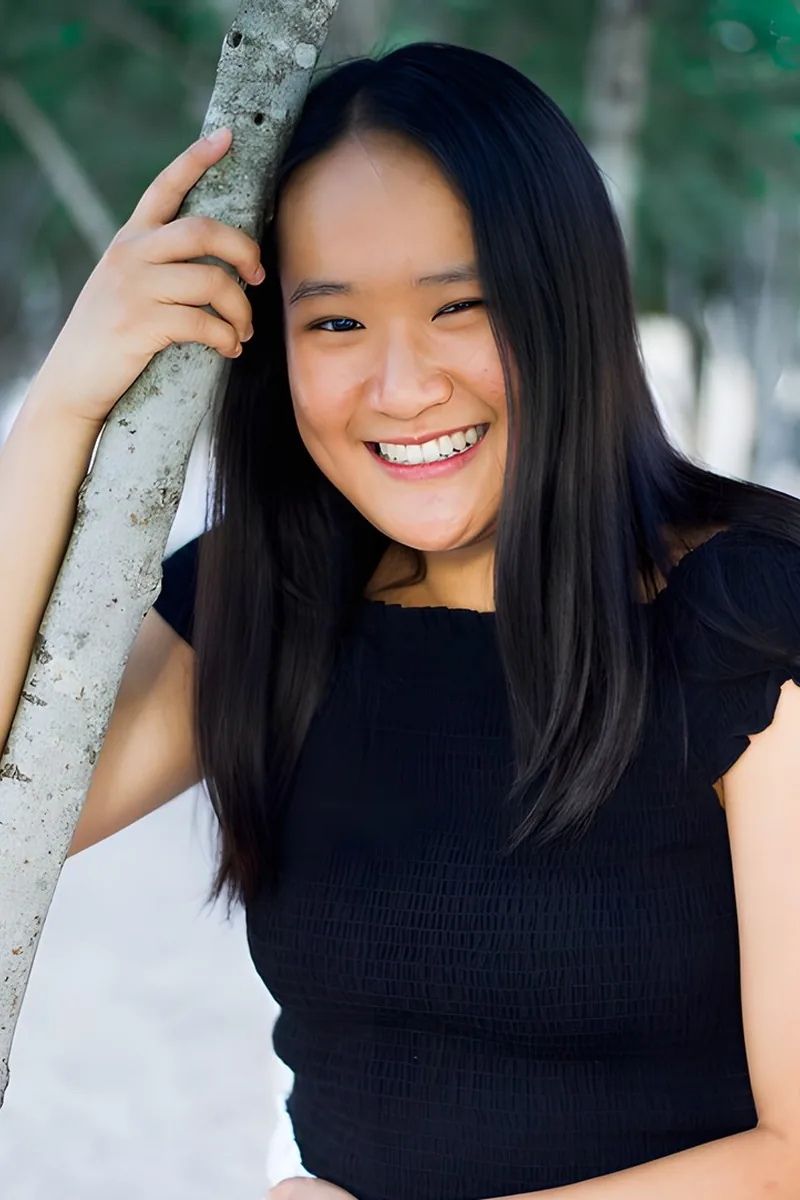
The jump to pre-calculus is where many students first encounter trigonometric identities, polar coordinates, and limits — concepts that feel disconnected from anything they've done before. Eileen bridges that gap by tying each new idea back to familiar algebra and geometry, giving students a clear roadmap into calculus.

The leap from trig identities to limits and series in pre-calculus catches a lot of students off guard. Nat tackles these topics by connecting them to the calculus concepts they're building toward, giving students a sense of purpose behind each technique. As a math major at Vanderbilt's School of Engineering, he brings both rigor and clarity to the subject.
Dual degrees in computer science and sociology from Duke mean Michelle thinks about functions the way a programmer does — as composable, transformable building blocks where each input-output relationship has to be airtight before you chain it into something larger. She applies that precision to pre-calculus topics like rational functions, sequences, and graph transformations, teaching students to trace the logic rather than pattern-match from examples. Holds a 5.0 rating and a 36 ACT.
Mechanical engineering at Vanderbilt means Megan hits pre-calculus material from every direction — parametric motion in dynamics, sinusoidal signals in vibrations, polar coordinates in fluid mechanics — so she teaches these topics as someone who genuinely needs them to work. Her math minor adds the formal rigor behind the intuition, especially when it comes to proving why identities and transformations behave the way they do. A 33 ACT confirms the quantitative instincts she brings to each session.
Having earned both a bachelor's and master's in mathematics from top Indian institutions before pursuing PhD work at the University of Memphis, Monika has taught pre-calculus material — polynomial behavior, rational functions, trigonometric identities — across multiple curricula and levels of rigor. That depth means she can trace exactly where a student's algebra reasoning breaks down and rebuild the specific skill blocking their progress. Rated 4.5 by students.
I'm pursuing a double major in Mathematics and English at Vanderbilt University. I have been tutoring math since High School and have native proficiency in Mandarin Chinese. I am dedicated to helping students explore the study methods that will fit their individual needs.
Aerospace engineering at its core is applied pre-calculus — orbital trajectories run on conic sections, flight dynamics depend on trigonometric decomposition, and every thrust calculation involves parametric equations. Matthew brings that engineering intuition to topics like polar coordinates and function transformations, showing students the mechanical reality behind what can feel like abstract symbol-pushing. Rated 5.0 by students.
The jump into Pre-Calculus can feel disorienting when trigonometric identities, polar coordinates, and limit intuition all land at once. Kira treats each new function family — logarithmic, rational, piecewise — as its own mini-investigation, connecting graphs to equations to real behavior. Her computer science background means she's comfortable with the abstract logic that Pre-Calc demands, especially when sequences and series enter the picture.
The jump from algebra to calculus hinges on truly understanding functions — their transformations, compositions, and limiting behavior. Matthew unpacks topics like trigonometric identities, polar coordinates, and sequences by connecting each one to the calculus concepts they're preparing students for. His engineering training gives him a clear picture of exactly which pre-calc skills matter most down the road.
Mechanical engineering at Alabama means Joshua is constantly applying the pre-calculus toolkit — trigonometric identities for force resolution, parametric curves for motion analysis, and polar coordinates for rotational systems — so he teaches these topics with the instinct of someone who builds on them daily. He breaks each problem into its component concepts, making sure students see how individual pieces like angle relationships or function transformations lock together before tackling the full picture. His 34 ACT confirms the quantitative horsepower behind that methodical approach.
Kevin's biomedical engineering training at the undergraduate level meant living inside the math that pre-calculus introduces — using sinusoidal models for biosignal analysis, exponential functions for decay processes, and polar representations that show up again in circuit design. He zeroes in on the conceptual bridges between algebra and calculus, particularly how transformations and composite functions behave, so students aren't just pattern-matching but actually reading what a graph is telling them. A 1550 SAT and 33 ACT confirm the quantitative instincts behind his teaching.
Rachel's math degree means she didn't just pass through pre-calculus — she circled back to its core ideas repeatedly in upper-level coursework, which gives her a clear sense of exactly where students get tripped up on topics like rational functions, composite transformations, and the shift from algebraic thinking to functional reasoning. She tackles the course as a bridge-builder, connecting the algebra skills students already have to the calculus concepts waiting on the other side. Her 1510 SAT and 4.8 rating reflect that approach in practice.
As a mathematics major who also teaches differential equations and calculus, Lawton knows exactly which pre-calculus skills — especially function composition, logarithmic properties, and trigonometric reasoning — students will lean on hardest later. He digs into the mechanics of each topic with enough depth that students build real fluency, not just surface-level familiarity. Rated 5.0 by students.
Teo holds degrees in both mathematics and computer science, which means he's encountered every pre-calculus concept — sequences, function transformations, trigonometric identities — from the proof side and the implementation side. That dual training lets him diagnose exactly where a student's algebraic reasoning breaks down and rebuild the connection to more abstract function behavior. A 36 ACT and 1550 SAT confirm the depth behind his approach.
Civil engineering at Georgia Tech means Kacey solves problems daily that trace straight back to pre-calculus — analyzing load distributions with trigonometric functions, modeling drainage flow with rational expressions, and applying vector decomposition to structural forces. She teaches these topics by connecting the mechanics students see in textbook exercises to the real calculations engineers actually perform, which makes the jump from algebra to calculus-level thinking far less abstract. Her 32 ACT confirms the quantitative grounding behind that approach.
I'm a graduate student in Applied Statistics with experience in general math and computer programming to boot. I currently have a PhD in Applied Statistics with experience in data analytics. I've had the opportunity to do some math and statistics work for hospitals and research facilities, and I enjoy getting to share my passion for math with others to assist them in their education.
The jump to Pre-Calculus — limits of trigonometric identities, polar coordinates, sequences and series — is where a lot of students first wonder whether they're really "math people." Matthew is deep into his mathematics degree at Lipscomb and treats Pre-Calc as the bridge course it actually is, connecting each topic to the calculus concepts it sets up. That forward-looking perspective makes the material feel purposeful instead of arbitrary.
The jump from algebra to calculus is exactly what Pre-Calculus is supposed to prepare students for, and Aubrey knows both sides of that bridge well. She walks through trigonometric identities, limits intuition, and the behavior of polynomial and rational functions with an eye toward what students will actually need when they hit Calc 1. Her aerospace engineering background at UT means she's used every one of these tools under pressure.
I am currently a Junior at The University of Alabama pursuing degrees in both Mathematics & Economics. After I graduate, I intend to stay at Alabama to get an M.A. in Economics. I have been tutoring both Math and ACT Prep since I was a Sophomore in High School. After 4 years of experience, I continue to enjoy tutoring these subjects, and the constant challenge of improving my abilities and techniques. I get a great sense of satisfaction in helping those I tutor improve their grades, test scores, and overall understanding of the subjects I am teaching them. Not only do I focus on the subject matter being taught, but I also focus on helping students develop the study skills and habits that are imperative to success later in their academic careers. Through my four years of tutoring, I have developed the ability to mold my tutoring style around however the student learns best whether that be visually, through examples, etc. This allows me to provide an individualized tutoring session to each person I tutor. I believe no two students should be tutored the same was; every student has different learning methods and I view it as my responsibility to modify my tutoring style to fit each individual student.
As a physics major digging into particle physics, Ismael encounters pre-calculus concepts like trigonometric identities, vector decomposition, and limit-adjacent function behavior as the raw machinery behind every equation he writes. That physics intuition shapes how he teaches — when a student asks why a rational function has an asymptote or how polar coordinates actually work, he can point to the physical systems where those ideas become unavoidable. He also teaches AP Calculus BC and differential calculus, so he knows exactly which pre-calc skills need to be airtight before students move on.
The jump from algebra to pre-calculus is really a jump in how you think about functions — suddenly you're composing them, inverting them, and transforming them instead of just solving for x. Braden's computer science training at Belmont makes that shift intuitive for him, since programming is essentially applied function logic: inputs, outputs, nested operations, and domain restrictions all show up in his code daily. Rated 5.0 by students.
I'm from New Jersey and of Italian decent, so I naturally love cooking and all things pizza. My favorite childhood book is The Giver by Lois Lowry, and favorite high school class was physics (rockets, easy winner). I enjoy playing guitar and ride my bicycle on a sunny day.
Fred's aerospace engineering degree from Princeton meant living inside the math that pre-calculus students are just meeting — parametric equations describing flight paths, trigonometric models for oscillating systems, and the limit-adjacent thinking that bridges algebra to calculus. He teaches the course knowing exactly which concepts will matter most once students cross into derivatives and integrals, and he builds that forward-looking intuition into every session. His 1550 SAT confirms the quantitative depth behind the approach.
Second-year medical school at Baylor means Michelle is neck-deep in the quantitative reasoning that pre-calculus builds — rate-of-change intuition for physiology, logarithmic models for acid-base chemistry, and exponential functions for everything from bacterial growth to drug clearance. Her biochemistry degree from Rice cemented the algebraic and trigonometric groundwork she now draws on daily, so she teaches these topics as someone who genuinely needed them to stick. A 1570 SAT confirms the mathematical precision behind her approach.
What separates students who survive pre-calculus from those who actually understand it is whether they've internalized the *why* behind each technique — and Daniel, as an applied mathematics major, learned every concept the hard way, by sitting down and working through the logic piece by piece. That deliberate approach makes him especially effective at breaking down topics like rational functions and graph transformations, since he teaches the reasoning he had to build for himself rather than skipping steps that feel obvious. Rated 4.7 by students.
Tim's computational neuroscience work at MIT sits right at the intersection where pre-calculus stops being abstract — he uses trigonometric models for neural oscillations, exponential decay for signal processing, and function composition to build the simulations his research depends on. That daily fluency means he can trace a topic like polar coordinates or logarithmic properties back to the intuition underneath it, not just the procedure on the page. His 34 ACT and 4.9 rating reflect the precision he brings to each session.
A philosophy major at Princeton with a certificate in Statistics and Machine Learning, Julie approaches pre-calculus proofs and function analysis with the logical rigor her coursework demands — she's especially sharp at breaking down the 'why' behind trigonometric identities and limit intuition before students hit calculus. She teaches across the full math ladder from elementary through Calculus II, so she knows exactly which algebraic instincts need to be solid and which conceptual leaps trip students up at the pre-calc stage. Rated 4.9 with a 1570 SAT.
Having earned a 35 ACT and a 1540 SAT while completing dual science and computing degrees at Notre Dame, Aidan built the kind of cross-disciplinary math fluency that makes him especially sharp on the pre-calculus topics where algebra starts becoming abstract — rational functions, composite functions, and the shift from manipulating expressions to analyzing their behavior. He zeroes in on the conceptual bridge between what students already know from algebra and the functional thinking calculus will demand, making sure each new idea has a logical foothold rather than floating as an isolated procedure.
Neuroscience at Vanderbilt meant Benjamin spent semesters immersed in the mathematical models that pre-calculus introduces — exponential decay in synaptic signaling, logarithmic dose-response curves, sinusoidal patterns in EEG data. He teaches these function families by connecting them to the biological phenomena that made them intuitive for him, turning abstract transformations and compositions into something students can visualize. His 34 ACT confirms the quantitative grounding behind that approach.
Holding degrees in both mechanical and electrical engineering, Steve has spent years in the territory where pre-calculus stops being coursework and starts being the toolkit — trigonometric analysis for signal processing, polynomial modeling for system dynamics, vectors and complex numbers for circuit design. He teaches the course knowing exactly which skills will matter most when students hit calculus and engineering-track courses, and builds each lesson around that forward view. Rated 4.9 by students.
Mechanical engineering at the undergraduate level means Andrea spent semesters grinding through the exact transition pre-calculus prepares students for — mastering polar coordinates, parametric equations, and trigonometric identities before they became essential tools in dynamics and thermodynamics courses. She teaches that material as someone who knows precisely where each concept resurfaces, breaking down topics like composite functions and rational expressions by connecting them to the engineering problems they eventually power. Her 32 ACT and 4.8 rating reflect consistent results across a wide range of students.
A year as a course assistant in Harvard's math department teaching introductory calculus gave Richard a sharp sense of exactly which pre-calculus skills — polynomial end behavior, composite functions, rate-of-change intuition — students need locked down before day one of calc. He teaches those topics with that forward view, connecting each piece to where it's actually headed so nothing feels like busywork. His 36 ACT and 1600 SAT confirm the quantitative range behind that perspective.
A statistics major at Northwestern, Jake knows exactly where pre-calculus concepts like polynomial behavior, exponential models, and function transformations show up in real data analysis — because he uses them constantly. He zeroes in on the algebraic reasoning that makes these topics intuitive, building each lesson around the specific gaps standing between a student and genuine confidence with the material. Holds a 5.0 rating and a 34 ACT.
The jump to pre-calculus is where many students first encounter limits of their algebraic intuition — rational functions behave strangely, trigonometric identities pile up, and sequences suddenly matter. Emily tackles these topics by emphasizing the graphical and conceptual logic underneath, drawing on a math background that earned her a 1590 SAT and a 36 ACT.
Testimonials
Because the right Pre-Calculus tutor makes all the difference.
Average Session Rating – Based on 3.4M Learner Ratings
Practice Pre-Calculus
Free practice tests, flashcards, and AI tutoring for Pre-Calculus
Nearby Pre-Calculus Tutors
Other Chattanooga Tutors
Related Math Tutors in Chattanooga
Frequently Asked Questions
Varsity Tutors matches Chattanooga students with expert Pre-Calculus tutors for 1-on-1 instruction. We pair each student with a tutor based on their specific needs, learning style, and goals.
Whether you need homework help, exam prep, or want to get ahead, our Pre-Calculus tutors are ready to help.
Common challenges include gaps from earlier material, difficulty with specific concepts, and trouble applying learning to new problems. These issues can snowball quickly in Pre-Calculus.
A tutor identifies where you're stuck, fills in gaps, and provides targeted practice. The 1-on-1 format means you get help exactly where you need it.
Tutors work with your student's actual coursework—homework assignments, class notes, and upcoming tests. This keeps tutoring directly relevant to what's happening in the classroom.
When you share information about your student's school and curriculum, we can match you with a tutor who has relevant experience.
All tutors complete background checks, credential verification, and teaching evaluation. Many of our Pre-Calculus tutors hold advanced degrees or have years of teaching experience.
You can review tutor profiles to find someone with the right background for your student's level and needs.
Many students see improved grades within a few weeks, along with better understanding of Pre-Calculus concepts and more confidence tackling challenging material.
Tutors track progress and adjust their approach to ensure continued improvement.
Most students benefit from 1-2 sessions per week. More frequent sessions help if your student is significantly behind or has an important exam coming up.
Your tutor can recommend a schedule based on your student's specific situation and goals.
Tutoring is purchased in packages of hours, with rates varying by tutor experience. Varsity Tutors offers several options to fit different budgets and needs.
You can discuss pricing during your consultation to find what works best.
Your tutor will assess where your student is, discuss goals, and start working on priority areas. Most students bring current homework or upcoming test material to focus on.
By the end, you'll have a clear sense of how the tutor can help and a plan for moving forward.
Let’s find your perfect tutor
Answer a few quick questions. We’ll recommend the right plan and match you with a top 5% tutor.