Award-Winning Algebra Tutors
serving Myrtle Beach, SC
Algebra
Tutors in Myrtle Beach
Private 1-on-1 tutoring, weekly live classes for academic support, test prep & enrichment, practice tests and diagnostics, and more to elevate grades and test scores.
Based on 3.4M Learner Ratings
UniversitiesSchools & Universities
DeliveredHours Delivered
ProficiencyGrowth in Proficiency
Who needs tutoring?
No obligation. Takes ~1 minute.
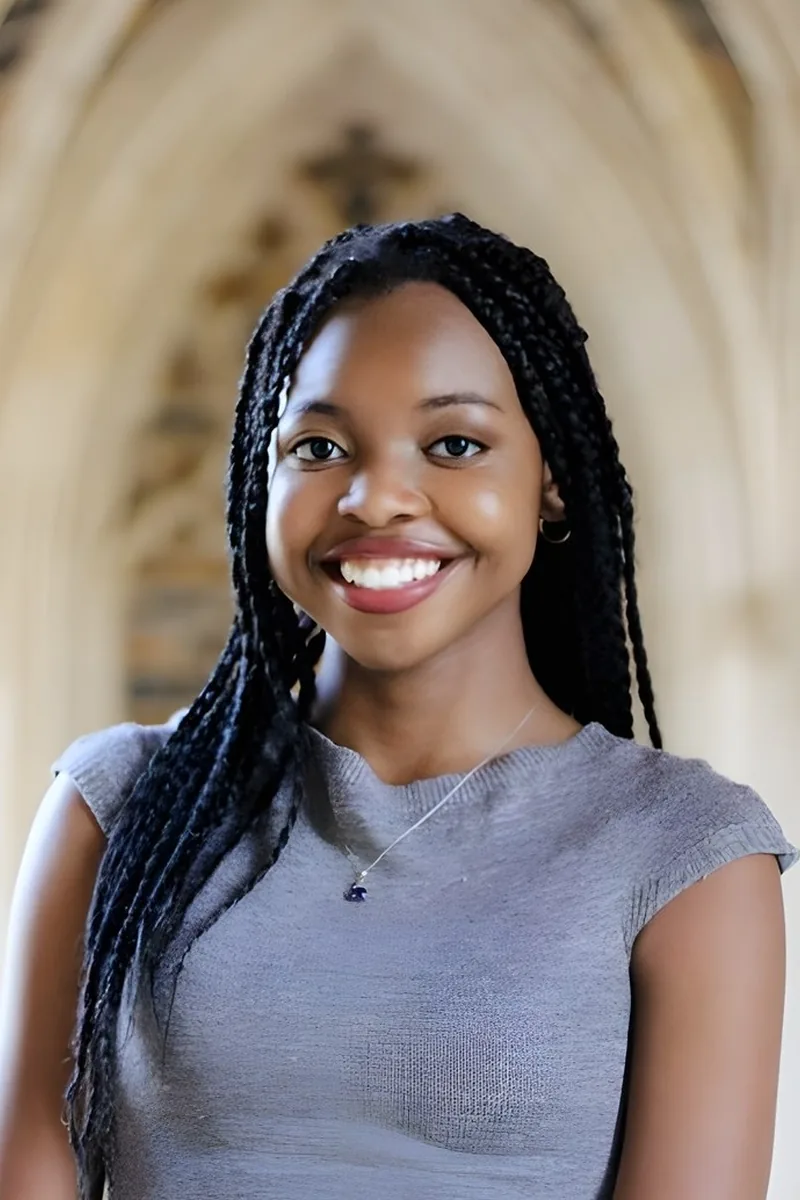
A strong algebra foundation is what made Lenique's advanced science coursework at Duke possible, and she draws on that perspective when teaching variables, linear equations, and systems of equations. She's especially effective at connecting algebraic reasoning to real-world scenarios, making abstract symbol manipulation feel purposeful rather than arbitrary.

Every equation-balancing and unit-conversion problem in chemistry is algebra in disguise, so Katheryn has spent thousands of hours applying variables, systems of equations, and algebraic manipulation in contexts that actually matter. She teaches students to translate word problems into equations step by step, building the kind of fluency that makes later math courses far less intimidating.
Solving equations is mechanical, but understanding *why* you isolate a variable or *when* to factor a quadratic is what separates students who memorize from students who actually get algebra. Rachael teaches the reasoning behind each step, using well-organized notes and real-life applications to make topics like systems of equations and inequalities stick long after the test is over.
Getting comfortable with variables is one thing; knowing what to do when an equation has two unknowns or a word problem buries the relationship in a paragraph is another. David zeroes in on translating real situations into algebraic expressions, a skill his research background reinforced constantly. He holds a 5.0 rating from students.
Factoring, graphing linear systems, working with inequalities — Kelly picks apart each algebra concept by tying it back to the concrete. She teaches students to read an equation as a story about quantities rather than a string of symbols to manipulate, which makes problem-solving feel less like guesswork. Rated 5.0 by students.
Before a student can tackle engineering-level math, algebra has to be automatic — and Saad knows exactly which skills need to be airtight. He zeroes in on the reasoning behind manipulating expressions and solving systems of equations, so students build intuition instead of just memorizing steps.
Biomedical engineering coursework throws algebra at you constantly — from solving systems of equations in circuit analysis to manipulating variables in biomechanics formulas. Janay uses that daily fluency to break down topics like factoring, inequalities, and linear modeling in ways that click. She's especially good at showing students why a technique works, not just the steps to follow.
I've helped several hundred students in a wide variety of subjects, from executive functioning to computer science to standardized testing. I also help students with general support in math and English. Most of my students are around 9-17, but I work well with students who are older and a little younger as well. I also work very well with students who have specific obstacles or requirements, such as neurodiversity support or schedules that change a lot. Most of my background is in computer science, from my college major to my experience hands-on over the past 10 years. Regardless of the subject, I believe every student's needs are unique and every student is able to achieve great things with the right preparation and support. My number one goal is to provide that whenever I can, both to the student and to their parents. I communicate with parents outside of sessions a lot to establish their expectations, better understand students, and recommend ways they can directly support their children in their journey as well.
Currently deep in a mathematics degree, Garrick teaches algebra as the language that powers every upper-level math course he's taking — from calculus to probability to finite math. That perspective lets him show students exactly why mastering something like quadratic equations or function notation matters three chapters from now, not just on Friday's quiz.
I am currently pursuing a degree in Chemical Engineering and Spanish at Virginia Tech. I have a strong academic record in my fields. I enjoy sharing knowledge and helping others overcome learning challenges. Through previous tutoring, I have developed excellent communication, organization, and problem-solving skills. I am comfortable using online learning technologies and am committed to providing engaging, supportive lessons that help students reach their full potential.
The moment variables enter the picture, many students feel like math changed the rules on them. Rachelle unpacks algebra by connecting new ideas — solving for x, graphing linear equations, factoring polynomials — back to the arithmetic reasoning students already trust. With over ten years of tutoring experience spanning elementary through college-level learners, she's adept at diagnosing whether a struggle is with the algebra itself or with a pre-algebra skill hiding underneath.
Brittney approaches algebra as a language with its own grammar — variables, expressions, and equations follow rules that make sense once you see the underlying logic. Her background in literary analysis at Princeton translates surprisingly well to teaching students how to decode word problems and translate real-world scenarios into solvable equations.
Most Algebra struggles come down to one thing: students learn procedures without understanding what the symbols represent. Ingrid unpacks expressions, factoring, and systems of equations by making each step transparent — showing, for instance, why distributing actually works rather than just drilling FOIL. Her 1540 SAT score speaks to the kind of mathematical precision she brings to every session.
Most algebra struggles trace back to one thing: students learn to mimic steps without grasping what an equation actually represents. Isabella tackles that head-on, connecting ideas like systems of equations and quadratic functions to the logical structure underneath them. Her MIT math background and experience teaching gifted middle and high school students mean she can adjust her explanations on the fly — from concrete examples to abstract reasoning — depending on what a student needs.
When a student stalls in algebra, it's usually not the mechanics — it's that they've lost the thread connecting, say, slope-intercept form to the behavior of a real system. Matt zeroes in on that conceptual link, building fluency with expressions, inequalities, and functions by tying each one back to what it actually represents.
Maya tackles algebra by connecting abstract expressions to real situations, making variables and equations feel less like arbitrary symbol-shuffling. Whether a student is stuck on systems of equations or struggling to interpret word problems, she builds each session around the specific gaps holding them back. Rated 5.0 by students.
Factoring, systems of equations, and quadratic functions all follow patterns that become obvious once someone lays them out clearly. Ellie's approach to algebra draws on the structured problem-solving she uses daily as a biomedical engineering major at Yale, where algebraic manipulation is second nature. She holds a 5.0 rating and an SAT score of 1530, and she's especially effective at showing students *why* each algebraic rule works rather than just *how* to apply it.
A lot of algebra frustration comes from word problems — translating a sentence into an equation feels like guesswork if nobody teaches the translation step explicitly. Ben zeroes in on that skill, walking through how to identify variables, set up relationships, and check whether an answer actually makes sense in context. His math background at Penn runs deep, but his algebra teaching stays grounded and practical.
The jump from solving simple equations to factoring quadratics or working with systems of equations trips up a lot of students who were doing fine before. Akarsh tackles algebra by teaching the reasoning behind each manipulation, so students can set up and solve problems they haven't seen before instead of relying on memorized steps.
The jump from solving simple equations to manipulating systems, quadratics, and rational expressions trips up a lot of students who did fine in earlier math. Emily teaches algebra by connecting each new technique — factoring, completing the square, graphing transformations — back to the reasoning students already have, so new skills build on intuition rather than rote steps.
Between a biomedical engineering degree and a PhD in statistics, Sam has spent years reducing messy real-world problems to clean algebraic expressions — isolating variables in biological models, rearranging formulas for experimental design, solving systems that describe physiological data. That habit of treating algebra as something you actually do, not just practice, comes through when he teaches topics like rational expressions and multi-step equation solving. Rated 4.9 by students.
A strong algebra foundation matters for every science and math course that follows, and Connor approaches it with that trajectory in mind. He zeroes in on the reasoning behind operations — why you isolate variables the way you do, how inequalities behave when you multiply by negatives — so that students build intuition they can carry into more advanced work.
Renee treats algebra as a language with its own grammar — variables, expressions, and equations follow rules that make sense once you see the underlying logic. Her background in linguistics and literary analysis gives her a knack for translating abstract notation into plain, intuitive explanations of topics like systems of equations and polynomial operations.
Testimonials
Because the right Algebra tutor makes all the difference.
Average Session Rating – Based on 3.4M Learner Ratings
Practice Algebra
Free practice tests, flashcards, and AI tutoring for Algebra
Nearby Algebra Tutors
Other Myrtle Beach Tutors
Related Math Tutors in Myrtle Beach
Frequently Asked Questions
Varsity Tutors matches Myrtle Beach students with expert Algebra tutors for 1-on-1 instruction. We pair each student with a tutor based on their specific needs, learning style, and goals.
Whether you need homework help, exam prep, or want to get ahead, our Algebra tutors are ready to help.
Common challenges include gaps from earlier material, difficulty with specific concepts, and trouble applying learning to new problems. These issues can snowball quickly in Algebra.
A tutor identifies where you're stuck, fills in gaps, and provides targeted practice. The 1-on-1 format means you get help exactly where you need it.
Tutors work with your student's actual coursework—homework assignments, class notes, and upcoming tests. This keeps tutoring directly relevant to what's happening in the classroom.
When you share information about your student's school and curriculum, we can match you with a tutor who has relevant experience.
All tutors complete background checks, credential verification, and teaching evaluation. Many of our Algebra tutors hold advanced degrees or have years of teaching experience.
You can review tutor profiles to find someone with the right background for your student's level and needs.
Many students see improved grades within a few weeks, along with better understanding of Algebra concepts and more confidence tackling challenging material.
Tutors track progress and adjust their approach to ensure continued improvement.
Most students benefit from 1-2 sessions per week. More frequent sessions help if your student is significantly behind or has an important exam coming up.
Your tutor can recommend a schedule based on your student's specific situation and goals.
Tutoring is purchased in packages of hours, with rates varying by tutor experience. Varsity Tutors offers several options to fit different budgets and needs.
You can discuss pricing during your consultation to find what works best.
Your tutor will assess where your student is, discuss goals, and start working on priority areas. Most students bring current homework or upcoming test material to focus on.
By the end, you'll have a clear sense of how the tutor can help and a plan for moving forward.
Let’s find your perfect tutor
Answer a few quick questions. We’ll recommend the right plan and match you with a top 5% tutor.