Award-Winning Algebra Tutors
serving Charleston, SC
Algebra
Tutors in Charleston
Private 1-on-1 tutoring, weekly live classes for academic support, test prep & enrichment, practice tests and diagnostics, and more to elevate grades and test scores.
Based on 3.4M Learner Ratings
UniversitiesSchools & Universities
DeliveredHours Delivered
ProficiencyGrowth in Proficiency
Who needs tutoring?
No obligation. Takes ~1 minute.
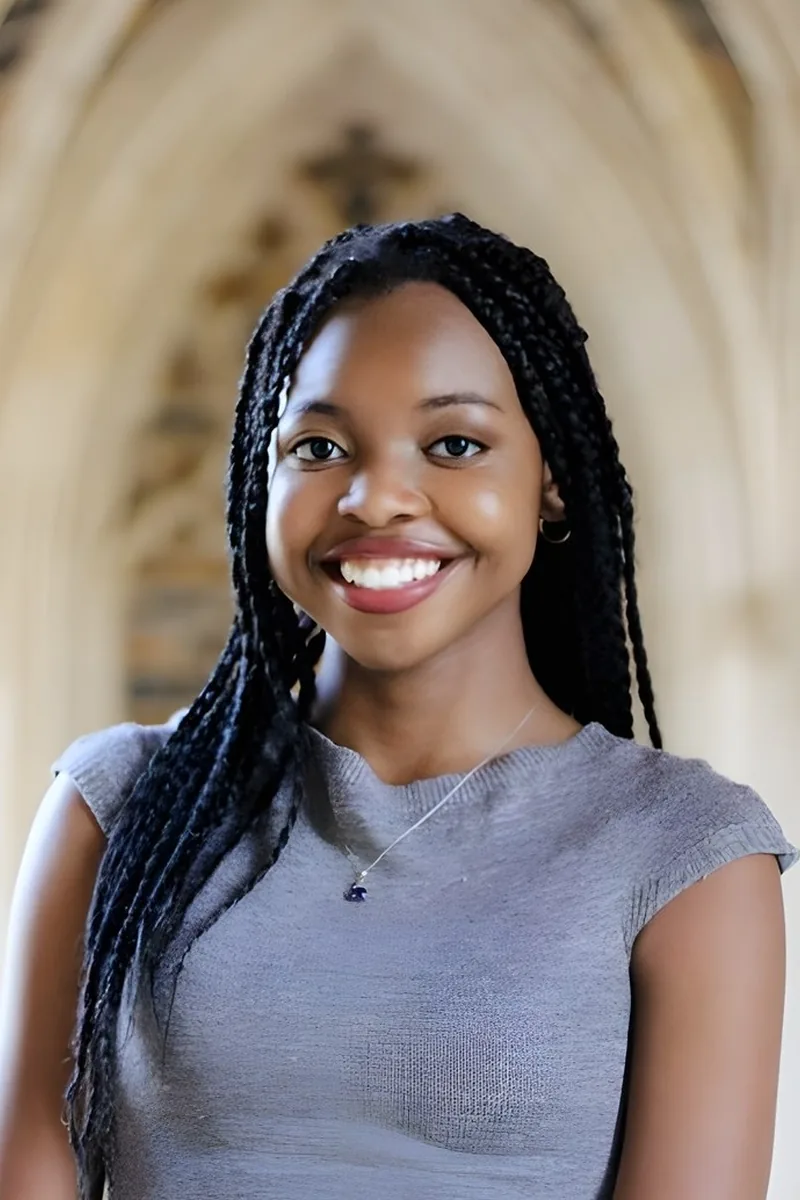
A strong algebra foundation is what made Lenique's advanced science coursework at Duke possible, and she draws on that perspective when teaching variables, linear equations, and systems of equations. She's especially effective at connecting algebraic reasoning to real-world scenarios, making abstract symbol manipulation feel purposeful rather than arbitrary.

Every equation-balancing and unit-conversion problem in chemistry is algebra in disguise, so Katheryn has spent thousands of hours applying variables, systems of equations, and algebraic manipulation in contexts that actually matter. She teaches students to translate word problems into equations step by step, building the kind of fluency that makes later math courses far less intimidating.
Getting comfortable with variables is one thing; knowing what to do when an equation has two unknowns or a word problem buries the relationship in a paragraph is another. David zeroes in on translating real situations into algebraic expressions, a skill his research background reinforced constantly. He holds a 5.0 rating from students.
Solving equations is mechanical, but understanding *why* you isolate a variable or *when* to factor a quadratic is what separates students who memorize from students who actually get algebra. Rachael teaches the reasoning behind each step, using well-organized notes and real-life applications to make topics like systems of equations and inequalities stick long after the test is over.
Factoring, graphing linear systems, working with inequalities — Kelly picks apart each algebra concept by tying it back to the concrete. She teaches students to read an equation as a story about quantities rather than a string of symbols to manipulate, which makes problem-solving feel less like guesswork. Rated 5.0 by students.
Biomedical engineering coursework throws algebra at you constantly — from solving systems of equations in circuit analysis to manipulating variables in biomechanics formulas. Janay uses that daily fluency to break down topics like factoring, inequalities, and linear modeling in ways that click. She's especially good at showing students why a technique works, not just the steps to follow.
Before a student can tackle engineering-level math, algebra has to be automatic — and Saad knows exactly which skills need to be airtight. He zeroes in on the reasoning behind manipulating expressions and solving systems of equations, so students build intuition instead of just memorizing steps.
I've helped several hundred students in a wide variety of subjects, from executive functioning to computer science to standardized testing. I also help students with general support in math and English. Most of my students are around 9-17, but I work well with students who are older and a little younger as well. I also work very well with students who have specific obstacles or requirements, such as neurodiversity support or schedules that change a lot. Most of my background is in computer science, from my college major to my experience hands-on over the past 10 years. Regardless of the subject, I believe every student's needs are unique and every student is able to achieve great things with the right preparation and support. My number one goal is to provide that whenever I can, both to the student and to their parents. I communicate with parents outside of sessions a lot to establish their expectations, better understand students, and recommend ways they can directly support their children in their journey as well.
Currently deep in a mathematics degree, Garrick teaches algebra as the language that powers every upper-level math course he's taking — from calculus to probability to finite math. That perspective lets him show students exactly why mastering something like quadratic equations or function notation matters three chapters from now, not just on Friday's quiz.
I am currently pursuing a degree in Chemical Engineering and Spanish at Virginia Tech. I have a strong academic record in my fields. I enjoy sharing knowledge and helping others overcome learning challenges. Through previous tutoring, I have developed excellent communication, organization, and problem-solving skills. I am comfortable using online learning technologies and am committed to providing engaging, supportive lessons that help students reach their full potential.
The moment variables enter the picture, many students feel like math changed the rules on them. Rachelle unpacks algebra by connecting new ideas — solving for x, graphing linear equations, factoring polynomials — back to the arithmetic reasoning students already trust. With over ten years of tutoring experience spanning elementary through college-level learners, she's adept at diagnosing whether a struggle is with the algebra itself or with a pre-algebra skill hiding underneath.
The moment algebra stops being about "solve for x" and starts involving systems, inequalities, or function notation, many students lose their footing. Sabira approaches each of these transitions by connecting new notation back to arithmetic reasoning students already trust — a habit she developed through her Applied Math studies at Johns Hopkins. She holds a 5.0 client rating.
The jump from arithmetic to algebra trips students up when variables start feeling like random letters instead of meaningful unknowns. Sherry tackles this by connecting equation-solving and graphing to real scenarios, building the kind of algebraic reasoning that carries through to higher math. Her background in linguistics gives her a knack for translating word problems into clear mathematical expressions.
Brittney approaches algebra as a language with its own grammar — variables, expressions, and equations follow rules that make sense once you see the underlying logic. Her background in literary analysis at Princeton translates surprisingly well to teaching students how to decode word problems and translate real-world scenarios into solvable equations.
Factoring, systems of equations, and quadratic functions all follow patterns that become obvious once someone lays them out clearly. Ellie's approach to algebra draws on the structured problem-solving she uses daily as a biomedical engineering major at Yale, where algebraic manipulation is second nature. She holds a 5.0 rating and an SAT score of 1530, and she's especially effective at showing students *why* each algebraic rule works rather than just *how* to apply it.
The jump from arithmetic to algebra trips up a lot of students right at the point where variables start replacing numbers — suddenly "solve for x" feels like a different language. Zosia tackles that transition by connecting each algebraic rule to concrete examples, whether it's distributing terms across parentheses or setting up equations from word problems.
Meghan approaches algebra the way she approaches a news story: break the problem into pieces, identify what you know, and solve for what you don't. She's especially effective at translating word problems into equations, a skill her journalism training made second nature. Rated 5.0 by students.
Whether it's factoring polynomials or solving systems of equations, Victoria takes a patient, methodical approach to algebra that builds real understanding of why each step works. Her background as a high school educator means she's seen the specific places students get stuck — like translating word problems into expressions — and knows how to untangle the confusion.
Henry approaches algebra the way he approached his Harvard history thesis: by building arguments step by step until the conclusion feels inevitable. Whether a student is stuck on systems of equations or struggling to see how variables behave in inequalities, he walks through the underlying logic rather than just drilling procedures.
One thing Reid noticed early in his tutoring career: students who struggle with algebra usually aren't bad at math — they just never got a clear explanation of what a variable actually represents. He tackles equations, inequalities, and systems by grounding every step in logical reasoning, so students can set up and solve problems independently instead of relying on memorized shortcuts.
Growing up with two university math professors as parents, Matthew absorbed algebraic thinking early — and learned how to explain it clearly by watching two natural teachers at work. He breaks down topics like systems of equations and polynomial manipulation by emphasizing the underlying logic, so students can approach unfamiliar problems with confidence rather than relying on memorized shortcuts.
When a student stalls in algebra, it's usually not the mechanics — it's that they've lost the thread connecting, say, slope-intercept form to the behavior of a real system. Matt zeroes in on that conceptual link, building fluency with expressions, inequalities, and functions by tying each one back to what it actually represents.
Most algebra frustration comes not from the new material itself but from shaky pre-algebra skills underneath it — and Liz, having taught middle schoolers for years, can spot those gaps fast. She zeroes in on the specific operation or concept causing the breakdown, whether it's distributing negatives, solving multi-step equations, or graphing linear functions, and rebuilds from there.
Testimonials
Because the right Algebra tutor makes all the difference.
Average Session Rating – Based on 3.4M Learner Ratings
Practice Algebra
Free practice tests, flashcards, and AI tutoring for Algebra
Nearby Algebra Tutors
Other Charleston Tutors
Related Math Tutors in Charleston
Frequently Asked Questions
Many students struggle with the shift from arithmetic to abstract thinking—understanding why we use variables and how to manipulate equations, not just follow steps. Word problems are another frequent challenge, as they require translating real-world scenarios into mathematical expressions. Multi-step equations, graphing, and seeing connections between different representations (equations, graphs, tables) are also areas where students often need support to move beyond memorization to genuine understanding.
The first session focuses on understanding where you are right now. A tutor will review your current coursework, identify specific topics that feel shaky, and discuss your learning style and goals. This helps create a personalized plan tailored to your needs—whether you're building foundational skills, preparing for a test, or working to deepen conceptual understanding beyond what's covered in class.
Showing work isn't just about getting the right answer—it's about thinking clearly and catching your own mistakes. Tutors help you develop problem-solving strategies and talk through your reasoning step-by-step, so you understand not just what to do, but why you're doing it. This builds the communication and analytical skills that teachers look for, and it makes algebra concepts stick much better than memorizing procedures.
Absolutely. Math anxiety often comes from feeling lost or rushed, but personalized 1-on-1 instruction gives you the space to ask questions without judgment and move at your own pace. When you understand the 'why' behind concepts and see patterns emerge, confidence naturally grows. Many students find that working with a tutor transforms their relationship with math from frustrating to manageable—and even enjoyable.
Yes. Varsity Tutors connects you with tutors who are familiar with different algebra approaches and textbooks used across Charleston's schools. Whether your class emphasizes traditional methods, integrated approaches, or specific standards, a tutor can align their instruction with what you're learning in class and help you bridge any gaps between how concepts are taught and how you understand them.
These skills require connecting multiple ideas at once, which is where personalized instruction shines. For graphing, a tutor helps you visualize what equations represent and practice translating between equations, graphs, and real situations. For word problems, they teach you to break down the language, identify what you know and need to find, and set up equations systematically. With guided practice and feedback, these challenging areas become much more manageable.
Many students notice a shift in understanding and confidence within a few weeks of consistent tutoring, especially when targeting specific weak spots. Bigger improvements—like moving from struggling to proficient on tests or finally grasping a concept that's been confusing—often take 4-8 weeks depending on where you're starting and how frequently you meet. The key is consistent practice and building conceptual understanding, not just drilling procedures.
Start by telling us about your algebra goals—whether you need help with a specific topic, test prep, or building overall confidence. Varsity Tutors will connect you with a tutor who has expertise in algebra and understands your learning needs. You'll have a chance to meet and make sure it's a good fit before committing, so you can start your personalized instruction with confidence.
Let’s find your perfect tutor
Answer a few quick questions. We’ll recommend the right plan and match you with a top 5% tutor.