Award-Winning AP Calculus BC Tutors
serving Greenville, SC
AP Calculus BC
Tutors in Greenville
Private 1-on-1 tutoring, weekly live classes for academic support, test prep & enrichment, practice tests and diagnostics, and more to elevate grades and test scores.
Based on 3.4M Learner Ratings
UniversitiesSchools & Universities
DeliveredHours Delivered
ProficiencyGrowth in Proficiency
Who needs tutoring?
No obligation. Takes ~1 minute.
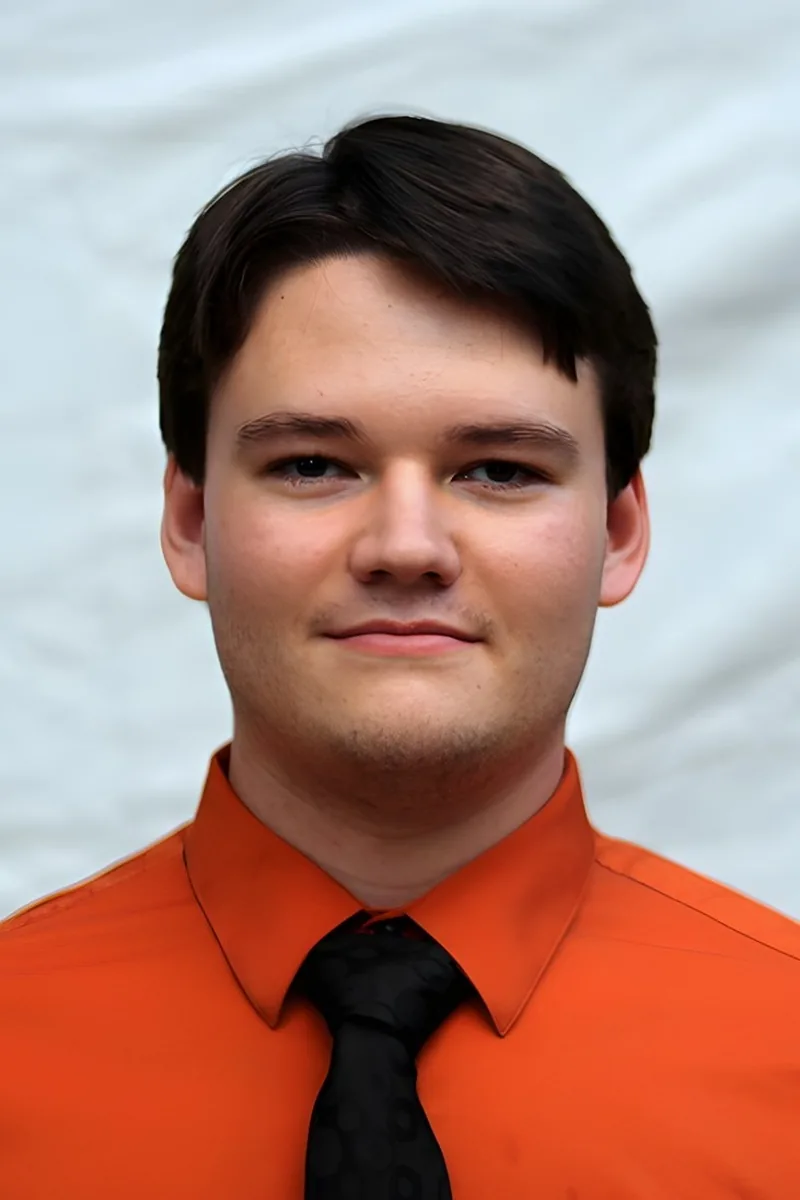
BC Calculus piles on topics like polar curves, parametric equations, and series convergence right when students are still getting comfortable with integration techniques. Garrick tackles these by building each new concept directly onto what came before, so Taylor series feel like a natural extension rather than a sudden leap. His genuine enthusiasm for calculus makes even the trickiest convergence tests more approachable.
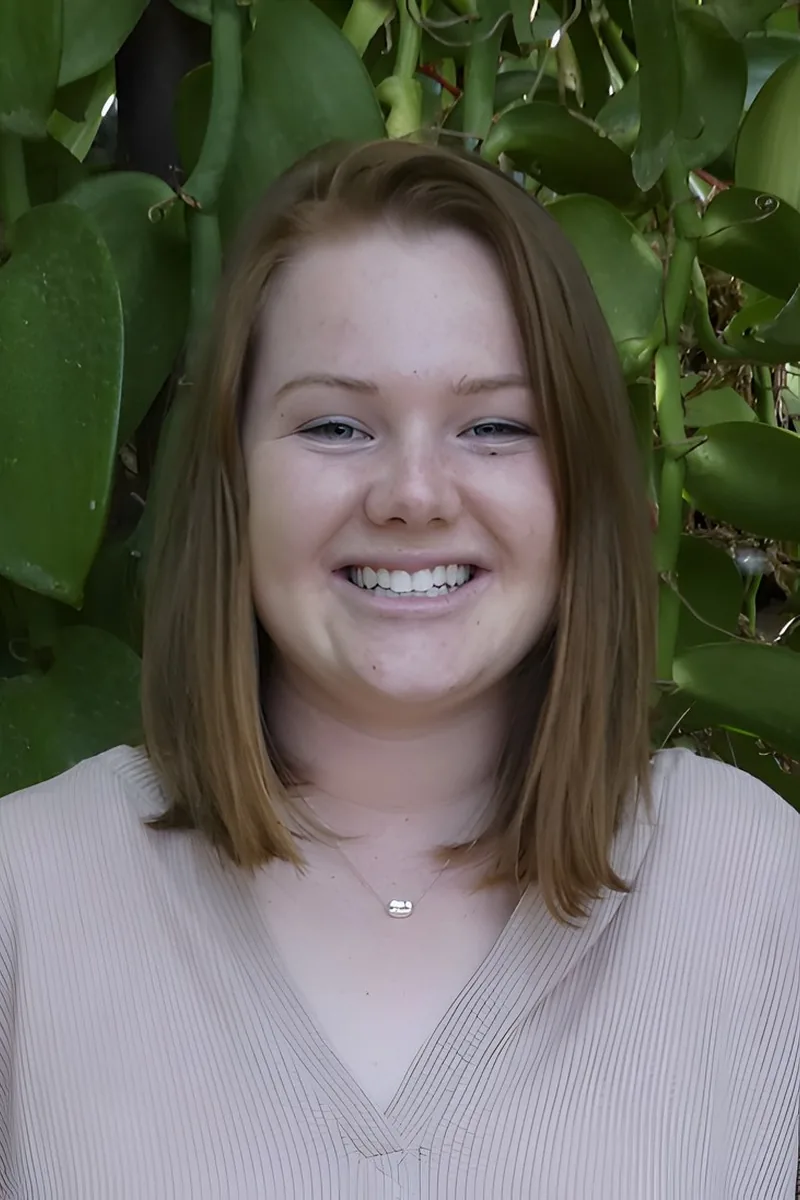
Mackenzie scored a 35 on the ACT and tutors math at every level from elementary through AP, which means she knows exactly which algebra and AB gaps trip students up once BC introduces new integration techniques and series. She walks through problems like setting up improper integrals or applying ratio tests by tracing each step back to the reasoning behind it, so students build intuition they can rely on during the exam.
Biomedical engineering at Cornell throws parametric modeling, series approximations, and heavy integration at Annie every semester — BC Calculus is essentially the prerequisite language for her entire degree. Her year as a teaching assistant for introductory biology sharpened her instinct for spotting exactly where a student's reasoning goes sideways, whether it's a shaky limit concept underneath a convergence test or a misread of how polar area integrals accumulate. Rated 4.9 by students.
Biomedical engineering at Yale means Jonathan lives in the calculus that comes after most students stop — modeling biological systems with differential equations, approximating nonlinear tissue behavior with series expansions, running convergence analysis on numerical simulations. That daily exposure makes him especially effective at teaching the logic behind the ratio and integral tests, because he's seen firsthand what happens when you pick the wrong one. Holds a 5.0 rating.
Studying both biomedical engineering and applied mathematics at Johns Hopkins, Nicholas lives in the world where BC Calculus concepts — series approximations, parametric modeling, advanced integration — are daily requirements rather than abstract exercises. He's especially good at breaking down the transition from AB to BC, showing how something like a convergence test or polar area calculation grows directly out of derivative and integral logic students already trust. His 35 ACT and 4.8 rating speak to the clarity he brings to those explanations.
Princeton's electrical engineering program leans hard on series expansions and differential equations from day one — Sabrina uses them to analyze circuits and model signal behavior in her applied physics coursework, which means BC topics like Taylor polynomials and convergence tests aren't abstract exercises for her but tools she reaches for weekly. She's especially clear at breaking down the logic behind each convergence test so students can choose the right one on their own instead of guessing. Rated 5.0 by students.
Chemical and biomolecular engineering at Johns Hopkins means Joshitha is actively using series approximations and integration techniques in thermodynamics and transport courses — so when she teaches Taylor polynomial construction or walks through convergence test logic, it comes from current, hands-on application rather than distant memory. Her 1580 SAT and 5.0 tutoring rating back up an approach that prioritizes building problem-solving intuition over drilling formulas.
BC Calculus throws students into deep water fast — Taylor and Maclaurin series, parametric equations, and convergence tests all pile up in a single semester. Rahi's applied mathematics engineering background means he can unpack these topics by connecting them to the real-world modeling problems they were designed to solve. He builds each concept from its AB foundation so students see how the BC extensions actually work.
Electrical engineering at Duke means Brooke is actively using series expansions to analyze circuits and integration techniques to model signal behavior — so when she teaches convergence tests or Taylor polynomial construction, she knows exactly which conceptual gaps trip students up because she's recently closed those gaps herself. Her 1550 SAT and 5.0 tutoring rating back up what her coursework suggests: she can break down the leap from AB to BC in precise, concrete terms that make parametric curves and polar integrals feel like logical next steps rather than foreign territory.
Series convergence tests, parametric equations, polar curves — BC Calculus piles on concepts fast, and falling behind on one unit can cascade through the rest of the course. Ethan breaks each new topic back to its AB foundation before building upward, so students see Taylor series and integration techniques as extensions of ideas they already own rather than entirely new material.
Studying applied mathematics at Stanford means Alex isn't just recalling BC topics from a past exam — he's actively using series, parametric equations, and advanced integration in his current coursework, which keeps his explanations sharp and grounded in how the math actually behaves. He's especially good at tracing a tricky convergence test or Lagrange error bound back to the core AB reasoning that makes it click. Rated 4.8 by students.
Series convergence tests, parametric equations, polar curves — BC Calculus piles on topics fast, and falling behind on even one unit can snowball. JF scored a perfect 1600 SAT and is studying mathematical and computational science at Stanford, where the calculus concepts from BC are the everyday language of coursework. That recent fluency means explanations stay intuitive rather than overly formal.
BC Calculus layers convergence tests, parametric equations, and polar curves on top of an already demanding AB foundation, and keeping all of it organized is half the battle. Tessa's approach is to unpack each new topic by tying it back to core ideas students already understand — showing, for instance, how Taylor series are really just an extension of local linearity. She's a math major at Yale with a 4.9 client rating.
Testimonials
Because the right AP Calculus BC tutor makes all the difference.
Average Session Rating – Based on 3.4M Learner Ratings
Practice AP Calculus BC
Free practice tests, flashcards, and AI tutoring for AP Calculus BC
Nearby AP Calculus BC Tutors
Other Greenville Tutors
Related Math Tutors in Greenville
Frequently Asked Questions
AP Calculus BC covers all topics from AP Calculus AB plus additional material including parametric equations, polar coordinates, and infinite series. The course focuses on limits, derivatives, integrals, differential equations, and applications of calculus. For students in Greenville, understanding this expanded scope early helps with pacing—many students find the series and parametric sections particularly challenging, so starting preparation well before the May exam is important.
Score improvement depends on your starting point and how consistently you work with a tutor. Students who identify weak areas early and practice regularly typically see meaningful gains—often moving from a 2 or 3 to a 4 or 5. The key is focusing on conceptual understanding, not just memorization, and taking multiple practice tests under timed conditions to build confidence and identify pacing issues.
Students in Greenville often struggle most with infinite series, convergence tests, and parametric/polar equations—these topics require both conceptual understanding and procedural fluency. Integration techniques and applications of integrals also trip up many students. A tutor can break these topics into manageable pieces and connect them to earlier concepts you've mastered, making them less overwhelming.
Time management is critical—the exam has a strict pace, and knowing when to move on versus when to linger on a problem is essential. Practice tests under timed conditions help you develop this instinct. Also, on the free-response section, showing your work and explaining your reasoning earns partial credit even if your final answer is wrong, so never skip steps. Tutors can help you identify which question types you should tackle first based on your strengths.
Ideally, start tutoring in the fall or winter before the May exam to give yourself time to master challenging topics like series and parametric equations. If you're already in spring, targeted tutoring on your weakest areas can still make a real difference. Many students benefit from weekly sessions during the school year and ramping up to twice weekly closer to exam day.
Look for tutors with strong calculus backgrounds and experience preparing students specifically for the AP exam—they'll know the exact format, common traps, and scoring rubrics. For students in Greenville, finding someone who understands your school's curriculum and teaching style helps too. Varsity Tutors connects you with expert tutors who can assess your current level and create a personalized plan targeting your specific weak areas.
Aim to complete at least 3-4 full-length practice tests under timed conditions in the weeks leading up to the exam. After each test, review every question you missed or found difficult—this is where real learning happens. Your tutor can help you analyze patterns in your mistakes and adjust your study strategy accordingly, rather than just taking test after test without reflection.
Your tutor will assess your current understanding of calculus concepts, identify your strongest and weakest areas, and learn about your goals—whether you're aiming for a 3, 4, or 5. They'll also ask about your school's pace and any specific topics your teacher emphasizes. From there, you'll create a personalized study plan that fits your timeline and focuses on the areas where you'll see the most improvement.
Let’s find your perfect tutor
Answer a few quick questions. We’ll recommend the right plan and match you with a top 5% tutor.