Award-Winning AP Calculus BC Tutors
serving Columbia, SC
AP Calculus BC
Tutors in Columbia
Private 1-on-1 tutoring, weekly live classes for academic support, test prep & enrichment, practice tests and diagnostics, and more to elevate grades and test scores.
Based on 3.4M Learner Ratings
UniversitiesSchools & Universities
DeliveredHours Delivered
ProficiencyGrowth in Proficiency
Who needs tutoring?
No obligation. Takes ~1 minute.
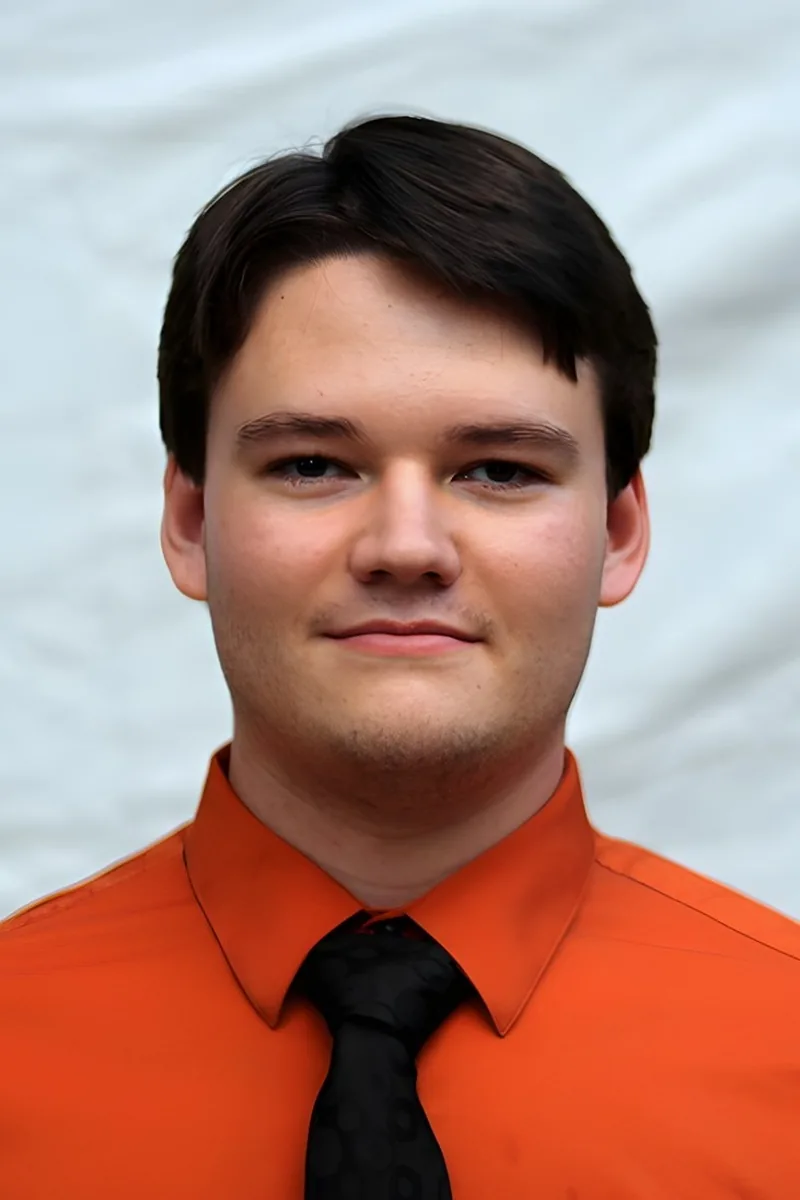
BC Calculus piles on topics like polar curves, parametric equations, and series convergence right when students are still getting comfortable with integration techniques. Garrick tackles these by building each new concept directly onto what came before, so Taylor series feel like a natural extension rather than a sudden leap. His genuine enthusiasm for calculus makes even the trickiest convergence tests more approachable.

Rachel's 35 ACT and economics coursework at WashU mean she's comfortable with the quantitative reasoning BC demands, though her real edge is in how she breaks down the transition from AB material into BC-specific territory — particularly series convergence and polynomial approximations, where students often memorize tests without understanding what they're actually checking. She approaches each new BC tool by rebuilding the calculus logic underneath it, so topics like the ratio test or integration by parts hold up under exam pressure instead of falling apart.
Physics majors don't just take BC Calculus — they breathe it, using series expansions to model wave behavior, integration techniques to solve equations of motion, and parametric equations to describe trajectories. Kiran is finishing a physics and computer science double major at Stony Brook, which means topics like Taylor polynomials and convergence aren't abstract to him; they're tools he reaches for in his own coursework daily. His 34 ACT and 4.7 rating speak to an ability to make that applied intuition accessible to students still building their BC toolkit.
Series convergence tests, parametric equations, polar curves — BC Calculus piles on topics fast, and falling behind on even one unit can snowball. JF scored a perfect 1600 SAT and is studying mathematical and computational science at Stanford, where the calculus concepts from BC are the everyday language of coursework. That recent fluency means explanations stay intuitive rather than overly formal.
BC Calculus throws students into series convergence tests, parametric equations, and polar coordinates — topics that feel disconnected unless someone ties them back to the core ideas of AB. Dylan's physics major at Vanderbilt means he uses calculus daily and can show exactly how Taylor series or integration by parts behave visually, not just symbolically. He turns abstract series into something students can sketch, interpret, and reason through on exam day.
BC Calculus layers convergence tests, parametric equations, and polar curves on top of an already demanding AB foundation, and keeping all of it organized is half the battle. Tessa's approach is to unpack each new topic by tying it back to core ideas students already understand — showing, for instance, how Taylor series are really just an extension of local linearity. She's a math major at Yale with a 4.9 client rating.
Scoring a perfect 1600 on the SAT while studying computer science at MIT suggests Brice isn't just comfortable with calculus — he's fluent in it, and BC's extension into series, parametric equations, and advanced integration techniques sits squarely in his daily coursework. He breaks down topics like convergence tests by tracing each one back to the limit reasoning students already built in AB, turning what feels like a grab bag of rules into a coherent decision-making process. Rated 4.9 by students.
Mackenzie scored a 35 on the ACT and tutors math at every level from elementary through AP, which means she knows exactly which algebra and AB gaps trip students up once BC introduces new integration techniques and series. She walks through problems like setting up improper integrals or applying ratio tests by tracing each step back to the reasoning behind it, so students build intuition they can rely on during the exam.
As a multivariable calculus teaching assistant at Harvard's Math Department, Kristi spent semesters watching exactly where students' BC foundations cracked under pressure — shaky series intuition, mechanical convergence testing, parametric reasoning that never quite solidified. Her astrophysics training means she learned these tools by necessity, using Taylor expansions to model orbital mechanics and integration techniques to analyze planetary data, so she teaches the logic driving each method rather than just the steps. Rated 5.0 by students.
Series convergence tests, parametric equations, polar curves — BC Calculus piles on concepts fast, and falling behind on one unit can cascade through the rest of the course. Ethan breaks each new topic back to its AB foundation before building upward, so students see Taylor series and integration techniques as extensions of ideas they already own rather than entirely new material.
BC Calculus piles on convergence tests, parametric equations, and polar curves right when students think they've mastered AB material. Jake tackles series and sequences by teaching students to build a decision tree for which convergence test applies, turning one of the most overwhelming units into a systematic process.
Studying both biomedical engineering and applied mathematics at Johns Hopkins, Nicholas lives in the world where BC Calculus concepts — series approximations, parametric modeling, advanced integration — are daily requirements rather than abstract exercises. He's especially good at breaking down the transition from AB to BC, showing how something like a convergence test or polar area calculation grows directly out of derivative and integral logic students already trust. His 35 ACT and 4.8 rating speak to the clarity he brings to those explanations.
Coming out of Thomas Jefferson High School for Science and Technology — one of the most rigorous STEM pipelines in the country — Rhamy had BC Calculus concepts like series convergence and parametric integration locked down before most students even encounter them. His computer engineering program at Vanderbilt keeps those tools sharp daily, since signal analysis and circuit design lean heavily on the same Taylor expansions and differential equations that define the BC curriculum. Rated 5.0 by students.
Testimonials
Because the right AP Calculus BC tutor makes all the difference.
Average Session Rating – Based on 3.4M Learner Ratings
Practice AP Calculus BC
Free practice tests, flashcards, and AI tutoring for AP Calculus BC
Nearby AP Calculus BC Tutors
Other Columbia Tutors
Related Math Tutors in Columbia
Frequently Asked Questions
AP Calculus BC covers all of AP Calculus AB content plus additional topics including parametric equations, polar coordinates, and series/sequences. The course focuses on limits, derivatives, integrals, differential equations, and applications of calculus. For students in Columbia, understanding this expanded scope compared to AB is crucial for test preparation and college credit eligibility.
Yes, AP Calculus BC includes everything from AB plus more advanced topics like series convergence and parametric differentiation, making it more challenging. The exam reflects this difficulty—BC typically has a lower pass rate than AB. Personalized 1-on-1 instruction can help you master these advanced concepts by breaking them into manageable pieces and addressing your specific weak areas.
Score improvement depends on your starting point and how much time you dedicate to practice. Students who work with tutors often see gains of 1-2 points on the 1-5 scale, particularly when focusing on consistent practice with past exam questions and targeted review of problem areas. The key is identifying which topics (like series or parametric equations) are holding you back and building mastery through deliberate practice.
The AP Calculus BC exam gives you 105 minutes for 45 multiple-choice questions and 90 minutes for 6 free-response questions. Effective pacing means spending roughly 2 minutes per multiple-choice question and allocating time based on question difficulty. Tutors can help you develop a personalized timing strategy through practice tests, teaching you to recognize which problems to tackle first and which to revisit if time permits.
Students often struggle with series convergence tests, parametric and polar calculus, and connecting multiple concepts in free-response problems. Many also find the transition from computational work to conceptual understanding challenging. Personalized tutoring helps you identify whether your struggles are with specific topics or with test-taking strategy, then builds targeted practice to address those gaps.
Most students benefit from 3-6 months of consistent preparation, starting with topic review and progressing to full-length practice tests in the final weeks. The intensity depends on your starting level—if you're already comfortable with AB material, you may need less time. Working with a tutor helps you create a realistic study schedule that covers all topics while leaving time for repeated practice with challenging areas.
Test anxiety often stems from uncertainty about your preparation or unfamiliar question formats. Taking multiple full-length practice tests under timed conditions builds confidence and reduces anxiety on test day. Tutors can also teach you calming strategies and help you develop a pre-test routine. For students in Columbia preparing for this high-stakes exam, practicing with released AP questions and getting feedback on your approach makes a significant difference in managing stress.
Look for tutors with strong calculus backgrounds, ideally with teaching experience or AP exam familiarity. They should understand both the computational and conceptual sides of calculus and be able to explain complex topics clearly. Varsity Tutors connects you with expert tutors who can assess your current level, identify gaps, and create a focused study plan tailored to your goals for the AP exam.
Let’s find your perfect tutor
Answer a few quick questions. We’ll recommend the right plan and match you with a top 5% tutor.