Award-Winning Science Tutors
serving Harrisburg, PA
Science
Tutors in Harrisburg
Private 1-on-1 tutoring, weekly live classes for academic support, test prep & enrichment, practice tests and diagnostics, and more to elevate grades and test scores.
Based on 3.4M Learner Ratings
UniversitiesSchools & Universities
DeliveredHours Delivered
ProficiencyGrowth in Proficiency
Who needs tutoring?
No obligation. Takes ~1 minute.

A neuroscience degree from the University of Scranton means Michael didn't just study one science — he lived at the intersection of biology, chemistry, and research methods for four years. He's particularly strong at walking through experimental design, data interpretation, and the kind of cause-and-effect reasoning that trips students up on lab reports and exams. His philosophy training also sharpened his ability to explain the logic behind scientific arguments.
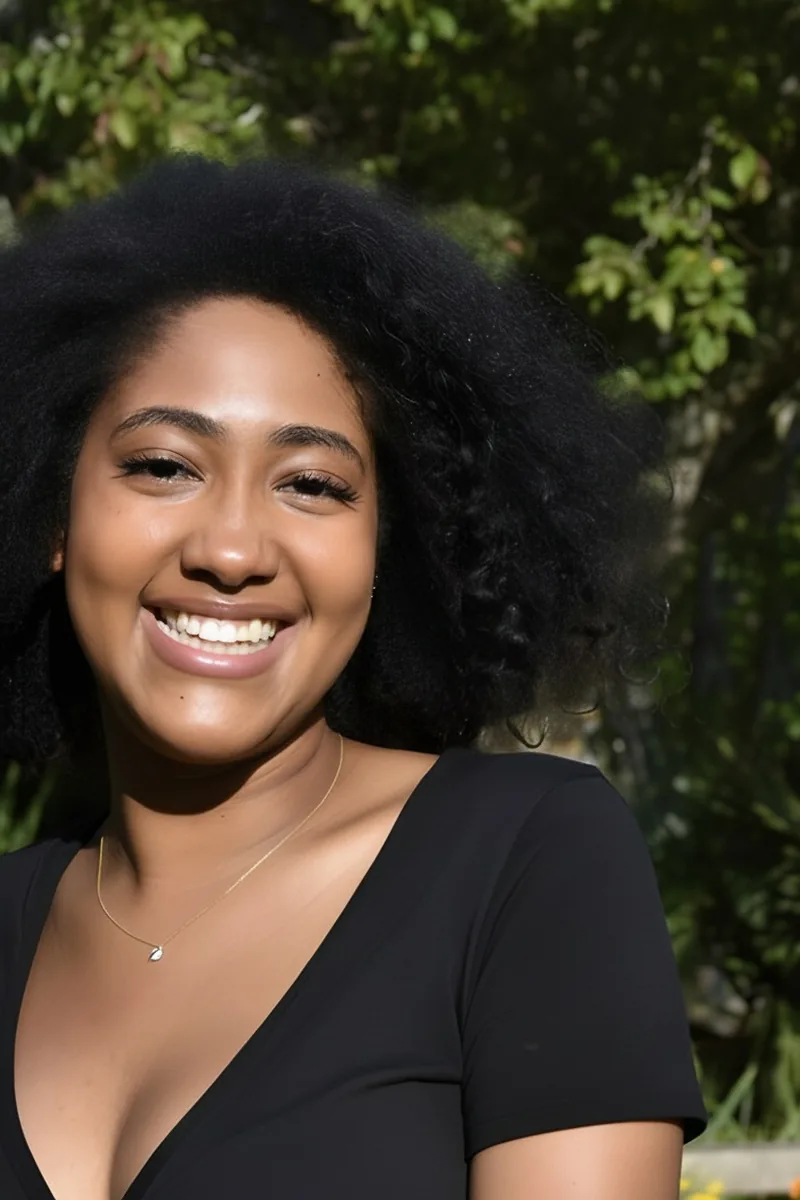
I am committed to making tutoring fun and beneficial for all my students. I graduated magna cum laude from my high school as salutatorian in 2018, with distinction from Duke University with a B.S. in neuroscience in 2022 and am an incoming graduate student at Columbia University. Although each of my academic experiences posed different challenges, one thing made me successful at each stage- my zeal for learning. In my experience as a tutor and in my future endeavors, I want to impart this excitement for learning to each of my students. In tutoring sessions, I introduce topics in fun and engaging ways while thoroughly teaching key concepts and important skills. I then give students the opportunity to personally engage with the material by exploring and problem-solving. I adapt my approaches for each students' particular learning style, strengths, and weaknesses to make them excel in their desired subjects and excited about learning.
Psychology coursework is half science coursework in disguise — Abigail's studies in research methods, experimental design, and statistical analysis mean she's already fluent in hypothesis testing and interpreting data sets. She brings that firsthand lab experience to teaching concepts like variables, controls, and drawing valid conclusions from messy results. Her 1540 SAT also confirms she can handle the quantitative reasoning science demands.
Pre-health coursework at the University of Pennsylvania means Shayan has lived the full gauntlet — biology, biochemistry, physiology, pharmacology, and anatomy — and knows how to connect those disciplines into a coherent picture. He teaches science by grounding every concept in a concrete example, whether that's explaining cellular respiration through energy metabolism or walking through organ systems one function at a time.
Ben's science tutoring draws on his IB Chemistry background and the quantitative rigor of his Penn math training, which means he's especially effective when science gets mathematical — balancing equations, interpreting rate laws, or working through stoichiometry. He teaches students to translate word-heavy science problems into clean mathematical setups they can actually solve.
A master's in environmental engineering means Kate didn't just study biology, chemistry, and physics — she used all three together to solve real problems like modeling water contamination or analyzing energy systems. That cross-disciplinary perspective makes her especially effective at showing students how scientific concepts connect rather than treating each unit as isolated material. Rated 4.9 by students.
Kevin's Philosophy, Politics, and Economics major at Penn requires him to constantly evaluate claims against evidence — the same core skill students need when forming hypotheses, interpreting lab data, and explaining why an experiment turned out the way it did. His 34 ACT confirms he can handle the quantitative and reading-heavy demands of science material, and his statistics background means he's comfortable walking students through graphing relationships and drawing conclusions from data sets.
An economics degree means Simon spent years building and testing models — controlling for variables, interpreting data sets, and figuring out whether the numbers actually support a conclusion or just look like they do. That same process underpins every science class, from setting up a controlled experiment to reading a graph and explaining what it reveals. His 1540 SAT confirms the quantitative and analytical chops to back it up.
A Yale biochemistry degree, NIH lab research, and medical school at Penn give Matthew an unusually deep bench to draw from when teaching science — whether the topic is cell biology, chemical reactions, or physics concepts like energy and motion. He connects textbook material to real experiments and clinical examples that make abstract ideas click.
A medical student at Jefferson, Nishad has spent years immersed in biology, chemistry, and anatomy — the core disciplines that make up most K-12 and introductory college science coursework. He excels at translating abstract concepts like cellular respiration or chemical bonding into concrete, visual explanations that click on the first try. Students walk away understanding the "why" behind each process, which makes exam questions far more predictable.
Studying human evolutionary biology gave Victoria a working knowledge of natural selection, genetics, anatomy, and ecological systems that most humanities-trained tutors simply don't have. She connects scientific concepts to real-world examples — like how archaeological site stratigraphy illustrates geological principles — making abstract ideas tangible for students who struggle with textbook explanations.
An MIT math major doing research in Spectral Graph Theory, Enrico brings serious quantitative muscle to science — the kind that makes unit conversions, rate calculations, and data analysis feel routine rather than intimidating. He's especially sharp at teaching students to read graphs and extract meaning from numerical relationships, since that's essentially what his daily research involves. Holds a 5.0 rating and a 36 ACT.
Certified in both biology and chemistry and currently teaching biochemistry and chemistry at a Philadelphia magnet school, Kathleen covers an unusually wide swath of science in a single week. She unpacks everything from cellular respiration and genetics to reaction stoichiometry and thermodynamics, adjusting the depth based on whether a student needs middle school foundations or college-level rigor.
A biology degree from UChicago and hands-on clinical training through Penn's nursing program give Kristin an unusually wide range in science — from cellular mechanisms and microbiology to human physiology and pharmacology. She connects abstract scientific concepts to concrete examples, making topics like enzyme kinetics or gas exchange click rather than feel like vocabulary lists to memorize.
Two years teaching algebra and geometry at a charter high school meant Wamweni was constantly translating abstract concepts into concrete, observable examples — the same skill that makes science material stick when students need to connect formulas to real phenomena like motion, energy, or chemical reactions. Her math tutorial program also built her instinct for diagnosing exactly where a student's quantitative reasoning breaks down, which is often the real barrier in science courses that require graphing, measurement, and data analysis. Rated 5.0 by students.
A biological engineering degree from Cornell and ongoing biomedical engineering graduate work mean Mary lives in the overlap of biology, chemistry, and physics daily. She's especially strong at breaking down life science topics — cell biology, genetics, body systems — and tying them to the kind of quantitative reasoning that makes science click rather than feel like a list of vocabulary words.
A physiological sciences degree from UCLA and current medical school training mean Annie lives in science daily — from cellular respiration and genetics to the physics of how body systems maintain homeostasis. She breaks down scientific reasoning into clear steps, teaching students how to read data, form hypotheses, and connect concepts across biology, chemistry, and earth science. Rated 5.0 by students.
While science isn't Katherine's core specialty, her quantitative background at Wharton and her experience tutoring younger students in STEM subjects make her a solid fit for elementary and middle school science. She's especially effective at breaking down data interpretation, unit conversions, and the math-heavy portions of science coursework.
Hannah's strongest credentials are in writing and history, not science — but her 1590 SAT required mastering evidence-based reasoning, data interpretation, and the kind of careful graph reading that science coursework leans on heavily. She's a good fit for students who understand the concepts but struggle to articulate scientific explanations clearly, since translating complex ideas into precise language is exactly what an MFA in Creative Writing trains you to do.
Penn's Biological Basis of Behavior program is genuinely interdisciplinary, covering everything from organic chemistry and cellular biology to neuroscience and physiology. Alexander uses that breadth to connect scientific concepts across disciplines — explaining, for instance, how electrochemistry in a battery relates to the ion gradients that fire neurons. That cross-pollination makes individual topics easier to remember and apply.
Scoring a 35 on the ACT means Naomi tackled the Science section's dense data tables and conflicting-viewpoints passages with precision — skills she now teaches younger students who are learning to read graphs, interpret experiments, and think scientifically. She approaches science as a reasoning discipline, walking through how to pull conclusions from evidence rather than relying on memorized facts.
Studying Materials Science & Engineering means Jennifer lived at the intersection of chemistry, physics, and applied math every day. She unpacks scientific concepts by connecting them to tangible examples — how atomic bonding determines whether a material is brittle or flexible, or why energy conservation shows up in every branch of science.
A liberal arts education forces you to learn how to learn — and Kirstie's Masters in Education means she also knows how to teach that process, which matters in science when students need to move from memorizing vocabulary to actually understanding how concepts like ecosystems, forces, or chemical changes connect. She's particularly good at turning dense textbook reading into something students can organize and retain, drawing on the same reading comprehension and study skills strategies that earned her a 5.0 rating.
Cancer immunotherapy research and a year as a teaching assistant for introductory biology at Cornell give Annie a rare combination — she understands science at the frontier and knows how to explain foundational concepts like cell structure, energy transfer, and the scientific method to students just getting started. She breaks down experiments and data interpretation the way working scientists actually think about them, connecting each topic to real-world applications.
Living in Chile for four years and teaching at a technical-professional university meant Anna regularly had to make scientific concepts accessible across a language barrier — stripping jargon down to its core meaning and building understanding from concrete examples rather than textbook definitions. Her economics training at Tufts also gave her strong quantitative skills for the measurement, graphing, and data-analysis side of science. She's a natural fit for students who need someone patient enough to explain the same concept three different ways until one clicks.
A biochemistry and biophysics degree means Zachary has spent serious time in every core science discipline — biology, chemistry, and physics — and understands how they interconnect. Whether a student is struggling with balancing chemical equations, drawing free-body diagrams, or tracing energy flow through an ecosystem, he explains the underlying logic rather than just walking through the textbook procedure.
Degrees in neuroscience and human nutrition mean Matt doesn't just teach science — he's lived inside it, from wet-lab biochemistry to clinical physiology research. He breaks down everything from cellular respiration and enzyme kinetics to organ system integration, choosing the depth and vocabulary that match each student's course level. Rated 5.0 by students.
Engineering is applied science, and Steve's dual background in mechanical and electrical engineering means he can teach physics concepts like energy conservation, wave behavior, and circuit analysis with real-world context from projects he's actually built. He breaks down scientific reasoning — forming hypotheses, interpreting data, identifying variables — using the same systematic thinking that drives his day-to-day work as a practicing engineer.
As a social studies teacher, Bradley regularly teaches students to read charts, interpret demographic data, and trace cause-and-effect through complex systems — skills that overlap heavily with what science coursework actually asks kids to do. His 33 ACT confirms he can handle the quantitative and data-interpretation demands of the subject, and his classroom experience means he knows how to slow down and re-explain when a concept isn't landing.
Molecular biology sits at the intersection of chemistry, physics, and life science, so Annabel's undergraduate training gives her a unusually broad scientific toolkit. Whether a student is struggling with cell energy pathways, Newton's laws, or how to interpret experimental data, she connects abstract concepts to concrete examples from her own lab coursework.
Having studied Latin extensively — including four levels of coursework — Alessia can help students decode the Greek and Latin roots buried in scientific terminology, turning unfamiliar words like "photosynthesis" or "endothermic" into something parseable on sight. Her political science training at Penn also required interpreting data, evaluating competing claims, and constructing evidence-based arguments, which is essentially what a good lab report demands. She holds a 5.0 rating.
Having written a section of a textbook and worked across disciplines at Penn State's Undergraduate Writing Center, Hannah knows how to make dense scientific vocabulary and concepts accessible through clear, structured language. She's particularly useful for the reading-heavy side of science — parsing textbook passages, breaking down lab instructions, and helping students articulate their observations in writing. Her secondary education certification means she understands exactly what middle and high school science courses expect students to produce.
Cognitive science at Penn means Samantha lives at the intersection of biology, psychology, and research methods — three pillars that show up constantly in middle and high school science coursework. She breaks down topics like the scientific method, experimental design, and basic neurobiology by connecting them to real studies she's encountered in her own program.
Hands-on lab work in reproductive biology gave Emma a researcher's instinct for how science actually operates — forming hypotheses, designing experiments, interpreting messy data. She brings that real-world perspective to foundational topics like the scientific method, cells, ecosystems, and basic chemistry. Students walk away understanding the reasoning behind concepts, not just the vocabulary terms on a study guide.
A PhD in English might not scream 'science tutor,' but Justin's 1530 SAT required serious command of data interpretation, evidence evaluation, and logical reasoning — the same skills students need when working through the scientific method or explaining experimental results. His decade of college-level teaching also means he knows how to walk students through dense, jargon-heavy material and help them articulate what they actually understand versus what they're just parroting back.
Studying linguistics at Yale means William spends his days doing what science classes ask students to do — collecting data, testing hypotheses about how systems work, and revising explanations when the evidence doesn't fit. That analytical habit, paired with a 35 ACT, makes him especially effective at teaching students to interpret graphs, design controlled experiments, and articulate conclusions clearly rather than just restating results.
Comparative literature might not scream science, but Winnie's training in close reading and systematic analysis — pulling apart complex texts to find underlying structures — translates well when students need to interpret data tables, parse dense textbook passages, or explain experimental results in their own words. Her Middle East Studies graduate work also involved evaluating primary sources and constructing evidence-based arguments, which mirrors the critical thinking science coursework demands.
A computer science master's student with a philosophy undergraduate degree, Keenan brings a dual toolkit to science: the formal logic and hypothesis-testing rigor of philosophy, plus the data analysis and computational modeling skills from his CS work at Penn. He teaches students to treat every science problem like a debugging exercise — isolate what you know, test one variable at a time, and trace the logic until the answer holds up. Rated 5.0 by students.
Civil engineering at Cornell means Ryan lives at the intersection of physics, chemistry, and applied math — calculating forces on structures, analyzing fluid dynamics, modeling material behavior. He unpacks scientific concepts by tying them to real systems, which gives students a mental framework that makes formulas and definitions easier to retain.
Cornell's biology and chemistry curriculum gave Viraj a deep bench across the life and physical sciences — everything from cellular respiration and stoichiometry to kinematics and wave behavior. He approaches science as interconnected rather than siloed, showing students how energy conservation in physics parallels metabolic pathways in biology. That cross-disciplinary thinking makes individual concepts click faster.
Testimonials
Because the right Science tutor makes all the difference.
Average Session Rating – Based on 3.4M Learner Ratings
Practice Science
Free practice tests, flashcards, and AI tutoring for Science
Other Harrisburg Tutors
Related Science Tutors in Harrisburg
Frequently Asked Questions
Many students struggle with connecting abstract concepts to real-world applications, especially in physics and chemistry where visualization is critical. Others find it difficult to keep up with the pace of lab work and problem-solving in classroom settings, particularly given that Harrisburg's average student-teacher ratio is 15.8:1, making it harder for teachers to address individual gaps. Personalized tutoring helps students slow down, ask questions without pressure, and build confidence in areas like experimental design, data analysis, and conceptual understanding.
Tutors work with students across Harrisburg's 11 school districts and understand the standards taught in Pennsylvania schools, including state science standards and grade-level expectations. During the first session, tutors assess where your student is in their curriculum and identify specific topics—whether it's life science, earth science, physical science, or AP-level courses—to provide targeted support. This alignment ensures tutoring reinforces what's being taught in class while filling in foundational gaps that may be holding your student back.
The first session focuses on understanding your student's current level, learning style, and specific challenges—whether they're struggling with lab reports, concept mastery, or test preparation. The tutor will ask diagnostic questions, review recent assignments or test results, and work through a sample problem to identify where support is needed most. By the end of the session, you'll have a clear picture of how personalized instruction can help your student succeed in science.
Yes. Tutors can help students understand the scientific method, design experiments, analyze data, and write lab reports—skills that are essential across all science disciplines. Personalized instruction allows tutors to walk through lab concepts step-by-step, explain why certain procedures matter, and help students interpret results with confidence. This is especially valuable for students preparing for AP Science courses or those who feel rushed during classroom lab sessions.
Many students see noticeable improvement within 4-6 weeks of consistent tutoring, particularly in understanding and test performance. The timeline depends on your student's starting point, the specific topics being addressed, and how frequently they receive tutoring. Personalized 1-on-1 instruction is highly effective because tutors can target exact problem areas rather than covering material at a classroom pace, often leading to faster gains than group settings.
Tutors support students across all major science disciplines: biology, chemistry, physics, earth science, environmental science, and life science at middle and high school levels. They also work with students preparing for AP Biology, AP Chemistry, AP Physics, and AP Environmental Science exams. Whether your student needs foundational help or advanced preparation, Varsity Tutors connects you with expert tutors who specialize in the specific science area your student needs.
In a classroom with 15+ students, teachers must move at an average pace and can't always address individual misconceptions or learning styles. Personalized tutoring allows a tutor to spend entire sessions on concepts your student finds challenging, use examples relevant to their interests, and adjust explanations until the concept clicks. This focused approach is especially powerful in science, where hands-on understanding and the ability to apply concepts to new problems are critical to success.
Look for tutors with strong subject knowledge in the specific science area your student needs—whether that's chemistry, biology, or physics—and ideally with experience teaching or tutoring that level of student. Effective science tutors can explain complex concepts clearly, help students develop problem-solving skills, and are comfortable with both conceptual understanding and quantitative problem-solving. When you connect with Varsity Tutors, you'll be matched with tutors who have been vetted for both expertise and the ability to work effectively with your student's learning style.
Let’s find your perfect tutor
Answer a few quick questions. We’ll recommend the right plan and match you with a top 5% tutor.