Award-Winning Calculus Tutors
serving Harrisburg, PA
Calculus
Tutors in Harrisburg
Private 1-on-1 tutoring, weekly live classes for academic support, test prep & enrichment, practice tests and diagnostics, and more to elevate grades and test scores.
Based on 3.4M Learner Ratings
UniversitiesSchools & Universities
DeliveredHours Delivered
ProficiencyGrowth in Proficiency
Who needs tutoring?
No obligation. Takes ~1 minute.

The jump from understanding derivatives as a formula to grasping them as instantaneous rates of change is where most Calculus students stall. Michael approaches limits, differentiation, and integration by connecting each concept to what's physically happening — a skill sharpened by applying calculus in his neuroscience coursework at the University of Scranton. He's rated 4.9 across his students.
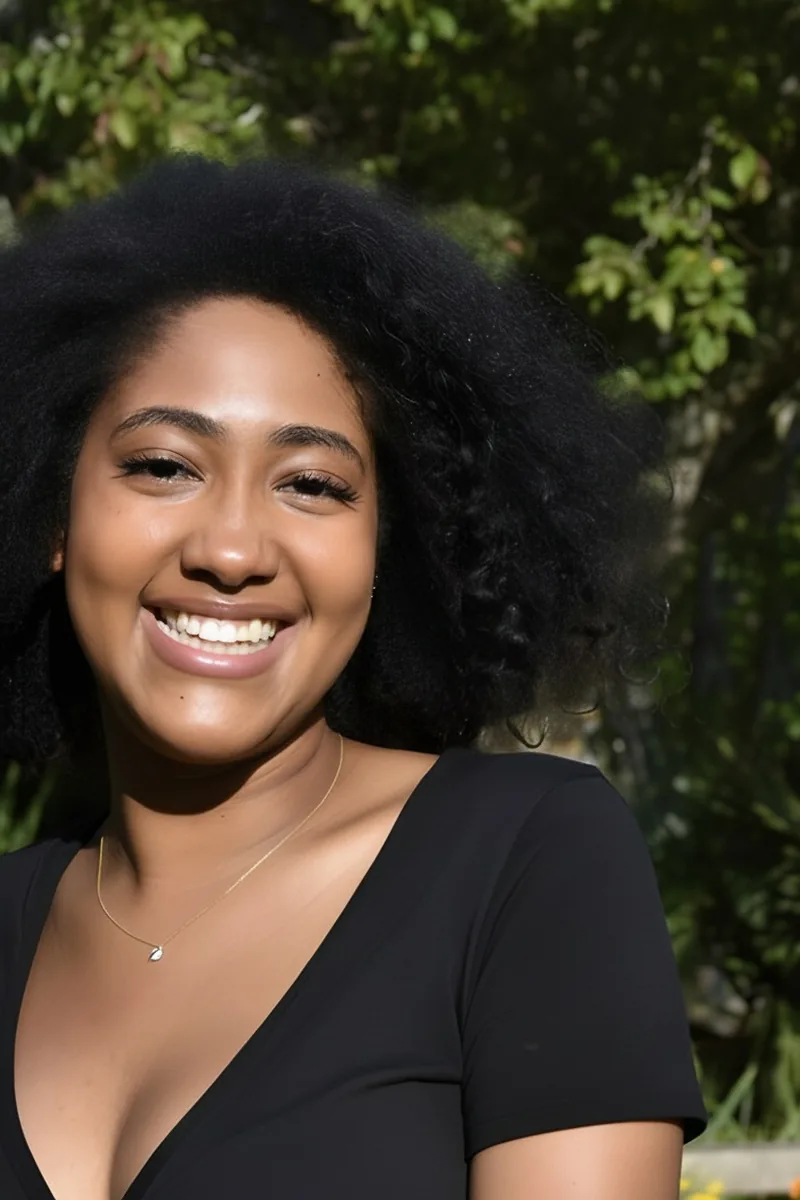
I am committed to making tutoring fun and beneficial for all my students. I graduated magna cum laude from my high school as salutatorian in 2018, with distinction from Duke University with a B.S. in neuroscience in 2022 and am an incoming graduate student at Columbia University. Although each of my academic experiences posed different challenges, one thing made me successful at each stage- my zeal for learning. In my experience as a tutor and in my future endeavors, I want to impart this excitement for learning to each of my students. In tutoring sessions, I introduce topics in fun and engaging ways while thoroughly teaching key concepts and important skills. I then give students the opportunity to personally engage with the material by exploring and problem-solving. I adapt my approaches for each students' particular learning style, strengths, and weaknesses to make them excel in their desired subjects and excited about learning.
Her academic focus is English and Psychology, not math, so Abigail is honest that calculus isn't her deepest subject — but a 1540 SAT shows she can handle rigorous quantitative reasoning. She brings a study-skills mindset to the material, teaching students how to organize problem types and decode notation systematically so early topics like limits and differentiation rules feel less like a foreign language.
Ben's math degree from Penn means he's gone well beyond the standard calculus sequence — through multivariable calculus, linear algebra, and the rigorous proofs that tie them together — so he teaches concepts like the chain rule or integration by parts with a clear sense of where they lead. That depth shows up in how he unpacks problems: connecting each technique back to the underlying logic instead of treating it as a standalone trick. Rated 5.0 by students.
Biology at the pre-health level is surprisingly calculus-heavy — enzyme kinetics, membrane transport rates, and the pharmacology models Shayan encounters in his Penn coursework all depend on derivatives and integrals behaving predictably. That daily exposure to calculus as a tool for solving real biological problems gives him a concrete vocabulary for explaining chain rules, related rates, and integration techniques without leaning on pure abstraction. Rated 5.0 by students.
Anthropology and human evolutionary studies might not scream calculus, but Victoria's coursework involved quantitative modeling of population dynamics and morphological change over time — territory where rates of change and accumulation aren't abstract concepts but tools for answering real questions. Her 1520 SAT confirms strong quantitative chops, and she brings that same analytical rigor to breaking down derivatives and integrals into steps that actually make sense.
Seven years of tutoring math through the calculus sequence means Kate has seen nearly every way a student can misunderstand the chain rule or botch a u-substitution. She digs into the specific step where confusion starts — whether that's setting up a Riemann sum or interpreting a derivative graphically — and rebuilds understanding from there.
Both of Matthew's parents are university math professors, so calculus was dinner-table conversation long before it was a college course. That upbringing gave him an intuitive way of explaining limits, derivatives, and integration techniques that connects the visual logic of a graph to the formal notation students struggle with. Rated 4.9 by students, he's especially sharp at walking through related rates and optimization problems step by step.
Economics relies heavily on derivatives and integrals — marginal cost, consumer surplus, optimization under constraints — so Simon didn't just study calculus, he applied it daily throughout his degree. He's especially sharp at explaining the logic behind limit definitions and the chain rule, the two places where most students first lose the thread. That application-heavy perspective turns calculus from symbol manipulation into something students can actually visualize.
Philosophy, Politics, and Economics at Penn isn't a math degree, but the PPE program's quantitative economics track means Kevin has worked through optimization problems, marginal analysis, and the derivative-driven reasoning that underpins microeconomic theory. His 34 ACT composite backs up that quantitative ability, and he teaches calculus concepts by connecting them to the economic models where they actually do something — finding maximum profit, minimizing cost, interpreting what a rate of change means in context.
Premed coursework at the level needed for a 1580 SAT and medical school admission means Nishad has pushed well past introductory calculus — working through the differential equations and integration techniques that underpin pharmacology dosing models and physiological rate problems. He teaches the chain rule, related rates, and optimization by connecting each concept to the quantitative reasoning that got him into Sidney Kimmel Medical College, so the math carries purpose beyond the problem set.
Engineering programs at Cornell don't let you skip the heavy calculus — Mary's biological engineering degree required working through multivariable calculus, differential equations, and integral applications in contexts like fluid dynamics and biological system modeling. That means she teaches derivatives and integrals as tools she actually used, connecting each concept to the physical problems it was built to solve. Rated 5.0 by students.
Teaching high school chemistry at a Philadelphia magnet school means Kathleen regularly uses calculus concepts in disguise — reaction rates, enthalpy curves, and the quantitative reasoning behind equilibrium all depend on derivatives and integrals. Her chemistry degree and M.S.Ed. ground her in the math that underpins the science, so she can walk through problems like related rates or area under a curve with the fluency of someone who's applied them daily. Rated 5.0 by students.
Biological sciences at the University of Chicago meant Kristin worked through calculus in the context of modeling enzyme kinetics, growth curves, and reaction rates — problems where derivatives and integrals describe real biological behavior rather than sitting as abstract exercises. Her nursing training added pharmacokinetics to that foundation, reinforcing how rates of change govern drug absorption and clearance in clinical settings. Rated 5.0 by students.
Two years teaching algebra and geometry at a charter high school — plus running the school's math tutorial program — gave Wamweni a sharp sense of exactly where students' foundations crack when they hit calculus for the first time. She zeroes in on the conceptual bridge between algebraic manipulation and calculus thinking, making sure ideas like rate of change and limit behavior are genuinely understood before moving into formal notation. Rated 5.0 by students.
Limits, derivatives, and integrals each introduce a new way of thinking, and rushing past any one of them creates problems that compound through the rest of the course. As an MIT math major doing active research, Enrico unpacks the reasoning behind each concept — why the chain rule works, what the integral truly accumulates — so that application problems and related rates feel like puzzles rather than panic. He's rated 5.0 by students.
Materials science and engineering coursework is essentially calculus in disguise — optimizing stress-strain curves, modeling heat transfer through differential equations, analyzing material behavior through integration. Jennifer draws on that daily fluency to teach topics like related rates and optimization problems with the kind of intuitive grounding that makes the math feel purposeful. Rated 5.0 by students.
Sociology at Princeton involves more quantitative analysis than most people expect — regression models, rates of demographic change, and the kind of data interpretation that shares DNA with early calculus concepts like limits and derivatives. Naomi uses that social-science lens to make the transition from algebra to calculus feel less abstract, grounding slope and rate-of-change problems in real patterns rather than pure notation. Rated 5.0 by students.
Limits, derivatives, and integrals all demand a shift in thinking from static answers to rates of change, and that conceptual leap is where most students stall. Matt's graduate work in nutrition science required applying calculus to biological models — pharmacokinetics, metabolic rates — so he explains these ideas through real applications that give the math a purpose.
Biomedical engineering at Cornell means Annie doesn't just remember calculus — she applies integration techniques, differential equations, and multivariable concepts to real problems every week. She walks students through the reasoning behind each rule so they can set up and solve problems independently, not just mimic worked examples.
From epsilon-delta definitions to integration techniques to series convergence, calculus has layers that build on each other fast. Steve has taught and applied calculus across both mechanical and electrical engineering, so he can walk through a tricky u-substitution or a differential equation setup with the fluency of someone who's used these methods in professional practice for years.
The leap from precalculus to calculus often isn't the concepts themselves — it's learning to think about rates of change and accumulation as connected ideas rather than separate formulas. Kirstie walks students through limits, derivatives, and integrals by grounding each in concrete, intuitive examples before moving to formal notation. Her teaching background means she can diagnose exactly where a student's understanding breaks down.
An economics major at Tufts, Anna built her quantitative reasoning through applied math coursework heavy on derivatives, integrals, and optimization problems. She connects calculus concepts to real-world modeling — things like marginal cost curves and rates of change — so the abstraction feels grounded in something tangible.
Hannah's academic home is firmly in the humanities — history, creative writing, and literature — so she's straightforward that calculus is not her area of depth. That said, her 1590 SAT demonstrates serious quantitative ability, and her analytical training in close reading and argumentation translates surprisingly well to walking through the logic of early calculus ideas like limits and continuity, where understanding *why* a definition works matters as much as computing the answer.
Studying the Biological Basis of Behavior at Penn means Alexander has worked through calculus in the context of modeling neural dynamics, reaction rates, and the quantitative backbone of pre-med science courses. That firsthand experience with applied derivatives and integrals — not just textbook drills — gives him a practical vocabulary for explaining concepts like the chain rule or area-under-the-curve problems. His 1510 SAT confirms the quantitative chops to back it up.
The jump from derivatives as a concept to applying integration techniques like u-substitution and integration by parts is where most calculus students start to struggle. Zachary's approach is to connect each new technique back to the graphical and physical intuition behind it, drawing on the heavy calculus demands of his biophysics coursework to show students why these tools matter beyond the textbook.
Studying physiological sciences at UCLA meant Annie used calculus constantly — modeling rates of enzyme activity, analyzing fluid dynamics in circulatory systems, interpreting area-under-the-curve for drug dosing. She brings that applied perspective to derivatives, integrals, and limit problems, making the mechanics of calc feel purposeful. Students who want to understand the 'why' behind each rule, not just memorize formulas, tend to click with her teaching style.
Katherine's Finance and Operations coursework at Wharton put her through the quantitative gauntlet — optimization problems, marginal analysis, and the derivative-heavy modeling that underpins financial decision-making. That business-school calculus background, paired with a 1590 SAT, means she can walk through differentiation rules and integral concepts with the fluency of someone who's actually used them to solve real problems.
Cognitive science at Penn isn't just philosophy and psychology — Samantha's coursework included the quantitative modeling side, where calculus describes everything from neural network learning rates to decision-making curves. That means she can teach derivatives and integrals with an intuitive sense of what the math is actually measuring, connecting slope and area-under-the-curve to real processes rather than leaving them as abstract procedures. Her 1460 SAT confirms the quantitative chops to back it up.
An English major and writing center veteran might seem like an unlikely calculus tutor, but Hannah's SAT score of 1420 and her analytical approach to breaking down complex texts translate surprisingly well to parsing the layered logic of limits and derivatives. She treats a calculus problem the way she'd treat a difficult passage — slowing down, identifying what each piece is doing, and building understanding from the structure up.
Political science at Penn isn't a math degree, but Alessia's coursework in economics and psychology required fluency with rates of change, optimization problems, and the quantitative modeling that underpins both fields. She breaks down derivatives and integrals by connecting them to the decision-making frameworks she already uses daily — how marginal costs shift, how trends accelerate or decay — which gives abstract notation a practical anchor. Rated 5.0 by students.
Pre-med biology coursework and reproductive biology lab work gave Emma hands-on experience with the calculus that underlies science — growth rate models, concentration curves, and the kind of continuous change problems that make derivatives and integrals feel necessary rather than arbitrary. Now pursuing a health sciences master's before medical school, she teaches calculus concepts by connecting them to the biological systems where they actually get used.
An English PhD and a 1530 SAT might seem like an unusual combination for calculus, but Justin's quantitative reasoning is genuine, and his doctoral training sharpened the kind of structural thinking — pulling apart how pieces of an argument build on each other — that maps directly onto understanding why the chain rule or integration by parts works the way it does. He treats a calculus problem the way he'd treat a complex text: slowing down, identifying what each component is doing, and making sure the logic holds before moving forward.
Teaching economics to high schoolers means Bradley has already walked students through marginal analysis, cost curves, and rate-of-change reasoning — the exact conceptual territory that calculus formalizes with derivatives and integrals. His 33 ACT composite confirms solid quantitative chops, and his instinct as a social studies teacher to ground abstract ideas in real-world context gives him a practical way to make early calculus concepts stick.
Molecular biology coursework means Annabel has actually used calculus — modeling reaction rates, analyzing enzyme kinetics curves, and working through the differential equations that describe how biological systems change over time. A perfect 1600 SAT underscores her quantitative chops, and she teaches derivatives and integrals by connecting them to the science problems where they naturally appear.
Biology at Cornell means Viraj has actually used calculus — modeling enzyme kinetics, population dynamics, and the rate equations that describe how biological systems change over time. That hands-on context lets him teach derivatives and integrals as tools with a purpose, connecting each rule to problems where the math describes something real. Rated 5.0 by students.
Comparative literature trains you to hold multiple frameworks in your head simultaneously and trace how one idea transforms into another — which is surprisingly close to what early calculus asks when a student tracks how a function's behavior shifts through limits and derivatives. Winnie applies that same careful, structural reading to mathematical notation, slowing down to unpack what each symbol actually communicates before moving to computation. Her strength is in making the conceptual logic visible, not drilling procedures.
Every dosage calculation in medical school is a calculus problem in disguise — Daniel's MD training meant routinely working with rates of change, accumulation functions, and the kind of applied integration that governs how drugs move through the body. He teaches derivatives and integrals by connecting them to those clinical scenarios, turning abstract notation into something students can actually picture. His 1510 SAT confirms the quantitative foundation underneath that medical fluency.
Teaching discrete math at Penn and studying computer science at the graduate level means Keenan uses calculus constantly — from analyzing algorithm efficiency to the continuous math underpinning machine learning models. His philosophy undergrad also trained him to unpack abstract reasoning step by step, which is exactly what students need when integration techniques or series convergence stop being intuitive. Rated 5.0 by students.
Economics at Penn means Eliza has actually used calculus for something — optimization problems, marginal analysis, and the derivative-heavy reasoning that underpins microeconomic theory. That gives her a practical vocabulary for explaining why you're taking a derivative or setting one equal to zero, not just how. Rated 5.0 by students.
Testimonials
Because the right Calculus tutor makes all the difference.
Average Session Rating – Based on 3.4M Learner Ratings
Other Harrisburg Tutors
Related Math Tutors in Harrisburg
Frequently Asked Questions
Many students struggle with the transition from algebra and precalculus to the conceptual thinking required in Calculus. Common pain points include understanding limits and continuity, mastering derivative and integral applications, working through multi-step word problems, and visualizing how graphs relate to their equations. Personalized 1-on-1 instruction helps students build confidence by breaking down these concepts into manageable pieces and showing how they connect to real-world applications.
Your first session is focused on understanding your current level, learning goals, and specific challenges. A tutor will review your recent coursework, identify which concepts feel shaky, and discuss your preferred learning style. From there, they'll create a personalized plan that targets your weak areas while building on your strengths—whether that's limits, derivatives, integrals, or exam preparation.
Yes. Harrisburg schools use different approaches and textbooks, and tutors are experienced working with various curricula including AP Calculus (AB and BC), IB Higher Level Math, and college-level Calculus I and II. Tutors can align their instruction with your specific course materials and teaching style, whether your class emphasizes graphical, numerical, analytical, or verbal approaches to problem-solving.
Word problems require translating real-world situations into mathematical language—a skill that takes practice. Tutors teach problem-solving strategies like identifying what's given, what you're solving for, and which Calculus concepts apply. Through guided practice, students learn to recognize patterns in optimization, related rates, and area/volume problems, building the confidence to tackle unfamiliar problems on tests.
Showing work in Calculus isn't just about getting the right answer—it demonstrates your understanding of the process and helps identify where mistakes happen. Tutors emphasize clear, organized solutions that explain each step, which is especially important for exams and college placement. This approach also helps you catch errors early and understand not just how to solve a problem, but why the method works.
Math anxiety often stems from gaps in foundational concepts or past negative experiences. Personalized instruction creates a judgment-free space where you can ask questions, work at your own pace, and build confidence gradually. Tutors celebrate small wins, connect new concepts to familiar ideas, and help you see Calculus as a logical system rather than a collection of random rules—transforming anxiety into understanding.
Absolutely. Whether you're preparing for AP Calculus AB, BC, or college Calculus placement exams, tutors create targeted study plans focused on high-yield topics, practice test strategies, and time management. They help you understand the specific format and expectations of your exam while reinforcing conceptual understanding—the foundation for strong performance on test day.
Varsity Tutors connects you with expert tutors who have strong backgrounds in Calculus and experience working with students in Harrisburg schools. You can share your specific needs—whether it's AP Calculus prep, help with derivatives and integrals, or building conceptual understanding—and we'll match you with a tutor whose expertise and teaching style fit your goals. Your first session is a great opportunity to see if the fit is right.
Let’s find your perfect tutor
Answer a few quick questions. We’ll recommend the right plan and match you with a top 5% tutor.