Award-Winning Middle School Math Tutors
serving Harrisburg, PA
Middle School Math
Tutors in Harrisburg
Private 1-on-1 tutoring, weekly live classes for academic support, test prep & enrichment, practice tests and diagnostics, and more to elevate grades and test scores.
Based on 3.4M Learner Ratings
UniversitiesSchools & Universities
DeliveredHours Delivered
ProficiencyGrowth in Proficiency
Who needs tutoring?
No obligation. Takes ~1 minute.
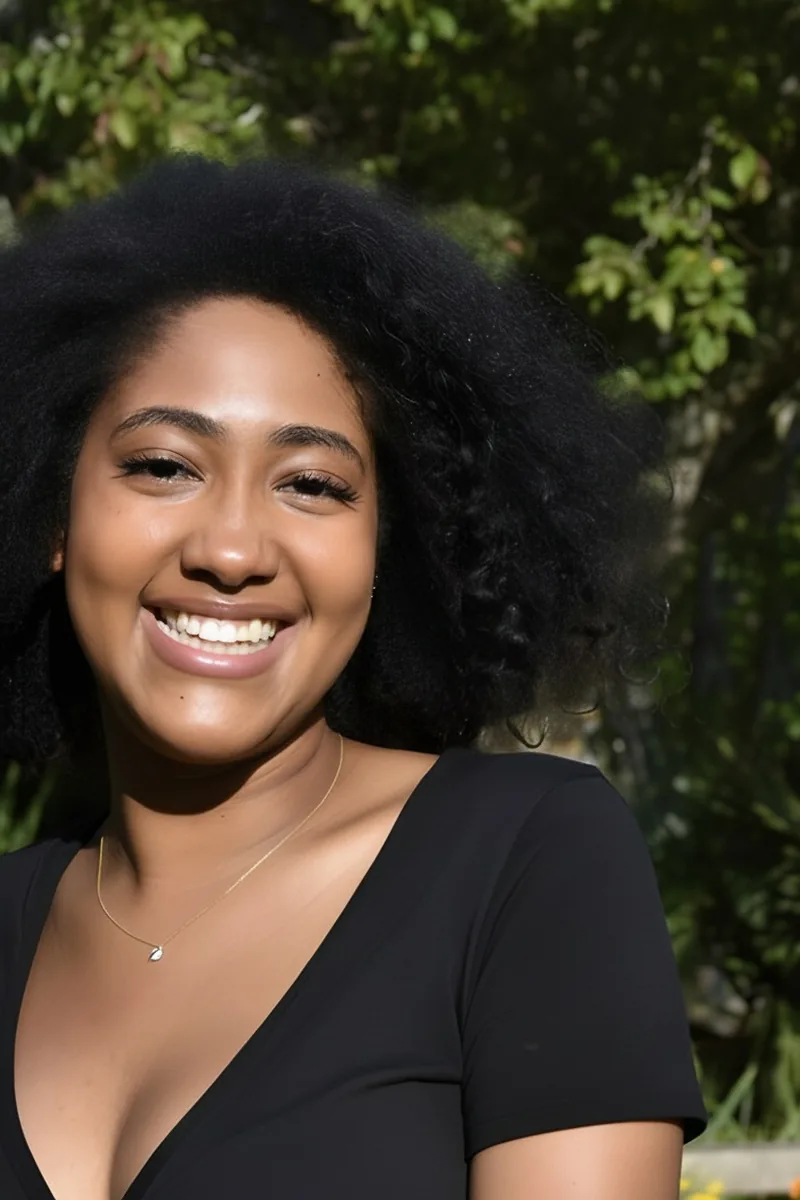
I am committed to making tutoring fun and beneficial for all my students. I graduated magna cum laude from my high school as salutatorian in 2018, with distinction from Duke University with a B.S. in neuroscience in 2022 and am an incoming graduate student at Columbia University. Although each of my academic experiences posed different challenges, one thing made me successful at each stage- my zeal for learning. In my experience as a tutor and in my future endeavors, I want to impart this excitement for learning to each of my students. In tutoring sessions, I introduce topics in fun and engaging ways while thoroughly teaching key concepts and important skills. I then give students the opportunity to personally engage with the material by exploring and problem-solving. I adapt my approaches for each students' particular learning style, strengths, and weaknesses to make them excel in their desired subjects and excited about learning.

The jump from arithmetic to proportional reasoning, integer operations, and basic equation-solving is one of the biggest conceptual leaps in all of K-12 math. Simon tackles middle school math by making sure students understand the reasoning behind each step — why dividing by a negative flips an inequality sign, or how a ratio actually describes a relationship. His 1540 SAT speaks to the kind of foundational fluency he builds at this level.
The jump from elementary to middle school math introduces ratios, proportional reasoning, and early algebraic thinking all at once, which can feel overwhelming without the right support. Mary's engineering background gives her a knack for showing students how these concepts connect — why understanding fractions deeply, for instance, makes proportions and percentages click naturally. She holds a 5.0 client rating and genuinely enjoys working at this level where curiosity about math can really take root.
Medical school demands constant mental math — dosage calculations, unit conversions, physiological ratios — so Annie treats middle school topics like fractions, decimals, and proportional reasoning as the genuine building blocks they are, not busywork to rush through. Her 1540 SAT and 5.0 student rating back up an approach rooted in making sure each concept is solid before moving on, which pays off once the pace picks up in high school.
Through the West Philadelphia Tutoring Project, Katherine has spent years working directly with middle schoolers on concepts like fractions, ratios, proportional reasoning, and introductory geometry. She's learned that most struggles at this level come from shaky number sense rather than lack of effort, so she pinpoints the exact gap and addresses it before moving forward.
Materials science and engineering coursework means Jennifer has spent years converting real physical problems — stress calculations, material properties, unit conversions — into the kind of step-by-step mathematical reasoning that middle schoolers are just starting to develop. She's particularly effective at teaching students how to organize multi-step problems involving decimals, fractions, and basic geometry so the logic stays clean as complexity increases. Her 5.0 rating and a 1550 SAT speak to how clearly she breaks things down.
A year as a teaching assistant for introductory science courses at Cornell gave Annie practice explaining foundational concepts to students encountering them for the first time. She applies that same patience to middle school math topics like fractions, ratios, proportions, and early equation-solving, building the numerical reasoning skills that make algebra feel approachable when it arrives.
Having earned a 1550 SAT and a Master's in Education, Kirstie knows both the math content and the science of how to teach it — a combination that's especially useful when middle schoolers hit the conceptual jump from basic computation to thinking with variables and negative numbers. She zeroes in on building number sense and mental math fluency, giving students tools they can carry forward rather than tricks that expire by eighth grade. Rated 5.0 by students.
Matt's neuroscience and chemistry training means he's been doing math in context for years — unit conversions, data analysis, interpreting graphs — and he brings that same practical mindset to middle school topics like order of operations, expressions, and coordinate graphing. He's especially effective at showing students how to set up a problem before solving it, a habit that prevents the careless errors that pile up once pre-algebra kicks in. Rated 5.0 by students.
Fractions, ratios, and pre-algebra concepts click faster when a student sees how they connect to each other instead of treating every chapter as a separate unit. Alessia breaks down these building blocks with structured problem-solving techniques honed by years of balancing rigorous academics at Penn with nationally-ranked athletics. Rated 5.0 by students, she brings the same discipline to a lesson on proportions that she brings to everything else.
The jump from arithmetic to middle school math trips up a lot of students, especially when proportions, coordinate graphing, and basic geometry all land at once. Annabel's approach zeroes in on the reasoning behind each problem type so students build confidence solving multi-step questions independently. Her 1600 SAT score speaks to the depth of her own mathematical fluency.
Studying linguistics at Yale means William spends his days mapping formal rule systems — syntax trees, morphological patterns, phonological constraints — which turns out to be surprisingly close to how middle school math works when students first encounter variables and expressions that follow strict structural rules. His 35 ACT and 1580 SAT confirm he's sharp with quantitative reasoning, and his 5.0 rating suggests he knows how to make that sharpness accessible to younger learners still building comfort with abstract thinking.
Studying economics at Penn means Eliza spends her days turning messy real-world questions into clean mathematical models — a process that starts with exactly the skills middle schoolers are developing when they work with ratios, percentages, and basic equations. Her 34 ACT and 5.0 student rating back up what her tutoring across math levels already shows: she's sharp at spotting where a student's arithmetic intuition needs to stretch to handle more abstract thinking, and she knows how to bridge that gap without making it feel like a leap.
Fractions, ratios, and pre-algebra concepts click faster when a student understands the "why" behind each step — and that's exactly how Viraj approaches middle school math. His biology and psychology training at Cornell gave him insight into how younger learners process quantitative reasoning, which he uses to build confidence with integers, proportions, and basic geometry. Rated 5.0 by students.
Biomedical engineering at Yale means Jonathan solves problems daily using the exact toolkit middle schoolers are assembling — ratios, unit conversions, and algebraic reasoning all show up in his coursework before lunch. He breaks down geometry and pre-algebra concepts by tying them to tangible engineering puzzles, like scaling a device prototype or calculating material volumes, so the math feels like it's going somewhere. Holds a 5.0 rating from students.
Ratios, proportions, and basic equation-solving might seem straightforward, but middle school math is where students either build real number sense or start faking it. Elias spots the difference quickly and addresses specific weak points — whether that's fraction operations, negative numbers, or translating word problems into expressions. He makes the material feel approachable without dumbing it down.
Having earned a 35 ACT and a Penn math degree, Sarah knows the full arc of where middle school concepts like ratios, integer operations, and basic equations are heading — and she teaches with that endpoint in mind so nothing feels like busywork. Her creative writing minor also means she's unusually good at breaking down word problems, translating messy everyday language into clean mathematical setups. Rated 4.9 by families.
A physics degree from Haverford means Larkin learned to treat math as a language for describing the physical world — and that perspective makes topics like ratios, graphing, and negative numbers feel grounded rather than arbitrary. He's now completing a master's in mechanical engineering at Penn, so the pre-algebraic skills middle schoolers are building are ones he still uses daily. Rated 5.0 by students.
The jump from arithmetic to middle school math catches a lot of students off guard when ratios, proportions, and early algebraic thinking enter the picture. Elliot keeps things concrete — connecting fractions to real measurements, graphing to visual patterns — so that abstract ideas land before students are asked to generalize them.
At the middle school level, math confidence matters almost as much as math skill — a student who feels defeated by fractions or negative numbers will disengage long before algebra arrives. Samuel spends time reinforcing what a student already understands before layering on new ideas like ratios, proportions, and basic equation-solving. It's a deliberate strategy: genuine pride in small wins builds the momentum that carries through high school.
Anita's engineering training at Cornell means she learned math by actually using it — modeling biological systems, solving differential equations, running data analysis — so she can show a middle schooler why mastering order of operations or solving for a variable matters beyond the worksheet. She scored a 1550 on the SAT, and that kind of fluency lets her spot exactly where a student's reasoning breaks down and reteach the concept on the fly. Rated 5.0 by students.
The jump from arithmetic to algebraic thinking trips up a lot of middle schoolers, especially when variables, negative numbers, and multi-step word problems enter the picture. Olivia breaks these concepts into concrete steps, connecting each new idea back to something the student already understands. Rated 4.9 by students and families.
The jump from fifth-grade arithmetic to middle school topics like proportional reasoning, negative numbers, and basic geometry catches a lot of students off guard. Walaa tackles each concept with concrete examples first — real measurements, real scenarios — before moving into the abstract notation that textbooks tend to rush toward.
The transition from arithmetic to algebraic thinking is one of the biggest leaps in a student's math life, and middle school is exactly when it happens. Joyce breaks down concepts like proportional reasoning, integer operations, and basic equation-solving into concrete steps, drawing on five-plus years of experience adapting her explanations to how each student thinks.
Fractions, ratios, and proportional reasoning are the concepts that either click in middle school or haunt students for years. Patrick uses concrete scenarios — splitting costs, scaling recipes, comparing rates — to make abstract operations tangible before moving to purely numerical practice.
Studying economics and statistics at Penn means Jennifer lives in spreadsheets and equations daily, but she's been tutoring math since high school — including peers and younger students in everything from fractions to pre-calculus. That range gives her a clear picture of how middle school concepts like decimal operations and basic geometry set up the algebraic thinking students will need next year. Her 1540 SAT score speaks to the fundamentals she can reinforce at every level.
The jump from arithmetic to pre-algebraic thinking — ratios, proportions, integer operations, basic equation solving — is where many students either gain or lose confidence in math. Daniel treats each concept as a puzzle to work through together, keeping sessions conversational so students feel comfortable asking the questions that actually matter.
Fractions, ratios, and proportions come up constantly in dental science — Saloni uses real measurement scenarios to make these concepts click for middle schoolers. Her five years of tutoring math at multiple levels means she knows exactly where students tend to get stuck on pre-algebra topics and how to get them moving again.
The jump from arithmetic to pre-algebra is where a lot of students quietly lose confidence — fractions become equations, and word problems start requiring multi-step reasoning. Abhinav breaks those transitions into smaller, concrete steps and builds number sense alongside procedural skills so students arrive at high school math ready, not rattled.
Every day in her middle school math classroom, Caroline sees which concepts — ratios, proportional reasoning, intro to linear equations — actually challenge students versus which ones just need a clearer explanation. That frontline teaching experience, backed by a Harvard M.Ed., gives her an unusually sharp read on what a struggling sixth or eighth grader actually needs. Rated 4.9 by students.
Confidence matters more than most people realize in middle school math — a student who freezes on fraction operations or proportional reasoning often knows more than their test scores suggest. Madhura pairs clear explanations with low-pressure practice, turning topics like ratios, percentages, and basic equation-solving into skills students trust themselves to use independently.
Growing up as the second oldest of six, Conor has been walking younger siblings through fractions, ratios, and proportional reasoning since before he started tutoring formally. He's especially good at spotting the specific step where a middle schooler's understanding breaks down — whether it's converting between decimals and percentages or setting up a word problem — and rebuilding from there.
Ratio tables, proportional reasoning, and early equation-solving are the skills that separate students who coast through high school math from those who struggle with it. Felipe connects these topics to real scenarios — unit pricing, speed calculations, scaling recipes — which makes abstract operations feel purposeful rather than arbitrary.
The jump from elementary math to middle school math often means juggling ratios, proportions, and negative numbers for the first time. Carolynne's science-oriented brain at Penn means she connects these topics to real scenarios — like using proportions in a recipe or negative numbers in temperature — so the material actually sticks.
At the middle school level, math shifts from following procedures to actually reasoning — explaining why a fraction rule works, or setting up a ratio from a word problem. Kimberly zeroes in on that transition, teaching students to think through proportions, decimals, and early geometry with the kind of logical structure that pays off for years.
Law school at Penn is essentially an exercise in structured reasoning — reading a messy situation, identifying what matters, and building a logical chain to an answer. Ashley applies that same discipline to middle school math topics like solving equations and working with ratios, breaking each problem into a clear sequence of decisions rather than a blur of steps. Rated 5.0 by students.
Fractions, ratios, and proportional reasoning trip up a lot of middle schoolers because the concepts feel abstract until someone connects them to something concrete. Aleksandar breaks these ideas down using real-world scenarios — unit rates at the grocery store, scaling in recipes — so the logic clicks before the formulas come out. Rated 5.0 by students, he brings the same structured thinking from his Penn science background to every math session.
Clinical research at UPenn means Brittaney spends her days organizing data, tracking variables, and catching errors in complex protocols — habits that translate directly into teaching middle schoolers how to set up and solve equations carefully. Her biology degree built fluency with the kind of ratio and proportional reasoning that sits at the heart of sixth- and seventh-grade math. Rated 5.0 by students.
Somewhere between fractions and functions, middle school math asks students to start thinking abstractly — proportional reasoning, negative numbers, basic statistics. Cathy approaches each of these topics by connecting them to concrete situations first, then gradually building toward the symbolic representation. Her three engineering and science degrees give her deep fluency with the math these concepts are preparing students for.
Getting ratios, proportions, and pre-algebra concepts to click early makes everything that comes later in math dramatically easier. Ronil builds that number sense by connecting each topic to tangible problems — calculating dimensions for a project, interpreting data from a chart, or reasoning through multi-step word problems. His 5.0 rating speaks to how well his encouraging, step-by-step approach lands with younger learners.
Testimonials
Because the right Middle School Math tutor makes all the difference.
Average Session Rating – Based on 3.4M Learner Ratings
Other Harrisburg Tutors
Related Math Tutors in Harrisburg
Frequently Asked Questions
Middle school math moves from learning procedures (like how to multiply) to understanding why those procedures work. Students start exploring algebraic thinking, working with variables, and solving multi-step problems that require reasoning beyond memorization. This shift can feel challenging, but personalized tutoring helps students build conceptual understanding so they see the logic behind each step rather than just following rules.
Word problems require students to translate real-world situations into mathematical language—a skill that's very different from solving equations directly. Many students struggle with identifying what information matters, deciding which operations to use, and organizing their thinking. Tutors help students develop problem-solving strategies like breaking problems into smaller parts, drawing diagrams, and checking whether their answers make sense in context.
Showing work isn't just about getting the right answer—it helps students catch their own mistakes and lets teachers understand their thinking. Tutors teach students to write out each step, label what they're doing, and explain their reasoning. This practice also builds stronger problem-solving skills because students learn to think through each stage rather than rushing to an answer.
Absolutely. Math anxiety often comes from feeling lost or embarrassed about not understanding something. Personalized 1-on-1 instruction creates a judgment-free space where students can ask questions, work at their own pace, and gradually rebuild confidence. As students experience small wins and start seeing patterns they didn't notice before, anxiety typically decreases and they become more willing to tackle challenging problems.
Yes. Harrisburg's 11 school districts may use different curricula, and tutors are experienced working across various textbooks and teaching methods. Whether your student's school uses a traditional approach, integrated math, or problem-based learning, tutors can align their instruction with what's happening in class while also filling gaps and reinforcing concepts in ways that click for your student.
The first session focuses on understanding your student's current level, learning style, and specific challenges—whether that's graphing, equations, fractions, or building confidence overall. Tutors ask questions, work through a few problems together, and identify patterns in where students get stuck. This foundation helps tutors create a personalized plan that targets exactly what your student needs.
Many students see noticeable improvement in understanding and confidence within 4-6 weeks of consistent tutoring, especially when they're working on specific skills like solving equations or graphing. However, progress depends on how frequently they meet with a tutor and how much they practice between sessions. Regular tutoring combined with practice helps students move from struggling with procedures to actually understanding the concepts behind them.
Varsity Tutors connects you with expert tutors who specialize in middle school math and know how to teach for understanding, not just answers. You'll tell us about your student's specific needs and goals, and we'll match them with a tutor whose teaching style fits how they learn best. The process is straightforward, and you can start personalized instruction quickly.
Let’s find your perfect tutor
Answer a few quick questions. We’ll recommend the right plan and match you with a top 5% tutor.