Award-Winning High School Chemistry Tutors
serving Raleigh, NC
High School Chemistry
Tutors in Raleigh
Private 1-on-1 tutoring, weekly live classes for academic support, test prep & enrichment, practice tests and diagnostics, and more to elevate grades and test scores.
Based on 3.4M Learner Ratings
UniversitiesSchools & Universities
DeliveredHours Delivered
ProficiencyGrowth in Proficiency
Who needs tutoring?
No obligation. Takes ~1 minute.
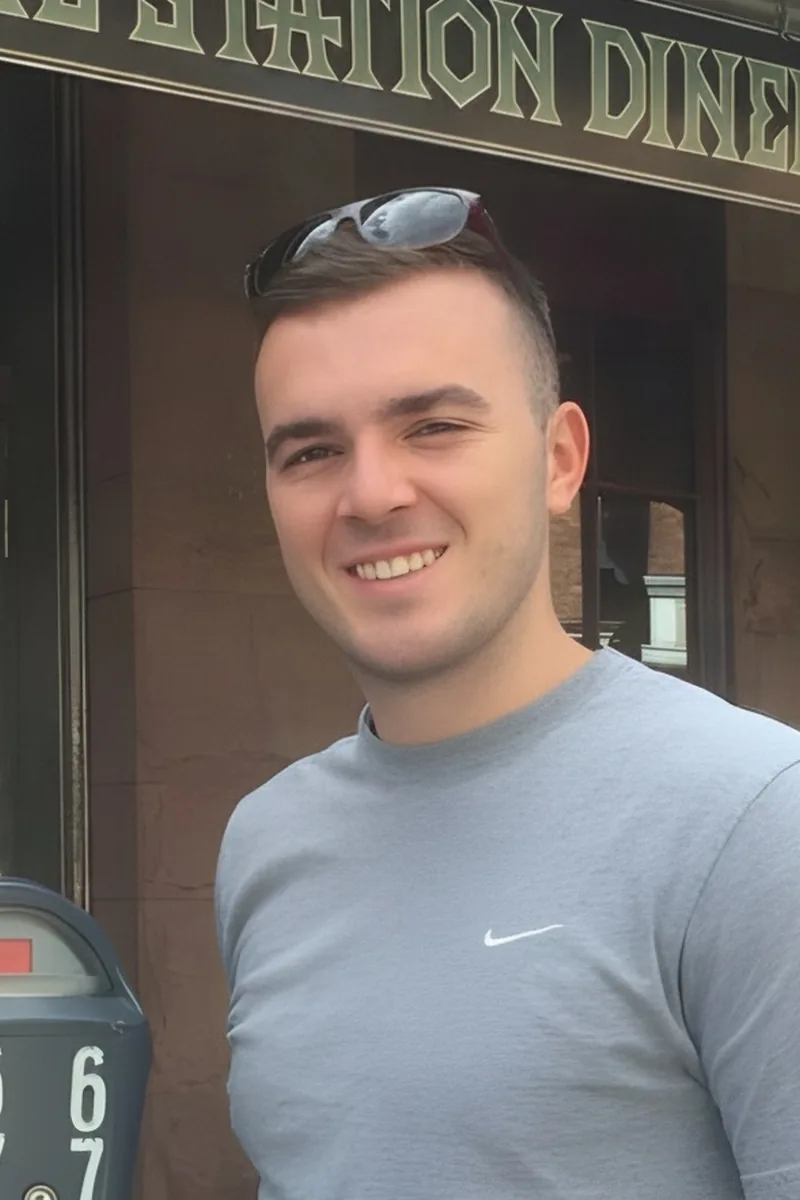
When moles, molarity, and balancing equations all show up in the same unit, High School Chemistry can go from manageable to overwhelming quickly. Hunter approaches these topics by anchoring each calculation to a physical picture — what's actually happening to the atoms — which makes dimensional analysis and reaction predictions far more intuitive. His Biochemistry training at Boston College means he's solved thousands of these problems and knows the common mistakes before they happen.

I graduated from the University of North Carolina at Chapel Hill with a Bachelor of Science in Physics. I work with students in a variety of subjects, including Math, Physics, and Chemistry. I have experience working with students on the Autism spectrum and with ADHD.
I am a chemist having majored in Organic chemistry for my BS degree and environmental chemistry for my MS degree, in my career as an analytical chemist both in Research and development in a plastics industry and analytical chemist in environmental health laboratories, I have been a lifetime student of organic chemistry and chemistry in general. My passion has always been to help student excel in chemistry, especially organic chemistry which has endless applications in the present word. I started by tutoring my own children in high school and helped my daughter graduate with a BS in chemical engineering at North Carolina State University and my son as an electrical engineer from the same college. Organic chemistry bogs down students if they are behind in some basic principles such as understanding the periodic table and why the elements are arranged in specific patterns, i.e. periods and groups. They must be very clear about the filling of electrons in various shells and orbitals. A basic understanding of this will open doors to many aspects of the bonding theory, hybridization of carbon and its tetrahedral nature and the ability of carbon to infinitely bond with itself to make long chains and many complex derivatives. Chemical reactions take place at the outermost, also referred to as the valency shell and therefore understanding the orbitals in the outer shell helps the student tell what a sigma or a Pi bond is and other characteristics of a bonded atom such as lone pair of electrons which plays important roles in reactions and ligand chemistry. My favorite hobby is soccer and football. I love music so I usually play my guitar for leisure. I spend a lot of time studying interesting topics in organic chemistry on the internet.
Three science bachelor's degrees plus a medical doctorate means Sydny has taken chemistry at every level — from introductory courses through the biochemistry and pharmacology that med school demands daily. She unpacks topics like stoichiometry and gas laws by connecting them to the biological and medical contexts where those calculations actually do something, which tends to make the abstract feel worth learning.
Mole conversions, electron configurations, balancing redox reactions — high school chemistry has a way of piling up new skills before the last ones feel solid. Tammy tackles each topic by walking through the underlying logic first, then drilling the math until it's automatic. She holds a 5.0 student rating.
I am a freshman at Vanderbilt University currently pursuing a B.S. in Biochemistry. My inquisitive nature has fostered a love for mathematics, the natural sciences, and how they interact to produce the world we experience every day. This extends to my teaching strategy, where I emphasize the importance of conceptual understanding rather than pure memorization of equations and steps. My recent experience in a wide variety of Advanced Placement courses lends me insight to recent changes in course objectives and exam formatting.
Respiratory therapy training gave Emmanuel a working knowledge of gas exchange, acid-base balance, and the chemistry of oxygen delivery systems — all concepts rooted in the same principles high school students encounter in units on gas laws, pH, and chemical reactions. He connects topics like partial pressures and solution chemistry to clinical scenarios from his time in adult critical care, which gives the material a concreteness that pure textbook explanations often lack. Holds a 5.0 rating.
As a dedicated tutor pursuing a Bachelor's in Biomedical Engineering from Duke University, I have over 5 years of experience in helping students excel in mathematics, including subjects like Algebra, Calculus, and Differential Equations. My teaching approach centers on fostering a supportive learning environment where students feel encouraged to explore concepts at their own pace. I believe that every student has the potential to succeed, and I strive to connect with each learner by tailoring my methods to their unique needs and learning styles. My passion for tutoring stems from witnessing my students' growth and confidence as they overcome challenges in math. Outside of tutoring, I enjoy being active and spending time with friends.
A first chemistry course can feel like learning a new language — element symbols, electron configurations, mole conversions — all at once. Devin simplifies it by anchoring each new concept to the periodic table's structure, showing students how trends in electronegativity or atomic radius actually predict the reactions they're studying.
Elisa's civil engineering degree required working through chemistry at the college level — particularly topics like material properties, chemical reactions, and stoichiometry — where understanding how substances interact wasn't theoretical but directly tied to structural design decisions. She uses that applied lens to walk through nomenclature, bonding, and quantitative problem-solving in ways that give the math a concrete purpose. Rated 4.8 by students.
Balancing equations and memorizing polyatomic ions only gets a student so far — high school chemistry really demands understanding *why* reactions happen, from electron configurations to intermolecular forces. Anameeka's pre-med science training at Pitt means she approaches stoichiometry and acid-base chemistry with the kind of detail that makes problem sets feel manageable rather than overwhelming.
Julia's cellular and molecular biology degree required serious chemistry coursework — stoichiometry, equilibrium, thermodynamics, and acid-base reactions are all concepts she's internalized at the college level. She breaks down problems like balancing redox equations or predicting reaction products by connecting them to the underlying atomic behavior, so the logic sticks.
Chemistry often trips students up at the transition from memorizing element names to actually balancing equations and understanding mole ratios. Madison's biology program at Guilford required a strong chemistry foundation — organic reactions, stoichiometry, acid-base equilibria — and she brings that cross-disciplinary perspective to every session. She's especially effective at turning abstract concepts into visual models students can actually work with.
Tutoring in Wake Forest's chemistry department gave Taylor a front-row seat to where students actually get stuck — and it's almost always the transition from memorizing formulas to understanding why a reaction proceeds the way it does. With a B.S. in Chemistry and a biochemistry concentration, she unpacks topics like chemical bonding and reaction mechanisms by tying them back to the underlying atomic behavior, so the logic carries forward instead of resetting every chapter.
Balancing redox reactions, predicting molecular geometry, and navigating stoichiometry all click faster when the underlying logic is clear. Cailee completed her pre-med chemistry sequence at the University of Michigan, where she learned to connect abstract concepts like electron orbitals and intermolecular forces to real chemical behavior. Rated 5.0 by students, she makes the problem-solving process feel methodical rather than overwhelming.
Balancing equations, predicting products, and navigating electron configurations are the skills that separate students who coast through high school chemistry from those who struggle. Nicole digs into the reasoning behind each rule so that solving problems feels logical rather than like guesswork. Her own science coursework keeps her sharp on exactly where students tend to get stuck.
Balancing redox reactions, predicting solubility, working through stoichiometry — high school chemistry is full of topics that seem unrelated until someone shows you the thread connecting them. Kathleen approaches the subject by grounding abstract ideas like mole ratios and electron configurations in concrete, step-by-step problem solving. Her science background stretches from biology to physics, so she naturally connects chemistry concepts to what students see in their other courses.
Chemistry demands a kind of thinking that's part math, part spatial reasoning, and part memorization — balancing equations, understanding mole conversions, and visualizing molecular geometry all at once. Lane's experience teaching across both math and science means he can address the quantitative side of chemistry without losing sight of the conceptual framework that holds it together.
Kelsey's double minor in chemistry at UNC Charlotte means she's currently immersed in the subject — not recalling it from years ago — which keeps topics like stoichiometry, nomenclature, and electron behavior sharp and immediately accessible. She also tutors chemistry through UNCC's Center for Academic Excellence, so she's practiced at pinpointing exactly where a concept like gas laws or periodic trends starts to lose students and adjusting her explanation on the spot.
Engineering students don't get to skip chemistry — Matthew's civil engineering degree from Clemson required him to work through general chemistry with a quantitative rigor that most high schoolers never see, particularly in areas like gas laws, stoichiometry, and thermochemistry where the math and the science genuinely intertwine. He leans on that engineering habit of setting up problems systematically, teaching students to track units and relationships before jumping to calculations. Holds a 5.0 rating.
A Yale psychology degree might not scream chemistry, but Bria's pre-med path means she's tackled general chemistry at a level where concepts like stoichiometry and equilibrium had to actually stick — not just long enough for a test, but well enough to build on in upper-level science courses. She zeroes in on the quantitative reasoning behind problems, teaching students to trace the logic of mole relationships and dimensional analysis rather than memorize setups. Rated 5.0 by students.
Stoichiometry clicks differently when the person explaining it is actively working through chemistry coursework right now — Amanda is a current chemistry major, so topics like mole ratios, limiting reagents, and gas law calculations are things she's using this semester, not recalling from years ago. She teaches students to trace the logic of a problem from the balanced equation forward, building the kind of step-by-step reasoning that makes unfamiliar questions feel approachable.
Studying chemistry as his actual major at Stetson — not just passing through it as a prerequisite — means Finnegan is deep in the weeds of concepts like electron orbitals, reaction equilibria, and bonding theory right now, which keeps high school topics immediate rather than rusty. He connects the dots between what students see in class and the college-level chemistry sitting just one step ahead, making ideas like periodicity and nomenclature feel like they're leading somewhere concrete.
A biology degree means spending serious time with chemistry — stoichiometry, molecular bonding, acid-base equilibria, thermodynamics. Jaela applies that cross-disciplinary knowledge to high school chemistry, connecting abstract ideas like electron configurations or mole conversions to real chemical behavior students can visualize. Her 4.8 rating speaks to how clearly she communicates these tricky topics.
Cognitive studies at Vanderbilt might not scream chemistry, but Vy's science coursework and her 35 ACT mean she's no stranger to reasoning through problems involving moles, gas laws, or balancing equations. She's especially effective at teaching students how to read what a chemistry problem is really asking — a skill she honed tutoring algebra and science in under-resourced schools where clear, patient explanation wasn't optional.
Balancing equations, mole conversions, and periodic trends are the building blocks of high school chemistry, and Camille tackles each one by teaching the underlying logic rather than handing students a formula sheet. Her pre-med background at Duke means she's fluent in the problem-solving style these courses demand. Rated 5.0 by students.
Most high school Chemistry struggles come down to one thing: the periodic table is supposed to be a cheat sheet, but nobody taught students how to read it. Sharan connects trends like electronegativity and atomic radius to actual behavior in reactions, so predicting whether a bond is ionic or covalent stops being a guessing game. She's earned a 5.0 rating tutoring science subjects alongside her premed studies at Cornell.
Working daily with CRISPR-Cas9 and other biochemical tools in a Yale research lab, Matthew sees chemistry in action — the thermodynamics of enzyme reactions, the pH sensitivity of buffer systems, the molecular interactions that make or break an experiment. That hands-on context sharpens how he teaches high school topics like equilibrium, gas laws, and nomenclature, because he can point to exactly where each concept shows up beyond the textbook.
Chemistry clicked for Christopher when he stopped treating it as memorization and started seeing it as a logic puzzle — balancing equations, predicting reaction products, and connecting periodic trends to real behavior. His engineering background at Harvard reinforces that analytical approach, especially when tackling stoichiometry and gas laws.
When mole conversions and electron configurations feel like two completely unrelated subjects crammed into one class, that's usually a sign the underlying logic hasn't clicked yet. Aidan ties high school chemistry concepts together by starting from atomic structure and building outward — showing why periodic trends predict reactivity, how bonding explains molecular shape, and where the math fits in. His premed coursework at Notre Dame covered this material in depth.
When mole conversions and electron configurations start piling up in high school chemistry, the subject can feel like pure memorization. Andrew reframes it: he walks through the logic of the periodic table so students can predict reactivity, bonding behavior, and molecular geometry from first principles instead of flashcards. Rated 4.8 by students.
Most high school chemistry students hit a wall somewhere around mole conversions or balancing redox reactions — the point where the subject stops feeling like science and starts feeling like math. Jessica approaches those sticking points by explaining the underlying logic first, then layering on the calculations. Her background in medicine keeps her grounded in why this chemistry actually matters.
Balancing equations and stoichiometry are mechanical once you see the logic, but topics like equilibrium, thermodynamics, and acid-base chemistry require real conceptual understanding. Annie tackles these through her engineering lens, connecting abstract chemical principles to tangible applications — like how reaction kinetics govern drug delivery systems she studies in her biomedical program at Cornell.
Devon's pre-med track at Vanderbilt means she's taken chemistry well beyond the high school level, and that deeper exposure sharpens how she explains topics like molecular geometry, intermolecular forces, and the logic behind predicting reaction products. She emphasizes understanding the patterns on the periodic table so students can reason through unfamiliar problems instead of treating each one as a brand-new challenge.
Stoichiometry, equilibrium, and electron configurations each demand a slightly different kind of thinking, and Emily switches between them fluidly thanks to her science-heavy coursework at Cornell. Her biology concentration means she often connects chemistry concepts to real biochemical contexts — why buffer systems matter, how thermodynamics drives reactions — which tends to make the material click faster for students who need more than rote formulas.
Stoichiometry clicks differently when someone can trace it all the way up to organic reaction yields and MCAT-level biochemistry — and Rebecca's biology degree plus her deep run through both general and organic chemistry means she's done exactly that. She teaches mole relationships and balancing equations by anchoring them in the reaction logic rather than letting students treat them as standalone math exercises. Rated 5.0 by students.
Testimonials
Because the right High School Chemistry tutor makes all the difference.
Average Session Rating – Based on 3.4M Learner Ratings
Nearby High School Chemistry Tutors
Other Raleigh Tutors
Related Science Tutors in Raleigh
Frequently Asked Questions
High school chemistry requires understanding both abstract concepts and concrete problem-solving skills. Students often struggle with balancing chemical equations, mastering unit conversions, and visualizing molecular structures and bonding at the atomic level. Many also find it challenging to connect theoretical concepts to real-world applications, which is essential for truly grasping topics like stoichiometry, thermodynamics, and equilibrium. Personalized tutoring helps students build conceptual understanding rather than relying on memorization alone.
Chemistry labs are where theory meets practice, but many students struggle to understand the "why" behind experimental procedures. Tutors can help you develop strong scientific reasoning skills, understand lab safety protocols, and interpret experimental results meaningfully. They can also help you prepare for lab reports by teaching you how to analyze data, draw conclusions, and connect your observations back to the concepts you're learning in class.
North Carolina high school chemistry typically covers atomic structure, bonding, chemical reactions, stoichiometry, acids and bases, equilibrium, thermodynamics, and organic chemistry. The curriculum emphasizes both content mastery and scientific thinking skills like the scientific method, data analysis, and experimental design. Tutors familiar with the NC chemistry standards can help you master these topics and prepare for end-of-course exams and AP Chemistry if you're taking that course.
Your first session is about understanding your specific needs and learning style. A tutor will assess which topics are most challenging for you—whether it's balancing equations, understanding molecular geometry, or connecting concepts to lab work—and learn about your goals. From there, they'll develop a personalized plan that might include working through practice problems, visualizing abstract concepts, or reviewing foundational skills that are holding you back.
Many chemistry concepts—like molecular bonding, electron orbitals, and reaction mechanisms—are inherently abstract and difficult to picture. Tutors use diagrams, models, animations, and real-world examples to make these concepts concrete and easier to understand. By connecting abstract ideas to tangible representations and applications, personalized instruction helps you build a clearer mental model of how chemistry actually works.
Improvement timelines vary depending on your starting point and how frequently you meet with a tutor. Some students see noticeable improvement in specific topics within 2-3 weeks, while building comprehensive understanding across the course typically takes longer. Consistent, focused tutoring combined with regular practice and engagement with your classroom material tends to produce the best results—many students report stronger test performance and deeper conceptual understanding within a month or two of regular sessions.
Varsity Tutors connects you with tutors who have strong backgrounds in chemistry—many hold degrees in chemistry, chemical engineering, biochemistry, or related fields, and many have teaching experience or advanced certifications. Tutors are selected for both their subject expertise and their ability to explain complex concepts clearly. When you connect with a tutor, you can review their qualifications and experience to ensure they're the right fit for your needs.
Unit conversions are tricky because they require juggling multiple concepts at once—dimensional analysis, molar mass, stoichiometry, and sometimes gas laws or solution concentrations. Many students memorize conversion factors without understanding the underlying logic, which leads to errors and confusion. A tutor can teach you the systematic approach to unit conversions, help you understand why each step matters, and give you plenty of guided practice so conversions become second nature rather than a source of anxiety.
Let’s find your perfect tutor
Answer a few quick questions. We’ll recommend the right plan and match you with a top 5% tutor.