Award-Winning Reading Tutors
serving Fayetteville, NC
Reading
Tutors in Fayetteville
Private 1-on-1 tutoring, weekly live classes for academic support, test prep & enrichment, practice tests and diagnostics, and more to elevate grades and test scores.
Based on 3.4M Learner Ratings
UniversitiesSchools & Universities
DeliveredHours Delivered
ProficiencyGrowth in Proficiency
Who needs tutoring?
No obligation. Takes ~1 minute.
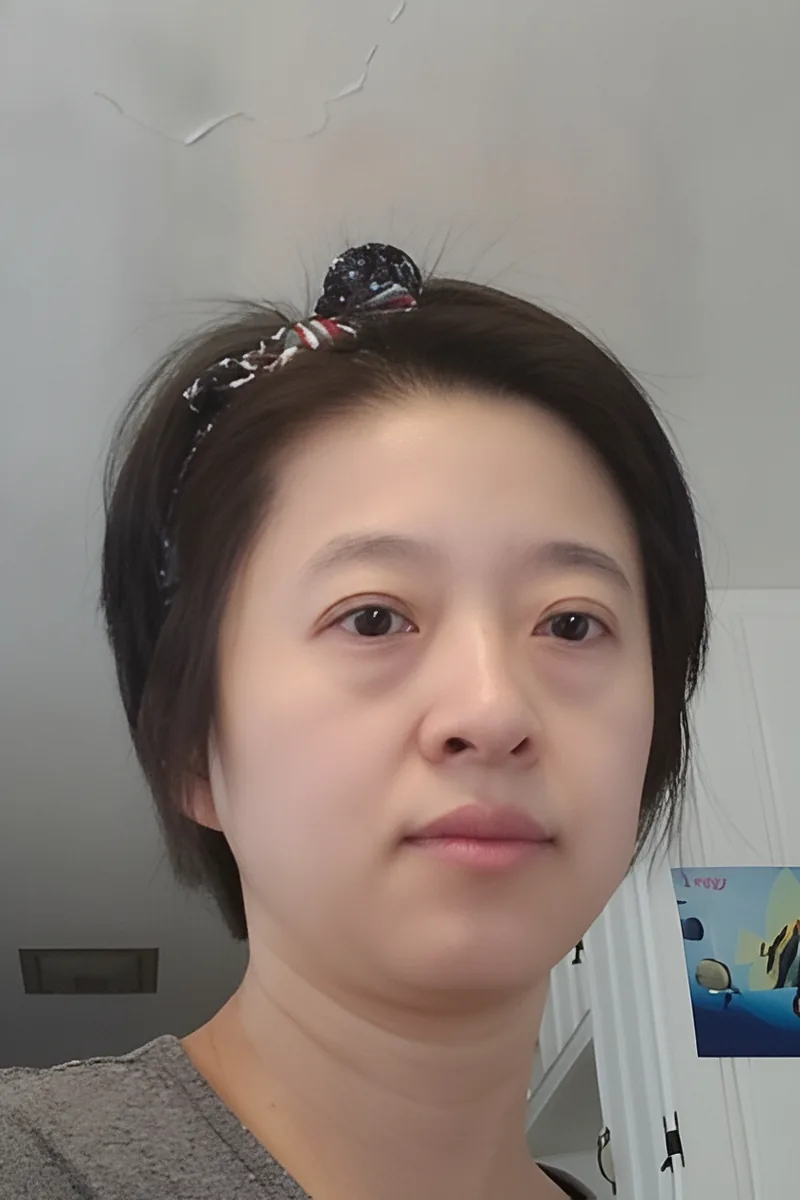
I got my undergraduate degree in political science in Nanjing University in China and psychology in Georgia Institute of Technology, master's degree in International Affairs in Georgia Institute of Technology. I have been tutoring K12 students math and language arts and GRE test preparation for 7 years. My favorite subject is the GRE test prep and Mandarin Chinese. My tutoring is based on student capabilities and tailored to their age differences. I like to read and listen to audio books, I love young children of different ages. Cooking and baking is my another hobby. Sometimes I enjoy to cook together with my children, or play video games like Minecraft with them. I love music of a large variety of genres, playing piano to relax myself. My class is usually filled with fun games with children and occasionally even their siblings join us to practice speaking Chinese, English or Russian.
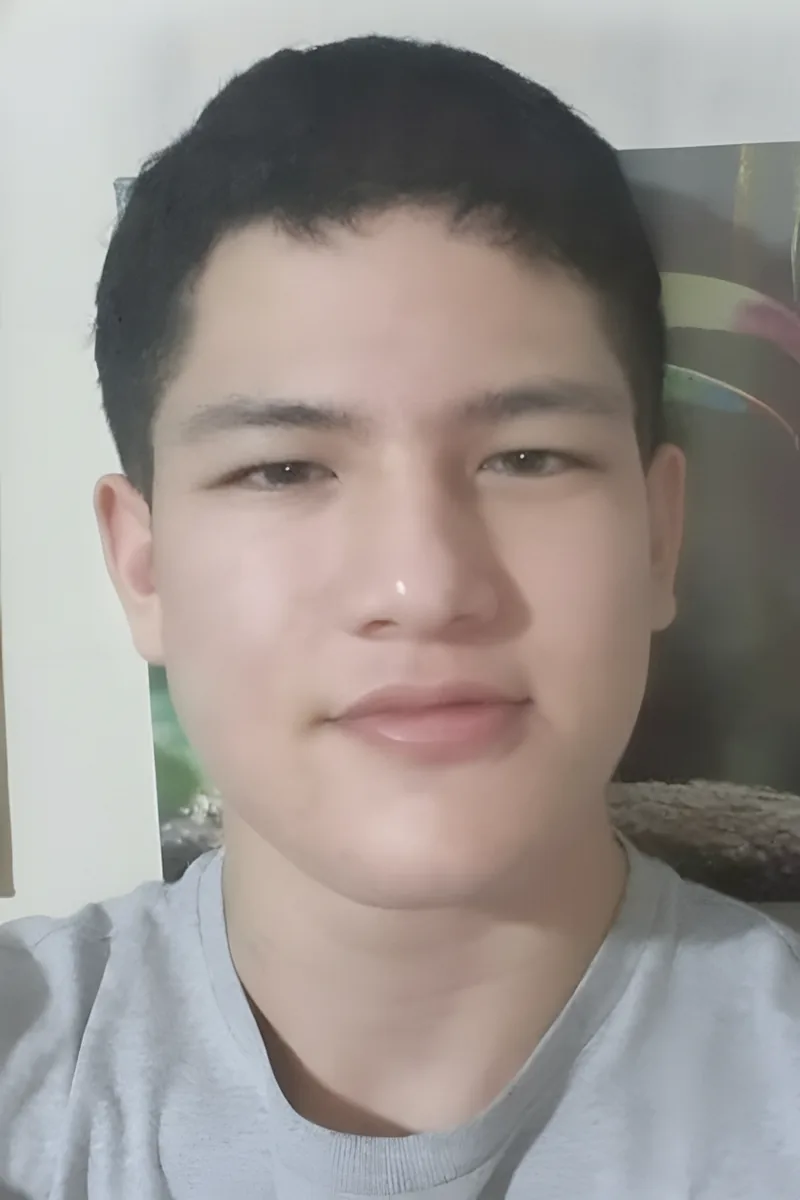
I am a graduate student at George Mason University studying Computer Science. I also graduated at Vanderbilt University, with Bachelors Degrees in Computer Science, Mathematics, and Philosophy. When a student does not understand a topic or concept, I believe the best way to teach it is to meet students where they are at, providing individually catered feedback, and exploring the aspects of a student's weaknesses, finding a way to explain the concept in a way that resonates with and makes sense to the student. I am most familiar with tutoring for the SAT, where I have generally increased scores by 120-300 points.
I am a current student at NC State University, and I am pursuing a bachelor's degree in aerospace engineering. Math has always been my strongest subject, and I love working with numbers. I hope to be able to allow students to see problems in a different light and not only be able to solve them but also understand them.
I am passionate about helping students to improve in all academic areas.
Parsing glioblastoma research papers at Duke Medical Center every day means Callie reads for precision — pulling key findings from dense methodology sections, distinguishing a study's actual conclusions from its speculative claims, and catching the one data point that changes the whole interpretation. She brings that same disciplined, detail-oriented approach to teaching comprehension skills like identifying main ideas, making inferences, and using context clues to decode unfamiliar vocabulary. Rated 4.7 by students.
Someone who reads voraciously for pleasure — and who built both a bachelor's and master's degree around close textual analysis of religious literature — brings a genuine enthusiasm to reading sessions that younger students pick up on quickly. Alex treats every passage as something worth being curious about, teaching kids to ask questions of a text rather than just push through it. Rated 5.0 by students.
A PhD in Literature from Duke means Renee has spent years inside texts that resist easy interpretation — novels where meaning hides in structure, essays where a single word choice reshapes an entire argument. She brings that deep-reading habit to students at every level, teaching them to slow down and actually track what's happening on the page rather than skimming for a surface-level answer. Rated 4.9 by students.
A Dartmouth history major learns to read dense, complicated texts and pull meaning out of them — and that's exactly the skill Jennifer teaches. She breaks down strategies like annotation, identifying author's purpose, and tracking argument structure so students can tackle everything from novels to nonfiction passages with real confidence.
Editing papers across every discipline at Sewanee's writing center meant Wallis had to become a sharp reader first — pulling apart arguments in history theses, tracing logic in science reports, and catching where a student's own ideas got lost in unclear prose. That cross-subject reading habit trained her to teach comprehension as an active skill: annotating for structure, identifying what each paragraph actually contributes, and recognizing when a writer is burying their main point. Her 1470 SAT reflects the same careful, strategic approach she brings to every text.
Strong reading comprehension isn't just decoding words — it's tracking an author's argument, making inferences from context, and distinguishing main ideas from supporting details. Lexy builds these skills by working through passages with students and modeling the internal questions a skilled reader asks while reading. Her 1570 SAT and 34 ACT scores show she's practiced exactly this kind of active, analytical reading at the highest level.
I am persuasive and capable of developing rapport and trust, as well as experienced in influencing the attitudes and ideas of others.
Volunteering in elementary classrooms before college and then tutoring local students in reading throughout four years at Duke gave Faven a clear picture of how comprehension demands shift as kids grow — from following a picture book's narrative to pulling arguments out of dense nonfiction. She zeroes in on the specific skill a student is missing, whether that's making inferences, summarizing what they just read, or figuring out unfamiliar vocabulary from context clues. Rated 5.0 by students.
A double major in Economics and Psychology at Emory meant Timothy spent four years toggling between two radically different kinds of reading — data-heavy policy papers where every chart caption matters, and dense behavioral studies where a single qualifying clause can flip the conclusion. He teaches students to recognize what kind of text they're dealing with and adjust accordingly, whether that means slowing down to trace an argument or scanning for the one paragraph that actually answers the question. Rated 5.0 by students.
Years of teaching reading to K–8 students through education equity organizations gave Rebecca a sharp sense of where comprehension breaks down — whether it's unfamiliar vocabulary, losing track of a passage's main idea, or struggling to make inferences. She builds specific strategies for active reading, like annotation techniques and summarization drills, tailored to whatever level a student is working at. Her 5.0 rating speaks to how well those strategies stick.
Growing up with two siblings who needed different learning approaches taught Arial early on that comprehension isn't one-size-fits-all — some readers need to talk through a passage out loud, others need to sketch out what's happening, and some just need someone to show them it's okay to re-read a paragraph three times. Her English degree at Duke sharpened her own close-reading skills, but it's that instinct for adapting to how each person actually processes text that she brings into sessions. She's especially strong at helping readers move from surface-level recall to pulling apart what an author means versus what they literally wrote.
Because his Duke coursework spanned history, biology, and chemistry, Rayhan learned to decode dense texts across very different disciplines. He breaks down reading strategies like annotation, identifying author's purpose, and synthesizing information from multiple sources — skills that transfer to any subject a student encounters.
I am passionate about learning and teaching others.
Building strong reading skills early means teaching a student to ask questions while they read — what's the main idea, what evidence supports it, and what's the author's purpose. Corey started tutoring as a volunteer with ESL students, which gave him practice breaking down texts for readers at every level. He adapts his approach based on whether a student struggles with vocabulary, comprehension, or staying engaged with the material.
Neuroscience textbooks are full of passages where one misread detail — a receptor type, a brain region, a study's control condition — changes everything that follows, and that's the kind of precise reading Kailee trained on throughout her undergraduate degree. She teaches students to stop skimming and start noticing: how sentences connect to each other, where an author's main claim actually lives, and what to do when a paragraph feels confusing instead of just pushing past it.
A Columbia graduate student in international affairs, Maha spends her days pulling arguments out of dense policy briefs, foreign correspondents' dispatches, and academic journals — the kind of reading where missing a single qualifier changes the entire meaning. She brings that same precision to teaching comprehension skills like identifying an author's claim, weighing supporting evidence, and recognizing when a passage shifts direction. Her 1420 SAT and 4.7 rating speak to the careful, deliberate reading habits she builds in her students.
Strong readers don't just decode words; they actively predict, question, and connect what they're reading to what came before. Brielle teaches annotation strategies and close-reading techniques that turn passive page-turning into genuine comprehension — whether the text is a standardized test passage or a chapter book. She's rated 5.0 by her students.
Traci treats reading comprehension as a teachable strategy, not an innate talent. She walks students through techniques like annotation, identifying an author's purpose, and distinguishing main ideas from supporting details — skills she's honed through years of close reading across genres from literary fiction to academic psychology texts.
Breaking down a passage into its moving parts — main idea, author's purpose, tone, supporting evidence — is something Colleen does daily in her professional editing work. She teaches students to read actively by annotating, asking questions of the text, and distinguishing between what an author states directly and what they imply.
Juggling a statistics and political science double major means Sarah reads across wildly different registers every day — dense data analyses one hour, policy briefs and persuasive arguments the next. That constant switching taught her how to adjust reading speed and strategy based on what a text is actually asking of the reader, a skill she breaks down for students tackling everything from fiction passages to informational texts.
Working with kids from first grade through college — including extensive one-on-one mentoring with special needs students — taught Brianna that reading breakdowns look completely different at every level, from basic decoding struggles to losing track of meaning in longer passages. Her math-teacher instinct for structured, step-by-step problem solving carries over surprisingly well: she treats comprehension like a process students can learn to follow, not a talent they either have or don't. Rated 4.9 by students.
I am a recent magna cum laude graduate of Duke University and a full-time educator in North Carolina. I have a passion for helping young people figure things out and have experience writing professionally.
I am a graduate of the University of California, Berkeley and Duke University. I received my Bachelor's degree in History and my Master's degree in Religious Studies. Since graduation I have tutored students in American History and Biblical Hebrew, which were exceedingly rewarding experiences. I am especially passionate in helping students learn to think critically, and enjoy the process of learning. While I tutor a variety of subjects, I am most enthusiastic about tutoring in History and Writing because these subjects utilize skills that students will use and cultivate throughout their lives and are applicable for many careers. I would describe my teaching philosophy as hands on and project-based learning. I strive to include fun and relevant videos, songs, and activities into my curriculum to ensure the engagement of my students. Outside of academia I like painting, baking, hiking, photography, and having game nights with friends.
I am an avid rower and bicyclist. I also greatly enjoy growing vegetables and playing basketball.
I am a rising senior at Duke University. I major in Computer Science and am also getting a minor in Physics. I have had experience tutoring/teaching as a teaching assistant for three classes: Intro to Databases, Electricity and Magnetism (for engineers), and Computer Network Architecture. I have had industry experience in software development as an intern for IBM and a cybersecurity analyst for TIAA. Outside of school/work, I play the piano and train with the Duke Taekwondo Club. I have a strong background in computer science, physics, and math, but I love learning about and helping students with a wide variety of subjects!
I am a rising sophomore at Harvard College and I am studying social studies with a focus on Near Eastern Languages and Civilizations. I have lived my whole life until college in the incredible countries of Rwanda and Kenya (with one year in Egypt). Since education wasn't easily accessible to me through elementary school, very early on I had to learn how to love learning and teach myself. Even after many years of more formal education I haven't lost that spark and that ownership of my education yet! I love tutoring because it allows me to bring people into that same kind of ownership of their knowledge. I love tutoring all sorts of different subjects, but I have the most experience (and maybe the most love) for tutoring in calculus, French, Arabic, English as a second language, and test prep!
I am a Marshall Scholar and will begin graduate studies at the University of Cambridge in the fall.
I'm graduating from medical school at Duke University this summer and finally have quite a bit of flexible time to tutor, something I really enjoyed doing all throughout college.
I am a recent graduate of Duke University, where I obtained a Bachelor of Science in Mathematics in 2014. I am primarily a math tutor but I also enjoy teaching chemistry and physics. Math was always my favorite subject in high school and I continued my love of math at Duke. I have also been a middle school and high school tutor throughout my time at Duke through the Program in Education. One of my crowning achievements at Duke was winning the DT Stallings Award, which is awarded to a Duke senior who has shown sustained and dedicated service to tutoring local school children. When I am tutoring a student, I prefer a very hands-on approach. I love working out problems with my students after working through an example problem completely. By working problems out with my students, I am able to help them if and when they get stuck. I hope to convey to every student the ability to think logically and persevere when things seem difficult.
I am a rising junior at Duke University. I hail from Cleveland, Ohio (Go Cavs!), and I'm currently studying medical sociology, with the intent of going to medical school.
I am willing to help a student reach higher grades, but more important to me than the grade is that the student is actually getting something out of what we are doing, and truly learning, not just retaining information, but engaging with the material and enjoying what they are learning. I firmly believe that hard work pays off, and with the right encouragement and help, a student can achieve anything they set their mind to. You're never to old to learn something new, and the doorways opened by education are endless.
I am currently a graduate student at Texas State University, pursuing a specialist degree in School Psychology. A major deciding factor in my career choice was the field's emphasis on helping all students do their best at school and at home, which directly applies to my approach to tutoring. I love to learn and I love helping others feel successful in their classes. I have been informally tutoring peers and my younger siblings from a young age, and continue to do so today.
I am open to helping any student of any age with nearly any subject (math, reading, writing, biology, chemistry, economics, civics, Spanish etc). I'm also happy to help with test prep (hello SAT and ACT takers), as well as college application assistance. I'm a strong believer in a patient, non-judgmental, non-intimidating approach to tutoring, and I really try to prioritize the comfort of my students. As someone who has used tutoring myself in some of my harder classes in college, I understand that not everything comes easily to everyone, so I want all of my students to feel comfortable asking any and all questions they might have, or going over a topic as many times as needed to understand it. I'm all about friendly, humble service!
I am comfortable with either setting. I'm confident that I can help you (or your student) achieve to the best of their ability, so please don't hesitate to get in touch!
I am a senior at Virginia Commonwealth University. I am working towards a BFA in Dance and Choreography with minors in Political Science and Psychology. I have served as a TA for a freshman honors writing course at VCU since Fall 2018. I have also assisted and taught children's dance classes. I enjoy babysitting and helping my younger sister with her homework. While I tutor a broad range of subjects, I am most passionate about Math, Science, and Psychology. I am also happy to help students prepare for Standardized Tests, particularly with the math portions of the exams. I have always felt respect and admiration towards my teachers in both smaller and more grand situations who have shaped me into the lifelong learner that I am. As a tutor, my goal is to make good on this foundation and show students the same courtesy my teachers have shown me.
I am currently in my fourth year of medical school at the University of Tennessee Health Science Center. Learning science is my passion, but I also enjoy running, trying new food, and reading classic books. I would love to be part of your journey by helping you love mastering the task at hand. No doubt, you will see your best results once you have learned to enjoy the grind of becoming an expert of the material placed before you. Together, we can learn to enjoy the process as well as enjoy the results you will achieve. Whether you are working through upper-level science courses to complete a pre-med degree, taking the MCAT before applying to medical school, or studying for the USMLE Step 1 or 2 exams to get into the residency of your dreams, I can help you achieve your goal. With whatever content we are mastering together, we will work to be as organized and planned as possible. "Those who fail to plan, plan to fail!"
Testimonials
Because the right Reading tutor makes all the difference.
Average Session Rating – Based on 3.4M Learner Ratings
Other Fayetteville Tutors
Related English Tutors in Fayetteville
Frequently Asked Questions
Varsity Tutors matches Fayetteville students with expert Reading tutors for 1-on-1 instruction. We pair each student with a tutor based on their specific needs, learning style, and goals.
Whether you need homework help, exam prep, or want to get ahead, our Reading tutors are ready to help.
Common challenges include gaps from earlier material, difficulty with specific concepts, and trouble applying learning to new problems. These issues can snowball quickly in Reading.
A tutor identifies where you're stuck, fills in gaps, and provides targeted practice. The 1-on-1 format means you get help exactly where you need it.
Tutors work with your student's actual coursework—homework assignments, class notes, and upcoming tests. This keeps tutoring directly relevant to what's happening in the classroom.
When you share information about your student's school and curriculum, we can match you with a tutor who has relevant experience.
All tutors complete background checks, credential verification, and teaching evaluation. Many of our Reading tutors hold advanced degrees or have years of teaching experience.
You can review tutor profiles to find someone with the right background for your student's level and needs.
Many students see improved grades within a few weeks, along with better understanding of Reading concepts and more confidence tackling challenging material.
Tutors track progress and adjust their approach to ensure continued improvement.
Most students benefit from 1-2 sessions per week. More frequent sessions help if your student is significantly behind or has an important exam coming up.
Your tutor can recommend a schedule based on your student's specific situation and goals.
Tutoring is purchased in packages of hours, with rates varying by tutor experience. Varsity Tutors offers several options to fit different budgets and needs.
You can discuss pricing during your consultation to find what works best.
Your tutor will assess where your student is, discuss goals, and start working on priority areas. Most students bring current homework or upcoming test material to focus on.
By the end, you'll have a clear sense of how the tutor can help and a plan for moving forward.
Let’s find your perfect tutor
Answer a few quick questions. We’ll recommend the right plan and match you with a top 5% tutor.