Award-Winning Science Tutors
serving Durham, NC
Science
Tutors in Durham
Private 1-on-1 tutoring, weekly live classes for academic support, test prep & enrichment, practice tests and diagnostics, and more to elevate grades and test scores.
Based on 3.4M Learner Ratings
UniversitiesSchools & Universities
DeliveredHours Delivered
ProficiencyGrowth in Proficiency
Who needs tutoring?
No obligation. Takes ~1 minute.
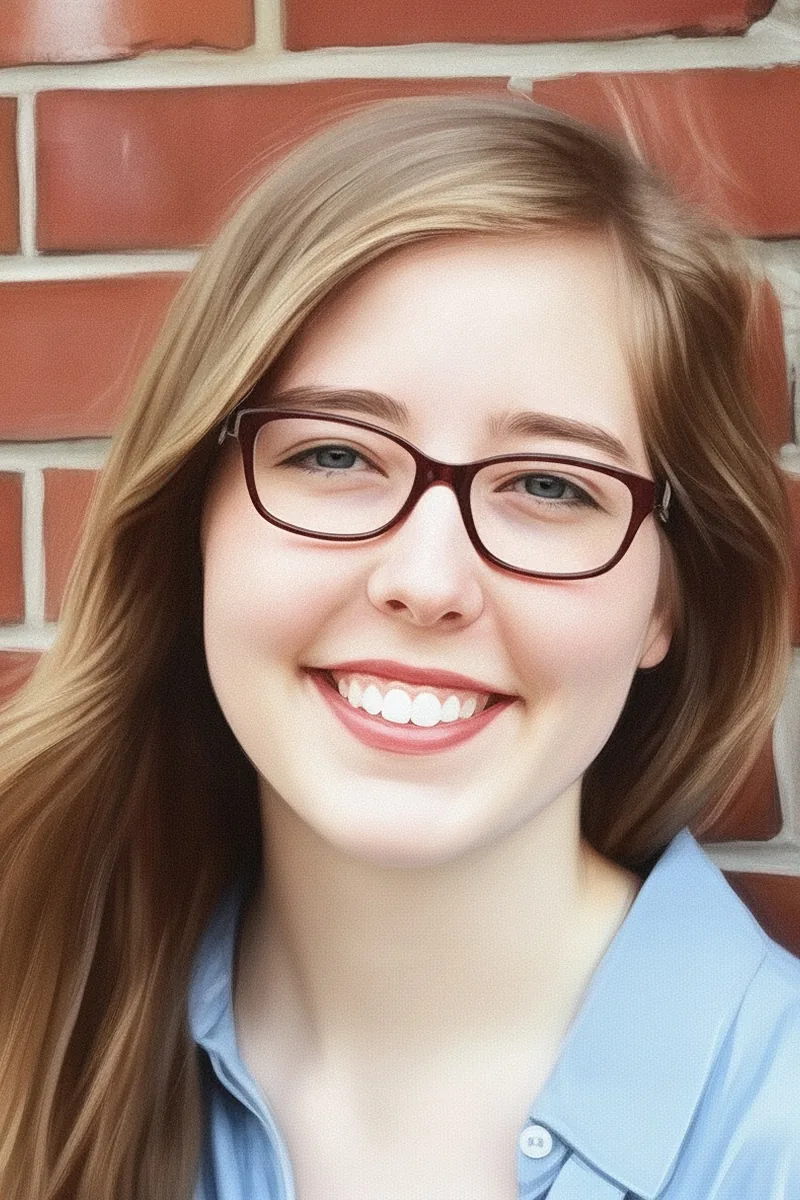
As someone who also teaches GED Science, Frances approaches science by treating it as a reading and reasoning exercise first. She teaches students to interpret data tables, understand experimental design, and connect vocabulary to the underlying concepts in biology, earth science, or physical science.

Biomedical engineering sits at the intersection of biology, chemistry, and physics, which gives Eric an unusual ability to explain how scientific disciplines connect. Whether a student is struggling with Newton's laws, cellular respiration, or stoichiometry, he draws on coursework and lab experience at Duke to make abstract processes concrete. He holds a 5.0 rating from students.
Callie isn't just teaching science from a textbook — she's actively conducting glioblastoma research at Duke Medical Center, designing experiments and analyzing data in a real lab. That firsthand experience means she can explain concepts like cell signaling, experimental controls, and data interpretation with concrete examples students actually remember. Rated 4.7 by students.
Studying civil engineering at Duke's Pratt School means Natalie applies scientific principles — forces, energy transfer, material properties — in problem sets every week. She breaks down concepts like the scientific method, experimental design, and data interpretation by tying them to real-world engineering scenarios that make abstract ideas click.
Environmental Studies gave Simon fieldwork experience that makes ecology, earth science, and physical science feel tangible instead of abstract. He unpacks topics like biogeochemical cycles, plate tectonics, and energy transfer by connecting them to real systems — watersheds, climate data, local ecosystems — so the vocabulary actually sticks. Students who struggle with science as a memorization exercise tend to click with his approach.
Between her neuroscience B.S. and coursework spanning biology, physics, and chemistry, Julie has an unusually broad science foundation. She's particularly strong at explaining how different scientific disciplines overlap — why understanding cellular biology matters for neuroscience, or how physics principles govern the imaging technology used in brain research. Rated 5.0 by students.
A biochemistry and cell biology degree plus four years of medical school gives Tammy unusual depth across biology, chemistry, and the places where they overlap — metabolism, molecular signaling, lab techniques. She unpacks scientific concepts by tying them to concrete examples, like explaining enzyme kinetics through how medications actually work in the body. Rated 5.0 by students.
As a pre-med sociology student at Duke, Zhong bridges the gap between scientific concepts and the bigger picture of why they matter. He's particularly effective at walking through data interpretation and experimental design — the skills that trip students up when a science class shifts from memorizing facts to actually thinking like a scientist.
A Duke student carrying a triple science and economics course load, Devanshi tackles scientific reasoning the way it actually works — connecting concepts across biology, chemistry, and physics rather than treating them as isolated chapters. She breaks down experimental design, data interpretation, and hypothesis testing into repeatable steps that click for students who feel lost staring at diagrams and tables.
A respiratory therapist turned physician assistant student at Duke, Emmanuel brings lab-bench and bedside experience into science tutoring. Whether a student is tackling the scientific method, cellular respiration, or chemical bonding, he unpacks each concept using clinical examples that make the material tangible and easier to retain.
Eric's data science training at Duke is grounded in statistics, linear algebra, and scientific reasoning, giving him a quantitative lens that translates well to science tutoring. He tackles topics like the scientific method, unit conversions, and interpreting experimental data by connecting each concept to concrete, real-world examples that make abstract ideas click.
While science isn't Justin's core specialty, his analytical training across two graduate and undergraduate programs at Duke and Yale makes him effective at breaking down scientific concepts and data interpretation for younger students. He treats science assignments the way he treats historical sources — by teaching students to read carefully, identify key evidence, and build logical explanations from the data.
Gregory's theology training involved more empirical reasoning than most people expect — evaluating textual evidence, constructing logical arguments, and weighing competing interpretations against observable facts. He applies that same disciplined thinking to science material, particularly when students need to move from memorizing definitions to actually explaining how a process works and what the evidence shows. His 5.0 rating suggests the approach clicks.
Teaching science effectively often comes down to reading comprehension — understanding what a word problem is actually asking, interpreting data in a chart, or breaking down a dense textbook passage. Jennifer's background in education (M.Ed. from Boston College) and years of teaching middle and high school students means she knows how to connect scientific vocabulary and concepts to the analytical thinking students already use in other subjects.
While science isn't Roger's primary focus, his economics coursework at Duke involves data analysis, modeling, and the scientific method's emphasis on hypothesis testing — skills that transfer directly to interpreting experiments and evaluating evidence. He's a strong fit for students who need to sharpen their quantitative reasoning within science courses or build confidence reading graphs and drawing conclusions from data.
Four years of medical school at the University of Tennessee means Jordan has tackled science at every level — from cellular respiration and genetics in biology to thermodynamics and wave optics in physics. He breaks down complex processes into step-by-step logic chains, making topics like enzyme kinetics or electron transport feel manageable rather than overwhelming. Rated 5.0 by students.
An economics major at Duke, Bailey is trained in the same core skills science coursework tests — reading graphs, identifying variables, and drawing conclusions from data sets. She also brings a 3.94 GPA from a program that required quantitative reasoning across disciplines, which means she can walk students through everything from unit conversions to interpreting experimental results with real precision.
Theology graduate work at Notre Dame is surprisingly science-adjacent — Myles spent years evaluating competing claims, weighing evidence across centuries of texts, and constructing airtight arguments, which is the same intellectual muscle science asks students to flex when designing experiments or defending a conclusion. He's particularly strong at teaching students to read dense material carefully and extract the key ideas, a skill that makes science textbooks and lab instructions far less intimidating. Holds a 5.0 rating.
A math degree gives Matt something most science tutors on this page don't have — deep comfort with the quantitative backbone of science, from unit conversions and rate calculations to interpreting graphs and spotting trends in experimental data. His policy studies at Duke layered on rigorous statistical analysis, so he can walk students through both the numbers and the reasoning behind what those numbers mean. Holds a 5.0 rating.
A PhD in bioengineering sits at the intersection of physics, biology, and chemistry, which means Jordan can tackle science questions that cross disciplinary boundaries without losing depth in any one area. Jordan unpacks concepts like energy transfer, cellular processes, and experimental design by connecting them to tangible, real-world systems students can visualize.
Between her engineering coursework and organic chemistry tutoring at Duke, Molly covers an unusually wide range of science — physics, chemistry, and biology all show up in her day-to-day studies. She's particularly strong at explaining how these disciplines overlap, like how thermodynamic principles govern both chemical reactions and biological systems, which gives students a more unified understanding instead of isolated facts.
Biomedical engineering sits at the intersection of biology, chemistry, and physics, so Beepul tackles science as an interconnected system rather than isolated facts. Whether a student is struggling with Newton's laws, cell biology, or energy conservation, he connects each concept to real-world applications — like how force analysis applies to designing prosthetics — to make the material stick.
Studying biomedical engineering means living in the overlap of biology, chemistry, and physics — so Erinn doesn't just know scientific concepts in isolation but understands how they connect. She's particularly strong at walking through experimental design and data interpretation, skills that show up across every science class from middle school through AP level.
Behavioral science at Duke is essentially a science degree with a human focus — Anastasia spent her coursework designing experiments, controlling for variables, and interpreting data sets, which means she can teach the scientific method as something she's actually practiced rather than just read about. She's particularly good at walking students through how to set up a fair test and explain what their results mean, skills that carry across biology, earth science, and physical science units alike. Rated 5.0 by students.
Kristina teaches science the way she practices it — by asking questions first and building understanding from observation. Her research on synapse formation at Duke and genomics work at Washington University means she can walk students through the scientific method, experimental design, and core life-science concepts with real examples drawn from an active lab. Rated 5.0 by students.
Susie's angle on science comes from her computational background at Duke, where she's seen firsthand how scientific questions get modeled with data and code. She's strongest at teaching the analytical side — reading graphs, understanding experimental design, and reasoning through cause-and-effect relationships. Her experience co-founding a chemistry tutoring club in high school adds hands-on familiarity with core science content.
Sonja's undergraduate degree in Environmental Science means she doesn't just teach the scientific method from a textbook — she can pull real examples from ecology, earth systems, and biology to make topics like energy transfer or ecosystems feel immediate. She's especially skilled at teaching students how to read data, design simple experiments, and explain their reasoning in writing.
Double-majoring in economics and psychology at Emory meant Timothy spent four years reading research papers, interpreting data sets, and evaluating whether studies actually proved what they claimed — skills that sit at the core of any science class. He teaches students to approach experiments the way he approached econometric models: identify what's being tested, track the variables, and explain the results in plain language. His 5.0 rating and MBA work at Duke add a quantitative rigor that's especially useful for graph-heavy and data-driven science material.
Having two siblings with ADHD taught Arial early on that the same concept often needs three different explanations before it lands — a skill she leans on when walking students through topics like states of matter, ecosystems, or energy transfer. Her English training at Duke also sharpens a surprisingly useful edge for science: she can teach students to read dense textbook passages carefully, pull key details from diagrams, and write lab responses that actually answer the question being asked.
Engineering sits at the intersection of physics, chemistry, and applied math, so Elisa understands how scientific concepts connect across disciplines rather than existing in isolated chapters. She tackles topics like force diagrams, chemical reactions, and energy conservation by tying them to tangible examples — bridges under load, water treatment processes, materials under stress — that make abstract ideas click.
While science isn't Tristan's core specialty, his linguistics training at William & Mary sharpened the same analytical skills that science courses demand — forming hypotheses, interpreting data, and building logical arguments from evidence. He's a strong fit for students who need help organizing scientific concepts and communicating their understanding clearly on tests and lab reports.
A biology major at Duke, Amanda digs into science the way a working researcher does: forming hypotheses, reading data, and connecting concepts across life and physical sciences. She's especially strong at translating dense scientific vocabulary into language that makes processes like cellular respiration or ecological cycles intuitive rather than overwhelming.
A bachelor's in wildlife and wildlands science means Emily didn't just read about ecosystems and biological systems — she studied them in the field and the lab. She connects textbook concepts like the water cycle, food webs, and cellular respiration to real-world examples that make the material tangible. Rated 4.9 by students across her subjects.
Between his biology minor, chemistry minor, and premedical track at Duke, Rayhan has logged serious hours across the core sciences. He explains concepts like cell respiration, stoichiometry, and force diagrams by building each idea from its simplest pieces, so students understand the logic instead of just memorizing vocabulary. Rated 5.0 by students.
Cognitive science at Penn is essentially science studied from the inside out — neuroscience, experimental design, statistical analysis — so Future knows how to teach the mechanics of hypothesis-testing and data interpretation from direct coursework experience. Where many students stumble is connecting abstract concepts like energy or cellular function to the experimental evidence that supports them, and Future's training in how the brain actually learns gives her a practical edge in making those connections stick.
A cellular and molecular biology degree means Julia doesn't just know science facts — she understands how to connect concepts across disciplines, whether it's linking chemical bonding principles to biological processes or explaining how energy flows through ecosystems. She breaks down the scientific method into a practical thinking tool students can apply to any lab report, data set, or exam question. Rated 4.8 by students.
Kathleen teaches across biology, chemistry, and physics, which means she can trace a concept like energy transfer from a chemical equation through a biological system and into a physics problem. That cross-disciplinary fluency is rare and especially useful for students preparing for standardized science sections or juggling multiple science courses at once.
Nursing school demands a deep understanding of the sciences — anatomy, physiology, chemistry, and how they all interconnect inside the human body. Emily's clinical nursing background means she explains concepts like cellular respiration or acid-base balance by tying them to real physiological scenarios, which makes abstract processes far easier to remember.
A neuroscience degree required mastering biology, chemistry, physics, and statistics — so Kailee brings genuine depth across the sciences rather than surface-level familiarity. She's especially strong at explaining biological systems and experimental design, walking students through how to read data, form hypotheses, and understand what's actually happening at the cellular or molecular level.
Teaching GED Science and middle school science alongside subjects like political science and world religions means Lane is used to toggling between disciplines — and that cross-subject fluency shows up when he connects scientific concepts to the social and historical contexts students already understand. His Social and Global Studies degree built strong skills in reading dense informational texts and evaluating evidence, which he applies to walking students through data tables, experimental setups, and the kind of nonfiction passages that dominate science assessments.
Testimonials
Because the right Science tutor makes all the difference.
Average Session Rating – Based on 3.4M Learner Ratings
Practice Science
Free practice tests, flashcards, and AI tutoring for Science
Other Durham Tutors
Related Science Tutors in Durham
Frequently Asked Questions
Varsity Tutors matches Durham students with expert Science tutors for 1-on-1 instruction. We pair each student with a tutor based on their specific needs, learning style, and goals.
Whether you need homework help, exam prep, or want to get ahead, our Science tutors are ready to help.
Common challenges include gaps from earlier material, difficulty with specific concepts, and trouble applying learning to new problems. These issues can snowball quickly in Science.
A tutor identifies where you're stuck, fills in gaps, and provides targeted practice. The 1-on-1 format means you get help exactly where you need it.
Tutors work with your student's actual coursework—homework assignments, class notes, and upcoming tests. This keeps tutoring directly relevant to what's happening in the classroom.
When you share information about your student's school and curriculum, we can match you with a tutor who has relevant experience.
All tutors complete background checks, credential verification, and teaching evaluation. Many of our Science tutors hold advanced degrees or have years of teaching experience.
You can review tutor profiles to find someone with the right background for your student's level and needs.
Many students see improved grades within a few weeks, along with better understanding of Science concepts and more confidence tackling challenging material.
Tutors track progress and adjust their approach to ensure continued improvement.
Most students benefit from 1-2 sessions per week. More frequent sessions help if your student is significantly behind or has an important exam coming up.
Your tutor can recommend a schedule based on your student's specific situation and goals.
Tutoring is purchased in packages of hours, with rates varying by tutor experience. Varsity Tutors offers several options to fit different budgets and needs.
You can discuss pricing during your consultation to find what works best.
Your tutor will assess where your student is, discuss goals, and start working on priority areas. Most students bring current homework or upcoming test material to focus on.
By the end, you'll have a clear sense of how the tutor can help and a plan for moving forward.
Let’s find your perfect tutor
Answer a few quick questions. We’ll recommend the right plan and match you with a top 5% tutor.