Award-Winning Science Tutors
serving Raleigh, NC
Science
Tutors in Raleigh
Private 1-on-1 tutoring, weekly live classes for academic support, test prep & enrichment, practice tests and diagnostics, and more to elevate grades and test scores.
Based on 3.4M Learner Ratings
UniversitiesSchools & Universities
DeliveredHours Delivered
ProficiencyGrowth in Proficiency
Who needs tutoring?
No obligation. Takes ~1 minute.
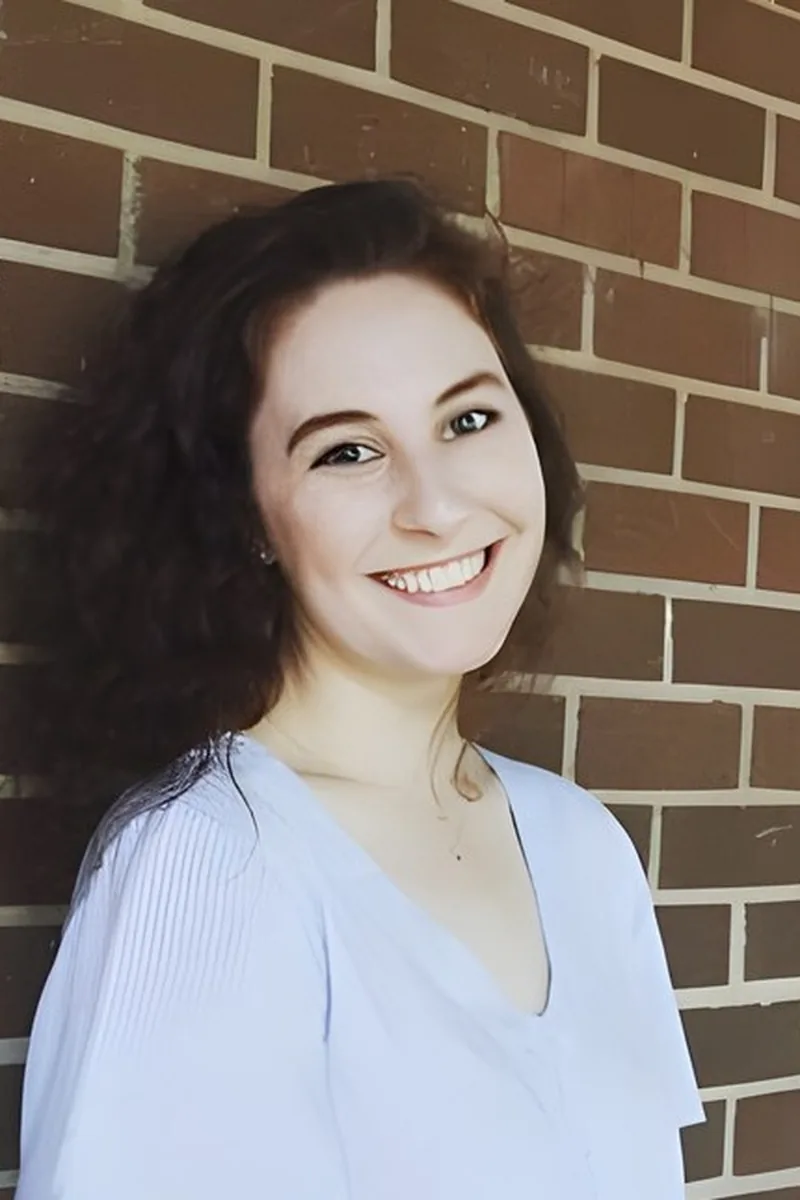
A history degree from Berkeley and a master's from Duke trained Bethany to do exactly what science coursework asks of students: evaluate sources of evidence, spot weak reasoning, and build arguments from observable facts rather than assumptions. She's particularly effective at walking students through how to read data tables and write clear explanations of experimental outcomes — skills her 5.0 rating suggests she communicates well.

Studying physics at Duke gives Bryce daily practice connecting scientific theory to mathematical models — the exact skill students need when tackling kinematics, energy conservation, or circuit analysis. He explains the reasoning behind formulas instead of just handing them over, so students can adapt when a problem doesn't look like the textbook example.
Circuit theory, electronics, and power systems aren't just subjects Prakash studied — he taught them as an independent instructor to senior-year engineering students and ran their lab sections. Whether a student needs to understand Newton's laws for a high school class or tackle electromagnetic theory at the college level, his ability to connect equations to physical, observable behavior makes abstract science tangible.
From cell biology to Newtonian mechanics, Alisha covers science topics across multiple disciplines and grade levels. She connects abstract concepts — like energy transfer or natural selection — to concrete examples students can visualize, making it easier to recall ideas on tests and apply them to lab work.
An applied mathematics degree from UCLA and PhD-level engineering work at Virginia Tech mean Professor Florence has spent years doing actual science — building models, testing them against data, and revising when results don't cooperate. That hands-on research experience shows up in how she teaches topics like experimental design, measurement, and quantitative analysis: students learn to think through problems the way a working engineer would. Her 4.6 rating spans 67 subjects, but the STEM core is clearly home turf.
Most of Michael's tutoring lives in writing and humanities, but his 1470 SAT required him to nail the evidence-based reasoning that underpins science questions — interpreting data displays, evaluating experimental designs, and distinguishing supported conclusions from unsupported ones. He's especially useful for students who can do the science but struggle to articulate their thinking in lab write-ups or short-answer explanations, since clear scientific writing is really just clear argumentation.
I am persuasive and capable of developing rapport and trust, as well as experienced in influencing the attitudes and ideas of others.
An MFA in creative writing might not scream 'science tutor,' but Erintrude's real strength here is helping students who struggle with the reading-heavy side of science — parsing dense textbook passages, interpreting diagrams, and writing up lab conclusions that actually communicate what happened and why. Her ACT score of 31 confirms she can handle the analytical and quantitative demands, and her 5.0 rating suggests she makes even unfamiliar material feel approachable.
Biochemistry sits at the intersection of biology and chemistry, and Hunter's training in both — from Boston College through a biomedical sciences program at Tufts — means he can explain concepts like cellular respiration, atomic structure, or ecological systems by connecting them rather than treating them as isolated topics. Whether a student is struggling with balancing equations or interpreting lab data, he brings the kind of cross-disciplinary thinking that makes science click. Rated 5.0 by students.
Having taught both physics and math at multiple levels, William understands the quantitative backbone of science — converting units, interpreting graphs, and connecting formulas to what's actually happening in a physical system. His MBA training also means he can walk students through experimental design and data analysis with the same structured, step-by-step logic used to solve real business problems.
A chemistry background gives Parth particular depth when it comes to topics like balancing equations, understanding the periodic table's trends, or connecting molecular structure to physical properties. He also covers life and earth science for younger students, emphasizing how to interpret data from lab results and diagrams — a skill that pays off well beyond science class.
A geosciences degree from Princeton required Rick to move fluidly between chemistry, physics, and biology — analyzing rock composition one week and modeling atmospheric systems the next. He brings that cross-disciplinary thinking to science tutoring, connecting topics like the water cycle or energy transfer to the underlying principles so students can reason through unfamiliar problems instead of relying on memorization.
George's business degree from UNC Chapel Hill included coursework in statistics, data analysis, and quantitative reasoning — skills that translate well when students need to interpret graphs, calculate rates, or make sense of experimental data in science class. He also teaches physics, which means he can bridge the gap between abstract scientific concepts and the math that supports them. Holds a 5.0 rating.
I am passionate about learning and teaching others.
Rachel's 34 ACT required strong performance on the Science section, which is really a test of graph reading, data interpretation, and experimental reasoning rather than memorized facts — and those are the same skills that general science coursework demands. Her English literature training also means she can teach students to pull meaning from dense textbook passages and write lab conclusions that actually communicate what happened and why.
A biomedical engineering background means Joseph has spent serious time in labs — designing experiments, collecting data, and troubleshooting when results don't match predictions. He teaches science as a process of asking precise questions and figuring out how to test them, which clicks especially well for students who need to move past flashcard-level memorization. Rated 5.0 by students.
Elementary and middle school science is as much about reading comprehension as it is about content — students need to interpret diagrams, follow experiment procedures, and explain observations in writing. Brielle's English Education training makes her especially effective at teaching students to pull information from science texts and articulate their reasoning clearly on lab reports and assessments.
As an engineering student who tutors physics from introductory mechanics through college-level electromagnetism, Artem tackles science by anchoring every concept in a concrete, solvable problem. He's especially effective at translating word problems into diagrams and equations — the exact skill that separates students who understand a concept from those who can actually apply it on an exam.
Running experiments in a cognitive psychology lab taught Joshua the scientific method from the inside — designing controlled studies, analyzing data, and interpreting results with precision. He brings that firsthand research experience to science tutoring, walking students through how to read graphs, evaluate hypotheses, and understand why an experiment was designed a particular way.
Between AP Physics 1, calculus, and trigonometry, Jeffrey's course load at UNC Chapel Hill keeps him immersed in the quantitative side of science — calculating forces, modeling motion, and converting units across measurement systems. He's especially useful for students who hit a wall when science shifts from vocabulary-heavy material to problems that require actual math, since he can walk through the formulas and dimensional analysis step by step.
Jenna's statistics background is particularly useful in science, where students often struggle not with the concepts themselves but with interpreting experimental data, reading graphs, and understanding what statistical significance actually means. She connects the quantitative side of science — unit conversions, proportional reasoning, data analysis — to the underlying logic so students can tackle lab reports and data-heavy exam questions with confidence.
I graduated from the University of North Carolina at Chapel Hill with a Bachelor of Science in Physics. I work with students in a variety of subjects, including Math, Physics, and Chemistry. I have experience working with students on the Autism spectrum and with ADHD.
A mechanical engineering grad student who builds things, breaks things, and troubleshoots what went wrong — Aaron brings that same hands-on diagnostic process to science topics like forces, energy, properties of matter, and experimental design. His 1530 SAT confirms the analytical horsepower, and his 5.0 rating suggests he explains the reasoning behind results in a way that actually lands.
As someone who also teaches GED Science, Frances approaches science by treating it as a reading and reasoning exercise first. She teaches students to interpret data tables, understand experimental design, and connect vocabulary to the underlying concepts in biology, earth science, or physical science.
Between degrees in psychology and premedicine, Sydny has taken the full sweep of foundational science — biology, chemistry, genetics, and human anatomy. She explains concepts like cellular respiration or chemical bonding by linking them to how the body actually works, turning isolated facts into a coherent story students can reason through on exams.
Biomedical engineering sits at the intersection of biology, chemistry, and physics, which gives Eric an unusual ability to explain how scientific disciplines connect. Whether a student is struggling with Newton's laws, cellular respiration, or stoichiometry, he draws on coursework and lab experience at Duke to make abstract processes concrete. He holds a 5.0 rating from students.
Callie isn't just teaching science from a textbook — she's actively conducting glioblastoma research at Duke Medical Center, designing experiments and analyzing data in a real lab. That firsthand experience means she can explain concepts like cell signaling, experimental controls, and data interpretation with concrete examples students actually remember. Rated 4.7 by students.
A physics minor at Duke and a TA for the university's Electricity and Magnetism course, Florence brings real lab-and-lecture experience to science tutoring. She tackles topics from kinematics and circuit analysis to energy conservation by connecting equations to the physical intuition behind them — the kind of understanding that makes problem-solving click rather than feel like formula hunting.
Environmental Studies gave Simon fieldwork experience that makes ecology, earth science, and physical science feel tangible instead of abstract. He unpacks topics like biogeochemical cycles, plate tectonics, and energy transfer by connecting them to real systems — watersheds, climate data, local ecosystems — so the vocabulary actually sticks. Students who struggle with science as a memorization exercise tend to click with his approach.
Studying civil engineering at Duke's Pratt School means Natalie applies scientific principles — forces, energy transfer, material properties — in problem sets every week. She breaks down concepts like the scientific method, experimental design, and data interpretation by tying them to real-world engineering scenarios that make abstract ideas click.
Alex's science tutoring is geared toward younger and general-level students who need support with concepts like the scientific method, earth science, and basic life science. His academic training in careful reading and analysis carries over naturally to interpreting lab data and understanding how to support a scientific claim with evidence.
Growing up in Rwanda and Kenya, where formal schooling wasn't always available, Caleb learned to observe and question the natural world long before he had a textbook — a habit that maps well onto teaching students how to form hypotheses, design simple experiments, and explain their reasoning. His 35 ACT confirms he can handle the data interpretation and quantitative reasoning that science coursework requires, and his self-taught background means he's unusually good at breaking concepts down from scratch rather than assuming prior knowledge.
Between her neuroscience B.S. and coursework spanning biology, physics, and chemistry, Julie has an unusually broad science foundation. She's particularly strong at explaining how different scientific disciplines overlap — why understanding cellular biology matters for neuroscience, or how physics principles govern the imaging technology used in brain research. Rated 5.0 by students.
As a pre-med sociology student at Duke, Zhong bridges the gap between scientific concepts and the bigger picture of why they matter. He's particularly effective at walking through data interpretation and experimental design — the skills that trip students up when a science class shifts from memorizing facts to actually thinking like a scientist.
I am a freshman at Vanderbilt University currently pursuing a B.S. in Biochemistry. My inquisitive nature has fostered a love for mathematics, the natural sciences, and how they interact to produce the world we experience every day. This extends to my teaching strategy, where I emphasize the importance of conceptual understanding rather than pure memorization of equations and steps. My recent experience in a wide variety of Advanced Placement courses lends me insight to recent changes in course objectives and exam formatting.
A biochemistry and cell biology degree plus four years of medical school gives Tammy unusual depth across biology, chemistry, and the places where they overlap — metabolism, molecular signaling, lab techniques. She unpacks scientific concepts by tying them to concrete examples, like explaining enzyme kinetics through how medications actually work in the body. Rated 5.0 by students.
While mathematics is Taariq's core strength, he also enjoys teaching science and approaches it with the same logical rigor he applies to proofs and equations. He's particularly effective at the quantitative side of science — dimensional analysis, interpreting graphs, and translating word problems into solvable setups.
Ify treats science like a reading exercise as much as a content one — teaching students to pull meaning from diagrams, data tables, and dense textbook passages. Her biology background and 32 ACT (including the Science section's rapid-fire data interpretation) give her a practical toolkit for breaking down life science and physical science concepts at the middle and high school level.
While science isn't Justin's core specialty, his analytical training across two graduate and undergraduate programs at Duke and Yale makes him effective at breaking down scientific concepts and data interpretation for younger students. He treats science assignments the way he treats historical sources — by teaching students to read carefully, identify key evidence, and build logical explanations from the data.
A physics degree from Penn and a PhD in Biomedical Engineering from Cornell mean Elizabeth has spent over a decade immersed in scientific thinking — from Newtonian mechanics to cellular biology to experimental design. She breaks down concepts like energy transfer, molecular interactions, and the scientific method by connecting them to real research problems she's tackled in the lab.
Testimonials
Because the right Science tutor makes all the difference.
Average Session Rating – Based on 3.4M Learner Ratings
Practice Science
Free practice tests, flashcards, and AI tutoring for Science
Other Raleigh Tutors
Related Science Tutors in Raleigh
Frequently Asked Questions
Many students in Raleigh struggle with connecting abstract scientific concepts to real-world applications, especially in chemistry and physics where visualization is critical. Additionally, with an average student-teacher ratio of 13.2:1 across Wake County schools, students often don't get individualized feedback on misconceptions—like confusing velocity with acceleration or misunderstanding chemical bonding—until they've already fallen behind. Personalized tutoring addresses these gaps by identifying exactly where understanding breaks down and rebuilding foundational knowledge before moving forward.
Tutors working with Varsity Tutors are familiar with North Carolina's science standards across all grade levels and can tailor instruction to match what students are learning in their Raleigh classrooms. Whether your student is working through elementary life science, middle school earth science, or high school biology, chemistry, or physics, tutors align their lessons with the specific standards and pacing their school uses. This ensures tutoring reinforces classroom learning rather than introducing conflicting approaches or content.
The first session focuses on understanding your student's current level, learning style, and specific challenges—whether that's lab report writing, problem-solving in physics, or mastering the periodic table. The tutor will ask diagnostic questions, review recent assignments or test results, and identify the root causes of confusion rather than just surface-level gaps. From there, they'll create a personalized plan that targets your student's biggest obstacles and builds confidence in the areas where they're struggling most.
In a classroom of 25+ students, teachers must move at an average pace, which means struggling students often get left behind while advanced students wait for the class to catch up. Personalized tutoring adapts in real-time to your student's pace and learning style—a tutor can spend extra time on photosynthesis if that's the sticking point, use hands-on analogies for abstract concepts, or accelerate through topics your student has already mastered. This targeted approach typically produces faster, more durable understanding than whole-class instruction alone.
Yes. Many students struggle not just with the science concepts but with lab procedures, data analysis, and writing lab reports. Tutors can help students understand the purpose behind experiments, practice proper technique, interpret results, and communicate findings clearly—skills that are essential for success in high school and college science courses. This is especially valuable for students preparing for AP or honors science courses where lab competency is weighted heavily.
Personalized tutoring builds deep understanding of core concepts, which is the foundation for strong test performance. Tutors can also teach test-taking strategies specific to science—like how to approach multi-step physics problems, analyze data in biology questions, or manage time on chemistry exams. For students preparing for AP exams, SAT Subject Tests, or end-of-course assessments, tutors focus on the highest-yield topics and practice with released test questions to build both confidence and accuracy.
Varsity Tutors connects students in Raleigh with tutors across all grade levels and science disciplines—from elementary science and middle school earth science to high school biology, chemistry, physics, and AP/honors courses. Whether your student is building foundational observation skills in elementary school or tackling organic chemistry or AP Physics in high school, there are expert tutors available to help. The breadth of expertise ensures you can find the right match for your student's specific needs and academic level.
Tutors working with Varsity Tutors have strong backgrounds in their subject areas—many hold degrees in science, have taught science in schools, or have professional experience in STEM fields. All tutors are vetted for expertise and teaching ability, ensuring they can explain complex concepts clearly and adapt to different learning styles. When you connect with a tutor, you can review their qualifications and experience to make sure they're the right fit for your student's goals.
Let’s find your perfect tutor
Answer a few quick questions. We’ll recommend the right plan and match you with a top 5% tutor.