Award-Winning AP European History Tutors
serving Rochester, NY
AP European History
Tutors in Rochester
Private 1-on-1 tutoring, weekly live classes for academic support, test prep & enrichment, practice tests and diagnostics, and more to elevate grades and test scores.
Based on 3.4M Learner Ratings
UniversitiesSchools & Universities
DeliveredHours Delivered
ProficiencyGrowth in Proficiency
Who needs tutoring?
No obligation. Takes ~1 minute.

**"BYE TO AI" DISCLAIMER: In an environment where tutors use AI to research, plan lessons, and even give students feedback, I have a zero tolerance policy for AI tools and materials, and I commit to NOT using them in our work together whatsoever.** ABOUT ME: Award-winning writer and classical soprano. Bachelor's degree from Vanderbilt University in history; second major in voice; minor in Italian; concentration in musicology. Master's degree from the University of Rochester. Professional editor (both journalistic and creative prose) experienced in the Chicago Manual of Style and AP Style Guide. Areas of specialty include classical music (bel canto vocal instruction, musicology, and music theory), 18th and 19th century American and European history and literature, research skills, creative writing, test prep, and college admissions. My instruction in college essay writing has enabled over 30 students to gain admissions to top schools.
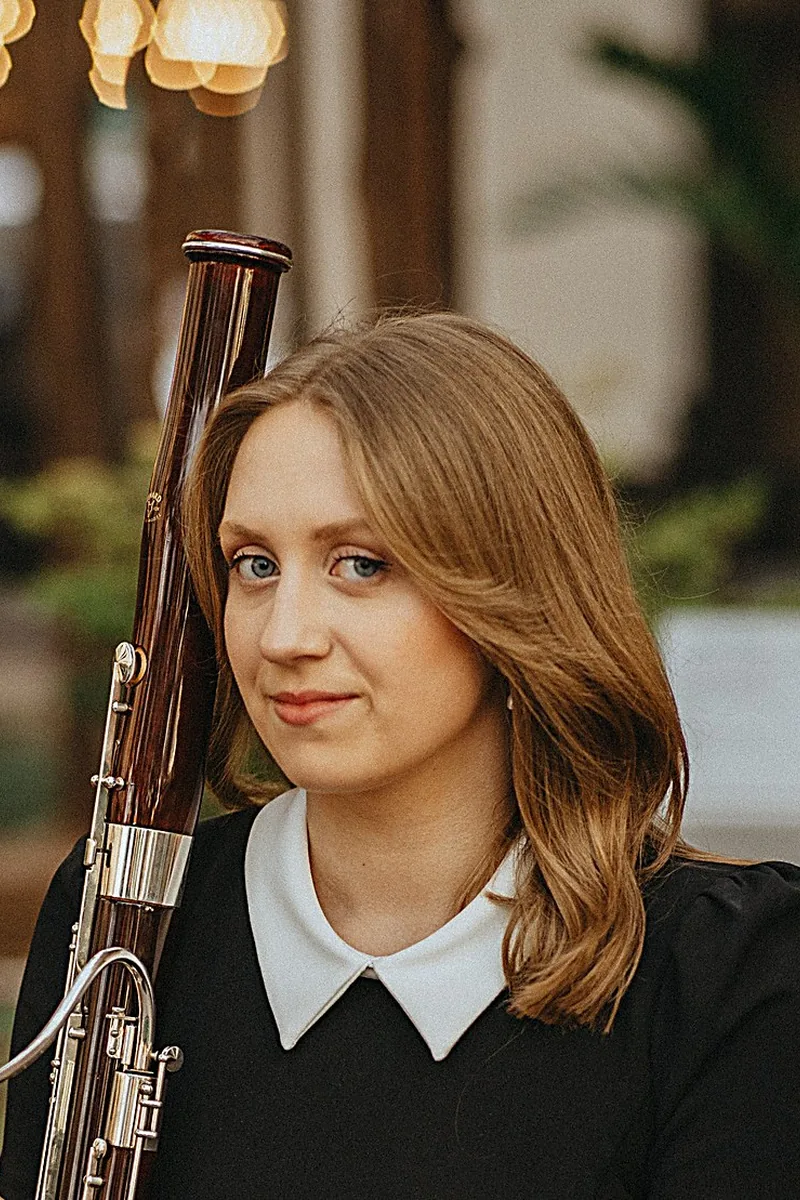
Studying International Developmental Relations at McGill means Isabel is constantly examining how European political decisions — colonial systems, treaty negotiations, economic policies — rippled outward across centuries, which is exactly the kind of causation-based thinking AP Euro essays demand. Her double major in classical bassoon performance also sharpens a less obvious skill: disciplined close reading, since interpreting a Baroque score and interpreting a Enlightenment-era document both require attention to context, structure, and intent.
Scoring well on AP European History means mastering the document-based question, and that's fundamentally an exercise in reading critically and writing persuasively under time pressure. Vivian's dual background in history and English composition is a natural fit — she unpacks primary sources with students, then teaches them to weave that evidence into a coherent, thesis-driven essay. Her 36 ACT reflects the same analytical rigor she brings to European history content from the Renaissance through the Cold War.
Richard's government degree from Harvard built the kind of analytical muscle AP Euro rewards — tracing how political institutions, ideological movements, and power struggles shaped each other across centuries, from absolutist monarchies to modern democracies. His coursework in philosophy and politics gives him a natural feel for the intellectual history that dominates the exam, whether it's unpacking Montesquieu's influence on constitutional thought or the ideological fault lines behind 1848's revolutions. He scored a 1600 SAT and 36 ACT, signaling the reading comprehension and argumentative precision the DBQ demands.
European history is Alexander's favorite subject to teach, and it shows — his Johns Hopkins BA is specifically in the field, and he's built his own independent history teaching project around it. He unpacks the connections between the Renaissance, the Reformation, and the rise of nation-states in ways that make the AP Euro exam's periodization and causation questions feel intuitive rather than overwhelming. Rated 4.7 by students.
The AP European History exam rewards students who can trace causation across centuries — linking, for instance, the Protestant Reformation to the Peace of Westphalia to the rise of the nation-state. Sanoja's political science training at Yale centered on exactly this kind of structural analysis, and her Fulbright year in Colombia deepened her understanding of how European colonialism reshaped global power dynamics. She teaches students to write DBQs that argue rather than narrate.
AP European History's essay prompts demand that students weave together political, intellectual, and social developments across centuries — the kind of synthesis that requires genuine understanding, not just a timeline. Varun's CLEP preparation in both Western Civilization I and II gave him a structured framework spanning the Renaissance through the Cold War. He teaches students to identify turning points like the Treaty of Westphalia or the Congress of Vienna and explain why they reshaped the European order.
Taylor's drama training at NYU's Tisch School of the Arts might seem like an odd fit for AP Euro, but theater history is deeply entangled with European cultural and political shifts — the rise of national theaters under absolutism, censorship battles during the Enlightenment, and avant-garde movements responding to industrialization and war. That cultural lens gives her a way into the material that's different from a straight political narrative, which can be especially useful for students who struggle to connect social and intellectual developments in their essays.
From the Protestant Reformation to the Congress of Vienna, AP European History covers centuries of political, intellectual, and social change that students often struggle to connect into coherent themes. Mustafa breaks each period into cause-and-effect chains — showing, for instance, how Enlightenment philosophy fed directly into revolutionary movements — so that essay responses feel like arguments rather than timelines.
I'm a graduate of Columbia University with a B.A. in History. I'm passionate about history and English, but I'm a competent math tutor as well. I have received outstanding scores on my SAT and AP tests, and am confident in my ability to pass on these skills to the next generation.
I am most passionate about helping people learn history, social sciences, and mathematics. I also assist with standardized test prep, primarily with the Reading and Writing sections of the exams. In my spare time, I enjoy photography, hiking and other outdoor activities, and reading about philosophy, evolutionary biology, and human history.
Gabrielle's biology training at Binghamton might seem unrelated to AP Euro, but scientific thinking — tracing how one development triggers the next — maps surprisingly well onto questions about, say, how the Scientific Revolution undermined Church authority or how Malthusian ideas shaped nineteenth-century social policy. She leans into those science-history intersections while drilling the cause-and-effect essay structure the exam actually rewards. Rated 4.9 by students.
Christian's political science degree gives him a structural lens for the power struggles that run through AP Euro — whether it's the consolidation of absolutist monarchies, the ideological clashes of the French Revolution, or the Cold War division of the continent. He teaches students to read those events as political arguments rather than isolated facts, which is exactly the kind of thinking that translates into strong exam essays.
Teaching English in South Korea and India exposed Alexander to how European colonial legacies, philosophical traditions, and political systems still shape education and culture worldwide — context that brings AP Euro topics like imperialism, Enlightenment thought, and nationalism to life beyond the textbook. His creative writing background also makes him a sharp essay coach, particularly for the DBQ, where crafting a tight argument from scattered evidence is as much a writing skill as a history skill. Rated 5.0 by students.
From the Renaissance through the Cold War, AP European History demands that students do more than memorize dates — they need to trace causation across centuries and argue a thesis under time pressure. Meghna teaches students to dissect DBQs by identifying point of view, purpose, and historical context in each document, turning a stack of sources into a coherent argument.
Theo is a History major at Columbia who digs into the kind of source analysis and periodization that AP European History demands — from the political fragmentation of the early modern era to the ideological collisions of the twentieth century. He teaches students to connect themes like state-building, religious conflict, and intellectual movements across centuries rather than treating each unit as isolated content. His 5.0 rating speaks to how well that approach clicks.
From the Renaissance to the Cold War, AP European History covers centuries of political, intellectual, and cultural shifts — and the exam expects students to synthesize all of it into timed analytical essays. Kay unpacks each era's key developments and connects them to recurring AP themes like state-building and economic systems, giving students a framework that makes the breadth manageable.
From the Renaissance papacy to the Berlin Conference, AP European History demands that students trace how political, economic, and intellectual developments shaped each other over centuries. Alexander unpacks those connections and drills the LEQ and SAQ formats so students can articulate complex causation arguments on exam day.
Eriks brings an unusual combination to AP European History: a chemistry major's comfort with systematic analysis paired with a deep interest in public health and Arabic studies at Williams College. That cross-disciplinary lens is especially useful when tackling exam topics like the Scientific Revolution's impact on political thought or how plague reshaped European economies — moments where science and history collide. He teaches students to build DBQ arguments around those intersections rather than treating each era as an isolated block of facts.
Mark's American Studies background trained him to analyze how cultural narratives and media shape — and get shaped by — political movements, a skill that pays off when tackling AP Euro topics like the spread of Reformation ideas through the printing press or how Enlightenment salons and pamphlets fueled revolutionary sentiment. He brings that media-and-culture lens to essay prep, teaching students to build arguments that go beyond political timelines and dig into how ideas actually circulated. Rated 5.0 by students.
I am a graduate of Fordham University where I earned a Bachelor's degree with a major in History. In particular, I focused my energies on the study of American History. I have tutored as a part of the National Honor Society on topics such as AP Literature, AP American History, AP American Government, and the SAT. I am incredibly passionate about History and Literature and could easily discuss these topics for hours on end. I truly believe that history is fascinating, interesting, and wholly deserving of our attention. I hope I can share this passion and create tutoring sessions that are as engaging as they are informative. With my free time I enjoy reading, especially science fiction, and also exercise regularly, but admit a certain weakness for video games and good TV.
From the Renaissance papacy to the Congress of Vienna to the EU's founding treaties, AP European History is really a course about how ideas — liberalism, nationalism, Enlightenment rationalism — collide with power. Alexander's Master of Philosophy gives him an unusual ability to unpack those intellectual currents while still drilling students on the document-based question skills the exam demands.
From the Renaissance through the Cold War, AP European History covers centuries of political upheaval, intellectual revolution, and social transformation. Todd approaches the course thematically — linking, say, Enlightenment philosophy to the French Revolution to nineteenth-century nationalism — so students can handle the exam's comparison and causation questions without relying on rote memorization. His graduate education at the University of Chicago built the analytical habits this kind of historical reasoning requires.
From the Renaissance through the Cold War, AP European History covers an enormous sweep of political, intellectual, and social change — and the exam expects students to synthesize across all of it. Patrick's university-level teaching background in European history means he can connect the Reformation to the Enlightenment to nationalism in ways that make essay arguments sharper and more historically grounded.
I'm a current PhD student in the history department at Georgetown University who is also an experienced instructor with Varsity Tutors. As a recipient of several degrees, the most recent being a BA in history from Hillsdale College and a MA in Russian, East European, and Eurasian Studies from Stanford University, I have long sought to make teaching my profession. Meanwhile, as a volunteer grade school teacher and a tutor with this company, I have many years' experience helping students reach their full potential. I am capable of teaching students in many subjects, including reading, mathematics, test prep, Latin, and especially writing, history, and literature. In practice, I am comfortable adapting to different learning styles and specific student preferences. Outside of my academic and career endeavors, I enjoy cooking, reading, and listening to and making music.
Winston treats history like a conversation — he'll crack a joke about Charles V's impossible empire or debate whether the Congress of Vienna actually worked, because that back-and-forth is how students internalize the kind of argumentation AP Euro essays demand. His history degree and 5.0 rating come from making periods like the Reformation or the age of revolutions feel like live debates rather than chapters to slog through.
William's linguistics and classics training at Boston University means he's spent years with the languages, texts, and cultural systems that underpin European history — the kind of background that makes topics like the spread of Latin Christendom, Renaissance humanism, or Enlightenment-era debates about reason feel concrete rather than abstract. He teaches students to read AP Euro documents with an eye for how language itself reveals political and ideological context, which is exactly what strong DBQ responses require. Rated 4.9 by students.
The AP European History exam asks students to do more than recall dates — it tests whether they can dissect a document set and construct an argument about, say, how Enlightenment thought reshaped political legitimacy. Brian approaches these document-based questions the way he approaches any analytical problem: identify the claim, weigh the evidence, and build a tight logical structure. His interdisciplinary background spanning economics and the humanities makes him especially effective at connecting Europe's intellectual, economic, and political threads.
From the Protestant Reformation to the Cold War, AP European History covers centuries of interconnected political, social, and intellectual movements that can blur together fast. Emerson breaks these into cause-and-effect chains that make long essay questions manageable, drawing on the rigorous historical training he received through IB History HL and at the University of Chicago.
I am a 2009 graduate of the University of Chicago in Statistics and Political Science. I have been a tutor for test prep (including ACT, SAT, LSAT and AP testing), academic and creative writing, and general academic assistance for three years.
From the Renaissance papacy to the Congress of Vienna to European integration, AP Euro covers an enormous sweep that overwhelms students who try to memorize everything. James teaches thematic throughlines — how power, religion, and economics interact across centuries — so students can tackle any free-response prompt by connecting specific evidence to broader patterns.
From the Renaissance through the Cold War, AP European History demands that students trace political, intellectual, and economic threads across centuries. Nathan digs into the causation and continuity-and-change skills the exam prioritizes, teaching students to build arguments that link events like the Reformation to Enlightenment thought rather than treating each unit as isolated content. His Rice history training means he reads primary sources alongside students, not just summaries.
Teaching literature at the college level means Zachary has spent years tracing how European intellectual movements — the Enlightenment, Romanticism, modernism — shaped and were shaped by the political upheavals AP Euro covers. His Columbia writing training is especially useful for the exam's essay components, where crafting a tight, evidence-driven argument under pressure matters as much as knowing the history. Rated 5.0 by students.
From the Renaissance through the Cold War, AP European History demands that students track political, intellectual, and cultural developments simultaneously. Samantha unpacks how movements like the Enlightenment or industrialization reshaped entire societies, and she drills the document-analysis and essay-construction skills that separate a 3 from a 5.
Testimonials
Because the right AP European History tutor makes all the difference.
Average Session Rating – Based on 3.4M Learner Ratings
Practice AP European History
Free practice tests, flashcards, and AI tutoring for AP European History
Nearby AP European History Tutors
Other Rochester Tutors
Related Social Studies Tutors in Rochester
Frequently Asked Questions
Score improvement depends on your starting point and commitment level, but students typically see meaningful gains within 8-12 weeks of consistent preparation. Personalized 1-on-1 instruction helps you identify knowledge gaps in specific time periods or themes (like the Renaissance, Reformation, or Cold War) and develop targeted strategies to address them. Many students jump from a 2 or 3 to a 4 or 5 by focusing on essay writing skills and document analysis—two areas where tutoring makes the biggest impact.
The AP European History exam covers roughly 1450 to the present day, organized around six major themes: interaction of Europe and the world, cultural and intellectual developments, state building and political developments, individual and society, national and European identity, and technological and scientific developments. A strong study plan should review all major periods and themes, but tutoring helps you prioritize the highest-yield content and understand how these themes connect across centuries. Most students benefit from starting comprehensive review 10-12 weeks before the May exam.
Essays make up 40% of your AP European History score, with three types: Long Essay Questions (LEQ), Document-Based Questions (DBQ), and Short Answer Questions (SAQ). Each requires different skills—the DBQ demands source analysis and contextualization, while the LEQ tests your ability to build a strong thesis and support it with specific evidence. Tutors help you master the rubric requirements for each essay type and practice writing under timed conditions, which is where most students struggle initially.
Students typically struggle with three main areas: memorizing vast amounts of specific dates and names, analyzing primary sources effectively, and writing essays that go beyond summary to show real historical thinking. Additionally, many find it hard to see connections between events across different centuries or to understand causation rather than just listing what happened. Personalized tutoring helps you develop frameworks for organizing information and strategies for approaching documents and questions strategically rather than relying on memorization alone.
A solid study plan includes full-length practice tests every 2-3 weeks starting 8-10 weeks before the exam, with more frequent section-specific practice in between. This spacing allows you to learn from mistakes, build stamina for the 3-hour exam, and track which themes or time periods need more attention. Tutors can review your practice test performance to identify patterns—like whether you're losing points on DBQ sourcing, LEQ thesis development, or multiple-choice timing—and adjust your study focus accordingly.
Test anxiety often stems from feeling unprepared for the breadth of material or uncertain about essay strategies—both things tutoring directly addresses. By practicing under timed conditions, getting feedback on your essays, and building confidence in your knowledge, you'll feel more in control on exam day. Tutors can also teach you pacing strategies for the multiple-choice section and help you develop a mental checklist for essays so you're not second-guessing yourself during the exam.
Look for tutors with strong knowledge of European history across all major periods and themes, plus experience teaching the AP curriculum and understanding the College Board's rubrics. Ideally, they've helped multiple students prepare for the exam and can speak to what actually appears on recent tests. Varsity Tutors connects you with tutors who have proven expertise in AP European History and can tailor their approach to your learning style and specific weak areas.
Rochester's 25 school districts and 102 schools offer varying levels of AP preparation support, so supplemental tutoring can help bridge gaps regardless of your school's resources. Personalized 1-on-1 instruction lets you work at your own pace and focus on exactly what you need—whether that's catching up on content, mastering essay writing, or fine-tuning test-taking strategies. Varsity Tutors connects Rochester students with expert tutors who understand the AP European History exam and can help you reach your score goal.
Let’s find your perfect tutor
Answer a few quick questions. We’ll recommend the right plan and match you with a top 5% tutor.