Award-Winning AP Human Geography Tutors
serving Rochester, NY
AP Human Geography
Tutors in Rochester
Private 1-on-1 tutoring, weekly live classes for academic support, test prep & enrichment, practice tests and diagnostics, and more to elevate grades and test scores.
Based on 3.4M Learner Ratings
UniversitiesSchools & Universities
DeliveredHours Delivered
ProficiencyGrowth in Proficiency
Who needs tutoring?
No obligation. Takes ~1 minute.
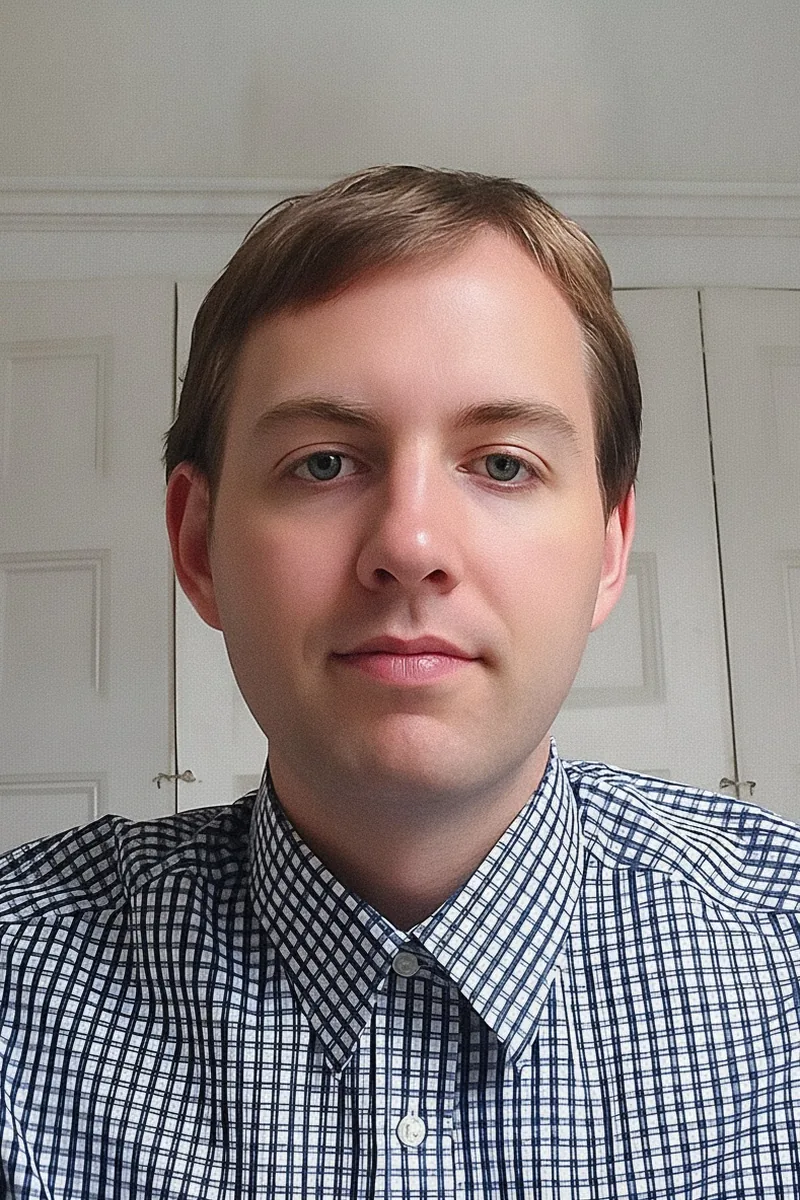
A UChicago BA and UBC master's degree — both in geography — plus a Fulbright research fellowship in Bulgaria mean Duncan has lived the discipline AP Human Geography introduces: migration, cultural landscapes, political boundaries, and spatial organization aren't abstract textbook units for him but the actual substance of his academic career. He teaches students to apply models like the von Thünen or demographic transition not as vocabulary to memorize but as tools for interpreting the stimulus maps and data sets the exam puts in front of them. Rated 5.0 by students.
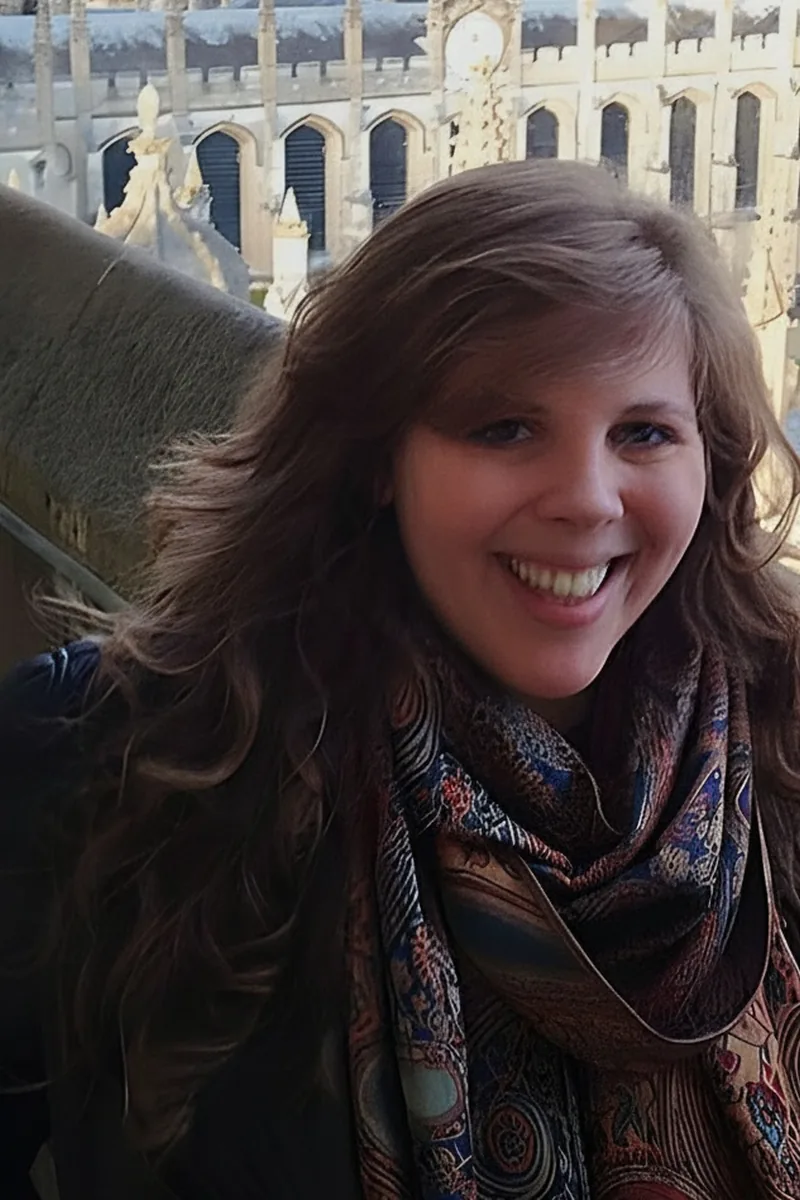
An anthropology degree from Northwestern means Samantha spent years studying exactly what AP Human Geography tests — how cultures form, spread, and collide across regions, and why migration and political organization look different depending on where you are in the world. She brings that ethnographic lens to units on cultural patterns, population dynamics, and political geography, turning abstract models into the kind of human stories that actually stick before exam day.
Christopher's economics degree from UCLA means he already thinks in the supply-demand and development frameworks that underpin some of AP Human Geography's densest units — Rostow's modernization theory, core-periphery dynamics, and how economic incentives drive agricultural and industrial land use. His history training adds the colonial and migration context that turns those economic models into full geographic arguments on FRQ prompts. Rated 4.7 by students.
Few tutors bring a more natural fit to AP Human Geography than someone trained in social anthropology at Harvard. Jorge digs into the spatial patterns behind migration, urbanization, and cultural diffusion with the same analytical lens he used studying human communities academically. He teaches students to think like geographers — reading landscapes, interpreting demographic models, and building arguments with data.
David is a practicing city planner, which means concepts like Christaller's central place theory, urban sprawl models, and the demographic transition aren't abstract exam topics for him — they're tools he uses at work. He unpacks AP Human Geography through real-world examples from his own projects, making it easier to internalize the spatial patterns and vocabulary the exam demands.
Spatial thinking trips up a lot of AP Human Geography students — understanding why cities develop where they do, how migration reshapes cultural landscapes, or what Ravenstein's laws actually predict. Amena tackles the free-response questions by teaching students to link geographic models to real-world examples, which is where most exam points are won or lost.
Designing educational materials for WSKG's PBS outreach programs gave Adam hands-on experience translating big-picture themes — migration, cultural change, political power — into accessible lessons, which is exactly what AP Human Geography demands across units like population dynamics and political organization. His history degree from Binghamton anchors that work in the kind of regional and thematic analysis the exam's FRQ prompts require, where students need to connect models to real-world processes rather than just define them. Holds a 5.0 rating.
I am a sophomore at Columbia University, studying political science and philosophy. I often like to joke that teaching runs in my blood I come from a family of teachers who instilled in me the passion to help others learn. Since I could grasp concepts I learned in school, I've always gone out of my way to help my fellow classmate. As I got older, that became formalized tutoring through school organizations and I eventually worked for the New York City Department of Education. There, I helped students with their standardized testing for the state assessments and the SAT. I love teaching math because I feel it's the subject where I can gauge the strength of my students best. Math is such a versatile (though widely-hated) subject, where every unique learning style can always result in the same answer. I also get the most freedom when it comes to designing questions to help students grow and practicing alongside them easily the most fun part of a tutoring session with me. I'm never shy when it comes to tutoring anything else, though, whether it be any sort of history, literature, or government-related topic. My goal as a tutor is not all about teaching anything new to my students, but instead drawing out the skills they already have.
Zain's senior thesis at Wesleyan traced the 1947 Partition of India and Pakistan — the kind of deep-dive into borders, migration, and political reorganization that maps directly onto AP Human Geography's units on political geography and population movement. His fieldwork across the Indian subcontinent, funded by grants for studying diasporas and transnationalism, means he can ground concepts like Ravenstein's migration laws or centripetal and centrifugal forces in real places and real stories rather than textbook abstractions.
As a passionate educator with a Bachelor's in History from Princeton University and a Master's in Music from Yale University, I have over 2 years of tutoring experience in subjects, with particular specialization in history, academic writing, and politics. My teaching philosophy centers on breaking down difficult concepts into more accessible and digestible forms of knowledge. I believe in tailoring my approach to meet each student's unique needs, utilizing creative methods to enhance understanding and retention. My dedication to helping students succeed is reflected in their improved confidence and performance. Outside of tutoring, I enjoy exploring different cultures through music and language, which enriches my teaching and connects me with my students on a personal level.
A Duke History major with Biology and Chemistry minors, Rayhan reads AP Human Geography's agriculture and development units the way a pre-med student reads systems — tracing how variables like industrialization, resource access, and population pressure interact to produce specific outcomes. That cross-disciplinary habit is especially useful when students need to explain *why* a model like Rostow's stages or the Green Revolution played out differently across regions, not just label the stages on a diagram. Rated 5.0 by students.
Cultural anthropology is essentially the discipline AP Human Geography was built from — Scott's honors degree in the field means concepts like cultural diffusion, language families, and ethnic territoriality aren't exam vocabulary to him but frameworks he's studied in depth at Washington University in St. Louis. He's particularly strong at unpacking the exam's trickier FRQ prompts where students need to connect anthropological models to real-world stimulus material, drawing on the same analytical reading skills behind his 1580 SAT. Rated 4.8 by students.
I am a graduate of The University of Colorado, Boulder and Harvard Kennedy School. I received my Bachelor of Arts in Economics and my Master in Public Policy with a focus on international and global affairs. Since graduation, I have worked in investment banking and management consulting, though I also have worked on government relations. While I tutor a broad range of subjects, I am most passionate about History, English Literature, and Math (namely algebra and pre-calc). In my experience helping students prepare for Standardized Tests, I like to focus on the writing and math assessments, as those tend to be challenging to many students. I believe in ensuring students are able to think independently and have the confidence to understand the material. I believe the subjects I tutor are necessary for students to succeed and I want to impart what I know to students. In my spare time, I enjoy reading about history and geopolitics, hiking, and writing.
Samantha's American Studies program is essentially AP Human Geography's reading list in degree form — she's deep in the cultural landscapes, migration narratives, and political structures that show up across Units 3 through 7. That academic grounding, plus a 35 ACT, means she can break down both the conceptual side (why Mackinder's heartland theory matters, how acculturation differs from assimilation) and the test-strategy side of stimulus-based multiple choice and FRQs.
Twelve AP classes and a math-focused mind at UChicago mean Felix approaches AP Human Geography's models — things like the von Thünen agricultural model or gravity model — with the quantitative intuition most social studies tutors lack. He's sharp at teaching students to decode the exam's data-heavy stimulus questions, reading population pyramids and development indicators with precision rather than guesswork. Rated 5.0 by students.
Between her political science major, criminal justice minor, and Latine/Mexican American studies certificate at UNT, Lianna's coursework covers the political boundaries, migration patterns, and cultural identity questions that drive AP Human Geography's most heavily tested units. She's especially grounded in the Latin America case studies that make concepts like acculturation, devolution, and economic development models concrete rather than abstract. Rated 4.8 by students.
Population pyramids, the Demographic Transition Model, Rostow vs. dependency theory — AP Human Geography throws dense conceptual models at students who often haven't taken a geography course before. Mark's international relations training at Tufts means he can ground these abstract models in concrete examples, connecting spatial patterns to the political and economic forces that actually produce them.
UCLA's International Development Studies curriculum puts Claudia right in the middle of the global migration, urbanization, and political boundary questions that AP Human Geography builds its units around — she's studying these processes academically while tutoring students through them on the exam. Her work at UCLA's Writing Center also sharpens a skill most AP Human Geo tutors overlook: teaching students to construct tight, evidence-driven FRQ responses that connect models like Rostow's stages or the Burgess concentric zone theory to stimulus material in a few clear sentences.
The IB program's interdisciplinary structure — connecting science, politics, and cultural analysis across a global curriculum — mirrors exactly how AP Human Geography asks students to think about spatial patterns and human decision-making. Rithika draws on that IB training and her Science, Technology, and Society coursework to unpack how technological change drives urbanization, agricultural shifts, and industrial development across Units 5 through 7. She's especially sharp at helping students see connections between models rather than treating each unit as a separate vocabulary list.
Mikkel's biology degree with a biochemistry focus might seem like an odd fit for AP Human Geography, but the population ecology and resource distribution concepts he studied at Carleton map surprisingly well onto units covering the demographic transition model, Malthusian theory, and agricultural development patterns. He also brings strong Spanish fluency and broad social studies knowledge to the cultural geography and political organization units, where understanding how language and identity shape regional boundaries makes abstract models feel concrete.
Teaching World History and Economics to high schoolers means Bradley already covers the historical forces — colonialism, industrialization, migration — that sit behind most AP Human Geography units. He connects those classroom experiences to the exam's trickiest content, like applying the demographic transition model or explaining how Wallerstein's world-systems theory plays out in real trade patterns. His 33 ACT composite also signals the kind of analytical reading skill that pays off on stimulus-based multiple choice.
A political science major at UGA, Monroe spends his coursework analyzing the same forces — sovereignty, borders, migration policy, state power — that AP Human Geography tests across Units 4 and 7. He turns that into practical exam prep by drilling students on how to connect models like Ratzel's organic theory or Rostow's development stages to real political examples in FRQ responses. His 35 ACT and 4.9 rating speak to the kind of structured, strategy-driven approach that pays off on test day.
Testimonials
Because the right AP Human Geography tutor makes all the difference.
Average Session Rating – Based on 3.4M Learner Ratings
Practice AP Human Geography
Free practice tests, flashcards, and AI tutoring for AP Human Geography
Nearby AP Human Geography Tutors
Other Rochester Tutors
Related Social Studies Tutors in Rochester
Frequently Asked Questions
AP Human Geography explores how humans interact with their environment across eight units: thinking geographically, population and migration patterns, cultural patterns and processes, political organization of space, agriculture and rural land use, cities and urban land use, industrial and economic development, and human-environment interaction. The exam tests your ability to analyze real-world geographic data, maps, and case studies rather than memorizing facts, making it ideal for students interested in understanding global issues like urbanization, cultural diversity, and resource management.
The AP Human Geography exam is 2 hours and 15 minutes long, with two sections: a 60-minute multiple-choice section (60 questions) and a 75-minute free-response section (3 essays). The multiple-choice section tests your ability to interpret maps, data, and geographic concepts, while the free-response section requires you to analyze scenarios and apply geographic thinking to real-world problems. Success depends on understanding concepts deeply and practicing how to explain geographic reasoning clearly.
Many students struggle with interpreting maps and geographic data accurately, especially when questions require connecting multiple concepts across units. Others find the free-response essays challenging because they require you to explain geographic reasoning in detail rather than just identifying correct answers. Time management is also critical—balancing 60 multiple-choice questions in one hour while saving energy for three essays requires practice and strategy.
With focused tutoring, most students see meaningful score improvements by developing stronger conceptual understanding and test-taking strategies. The realistic gains depend on your starting point and effort—students often improve by 1-2 score points by mastering weak units, learning to interpret geographic data more confidently, and practicing essay responses with detailed feedback. Consistent practice with released exams and targeted review of challenging concepts like spatial analysis and cultural diffusion typically yields the best results.
Most students benefit from 3-4 months of regular preparation if starting from scratch, though this varies based on your background and current understanding of geographic concepts. A typical study schedule includes reviewing one unit every 1-2 weeks, completing practice questions weekly, and dedicating the final 2-3 weeks to full-length practice exams and essay refinement. Personalized tutoring can accelerate this timeline by helping you focus on your specific weak areas rather than reviewing material you already understand well.
Varsity Tutors connects Rochester students with expert tutors who specialize in AP Human Geography and understand the specific challenges of the exam. When you reach out, you'll be matched with a tutor based on your goals, learning style, and schedule—whether you need help mastering specific units, improving essay writing, or building confidence with the full exam format. Many tutors in the Rochester area work with students preparing for the AP exam and can provide personalized instruction tailored to your needs.
Your first session is typically a diagnostic conversation where your tutor learns about your current understanding of AP Human Geography, identifies your strongest and weakest units, and discusses your goals for the exam. You might review a practice question or two to understand your approach to the material, and together you'll create a personalized study plan focusing on areas where you need the most support. This foundation helps your tutor tailor future sessions to maximize your improvement.
Strong essays require clearly explaining geographic concepts and supporting your reasoning with specific examples—not just listing facts. Practice breaking down essay prompts to identify what geographic thinking they're asking for, then structure your response with a clear thesis, specific case studies or data, and explicit connections between your examples and the geographic principle being tested. Working with a tutor on essay drafts gives you detailed feedback on your reasoning and helps you develop a reliable approach to all three essay types on the exam.
Let’s find your perfect tutor
Answer a few quick questions. We’ll recommend the right plan and match you with a top 5% tutor.