Award-Winning Economics Tutors
serving St. Louis, MO
Economics
Tutors in St. Louis
Private 1-on-1 tutoring, weekly live classes for academic support, test prep & enrichment, practice tests and diagnostics, and more to elevate grades and test scores.
Based on 3.4M Learner Ratings
UniversitiesSchools & Universities
DeliveredHours Delivered
ProficiencyGrowth in Proficiency
Who needs tutoring?
No obligation. Takes ~1 minute.
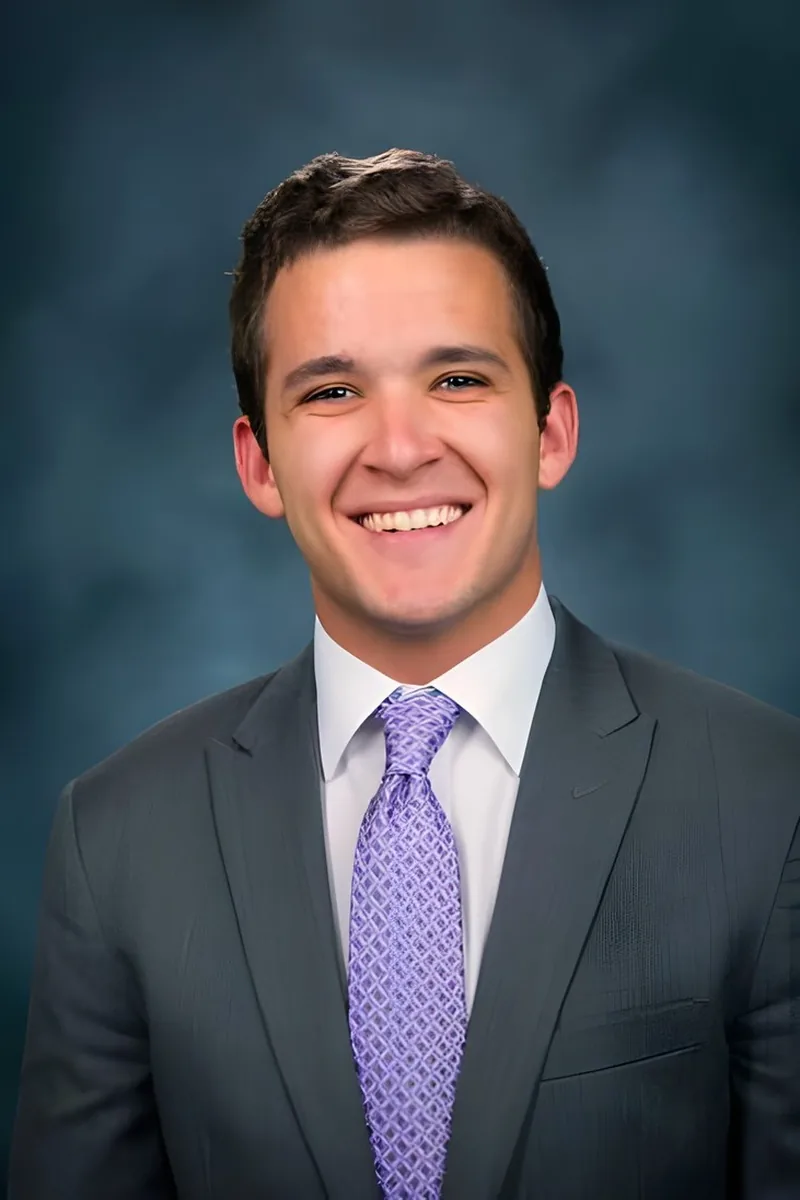
Tutoring for both the Economics and Mathematics departments at Texas Christian University meant Mason spent his undergrad years at the exact intersection where econ gets hard — the point where intuitive ideas about markets and trade-offs turn into graphs, equations, and formal models. His pursuit of a Master of Public Administration adds a policy dimension, so he can walk through how concepts like taxation incidence or public goods provision actually shape government budgets and city-level decision-making.

An engineer who reads box scores for fun, Jordan naturally thinks in terms of optimization, trade-offs, and data — the same framework that drives economics. He digs into supply-and-demand mechanics, elasticity, and market equilibrium with the precision of someone trained to model complex systems, then explains them in plain language.
I have a Bachelor of Science degree in Industrial Management with Economic Honors from Purdue University. I attended Purdue under a full academic scholarship. After graduation I attended the University of Chicago where I first earned a Master of Arts in Economics and then proceeded to achieve the level of All-but-Dissertation PhD at the University of Chicago in Economics. Since then, I have held key leadership positions with emphasis in strategic planning, finance, operations, and sales in a wide range of companies, from a Fortune 100 to an entrepreneurial high technology start up. Throughout my career I have found the time to function as an adjunct faculty member in economics for Saint Louis University, Maryville University, Webster University, Illinois Institute of Technology, and Elmhurst College, I love making economics understandable and applicable to the world we live in. Nothing makes me happier than to have a learner respond "now I get it!"
Three engineering degrees — including one in applied mathematics — mean Rahi is fluent in the quantitative side of economics that often catches students off guard: optimization problems, marginal analysis, and the calculus lurking behind supply and demand curves. He also tutors macroeconomics and accounting, so he can connect microeconomic theory to the bigger fiscal picture and the financial statements where these forces show up in practice.
A PhD candidate in economics at Yale with undergraduate degrees in physics and math from the same institution, Anthony brings serious quantitative firepower to the subject — the kind that matters when courses pivot from intuitive ideas about markets into optimization problems, game theory, or econometric proofs. He also teaches AP Micro, AP Macro, and econometrics, so he can connect introductory concepts to the formal models students will encounter as the material deepens. Rated 5.0 by his students.
As an economics major at Dartmouth, Mia engages with concepts like market equilibrium, elasticity, and game theory on a daily basis. She unpacks the intuition behind graphs and models so that supply-and-demand curves and GDP calculations actually make sense instead of feeling like abstract formulas to memorize.
Studying economics at Penn while simultaneously completing a music degree meant Katherine had to internalize models quickly — there wasn't time to passively reread chapters on elasticity or game theory when rehearsals and problem sets competed for the same hours. That efficiency now shows up in her tutoring, where she zeroes in on the specific graph, equation, or intuition a student is missing and builds understanding from there. Her 1550 SAT speaks to the analytical sharpness she brings to quantitative econ topics.
Supply and demand curves are simple enough on the surface, but economics gets tricky fast once students hit elasticity, market structures, or macroeconomic models. Emma minored in economics at Harvard, so she can unpack concepts like comparative advantage or fiscal policy with real-world examples that make the math and the theory click together. She holds a 5.0 client rating.
Jack earned his economics degree at Northwestern, where he studied everything from game theory to monetary policy in both micro and macro contexts. He connects abstract models — supply and demand curves, GDP calculations, elasticity — to real-world scenarios that make the reasoning behind each graph intuitive rather than mechanical.
Supply and demand curves are straightforward until you layer in elasticity, market failures, and government intervention — then economics gets interesting. Eliza earned her economics degree from Penn and tackles concepts like comparative advantage and marginal analysis by tying them to real-world examples students actually recognize, from streaming service pricing to minimum wage debates.
Studying Politics, Philosophy, and Economics at Penn means Esther encounters economic concepts not in isolation but tangled up with the political incentives and philosophical arguments that shape them — why a carbon tax gets framed as market efficiency in one class and as an ethical obligation in another. That interdisciplinary wiring is especially useful for students who need to understand the reasoning behind economic models, not just the graphs themselves. Rated 5.0 by her students.
Physics training builds a specific habit that transfers directly to economics: modeling complex systems with graphs, equations, and simplifying assumptions. Avram's three physics degrees mean he's deeply practiced at translating real-world behavior into formal models — exactly the skill students need when working through supply-and-demand curves, elasticity calculations, or equilibrium analysis.
Supply and demand curves are simple enough on the surface, but the real challenge is applying them — shifting curves correctly, interpreting elasticity, or reasoning through market failures. Benjamin's Economics degree from Notre Dame gave him deep fluency with both micro and macro frameworks, and he teaches students to think through cause-and-effect chains rather than memorize graph shapes.
Studying both engineering and economics at Duke gave Natalie a quantitative lens on economic reasoning — she's comfortable moving between supply-and-demand intuition and the math behind elasticity, optimization, and equilibrium. She digs into the "why" behind each model so students can apply concepts to unfamiliar problems, not just textbook examples.
Studying biology at Cornell means Drishti constantly encounters economics in disguise — resource allocation in ecosystems, cost-benefit trade-offs in evolutionary strategies, statistical modeling in population dynamics — which gives her an intuitive feel for concepts like scarcity, marginal analysis, and equilibrium. She also tutors AP Micro, AP Macro, and AP Statistics, so she can connect the graphical and quantitative reasoning those courses demand back to core economic thinking. Rated 5.0 by her students.
Testimonials
Because the right Economics tutor makes all the difference.
Average Session Rating – Based on 3.4M Learner Ratings
Nearby Economics Tutors
Other St. Louis Tutors
Related Business Tutors in St. Louis
Frequently Asked Questions
Economics requires students to think abstractly about complex systems—supply and demand curves, opportunity costs, and macroeconomic policy aren't always intuitive. Many students struggle to connect real-world examples to theoretical concepts, and the heavy emphasis on graphs and data interpretation can feel overwhelming without targeted practice. Personalized tutoring helps break down these abstract ideas into concrete examples relevant to a student's learning style.
In a classroom with a 13.2:1 student-teacher ratio, Economics instruction moves at a fixed pace that doesn't always match individual learning needs. Personalized 1-on-1 instruction allows tutors to identify exactly where a student gets stuck—whether it's understanding elasticity, analyzing supply shocks, or interpreting economic data—and spend focused time on those gaps. Tutors can also tailor examples and problem sets to match a student's interests, making abstract concepts more relevant and memorable.
Most St. Louis high schools follow a standard Economics curriculum covering microeconomics (supply, demand, competition, consumer behavior), macroeconomics (inflation, unemployment, GDP, monetary and fiscal policy), and international economics. Some schools also include personal finance topics like budgeting and investing. AP Economics courses dive deeper into economic theory and require mastery of graphs, models, and quantitative analysis. A tutor can help align preparation with your school's specific curriculum and pacing.
Your first session focuses on understanding where you stand right now. The tutor will assess your current grasp of Economics concepts, identify specific challenges (whether it's graphing, vocabulary, or applying theories), and learn about your learning style and goals. From there, they'll create a personalized plan that targets your weak areas while building on your strengths, whether you're preparing for a test, improving your grade, or getting ready for AP Economics.
Many students notice better understanding of difficult concepts within 2-3 sessions once a tutor identifies what's been holding them back. However, meaningful grade improvement typically takes 4-6 weeks of consistent work, depending on how much material needs to be covered and how frequently you meet. The key is regular practice between sessions—tutors often assign targeted problem sets and review strategies that reinforce what you've learned.
Varsity Tutors connects you with tutors who have strong backgrounds in Economics, whether through advanced degrees, teaching experience, or demonstrated expertise in the subject. Many tutors have taught Economics in schools, worked in economics-related fields, or have extensive experience preparing students for AP Economics exams. When you're matched with a tutor, you'll learn about their specific background and how they approach teaching the subject.
Yes. AP Economics (both Micro and Macro) requires mastery of specific models, graphs, and quantitative reasoning that can be challenging without focused preparation. Expert tutors help students understand the underlying economic principles, practice free-response questions, and develop test-taking strategies for the multiple-choice section. Many students benefit from starting tutoring several months before the exam to build a strong foundation and practice under timed conditions.
Simply reach out to Varsity Tutors with information about your Economics goals, current grade level or course, and any specific topics you'd like help with. You'll be matched with a tutor whose expertise and teaching style fit your needs. From there, you'll schedule your first session and begin working on a personalized plan tailored to your academic goals.
Let’s find your perfect tutor
Answer a few quick questions. We’ll recommend the right plan and match you with a top 5% tutor.