Award-Winning Geometry Tutors
serving St. Louis, MO
Geometry
Tutors in St. Louis
Private 1-on-1 tutoring, weekly live classes for academic support, test prep & enrichment, practice tests and diagnostics, and more to elevate grades and test scores.
Based on 3.4M Learner Ratings
UniversitiesSchools & Universities
DeliveredHours Delivered
ProficiencyGrowth in Proficiency
Who needs tutoring?
No obligation. Takes ~1 minute.
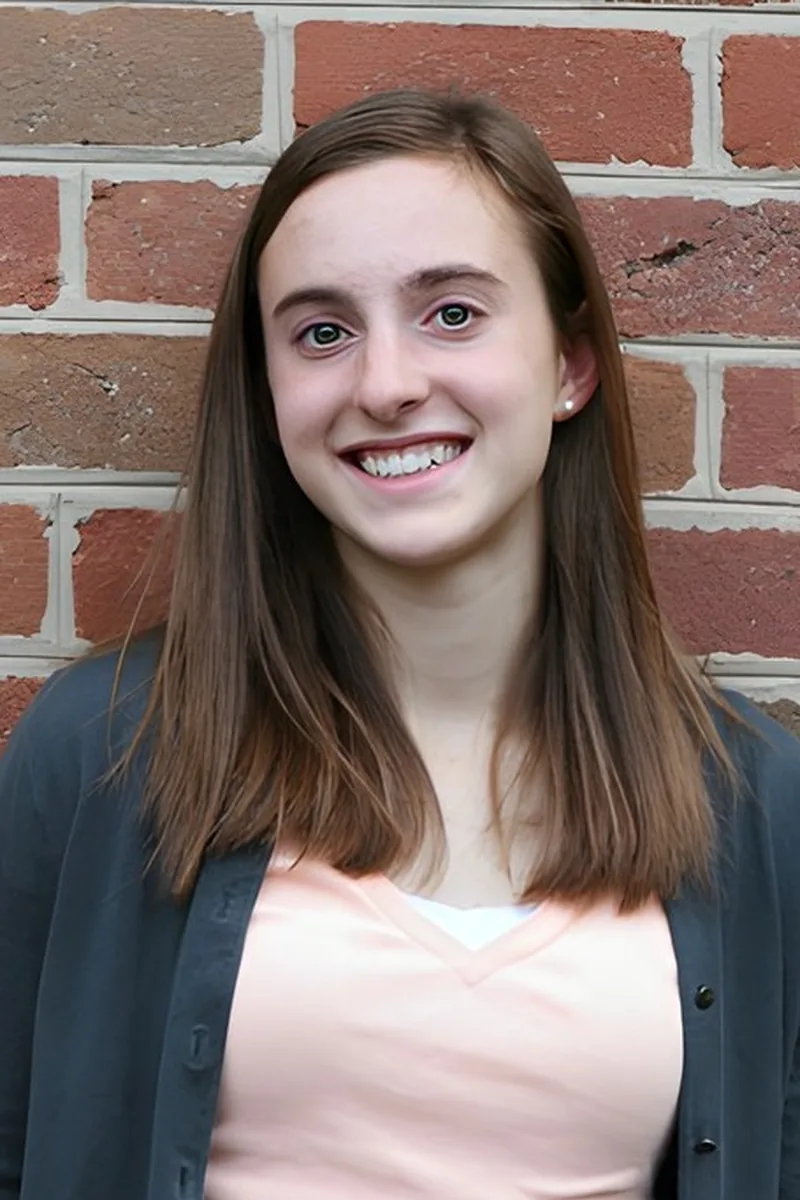
A math major at Washington University with a 35 ACT, Kathleen has the kind of fluency across algebra, trigonometry, and spatial reasoning that lets her spot exactly which prerequisite skill is tripping a geometry student up — whether it's solving equations inside angle relationships or applying trig ratios to right triangles. She teaches the "why" behind each theorem so students can reconstruct steps on their own instead of memorizing proof templates.

Proofs are usually where geometry students panic — the logic feels unfamiliar and the format is rigid. Rachel teaches proof-writing as organized storytelling, showing students how to chain together postulates and theorems into an argument that flows. Her emphasis on diagramming and marking up figures gives students a concrete anchor before they ever write a single statement.
A chemistry major at WashU, Mubariz is used to thinking about molecular geometry — bond angles, spatial arrangements, symmetry — which gives him a natural entry point into the kind of shape-and-angle reasoning that drives high school geometry. He teaches the 'why' behind each theorem rather than just the procedure, breaking down problems involving triangle relationships and angle properties so students can reconstruct the logic on their own instead of memorizing steps.
Proofs are usually the moment geometry stops feeling easy, so Jacob spends real time on the logic behind congruence and similarity rather than rushing to the next theorem. His scientific training at Missouri State sharpened his ability to build step-by-step arguments — exactly the skill students need when tackling two-column proofs, angle relationships, and coordinate geometry problems.
The jump from arithmetic to geometry is the first time many students have to argue *why* something is true instead of just computing an answer — and that shift trips up more kids than any specific theorem. John's math degree means he can teach the reasoning behind congruence and angle relationships from the ground up, connecting each proof step to intuition rather than leaving students to memorize statement-reason pairs. His 35 ACT reflects the kind of precise, methodical thinking he brings to even the trickiest multi-step diagram problems.
I am excited to help anyone who might need it!
A decade of teaching science in bilingual classrooms in Ecuador gave Joy a knack for making abstract ideas concrete — a skill that pays off in geometry when students need to visualize why a proof works or how a transformation changes a figure. Her biology background, where diagramming structures and reasoning about spatial relationships is routine, translates naturally to topics like symmetry, properties of polygons, and geometric constructions.
Proofs are usually the first place geometry students panic, and Jessica has a knack for demystifying them by teaching the logical structure behind each step before asking anyone to write one. She covers everything from triangle congruence and similarity to circle theorems and coordinate geometry. Her medical school training in systematic reasoning translates surprisingly well to the deductive thinking geometry demands.
Chemical engineering is full of geometry most students never see — reactor vessel dimensions, pipe cross-sections, flow through oddly shaped channels — so Austin thinks about shapes and measurements as practical tools, not abstract exercises. He unpacks problems involving area, volume, and right-triangle relationships by tying them back to physical intuition about why the formulas work the way they do.
Proofs are usually the first place geometry students get stuck — going from "I can see it's true" to writing a logical argument feels like a completely different subject. Jordan approaches proof-writing as an engineering problem: identify what you know, figure out what connects to what, and build the argument one justified step at a time. He also covers coordinate geometry and triangle relationships with the same structured thinking.
Proofs are usually the part of geometry that trips students up, because suddenly math requires written arguments instead of calculations. Matt teaches students to map out each logical step — from identifying congruent triangles to applying parallel-line theorems — the same way he'd sketch out an engineering design before building it.
Proofs are usually the first time a math student has to construct a logical argument rather than just compute an answer, and that shift trips up a lot of Geometry students. Samantha's doctoral training in computer science was built on formal logic and proof construction, so she teaches students to approach two-column and paragraph proofs as structured reasoning exercises rather than mysterious rituals.
Proofs are where most geometry students get stuck — the leap from calculating angles to constructing logical arguments feels like a different subject entirely. Jonathan breaks that transition down by teaching students to identify given information, spot congruence relationships, and build each proof step by step. His 4.9 rating speaks to how well that structured approach clicks.
Proofs are where most geometry students stall — the jump from calculating angles to constructing logical arguments feels like a completely different subject. Caroline's engineering training at WashU required rigorous spatial reasoning and formal proof techniques, so she teaches geometry as a system of logic rather than a collection of shape formulas. She unpacks each theorem step by step until the reasoning becomes second nature.
Kevin's Philosophy, Politics, and Economics program at Penn is essentially a training ground in structured argumentation — building claims from premises, identifying logical gaps, defending conclusions — which maps directly onto geometric proof-writing. He teaches students to treat two-column proofs the same way they'd treat a debate: state what you know, justify every step, and never skip a link in the chain. His 34 ACT composite reflects the kind of precise, methodical reasoning that makes geometry's logical demands feel manageable.
An applied math major at Stanford, Alex approaches geometry problems the way a mathematician would — by asking what's actually true about a figure before deciding which tools to use. That habit is especially valuable when students face problems combining circle theorems, inscribed angles, and arc-length relationships, where jumping to formulas too early usually leads nowhere. Rated 4.8 by students.
Proofs are usually where geometry goes from manageable to frustrating — suddenly students need to justify every step with logic instead of just calculating angles. Maggie approaches proof-writing as a skill closer to constructing an argument than solving an equation, a perspective sharpened by her dual background in science and the liberal arts. She also covers coordinate geometry, triangle congruence, and circle theorems with the same emphasis on reasoning over rote steps.
Cornell's biological engineering program threw Mary into years of modeling physical systems — fluid flow through channels, stress on biomaterials, device dimensions — all of which demand precise geometric reasoning about shapes, cross-sections, and spatial relationships. She brings that practical fluency to topics like circle theorems, properties of quadrilaterals, and area-volume calculations, making abstract definitions feel grounded in real measurement. Rated 5.0 by students.
Proofs are usually the sticking point in geometry — students can calculate angles and areas but freeze when asked to construct a logical argument from postulates. Kevin tackles this by teaching proof strategy as a skill: identifying what's given, what's needed, and which theorems connect the two. His background in computational geometry and algorithmic thinking at Stanford gives him a structured approach that clicks for students who think logically.
Materials science is a field where you're constantly thinking about how structures behave — crystal lattices, grain boundaries, stress distributions across shapes — so Jennifer's engineering background gives her a natural fluency with the spatial reasoning geometry demands. She unpacks problems involving angle relationships and properties of polygons by connecting them to the physical intuition she built studying how real materials are structured. Rated 5.0 by students.
Proofs are usually where geometry stops feeling intuitive and starts feeling arbitrary. Anthony approaches them as logical arguments rather than rote templates, drawing on his background in math and philosophy to teach students how to construct reasoning step by step. His 5.0 rating speaks to how well that approach clicks.
In biomedical engineering, Ingrid regularly works with geometric concepts that most students only see in textbooks — calculating cross-sections, modeling curved surfaces, and reasoning about spatial relationships in 3D-printed structures she designs as president of her university's 3D printing club. That constant hands-on application gives her a practical vocabulary for teaching circle theorems, arc length, and solid geometry that connects the abstract to something students can actually visualize.
Most geometry struggles come down to proofs: students can identify that two triangles look congruent but can't articulate why in a logical chain. Sam's engineering and statistics background trained him in rigorous argumentation, and he applies that same structured thinking to walk through two-column and paragraph proofs until the reasoning clicks.
Proofs are usually the first place geometry students feel lost, because suddenly they're being asked to construct arguments instead of compute answers. Ben teaches proof-writing as a logical skill: identifying what's given, what's needed, and which theorems bridge the gap. His approach turns the frustration of "I don't know where to start" into a repeatable process.
Testimonials
Because the right Geometry tutor makes all the difference.
Average Session Rating – Based on 3.4M Learner Ratings
Practice Geometry
Free practice tests, flashcards, and AI tutoring for Geometry
Nearby Geometry Tutors
Other St. Louis Tutors
Related Math Tutors in St. Louis
Frequently Asked Questions
Many students struggle with the shift from algebra's procedural focus to geometry's emphasis on reasoning and proof. Common pain points include understanding why theorems work (not just memorizing them), visualizing spatial relationships, writing formal proofs, and applying geometric concepts to word problems. Personalized tutoring helps students build conceptual understanding by connecting visual representations to logical reasoning, making these abstract concepts concrete and manageable.
Proof writing requires understanding the logical flow from given information to conclusion—something that's difficult to master alone. Tutors help by breaking down the proof-writing process into manageable steps, teaching you to identify relevant theorems and properties, and showing how to construct clear, logical arguments. With guided practice and feedback on your reasoning, you'll develop the confidence to tackle increasingly complex proofs.
Spatial reasoning is a skill that develops differently for each student, and some need more support to build mental models of 2D and 3D shapes. Tutors use multiple strategies—drawing diagrams, using manipulatives, rotating figures, and working through problems step-by-step—to help you develop stronger visualization skills. Over time, as you see patterns and practice applying them, spatial reasoning becomes more intuitive.
Yes. Varsity Tutors connects you with tutors experienced in Missouri's geometry standards and familiar with the various textbooks and approaches used across St. Louis's 9 school districts. Whether your school uses Glencoe, Holt, or another curriculum, tutors can align their instruction with what you're learning in class and help you master both the content and the specific problem-solving methods your teacher expects.
Word problems require translating real-world situations into geometric diagrams and equations—a skill that combines reading comprehension, visualization, and problem-solving. Tutors teach you to break down word problems into steps: identifying what's given, what you need to find, which theorems apply, and how to set up and solve the problem. With practice on varied problem types, you'll develop strategies that work across different scenarios.
Your first session focuses on understanding your current level, identifying specific challenges, and building a personalized plan. Tutors will review material you're struggling with, ask diagnostic questions to pinpoint gaps in understanding, and show you how they'll approach teaching. This foundation ensures that all future sessions target exactly what you need to succeed in geometry.
Math anxiety often stems from past struggles or feeling lost in class—but personalized instruction rebuilds confidence by meeting you where you are. Tutors work at your pace, explain concepts clearly, celebrate progress, and create a judgment-free space to ask questions. As you understand geometry more deeply and see your skills improve, anxiety naturally decreases and you develop a more positive relationship with math.
Showing work demonstrates your reasoning and problem-solving process—essential in geometry where the logic matters as much as the answer. It helps teachers identify where misunderstandings occur and allows you to catch your own errors. Tutors teach you how to organize and present your work clearly, explain your reasoning at each step, and develop the mathematical communication skills that are crucial for geometry and beyond.
Let’s find your perfect tutor
Answer a few quick questions. We’ll recommend the right plan and match you with a top 5% tutor.