Award-Winning SAT Tutors
serving Springfield, MO
SAT
Tutors in Springfield
Private 1-on-1 tutoring, weekly live classes for academic support, test prep & enrichment, practice tests and diagnostics, and more to elevate grades and test scores.
Based on 3.4M Learner Ratings
UniversitiesSchools & Universities
DeliveredHours Delivered
ProficiencyGrowth in Proficiency
Who will be getting tutoring?
No obligation. Takes ~1 minute.

Biology majors spend four years learning to read dense, data-heavy passages under pressure — exactly the skill that drives scores on the SAT's Evidence-Based Reading section. Ashley pairs that analytical reading ability with strong math fundamentals across algebra and data interpretation, and her own 1480 SAT score means she knows firsthand which question types eat up time and which reward a systematic approach.
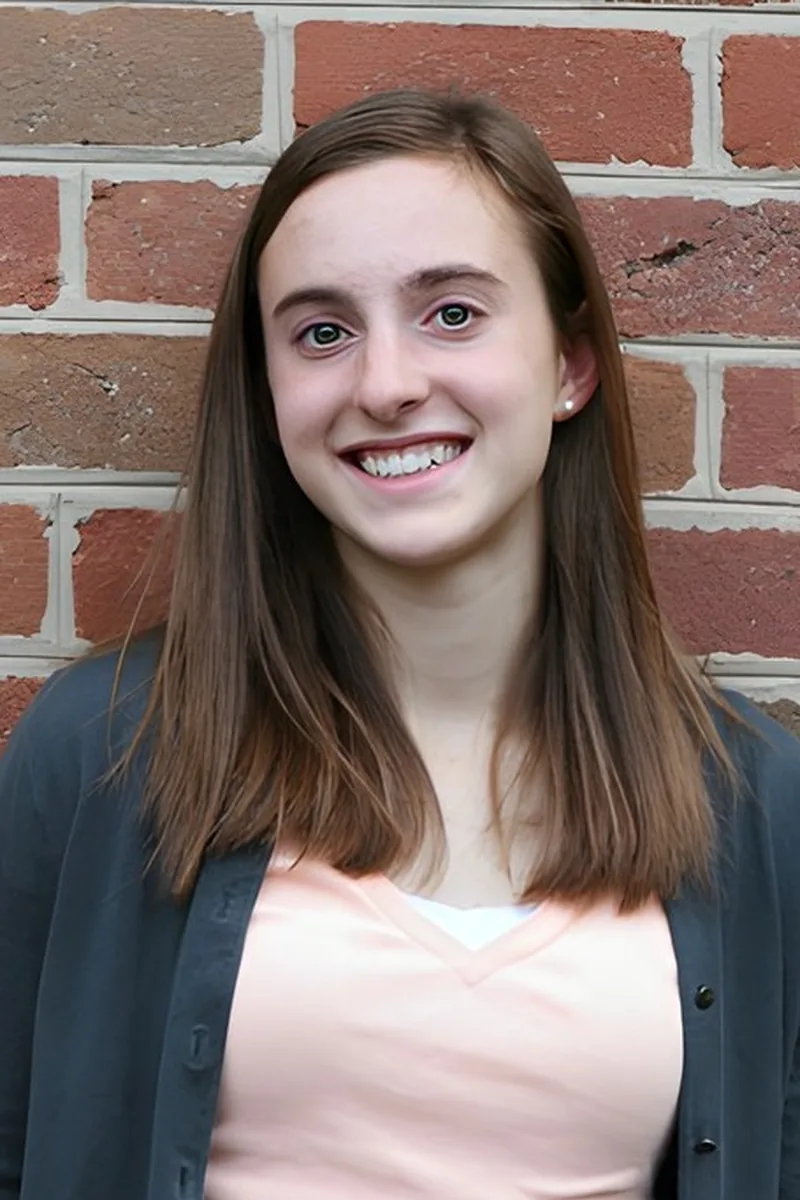
Scoring a 1550 on the SAT herself, Kathleen knows exactly where the test tries to trip students up — from no-change answers on the Writing section to the wordy word problems that disguise straightforward algebra. Her math degree at Washington University gives her a particular edge on the quantitative side, where she teaches students to spot which formula a question is actually testing before they start calculating. She's rated 4.5 by past students.
Preparing for the SAT means building two distinct skill sets — analytical reading and algebraic problem-solving — and Joy's academic background spans both. She earned a double major from Boston University in Biology and Hispanic Language and Literatures, which means she's equally comfortable walking through passage-based evidence questions and tackling quadratic or linear modeling problems.
Naomi's biochemistry and Spanish double major at Harding means she tackles both sides of the SAT — breaking down reading comprehension passages with the same precision she applies to stoichiometry problems in the math section. She teaches grammar rules for the Writing section as actual logic systems, not just "pick what sounds right" instincts, which tends to produce more consistent score jumps. Her background tutoring across English, chemistry, and languages gives her a versatile toolkit for a test that demands range.
Studying political science at the University of Michigan means Mahika reads and writes analytically every day — skills that translate directly to the SAT's evidence-based reading and writing sections. She teaches students to identify argument structure in passages and apply grammar rules in context, while also covering the math side with targeted strategies for algebra and data analysis questions. That dual comfort across both halves of the test is hard to find in a single tutor.
Kristen scored a 1480 on the SAT and brings a reading teacher's instinct for breaking down dense passages — the kind that trip students up in the Evidence-Based Reading section. She walks through question types systematically, teaching students to identify trap answers and use textual evidence efficiently across both the Reading and Writing & Language sections. Her English background also means she can sharpen grammar and essay skills simultaneously during prep.
Currently in a six-year medical program, Vijaya knows what it takes to score in the top percentile — her own 1550 SAT is proof — but more importantly, she knows how to teach the timing and elimination strategies that make that score repeatable for someone else. She covers both sides of the exam, connecting the algebraic reasoning in the Math section to the analytical reading skills the Evidence-Based Reading questions demand. Rated 5.0 by students.
Dennis's finance and statistics coursework at NYU means the SAT Math section plays to his strengths — he teaches students to spot the underlying algebra and data-analysis patterns that repeat across every practice test, turning unfamiliar-looking problems into familiar setups. His 1550 SAT score backs up a prep approach built on efficiency: knowing which questions to attack first, where to double-check, and how to manage the clock so careless errors don't eat into a strong performance.
I am passionate about helping students with math, science, test prep, and more! As sophomore undergraduate at Brown University studying Mathematics and Biophysics, I am well experienced with many topics. I received a perfect 36 on my ACT, so I am very confident with test taking.
Having once struggled as a test-taker himself, Ritik developed a systematic approach to the SAT that emphasizes building intuition over memorizing tricks — particularly on the Math section, where his aerospace engineering training at Purdue means he can unpack everything from algebraic modeling to data analysis with real clarity. He scored a 1420 on the SAT and uses that experience to teach pacing strategies and pattern recognition across both sections. His six years of tutoring students from elementary school through college means he's quick at diagnosing where points are being lost and adjusting accordingly.
Having worked for both the math and Spanish departments at Indiana University while maintaining a 4.0, Emily developed the kind of cross-disciplinary precision that pays off on the SAT — she's equally comfortable unpacking tricky algebra and data questions as she is teaching students to navigate evidence-based reading passages. She scored a 1480 on the SAT herself and knows how to coach pacing and question triage so students stop leaving points on the table. Rated 5.0 by students.
What separates David's SAT approach is his computer science mindset — he treats the test as a system to decode, teaching students to spot the predictable logic behind both the math section's algebra and data problems and the reading section's evidence-based question structures. He scored a 1570 on the SAT himself and knows exactly where the exam rewards methodical process over intuition. Rated 5.0 by students.
Molecular biology coursework demands the same kind of precise, evidence-based reasoning that shows up throughout the SAT — pulling key details from dense material, interpreting data, and constructing logical arguments under pressure. Annabel pairs that scientific training with a perfect 1600 SAT score, meaning she knows the test inside out from both the math and verbal sides. She teaches students to spot the structural patterns in Reading passages and recognize the algebraic setups the College Board recycles in the Math sections.
A 1400 SAT and a communication background give Logan a dual advantage: he knows the test's structure cold and can clearly articulate the reasoning behind every answer choice. His approach to the Reading and Writing sections leans heavily on argument analysis — identifying claims, evaluating evidence, and spotting the rhetorical moves that the College Board loves to test. Rated 5.0 by students, he also brings strong math fundamentals from his 36 ACT composite to shore up the quantitative side.
Classics and philosophy trained Austin to read dense, argument-heavy texts with precision — exactly the skill that separates good SAT Reading scores from great ones. He scored a 1570 and teaches students to trace an author's reasoning through evidence-based questions rather than relying on surface-level comprehension. His grammar and writing chops carry over to the Writing and Language section, where he unpacks the punctuation and syntax rules the test recycles in every form.
Medical school admissions forced Nishad to master every section of the SAT on his way to a 1580 composite — and that full-test perspective means he coaches the Reading, Writing, and Math sections as one integrated strategy rather than three separate prep tracks. His premed science training sharpens his approach to data interpretation and graph-based questions, while his literature and essay background keeps the evidence-based reading instruction equally rigorous.
What makes John effective for SAT prep is that he teaches both halves of the exam with equal fluency — his English and drama training sharpens his approach to passage analysis and evidence-based reading, while his math and physics background means he handles the algebra, data interpretation, and problem-solving sections without switching gears. He scored a 1420 on the SAT himself and holds a perfect 36 ACT composite, so he knows how standardized tests are constructed and where they try to trip students up. Rated 4.9 by students, he builds pacing and elimination strategies tailored to each section's specific traps.
Scoring a 1520 on the SAT takes more than content knowledge — it requires knowing when to slow down on tricky evidence-based reading questions and when to trust your instincts on the math no-calculator section. Vansh pairs that firsthand experience with an aerospace engineering background at Georgia Tech, which means the quantitative reasoning and data analysis portions are second nature to him. Rated 5.0 by students, he breaks each section into repeatable strategies that make test day feel predictable.
A 1530 SAT scorer who tinkers with cars and old electronics for fun, Aaron brings that same diagnostic mindset to test prep — isolating exactly where points are being lost and building targeted strategies for each section. He's particularly sharp on the math side, where his mechanical engineering background makes even the trickiest word problems and data interpretation questions feel routine. Rated 5.0 by students.
Testimonials
Because the right SAT tutor makes all the difference.
Average Session Rating – Based on 3.4M Learner Ratings
Practice SAT
Free practice tests, flashcards, and AI tutoring for SAT
Nearby SAT Tutors
Other Springfield Tutors
Related Test Prep Tutors in Springfield
Frequently Asked Questions
Varsity Tutors matches Springfield students with expert SAT tutors for 1-on-1 instruction. We pair each student with a tutor based on their specific needs, learning style, and goals.
Whether you need homework help, exam prep, or want to get ahead, our SAT tutors are ready to help.
Common challenges include gaps from earlier material, difficulty with specific concepts, and trouble applying learning to new problems. These issues can snowball quickly in SAT.
A tutor identifies where you're stuck, fills in gaps, and provides targeted practice. The 1-on-1 format means you get help exactly where you need it.
Tutors work with your student's actual coursework—homework assignments, class notes, and upcoming tests. This keeps tutoring directly relevant to what's happening in the classroom.
When you share information about your student's school and curriculum, we can match you with a tutor who has relevant experience.
All tutors complete background checks, credential verification, and teaching evaluation. Many of our SAT tutors hold advanced degrees or have years of teaching experience.
You can review tutor profiles to find someone with the right background for your student's level and needs.
Many students see improved grades within a few weeks, along with better understanding of SAT concepts and more confidence tackling challenging material.
Tutors track progress and adjust their approach to ensure continued improvement.
Most students benefit from 1-2 sessions per week. More frequent sessions help if your student is significantly behind or has an important exam coming up.
Your tutor can recommend a schedule based on your student's specific situation and goals.
Tutoring is purchased in packages of hours, with rates varying by tutor experience. Varsity Tutors offers several options to fit different budgets and needs.
You can discuss pricing during your consultation to find what works best.
Your tutor will assess where your student is, discuss goals, and start working on priority areas. Most students bring current homework or upcoming test material to focus on.
By the end, you'll have a clear sense of how the tutor can help and a plan for moving forward.
Let’s find your perfect tutor
Answer a few quick questions. We’ll recommend the right plan and match you with a top 5% tutor.