Award-Winning Pre-Calculus Tutors
serving Springfield, MO
Pre-Calculus
Tutors in Springfield
Private 1-on-1 tutoring, weekly live classes for academic support, test prep & enrichment, practice tests and diagnostics, and more to elevate grades and test scores.
Based on 3.4M Learner Ratings
UniversitiesSchools & Universities
DeliveredHours Delivered
ProficiencyGrowth in Proficiency
Who needs tutoring?
No obligation. Takes ~1 minute.
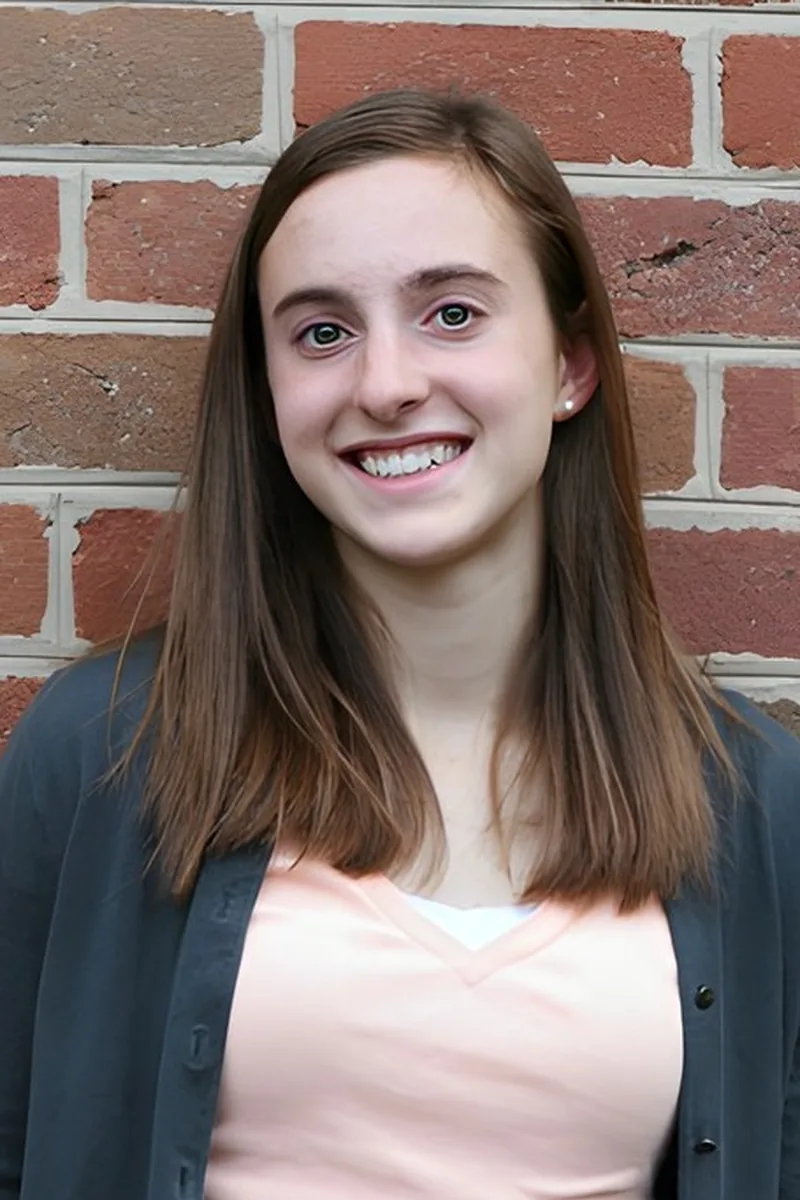
Most pre-calculus courses throw the unit circle, rational functions, and logarithmic properties at students in rapid succession without showing the thread connecting them — Kathleen's math degree from Washington University means she sees that thread clearly and teaches accordingly. She's especially sharp at bridging the gap between algebraic mechanics students already trust and the functional thinking calculus will demand, building each new concept as a natural extension rather than a separate topic to memorize. Her 35 ACT and 1550 SAT confirm the quantitative depth behind her approach.
What clicks for most students in pre-calculus is realizing that every new topic — rational functions, trig identities, logarithmic rules — is really just algebra wearing a different outfit. Mubariz, a chemistry major at WashU with a 34 ACT, teaches the course by stripping each concept back to the algebraic reasoning underneath it, then rebuilding so students see the how and why behind each step. His chemistry background means he's especially sharp on exponential and logarithmic relationships, where he can show students exactly how those functions behave in real applications.
I am interested in Physics and Mathematics and working out practical problems from plumbing to electronics. I will someday go back for my Ph.D. in Physics but until then I am looking to grow as an engineer or computer programmer.
Having tutored for both the Economics and Mathematics departments at TCU, Mason spent years showing students how algebraic reasoning scales up — and pre-calculus is exactly where that scaling happens, as familiar linear and quadratic thinking gives way to logarithmic, exponential, and trigonometric function families. He zeroes in on building the bridge between what students already trust from algebra and the more abstract function behavior that calculus will demand. His 31 ACT and economics training reinforce the quantitative fluency behind his approach.
The jump from algebra to pre-calculus often trips students up at a specific moment — when familiar equations become abstract function families with behaviors to analyze, not just answers to solve for. John's math degree means he can pinpoint exactly where that conceptual shift is breaking down, whether it's in rational function asymptotes, composite function notation, or the logic behind trigonometric graphs. His 35 ACT reflects the kind of precise quantitative reasoning he brings to each session.
Aerospace engineering at CU Boulder means Evan is solving problems right now that depend on the parametric equations, polar coordinates, and trigonometric relationships pre-calculus students are just meeting for the first time. He teaches each topic by connecting it to the algebra students already have down, then showing exactly where that concept reappears once calculus starts — so nothing feels like an isolated formula to memorize. His 33 ACT confirms the quantitative chops behind that bridge-building approach.
The jump into pre-calculus is often where students first encounter functions as objects to transform — stretching, shifting, and composing them — rather than just equations to solve. Mayuri approaches topics like trigonometric identities and logarithmic properties by connecting each one to the calculus concepts they're preparing students for. Her PhD-level math background means she can answer the 'why does this work?' questions that textbooks often skip.
Trigonometric identities and the behavior of rational, exponential, and logarithmic functions are the backbone of pre-calculus, and they're also exactly the tools Anatoliy relied on throughout his medical and science coursework. He teaches these topics by showing students the patterns that carry forward into calculus, so the material feels purposeful rather than abstract.
Chemical engineering at its core is applied pre-calculus — Austin spent his undergraduate years manipulating the same rational functions, exponential models, and trigonometric relationships that students encounter in this course, except embedded inside reactor design equations and thermodynamic cycles. He teaches topics like composite functions and asymptotic behavior by drawing on that engineering intuition, making the algebra-to-calculus bridge feel like a logical step rather than a leap.
The leap into pre-calculus — trigonometric identities, limits, and complex functions — requires connecting ideas from every prior math course into a coherent whole. Jessica approaches each topic by identifying exactly which foundational pieces a student is missing and rebuilding from there. Her science-heavy coursework in medical school keeps her fluent in the applied math that makes pre-calc concepts click.
Mechanical engineering runs on the pre-calculus toolkit — parametric curves for modeling motion, trigonometric functions for analyzing forces at angles, and conic sections for designing everything from gears to pressure vessels. Jordan earned his engineering degree solving problems where sloppy function algebra meant a wrong answer with real consequences, so he teaches topics like transformations and identities with that same precision. He's especially sharp at bridging the gap between the algebra students are comfortable with and the functional reasoning calculus will demand.
Most pre-calc struggles come down to one thing: students learned algebra procedures without building the intuition for how functions actually behave — and suddenly they're expected to transform, compose, and invert them fluently. Hannah's math degree means she can trace each new concept back to the algebraic reasoning underneath it, closing gaps in real time instead of layering new rules on top of shaky footing. She's particularly sharp at demystifying the shift from "solve for x" thinking to the function-level reasoning that calculus will demand.
A PhD in computer science means Samantha has spent years implementing the algorithms that depend on pre-calculus fundamentals — recursive sequences, matrix transformations, and the trigonometric calculations behind everything from graphics rendering to signal processing. She teaches these topics by revealing the computational logic underneath, showing students how a sequence definition or a composite function actually works rather than just what to plug in. Rated 5.0 by students.
Karl studied math and physics at Iowa State University, which means he's worked through every pre-calculus concept — polynomial end behavior, rational asymptotes, trig identities — as foundational tools for the calculus and differential equations courses that followed. He teaches the course with that forward-looking perspective, emphasizing how mastering something like composition of functions or limit intuition now prevents the confusion that derails students in Calc I. His subject range from elementary math through Calc III and differential equations means he can meet any gap head-on and fill it precisely.
Someone who genuinely loves puzzles and mathematical challenges tends to teach pre-calculus differently — Dylan digs into why a rational function has asymptotes where it does, or what's really happening geometrically when you compose two transformations, rather than handing students a recipe to follow. His three education-focused degrees and a 34 ACT reflect that depth, and his 5.0 rating suggests students notice the difference.
Cognitive science at Penn blends psychology, philosophy, and a surprising amount of mathematical modeling — Samantha's coursework has kept her actively working with the function families, transformations, and analytical reasoning that define pre-calculus. She's especially sharp at bridging the gap between algebraic mechanics and the conceptual shift pre-calc demands, like understanding why a rational function behaves near its asymptotes or how composite functions layer operations in a specific order. Her 1460 SAT reflects the quantitative grounding behind that clarity.
Competition math throughout high school taught Tracy to see pre-calculus topics like sequences, series, and trigonometric manipulations as puzzles with elegant internal logic — not just procedural hurdles before calculus. Her triple economics degree means she also knows how these tools land in practice, since exponential models and rate-of-change reasoning show up constantly in economic analysis. A 36 ACT and 4.9 rating confirm she delivers on both the conceptual and practical sides.
Everything in pre-calculus — logarithmic identities, trigonometric graphs, sequences, limits — exists to set up the ideas students will need in calculus. Because Agustin already teaches both AP Calc AB and BC, he knows exactly which pre-calc skills matter most and where gaps tend to cause trouble later. He spends extra time on function transformations and unit-circle reasoning, since those two areas pay the biggest dividends.
The jump from algebra to calculus-readiness often stalls at one specific point: understanding how functions actually behave — why a rational expression blows up near an asymptote, how composite functions layer transformations, what makes polynomial end behavior predictable. Samuel tackles that conceptual bridge head-on, drawing on his applied mathematics training at Caltech where these ideas aren't theoretical warm-ups but working tools. His 1550 SAT confirms the quantitative sharpness behind his teaching.
Environmental engineering coursework — modeling pollutant dispersion, watershed flow rates, decay of contaminants — runs on exactly the exponential, logarithmic, and trigonometric functions that pre-calculus introduces. Kate teaches these topics with the instinct of someone who's built real models around them through both her bachelor's and master's work, connecting each function family to the physical behavior it describes. Her 1580 SAT and 4.9 rating confirm the precision she brings to every session.
Doing research in Spectral Graph Theory at MIT means Enrico encounters the full toolkit of pre-calculus — eigenvalue behavior, polynomial roots, matrix transformations — at a level where shaky fundamentals would be immediately exposed. He teaches the course by making definitions click intuitively, so that concepts like composite functions or rational expressions feel like natural extensions of algebra rather than arbitrary new rules. His 36 ACT, 1570 SAT, and 5.0 rating confirm the depth behind that intuition.
Until age 16, Viktor saw math as mindless formula memorization — then a series of great teachers revealed the deeper logic underneath, and he ended up majoring in mathematics at UChicago. That conversion story shapes how he teaches pre-calculus: he digs into *why* the unit circle works or what a logarithm actually means, so students build real understanding instead of a formula sheet they'll forget by finals. His 1600 SAT and 35 ACT confirm the mathematical fluency behind that approach.
Todd's biology degree from UIUC built the quantitative reasoning that pre-calculus demands — modeling population dynamics with exponential and logarithmic functions, analyzing periodic phenomena with trig, interpreting rate-of-change problems that preview calculus. He draws on that science background to give function families a concrete meaning, so topics like transformations and composite functions feel like tools with a purpose rather than abstract exercises. His 33 ACT and 5.0 rating back that up.
Fred's aerospace engineering degree from Princeton meant living inside the math that pre-calculus students are just meeting — parametric equations describing flight paths, trigonometric models for oscillating systems, and the limit-adjacent thinking that bridges algebra to calculus. He teaches the course knowing exactly which concepts will matter most once students cross into derivatives and integrals, and he builds that forward-looking intuition into every session. His 1550 SAT confirms the quantitative depth behind the approach.
A PhD in statistics and a biomedical engineering degree mean Sam has spent years where pre-calculus isn't a course — it's the scaffolding holding together regression models, signal processing, and experimental design. He digs into the transition points that trip students up most, like moving from polynomial arithmetic to analyzing rational function behavior or connecting trig identities to their geometric origins. Rated 4.9 by students.
Cognitive science at Rice trained Adam to think about how people learn abstract patterns — which is exactly what pre-calculus demands when students hit the wall between comfortable algebra and the conceptual leap to limits and derivatives. He zeroes in on building intuition around function transformations and trigonometric reasoning, connecting each new idea to the cognitive scaffolding that makes it stick. His 34 ACT confirms the quantitative chops behind that approach.
Testimonials
Because the right Pre-Calculus tutor makes all the difference.
Average Session Rating – Based on 3.4M Learner Ratings
Practice Pre-Calculus
Free practice tests, flashcards, and AI tutoring for Pre-Calculus
Nearby Pre-Calculus Tutors
Other Springfield Tutors
Related Math Tutors in Springfield
Frequently Asked Questions
Varsity Tutors matches Springfield students with expert Pre-Calculus tutors for 1-on-1 instruction. We pair each student with a tutor based on their specific needs, learning style, and goals.
Whether you need homework help, exam prep, or want to get ahead, our Pre-Calculus tutors are ready to help.
Common challenges include gaps from earlier material, difficulty with specific concepts, and trouble applying learning to new problems. These issues can snowball quickly in Pre-Calculus.
A tutor identifies where you're stuck, fills in gaps, and provides targeted practice. The 1-on-1 format means you get help exactly where you need it.
Tutors work with your student's actual coursework—homework assignments, class notes, and upcoming tests. This keeps tutoring directly relevant to what's happening in the classroom.
When you share information about your student's school and curriculum, we can match you with a tutor who has relevant experience.
All tutors complete background checks, credential verification, and teaching evaluation. Many of our Pre-Calculus tutors hold advanced degrees or have years of teaching experience.
You can review tutor profiles to find someone with the right background for your student's level and needs.
Many students see improved grades within a few weeks, along with better understanding of Pre-Calculus concepts and more confidence tackling challenging material.
Tutors track progress and adjust their approach to ensure continued improvement.
Most students benefit from 1-2 sessions per week. More frequent sessions help if your student is significantly behind or has an important exam coming up.
Your tutor can recommend a schedule based on your student's specific situation and goals.
Tutoring is purchased in packages of hours, with rates varying by tutor experience. Varsity Tutors offers several options to fit different budgets and needs.
You can discuss pricing during your consultation to find what works best.
Your tutor will assess where your student is, discuss goals, and start working on priority areas. Most students bring current homework or upcoming test material to focus on.
By the end, you'll have a clear sense of how the tutor can help and a plan for moving forward.
Let’s find your perfect tutor
Answer a few quick questions. We’ll recommend the right plan and match you with a top 5% tutor.