Award-Winning Calculus Tutors
serving Gulfport, MS
Calculus
Tutors in Gulfport
Private 1-on-1 tutoring, weekly live classes for academic support, test prep & enrichment, practice tests and diagnostics, and more to elevate grades and test scores.
Based on 3.4M Learner Ratings
UniversitiesSchools & Universities
DeliveredHours Delivered
ProficiencyGrowth in Proficiency
Who needs tutoring?
No obligation. Takes ~1 minute.

John's Latin degree isn't a math credential, but parsing complex grammatical structures in a highly inflected language builds the same kind of systematic, rule-based reasoning that calculus demands — identifying patterns, applying transformations, and tracking how small changes propagate through a larger expression. His 35 ACT composite confirms he can back that up quantitatively, and he brings that analytical precision to unpacking derivatives and limit definitions where careful step-by-step logic matters most.
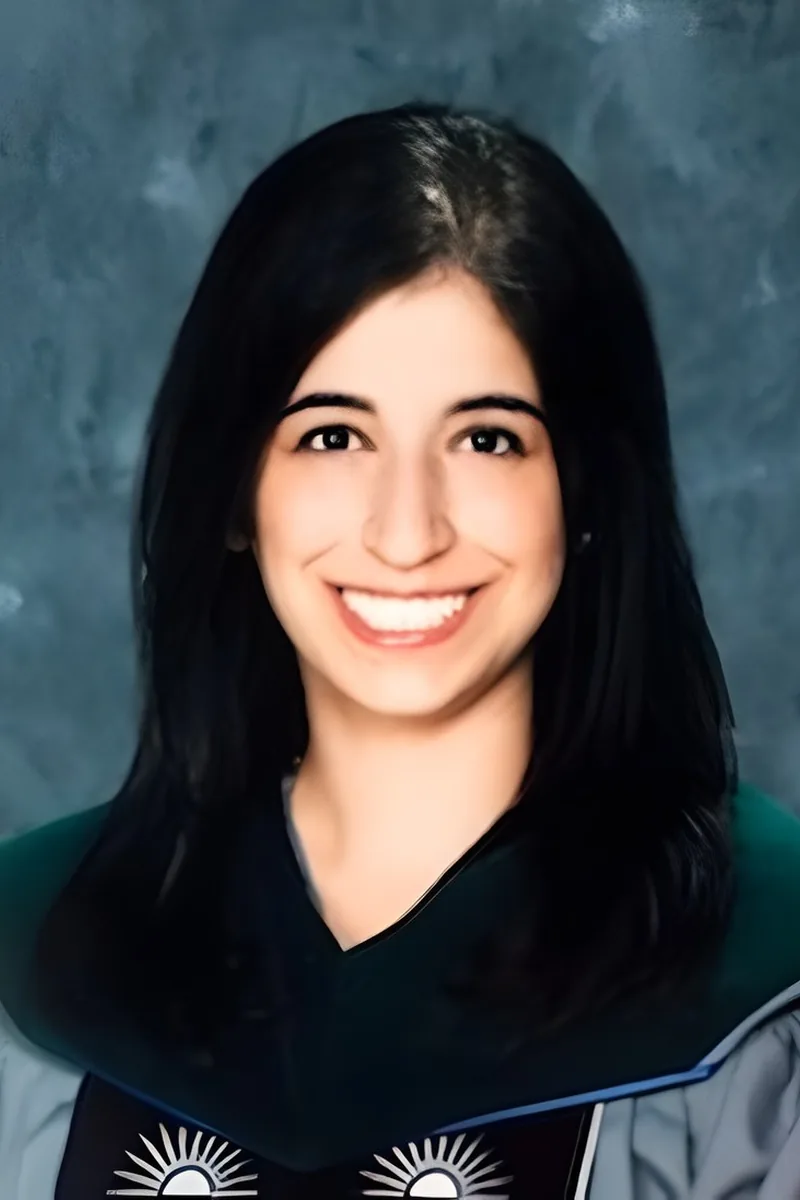
The jump to Calculus demands comfort with abstraction — understanding what a derivative actually represents, not just how to apply the power rule. Jessica tackles limits, integration techniques, and rate-of-change problems by connecting them to concrete scenarios, drawing on the quantitative reasoning she sharpened through her science-heavy coursework at Penn and in medical school.
Biology at UCLA doesn't let you skip calculus — Joseph worked through it in the context of modeling population dynamics, enzyme kinetics, and epidemiological curves, and his public health master's at Yale deepened that quantitative toolkit with biostatistics and rate-based modeling. His 1530 SAT confirms the math chops, and he teaches derivatives and integrals by connecting them to the biological systems where they actually matter.
Limits, derivatives, and integrals all click faster when a student sees the underlying logic instead of just memorizing formulas. Brian studied math and economics at Caltech, where calculus wasn't just a course but the daily language of nearly every discipline — so he teaches it with an emphasis on why the chain rule or integration by parts works, not just when to apply it.
Biology at Cornell means Josef worked through calculus where it actually lives — modeling enzyme kinetics, analyzing growth curves, and interpreting the rates of change that govern biological systems. His 1530 SAT confirms the quantitative chops to back that up, and he teaches derivatives and integrals by anchoring each concept in the kind of applied problem where the math stops feeling abstract. Rated 5.0 by students.
Tackling limits, derivatives, and integrals requires building each concept on the last, and one shaky step can derail an entire semester. Kathy's quantitative training in economics at Duke kept her deep in applied calculus — optimization problems, rates of change, area under curves — and she teaches the reasoning behind each rule so students can handle problems they haven't seen before.
Biology at the pre-health level is surprisingly calculus-heavy — enzyme kinetics, membrane transport rates, and the pharmacology models Shayan encounters in his Penn coursework all depend on derivatives and integrals behaving predictably. That daily exposure to calculus as a tool for solving real biological problems gives him a concrete vocabulary for explaining chain rules, related rates, and integration techniques without leaning on pure abstraction. Rated 5.0 by students.
Keith's academic path runs through political science and law, not mathematics, so he's upfront that calculus is well outside his core expertise. His tutoring experience across multiple math levels means he can support students navigating early concepts like limits and basic derivatives, bringing the same structured, logical thinking that earned him a 1560 SAT and admission to Cornell Law.
From epsilon-delta definitions of limits to integration techniques like substitution and parts, calculus demands both conceptual understanding and mechanical skill. James has tutored college students through calculus courses at Harvard for years, often connecting abstract ideas — like why the chain rule works — back to tangible applications in chemistry and the physical sciences. That dual perspective makes dense material more intuitive.
Electrical engineering at Stanford means Jai didn't just take calculus — he used it daily, from analyzing circuit behavior with differential equations to applying Fourier transforms in signal processing. That depth turns him into someone who can explain not just how to evaluate an integral but why it models the physical quantity it does. His 1590 SAT confirms the quantitative precision he brings to every problem.
Biostatistics at the master's and doctoral level means Nina uses calculus constantly — integration for probability density functions, derivatives for maximum likelihood estimation, and multivariable chain rules that underpin regression models. That daily fluency lets her teach concepts like Riemann sums or related rates by connecting them to the statistical machinery they actually power. Rated 5.0 by students.
Derivatives, integrals, and series aren't abstract math for Matthew — they're the daily language of his Mechanical and Aerospace Engineering coursework at Princeton. He tackles calculus by first making sure a student's algebra and trig foundations are solid, then walks through new concepts with worked examples before ramping up the difficulty. That layered approach keeps students from memorizing procedures they don't actually understand.
Frances's psychology background at Duke involved statistical modeling and data analysis — work that builds directly on the calculus concepts of rates of change and area under a curve. She teaches early calculus by connecting derivatives and integrals to the kind of quantitative reasoning she used in research, making notation feel purposeful rather than arbitrary. Rated 4.6 by students.
Testimonials
Because the right Calculus tutor makes all the difference.
Average Session Rating – Based on 3.4M Learner Ratings
Nearby Calculus Tutors
Other Gulfport Tutors
Related Math Tutors in Gulfport
Frequently Asked Questions
Varsity Tutors matches Gulfport students with expert Calculus tutors for 1-on-1 instruction. We pair each student with a tutor based on their specific needs, learning style, and goals.
Whether you need homework help, exam prep, or want to get ahead, our Calculus tutors are ready to help.
Common challenges include gaps from earlier material, difficulty with specific concepts, and trouble applying learning to new problems. These issues can snowball quickly in Calculus.
A tutor identifies where you're stuck, fills in gaps, and provides targeted practice. The 1-on-1 format means you get help exactly where you need it.
Tutors work with your student's actual coursework—homework assignments, class notes, and upcoming tests. This keeps tutoring directly relevant to what's happening in the classroom.
When you share information about your student's school and curriculum, we can match you with a tutor who has relevant experience.
All tutors complete background checks, credential verification, and teaching evaluation. Many of our Calculus tutors hold advanced degrees or have years of teaching experience.
You can review tutor profiles to find someone with the right background for your student's level and needs.
Many students see improved grades within a few weeks, along with better understanding of Calculus concepts and more confidence tackling challenging material.
Tutors track progress and adjust their approach to ensure continued improvement.
Most students benefit from 1-2 sessions per week. More frequent sessions help if your student is significantly behind or has an important exam coming up.
Your tutor can recommend a schedule based on your student's specific situation and goals.
Tutoring is purchased in packages of hours, with rates varying by tutor experience. Varsity Tutors offers several options to fit different budgets and needs.
You can discuss pricing during your consultation to find what works best.
Your tutor will assess where your student is, discuss goals, and start working on priority areas. Most students bring current homework or upcoming test material to focus on.
By the end, you'll have a clear sense of how the tutor can help and a plan for moving forward.
Let’s find your perfect tutor
Answer a few quick questions. We’ll recommend the right plan and match you with a top 5% tutor.