Award-Winning Finite Mathematics Tutors
serving Worcester, MA
Finite Mathematics
Tutors in Worcester
Private 1-on-1 tutoring, weekly live classes for academic support, test prep & enrichment, practice tests and diagnostics, and more to elevate grades and test scores.
Based on 3.4M Learner Ratings
UniversitiesSchools & Universities
DeliveredHours Delivered
ProficiencyGrowth in Proficiency
Who needs tutoring?
No obligation. Takes ~1 minute.

Engineering coursework at MIT means Natasha has used matrix operations, linear systems, and optimization methods as everyday tools — not just textbook exercises — which maps directly onto the core of most finite mathematics syllabi. She's especially sharp at translating messy word problems into clean constraint inequalities for linear programming, a step where many students lose the thread between the scenario and the math. Rated 4.9 by students.
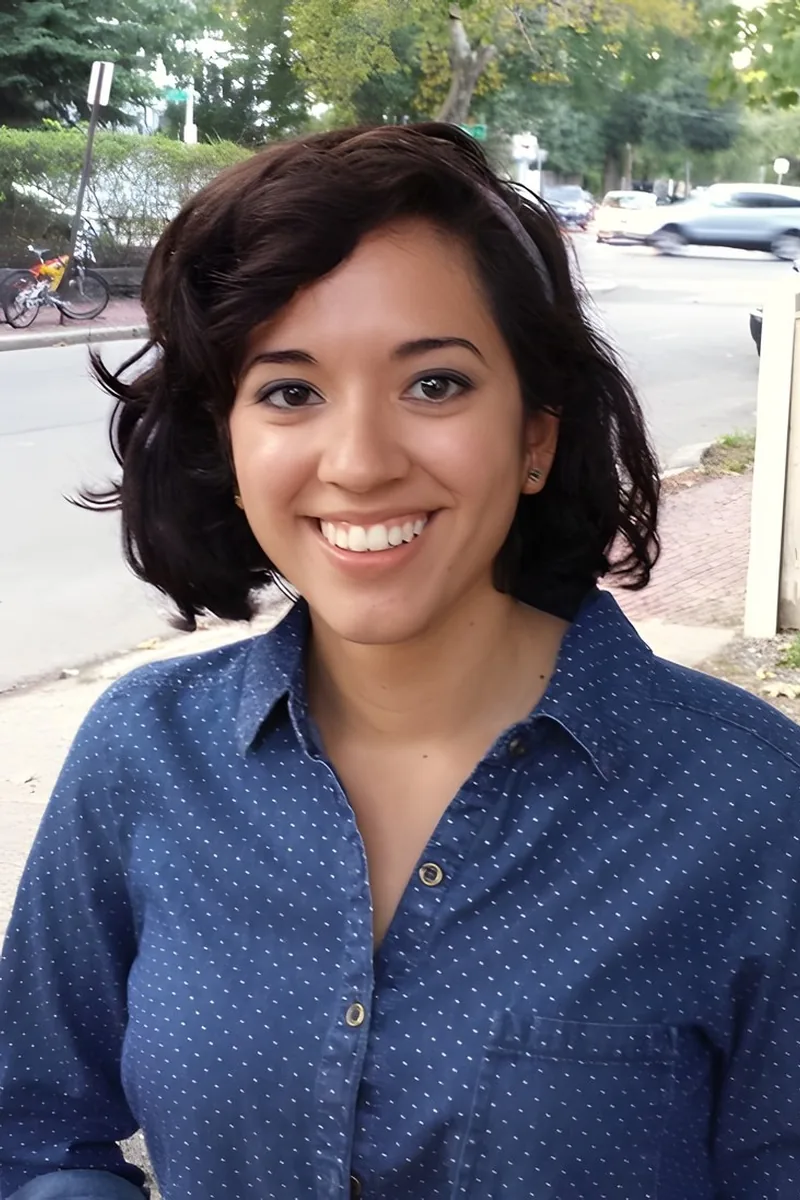
Finite math pulls together matrix operations, linear programming, probability, and combinatorics into a single course that can feel scattered without a unifying thread. Valerie's applied math training gives her a bird's-eye view of how these topics connect, especially in modeling and decision-making contexts. She walks through each problem type with concrete examples so students see the structure underneath the formulas.
Applied math majors don't just pass through finite mathematics — topics like linear programming, matrix operations, and combinatorics are foundational to the optimization and modeling work Roel trained in throughout his degree. He's especially sharp at teaching students how to set up and interpret systems of linear inequalities, connecting the algebraic steps to what the feasible region actually represents on a graph.
Most finite mathematics students hit a wall not on the computation but on the setup — figuring out whether a problem calls for a combination or a conditional probability formula, or how to translate a word problem into a system of inequalities. Hope's math degree and her experience teaching everything from pre-algebra through multivariable calculus means she can trace exactly where a student's algebraic reasoning breaks down and patch it in real time. Rated 4.8 by students.
Civil engineering graduate work is essentially applied matrix algebra and optimization — Louis uses linear programming and systems of inequalities daily when modeling structural loads and resource constraints, which maps directly onto the core of any finite mathematics syllabus. He walks through each problem by connecting the abstract setup to a concrete engineering scenario, making topics like feasibility regions and objective functions feel less arbitrary. Rated 4.9 by students.
Caltech's economics curriculum put Brian through heavy doses of matrix algebra, optimization under constraints, and probability — the exact toolkit finite mathematics courses test. He approaches linear programming and counting problems by connecting them to the economic modeling contexts where he first learned them, which gives students a concrete anchor for topics that can otherwise feel like disconnected chapters.
Engineering PhD coursework forced Sabry to treat matrix operations, linear systems, and optimization not as textbook exercises but as daily tools for modeling real physical systems — which is exactly the mathematical machinery that finite mathematics courses test. He unpacks each problem type by connecting it back to the underlying structure, whether that's setting up a system of inequalities for linear programming or building a transition matrix for a Markov chain. His years running recitations for both undergrad and graduate students mean he's seen the specific algebraic missteps that slow people down.
Ken's master's in applied mathematics means he's worked with matrix operations, optimization models, and probability at a level well beyond what a finite mathematics course requires — so he can quickly pinpoint where a student's reasoning breaks down in a linear programming tableau or a Markov chain transition setup. He's especially sharp at teaching the algebraic translation step, turning a paragraph of constraints into a clean system of inequalities ready to solve.
Victor's applied mathematics master's work means topics like matrix operations, linear programming, and probability aren't isolated textbook chapters for him — they're tools he's used repeatedly in modeling and optimization contexts. He's especially sharp at unpacking the algebra behind systems of inequalities, where students often set up constraints incorrectly because they rush past the translation from words to math. Rated 5.0 by students.
Linear programming, matrix operations, and probability models can feel disconnected from the rest of a student's math experience, which is part of what makes finite mathematics so tricky. Alan's mathematics degree and teaching background let him tie these topics together into a coherent framework rather than treating each chapter as an isolated unit. He's particularly effective at translating word-heavy application problems into clear mathematical setups.
Graduate-level biostatistics and plant biology research forced Dan to live inside the probability, matrix algebra, and data modeling that finite mathematics courses cover — except he was applying them to real population genetics and ecological datasets. He breaks down counting problems and probability setups by connecting them to the quantitative reasoning he uses daily, which tends to make abstract notation feel less arbitrary. Rated 5.0 by students.
Sam's PhD in statistics means the probability and matrix algebra chapters in finite mathematics are second nature — he taught and applied those tools at a graduate level long before they showed up in an undergrad syllabus. His biomedical engineering background adds a practical edge when explaining how to set up linear programming problems or interpret a Markov chain, since he's used those models to solve real optimization and modeling questions. Rated 4.9 by students.
Three engineering degrees — including one in applied mathematics — mean Rahi has used matrix operations, optimization setups, and probability computations as everyday working tools, not just textbook exercises. He unpacks the logic behind each problem type, whether it's building a system of inequalities for linear programming or organizing information in a counting argument, so the structure is clear before any calculation begins.
Notre Dame's Natural Sciences program puts Mark through enough applied math — probability models, matrix operations, data analysis — that the core of a finite mathematics course isn't unfamiliar territory. He breaks down counting and probability setups by asking students to identify what's being counted and why before reaching for any formula, which clears up the permutation-versus-combination confusion that derails most homework sets. Rated 4.8 by students.
Physics training builds a particular kind of comfort with matrices and systems of equations — Erik used them constantly for modeling physical systems, which translates directly into the matrix algebra and linear programming that finite mathematics courses test. He unpacks each problem by clarifying the structure first, making sure students see how to organize constraints or set up a payoff table before jumping into computation.
Emma's combination of a neurobiology major and economics minor at Harvard meant heavy exposure to the exact topics that define finite mathematics — probability, matrices, linear programming, and combinatorics. She teaches students to recognize which model fits a given problem, then walks through the setup step by step so the logic is clear. Her 5.0 rating speaks to how well that structured approach translates for students.
I like helping students. I am very patient. I have experience teaching Calculus classes at the University of Miami. I have done private tutoring for all levels of math up to Calculus, as well as Statistics, Business Math, and Math Finance. I have worked in the actuarial field. I have an undergraduate degree in mathematics from Michigan State University and a Master's degree in mathematics from the University of Miami. I worked for The Princeton Review as a tutor for the SAT. I did very well on both the SAT and ACT, and like teaching students how to do better on those. I like history, too, and always find it fun to tutor history.
Testimonials
Because the right Finite Mathematics tutor makes all the difference.
Average Session Rating – Based on 3.4M Learner Ratings
Nearby Finite Mathematics Tutors
Other Worcester Tutors
Related Math Tutors in Worcester
Frequently Asked Questions
Finite Mathematics covers practical mathematical topics like logic, set theory, probability, statistics, matrices, and linear programming—without calculus. Students in Worcester often take it as a college-prep course or requirement for business, computer science, or social science programs. It bridges the gap between algebra and higher-level math by focusing on real-world applications rather than continuous functions.
Many students struggle with translating word problems into mathematical models, understanding when to apply different techniques (like matrix operations or probability rules), and seeing how abstract concepts connect to real situations. Additionally, the shift from memorizing procedures to understanding underlying logic can be challenging. Personalized tutoring helps students break down complex problems into manageable steps and recognize patterns across different topics.
During the initial session, a tutor will assess your current understanding of key concepts, identify specific areas where you're struggling (whether it's probability, linear programming, or another topic), and learn about your learning style. They'll then create a personalized plan tailored to your goals—whether that's improving your grade, preparing for an exam, or building confidence with problem-solving strategies. This foundation ensures every subsequent session builds on what works best for you.
Word problems require translating real-world scenarios into mathematical language—a skill that takes practice and strategy. Tutors teach students how to identify what information matters, organize it systematically, and choose the right mathematical tools (sets, matrices, probability formulas, etc.). By working through problems step-by-step and discussing the reasoning behind each choice, students develop confidence and can apply these strategies to unfamiliar problems on their own.
Yes. Varsity Tutors connects you with tutors who are familiar with common Finite Mathematics textbooks and approaches used across Worcester's school districts. Whether your course emphasizes applications, proof-based reasoning, or a blend of both, tutors can align their instruction with your specific curriculum and teacher's expectations, making tutoring sessions directly relevant to your coursework.
Finite Mathematics requires understanding not just how to perform calculations, but why certain methods work and when to use them. Tutors help students see the connections between topics—for example, how probability relates to set theory, or how matrices simplify systems of equations. Through guided practice and discussion, students develop deeper conceptual understanding, which makes it easier to tackle new problems and retain what they've learned.
Absolutely. Math anxiety is common, and one-on-one tutoring creates a judgment-free space to ask questions, work through mistakes, and build confidence at your own pace. Tutors can break problems into smaller, manageable steps, celebrate progress, and help you see that struggling with a problem doesn't mean you're not capable—it's a normal part of learning. Many students find that personalized support transforms their relationship with math.
Simply connect with Varsity Tutors and let us know your goals, current challenges, and availability. We'll match you with a tutor who has expertise in Finite Mathematics and understands your needs. You can then schedule your first session at a time that works for you, and begin working toward stronger understanding and better grades.
Let’s find your perfect tutor
Answer a few quick questions. We’ll recommend the right plan and match you with a top 5% tutor.