Award-Winning Calculus Tutors
serving Worcester, MA
Calculus
Tutors in Worcester
Private 1-on-1 tutoring, weekly live classes for academic support, test prep & enrichment, practice tests and diagnostics, and more to elevate grades and test scores.
Based on 3.4M Learner Ratings
UniversitiesSchools & Universities
DeliveredHours Delivered
ProficiencyGrowth in Proficiency
Who needs tutoring?
No obligation. Takes ~1 minute.

I am a first-year medical student. I am extremely passionate about helping high school students craft meaningful and outstanding personal statements. During our sessions, we will brainstorm essay ideas, fine-tune word choice/tone/voice, and tailor essays to specific schools. My goal is to help students write essays that will stand out to the admissions officers of their dream school.
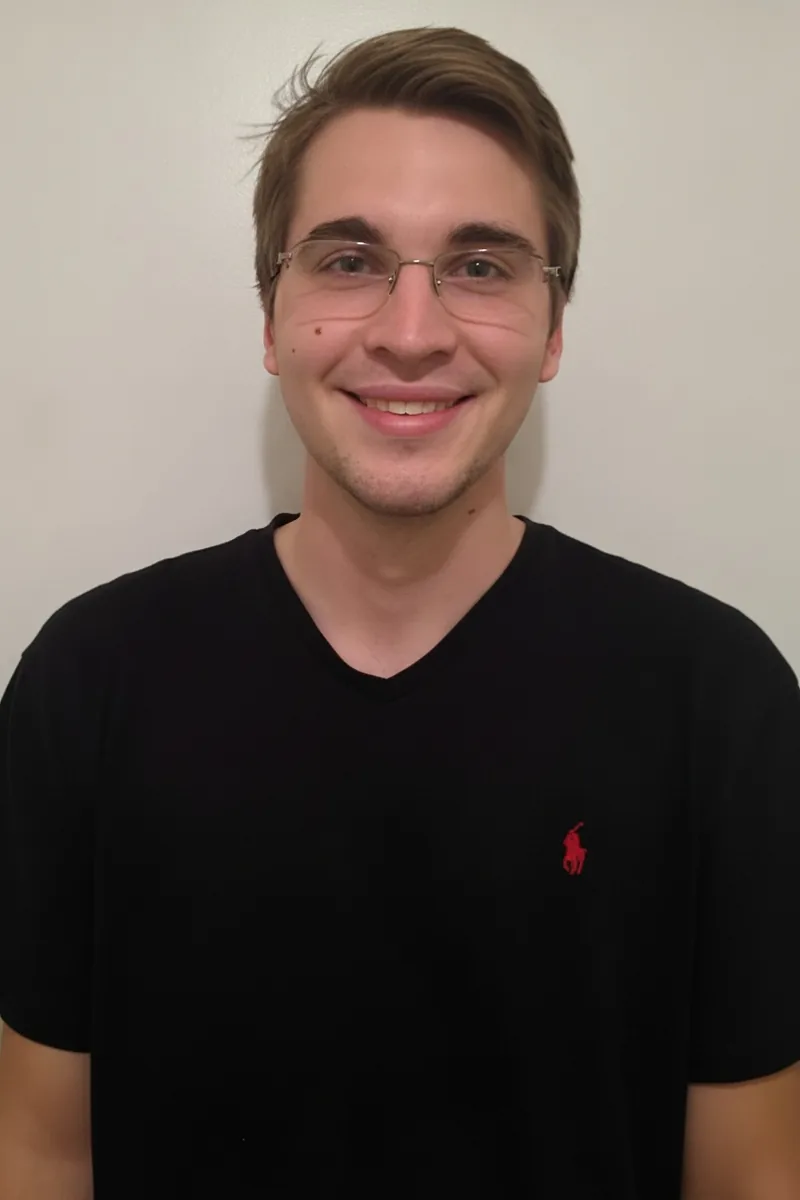
Limits and derivatives become far more manageable when a student can visualize what's happening on a graph before jumping into the algebra. Will's science-heavy pre-med background at Boston University means he's comfortable applying calculus to real problems — rates of change in biology, optimization in chemistry — which gives students concrete anchors for abstract rules like the chain rule and integration by parts.
I'm a student at Clark University and I can help you with whatever you need. Whatever your learning style, whatever your difficulties, I will help you through it. Together, we can solve any problem you have. I can teach you how to study, I can edit your papers, I can teach you memory tricks and organizational skills and I guarantee that after a little while with me, your grades WILL improve.
Limits, derivatives, and integrals each layer on top of the last, so one shaky concept can cascade into confusion for weeks. Megan tackles calculus by diagnosing exactly which layer needs reinforcing — whether it's the algebra underneath a derivative rule or the geometric intuition behind a Riemann sum — before pushing forward. She's a 5.0-rated tutor who covers math from middle school through college level.
I am a rising senior at Wellesley College majoring in Music and American Studies. During my first year at college, I started tutoring students in grades K-12 at the Mathnasium center in Wellesley, MA. The following two years, I tutored my peers taking courses in American Popular Music, Jazz Music Theory, and Jazz History. Over the past two years, I've developed a passion for helping students pursue writing and research topics that reflect their identities and personal histories. By framing education as a lens through which to perceive themselves, students have been infinitely more engaged. I'm most passionate in tutoring topics related to music history, but interestedly, I've come to deeply appreciate and value writing, research, and analysis skills. Outside of the classroom, I play alto saxophone in a couple of jazz groups, read graphic novels, bake, knit/crochet, and am learning to skate on a longboard!
The jump from algebra to calculus often stalls at limits, where students suddenly need to reason about behavior near a point rather than just plugging in values. Stephen unpacks the intuition behind derivatives and integrals before diving into the mechanics, so techniques like the chain rule or integration by substitution have context. He also covers the applied side — related rates, optimization, area between curves — with real-world setups that make the problems meaningful.
Yu's political science degree and education policy work involve more quantitative analysis than people expect — regression models, rate-of-change interpretations in policy data, and the kind of mathematical reasoning that underpins early calculus concepts like derivatives and accumulation. His Master's from Harvard's Graduate School of Education also means he knows how to break down the conceptual leap from algebra to calculus in a way that builds genuine understanding, not just procedural shortcuts.
Linguistics training at Harvard might seem unrelated to calculus, but Samuel's field is built on formal logic and structural analysis — skills that translate directly to parsing function behavior and understanding why limit definitions work the way they do. His math tutoring spans elementary through calculus, and his 5.0 rating suggests he's effective at making even his less central subjects click for students.
Limits, derivatives, and integrals each layer on top of each other, so a shaky grasp of one concept quietly undermines everything that follows. Talia diagnoses exactly where the confusion starts — whether it's the chain rule, u-substitution, or the fundamental theorem itself — and rebuilds understanding from that point forward.
An MIT writing major might seem like an unlikely calculus tutor, but Marisa's 1540 SAT shows she's genuinely strong with quantitative reasoning, and studying at a school where nearly everyone around her is deep in STEM means she's spent years absorbing how engineers and scientists think about rates of change and accumulation. She breaks down the notation and logic of limits and derivatives in plain, precise language — the same skill that makes her effective across her other subjects.
Princeton's curriculum and her current Master's in Medical Science at BU have kept Margaret immersed in quantitative reasoning — from research statistics to the rate-of-change problems that underpin pharmacology and physiology. She teaches calculus by connecting each new rule to the algebraic mechanics underneath it, so students see derivatives and integrals as extensions of skills they already have rather than a foreign language. Her 1530 SAT and 4.9 rating speak to that approach.
Environmental science at Harvard involves more quantitative work than most people expect — population modeling, resource depletion rates, and the kind of rate-of-change analysis that is, at its core, calculus. Alyssa's coursework gave her hands-on experience with derivatives in ecological contexts, and her 35 ACT composite confirms she can handle the math at a high level. Rated 5.0 by students.
Linguistics trains you to see structure in complexity — parsing syntax trees and mapping phonological rules requires the same kind of systematic, step-by-step reasoning that calculus demands when breaking a function into its derivative components. Diana applies that analytical habit to early calculus concepts like limits and differentiation, walking through each piece of notation until the logic behind it is clear. Her 1560 SAT confirms she's comfortable with serious quantitative work.
Kerry's psychology training isn't a calculus degree, but her productivity coaching practice is built on executive functioning — the exact skill set that determines whether a student can organize a multi-step integration problem or keep track of chain rule layers without losing the thread. Her 1500 SAT confirms solid quantitative reasoning, and her expertise in test anxiety means she can address the mental side of calculus exams that trips up students who actually know the material.
An English major with a 32 ACT composite, Meghan brings strong analytical reasoning to subjects outside her core humanities focus — and her tutoring roster includes math alongside her literature and writing work. She approaches early calculus concepts like limits and continuity the way she'd approach a complex text: methodically, pulling apart each layer of notation until the underlying logic becomes clear. Rated 5.0 by students.
Comparative literature trains you to trace how one idea transforms across contexts — which is surprisingly close to what calculus asks when tracking how a function changes at every point along a curve. Cassandra pairs that analytical instinct with a perfect 1600 SAT, and she teaches derivatives and limits by emphasizing the underlying logic of change rather than rushing to formulas. Her approach works especially well for students who think in words first and numbers second.
Vanessa's academic home is social studies and political philosophy at Harvard, not mathematics, so she's candid that calculus isn't her deepest subject. Her 33 ACT composite shows she can handle quantitative reasoning under pressure, though, and her research background — building arguments step by step, interrogating how one variable drives another — maps naturally onto unpacking what a derivative actually represents and why limit definitions work the way they do.
History and philosophy of science training at Northwestern gave Emma practice tracing how mathematical ideas develop logically — a skill that maps directly onto understanding why the definition of a limit works the way it does or what a derivative is actually measuring before the shortcuts take over. Her 1550 SAT confirms strong quantitative chops, and her instinct as a teacher is to unpack the reasoning behind each step rather than rush to the formula.
Rebecca's degrees are in English and Philosophy from Notre Dame, not mathematics, so she's straightforward that calculus isn't her primary area. Her 1550 SAT demonstrates strong quantitative reasoning, though, and her philosophy training — building rigorous logical arguments step by step — gives her a useful framework for unpacking how concepts like limits build toward derivatives in a way that emphasizes the reasoning chain rather than rote computation.
Studying neuroscience means Maedeh didn't just take calculus — she used it, applying derivatives to model neural signal propagation and integrals to analyze area-under-the-curve data in lab settings. That hands-on experience makes her especially effective at connecting the chain rule or integration techniques back to problems where the math actually describes something tangible. Rated 5.0 by students.
Sociology at Harvard might not scream calculus, but the discipline is increasingly quantitative — regression models, rate-of-change interpretations in demographic data, and optimization problems in policy analysis all draw on calculus fundamentals. Benjamin's 1510 SAT confirms he has the mathematical reasoning to back that up, and he teaches early concepts like limits and derivatives by connecting the mechanics to questions about how and why things change.
Public policy analysis at the University of Chicago isn't a math-free ride — Noel's coursework included the statistical modeling and quantitative reasoning that make derivatives and optimization problems second nature rather than abstract exercises. His 1550 SAT confirms that quantitative fluency, and he teaches early calculus by connecting rate-of-change concepts to the kind of real-world policy questions where understanding *how fast* something shifts actually drives decisions.
The jump from understanding derivatives as a formula to grasping them as rates of change is where most calculus students stall out. Erica tackles this by connecting abstract rules — chain rule, integration by parts, related rates — to concrete problems, an approach sharpened by her science-heavy coursework at Harvard. She's heading to Columbia for dental school this fall, so she knows firsthand how calculus underpins higher-level science.
Economics coursework lives and breathes calculus — every marginal cost curve, every elasticity formula, every profit maximization problem is a derivative in disguise. Laura's econ degree means she learned calculus as a tool for answering real questions about how markets behave, and she teaches it that way, connecting the mechanics of differentiation and integration to problems where the math actually drives a decision. Rated 5.0 by students.
Sociology at Harvard involves more quantitative work than most people expect — regression models, rate-of-change interpretations in demographic data, and the statistical reasoning that underpins social research all draw on calculus concepts. Scott pairs that academic context with a 34 ACT composite, and he's particularly good at translating abstract derivative and integral rules into the kind of plain-language logic that makes them stick.
Computer science at Harvard means Parita writes code that depends on calculus daily — optimization algorithms, gradient descent, and the mathematical logic behind machine learning all run on derivatives and integrals. She teaches those concepts by connecting them to how they're actually used in programming, turning abstract chain rule problems into something with a clear purpose. Rated 5.0 by students.
While English and writing are Halley's primary strengths, her Dartmouth liberal arts training included rigorous coursework across disciplines. She brings the same structured, step-by-step analytical approach she uses to break down complex texts to walking through derivatives, integrals, and limit problems.
MIT's core curriculum throws mechanical engineering students into calculus early and doesn't let up — Vania has worked through single-variable, multivariable, and the differential equations that govern everything from fluid dynamics to structural mechanics. She also tutored these courses through MIT's Seminar XL program, which means she's practiced at unpacking the chain rule, integration techniques, and series convergence for students hitting them for the first time. Rated 5.0 by students.
Studying computer science at MIT means Brice doesn't just use calculus — he lives in it daily, from analyzing algorithm efficiency with limits to applying integrals in physics simulations and probability theory. That constant exposure across disciplines gives him an intuitive feel for why techniques like integration by parts or series convergence tests work, not just how to execute them. His 1600 SAT and 4.9 rating speak to the precision he brings to breaking down even the trickiest problems.
Studying materials engineering at MIT means Cori uses calculus constantly — integration for stress-strain analysis, partial derivatives in thermodynamics, differential equations for diffusion modeling. She brings that applied perspective to tutoring, connecting limits, derivatives, and integrals to real problems so the concepts have weight behind them. Students get someone who doesn't just know the rules but understands why each technique matters.
Math isn't Lesleigh's primary discipline, but her analytical training in classical studies — parsing complex logical structures in ancient texts — translates surprisingly well to breaking down limits, derivatives, and integration problems. She approaches calculus conceptually, connecting each rule back to the reasoning behind it so the formulas actually make sense.
Harvard freshman coursework and a 1580 SAT put Cindy squarely in the quantitative deep end, but her real edge in calculus is how she breaks down the transition from algebra-level thinking to the logic of limits and continuity — the exact spot where most students stall out. Her English major sharpens that skill: she treats a derivative definition the way she'd treat a dense passage, unpacking each layer of notation until the meaning is clear. Rated 5.0 by students.
Creative writing and vocal performance at Carnegie Mellon aren't typical calculus credentials, so Sydney is straightforward that this isn't her deepest subject — but a 1600 SAT and 35 ACT reflect serious quantitative ability, and her analytical training means she can unpack early concepts like limits and differentiation rules with precision. She treats a calculus problem the way she'd treat a difficult passage of writing: slowing down, identifying the structure, and making sure each logical step is earned before moving forward.
Chemical and biomolecular engineering at MIT means Natasha didn't just take calculus — she used it daily, from modeling heat transfer and reaction kinetics to solving the differential equations that govern fluid flow and mass transport. That engineering fluency lets her teach derivatives, integrals, and series not as abstract procedures but as tools with immediate physical meaning. Rated 4.9 by students.
I'm excited to work with you or your child either on standardized test preparation or on generally improving performance in history, English, and social studies!
Financial economics at Duke gave Kelly a working relationship with calculus that goes beyond the textbook — she used derivatives and integrals to model marginal cost, optimize portfolios, and analyze how markets respond to change in real time. That economics lens means she can ground chain rules and integration techniques in problems where the math actually drives a decision. Rated 5.0 by students.
Finance at Boston College means Andy encounters calculus constantly — net present value, marginal revenue analysis, and the derivative-driven logic behind investment optimization are baked into his coursework. A 34 ACT composite backs up that quantitative fluency, and he teaches concepts like the chain rule and integration by connecting them to the financial models where they actually get used. Rated 5.0 by students.
Biomedical engineering at the PhD level demands serious calculus — Michelle used differential equations and multivariable integration routinely in her nanoparticle research, from modeling diffusion kinetics to analyzing signal processing in biosensor circuits. She teaches concepts like the chain rule, integration by parts, and series convergence by connecting them to tangible problems so the reasoning sticks.
Harvard Medical School drills calculus constantly — modeling drug absorption rates, interpreting cardiac output curves, and calculating how concentrations change over time all require fluency with derivatives and integrals. Jean brings that clinical math into her teaching, connecting abstract rules to the biological rate-of-change problems she's solved throughout her MD training. Her decade of tutoring experience means she can quickly pinpoint where a concept is breaking down and adjust on the fly.
Medical training demands constant fluency in calculus — from modeling drug concentration curves to interpreting rates of change in physiological systems. Connie earned her biology degree at Northwestern and her MD at Boston University, so she teaches derivatives, integrals, and limit concepts through the lens of someone who actually uses them. That real-world grounding makes abstract rules click faster.
Testimonials
Because the right Calculus tutor makes all the difference.
Average Session Rating – Based on 3.4M Learner Ratings
Nearby Calculus Tutors
Other Worcester Tutors
Related Math Tutors in Worcester
Frequently Asked Questions
Many students struggle with the transition from algebra and precalculus to the conceptual thinking required in Calculus. Common pain points include understanding limits and continuity, mastering derivative and integral applications, and connecting symbolic notation to real-world meaning. Word problems that require setting up equations and multi-step problem-solving can also be particularly challenging. Personalized tutoring helps students move beyond memorizing formulas to truly understanding the underlying concepts and how they connect.
During the first session, a tutor will assess your current understanding of foundational concepts like functions, limits, and rates of change. They'll identify specific areas where you need support—whether that's improving problem-solving strategies, building confidence with proofs, or connecting abstract concepts to practical applications. This diagnostic approach ensures your tutoring plan is tailored to your learning style and goals, whether you're preparing for an exam or aiming to strengthen your overall understanding of the material.
Tutors teach you systematic approaches to breaking down complex multi-step problems and organizing your work in a clear, logical way. They help you understand not just the "how" but the "why" behind each step, which is essential for Calculus success. By working through problems together and discussing your reasoning, you'll develop stronger problem-solving strategies and learn to communicate your mathematical thinking—skills that improve both your understanding and your test performance.
Yes. Tutors in Worcester work with students across different high schools and curricula, whether you're using traditional textbooks, AP Calculus materials, or other approaches. They understand how different textbooks present concepts and can help you navigate your specific curriculum while building deeper conceptual understanding. This flexibility ensures you get support that aligns with what you're learning in class.
Absolutely. Math anxiety is common, especially in advanced courses like Calculus, but personalized tutoring in a low-pressure environment can transform your confidence. Working one-on-one with a tutor allows you to ask questions without judgment, move at your own pace, and celebrate small wins as you master concepts. Many students find that understanding the "why" behind the math—rather than just following steps—reduces anxiety and builds genuine confidence in your problem-solving abilities.
Calculus is fundamentally about recognizing patterns—how functions behave, how rates of change relate to graphs, how derivatives and integrals are connected. Expert tutors help you move beyond isolated problem types to see these underlying patterns and connections. By exploring multiple representations (graphs, equations, real-world contexts), you'll develop a richer understanding that makes new problems feel less intimidating and helps concepts stick long-term.
Yes. Tutors work with students preparing for AP Calculus AB, AP Calculus BC, and other standardized assessments. They help you understand the specific skills and conceptual knowledge tested, develop effective problem-solving strategies, and practice with real exam materials. Personalized preparation means focusing on your specific weak areas rather than reviewing content you already understand, making your study time more efficient.
Varsity Tutors connects you with expert tutors who have strong Calculus backgrounds and experience working with students in your area. You can share your goals, schedule preferences, and specific challenges, and we'll match you with a tutor who fits your needs. The process is straightforward—most students get started within a few days and begin seeing progress quickly.
Let’s find your perfect tutor
Answer a few quick questions. We’ll recommend the right plan and match you with a top 5% tutor.