Award-Winning Math Tutors
serving Springfield, MA
Math
Tutors in Springfield
Private 1-on-1 tutoring, weekly live classes for academic support, test prep & enrichment, practice tests and diagnostics, and more to elevate grades and test scores.
Based on 3.4M Learner Ratings
UniversitiesSchools & Universities
DeliveredHours Delivered
ProficiencyGrowth in Proficiency
Who needs tutoring?
No obligation. Takes ~1 minute.
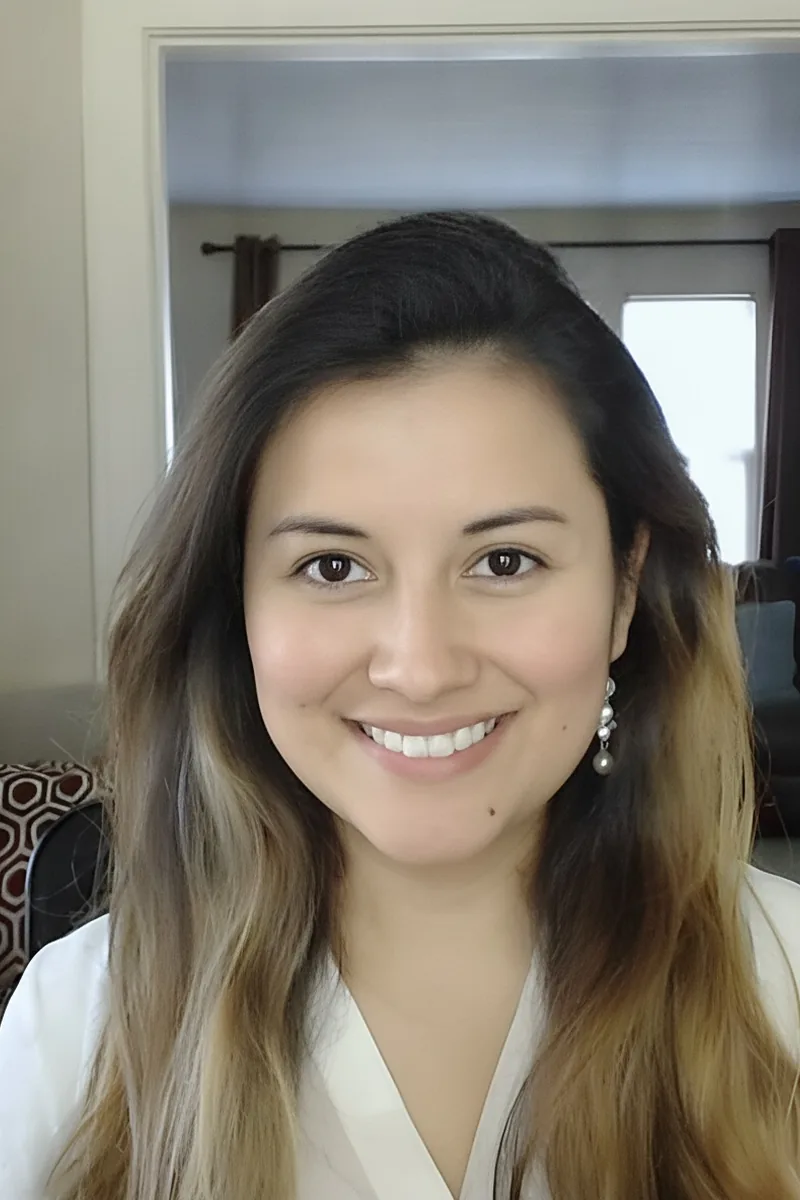
Vanessa's Harvard social studies concentration was more quantitative than most people expect — food policy research means working with agricultural data sets, cost-benefit models, and statistical analysis, all of which keep her sharp on the foundational math concepts she tutors. She's particularly good at helping students see the logic inside word problems, drawing on her background in breaking down dense policy arguments into their component parts. Rated 5.0 by students.

When math stops making sense, it's usually because a key earlier concept — fractions, proportional reasoning, or how variables actually work — didn't fully land. Yu is skilled at pinpointing exactly where that gap is and rebuilding understanding from there. Her Harvard education background means she doesn't just re-explain the same way louder; she finds a different angle that matches how each student thinks.
A linguistics major at Harvard, Samuel brings an unusual precision to math tutoring — he treats each problem like a logical argument where every step needs to hold up. He's particularly effective at translating word problems into equations, a skill that trips up students who are otherwise strong with computation. Rated 5.0 by students.
A perfect 36 on the ACT means Talia handled every math concept the test could throw at her, from fractions and ratios through algebra and basic trig. She applies that same systematic thinking when tutoring math, breaking multi-step problems into manageable pieces and showing students exactly where their reasoning goes off track.
Alyssa scored a 35 ACT and teaches across calculus and algebra, so she's comfortable moving between arithmetic fundamentals and more advanced problem-solving depending on what a student needs. She's particularly sharp at identifying the specific step where confusion sets in — whether that's fraction operations, order of operations, or translating word problems into equations — and rebuilding confidence from that exact point.
A Princeton graduate now pursuing medical science at BU, Margaret brings sharp quantitative reasoning to every math concept — from fractions and ratios through functions and data analysis. She zeroes in on the specific step where a student's understanding breaks down, then rebuilds the logic from that point forward. Rated 4.9 by students.
Not every math tutor comes from a pure STEM background, and that's exactly what makes Marisa effective — she knows what it's like to work hard at math rather than find it effortless. Her 1540 SAT score shows she built real quantitative skills, and she breaks down arithmetic, fractions, and early algebra concepts in plain language that clicks.
Not every math struggle is actually about math. Kerry's psychology background gives her a sharp eye for the anxiety, avoidance patterns, and confidence gaps that make arithmetic and word problems feel harder than they are. She rebuilds students' relationship with the subject while reinforcing the fundamentals — fractions, decimals, ratios, and basic operations.
Meghan's primary world is English and literature — her PhD work in American Literature at UConn is about as far from a math classroom as you can get — but her 32 ACT composite and years of tutoring across subjects like algebra and calculus mean she's genuinely comfortable with the content. What she brings that a pure math tutor might not is an English major's instinct for decoding language-heavy problems, pulling apart what a question is really asking before a single calculation begins.
Word problems and multi-step equations often trip students up not because the math is too hard, but because the language is confusing. Diana's linguistics background makes her especially skilled at translating math vocabulary into plain terms students actually understand. She walks through each problem type methodically, building the kind of number sense that carries across topics from fractions to pre-algebra.
Cassandra's math tutoring covers the fundamentals that trip students up long before calculus — operations with fractions, order of operations, word problem translation, and building number sense. Her perfect SAT score speaks to the precision she brings to quantitative reasoning, and she's skilled at reframing abstract problems in concrete terms.
From pre-algebra fundamentals through AP Calculus AB, Noel covers a wide math trajectory and knows where the stumbling blocks tend to cluster — fractions-to-decimals conversions for younger learners, variable manipulation for middle schoolers, and limit intuition for calculus students. His 1550 SAT reflects comfort with both computation and the kind of applied problem-solving that standardized tests demand. He breaks each concept into steps small enough that students can rebuild the logic on their own during exams.
Emma's approach to math at the elementary and middle school level treats each concept as a building block for the next — making sure a student truly grasps place value before tackling long division, or understands what a fraction represents before memorizing cross-multiplication steps. Her SAT score of 1550 reflects strong quantitative reasoning she can translate into clear, patient explanations for younger learners.
Erica's pre-dental track required calculus, statistics, and physics-level math, so she's comfortable across the spectrum from basic algebra through derivatives and integrals. She's especially good at translating word problems into equations — a sticking point for many students — because her interdisciplinary background trained her to move between verbal and quantitative reasoning constantly.
Rebecca's subject range includes algebra, calculus, and SAT Math — where her 1550 SAT composite speaks to her quantitative ability alongside her humanities strengths. She approaches math by making sure students can explain the reasoning behind each step, not just reproduce a procedure from memory. That philosophy-trained instinct for logical structure turns out to be surprisingly useful when untangling word problems or proofs.
From pre-algebra fundamentals through calculus, Parita covers a wide arc of math — but what ties it together is her emphasis on translating word problems into equations, the step that trips up most students. Her 1580 SAT and 35 ACT reflect the kind of precision she brings to breaking down multi-step problems and catching the algebraic mistakes students don't realize they're making.
Sociology at Harvard involves more quantitative work than most people expect — statistical methods, data interpretation, and formal logic all show up regularly in Scott's coursework. That analytical habit carries into how he teaches math: walking through each problem as a chain of reasoning rather than a set of memorized steps, whether the topic is graphing linear functions or simplifying algebraic expressions. His 34 ACT composite speaks to the breadth of his own math fluency.
Benjamin's 1510 SAT score reflects sharp quantitative reasoning, and he applies that same precision when teaching math concepts from fractions and proportions through algebra and early calculus. He breaks problems into smaller logical steps so students can see *why* a method works, which makes tackling unfamiliar problems on homework or exams far less intimidating.
Economics majors do more math than most people realize — Laura's degree required heavy coursework in calculus, statistics, and algebraic modeling, all applied to real economic problems. That background, plus a 1510 SAT score and a 5.0 client rating, means she can move fluidly between foundational skills like proportional reasoning and more advanced topics like statistical inference, always grounding the math in practical context.
From arithmetic fundamentals through calculus, Maedeh covers the full math pipeline and knows where students typically lose the thread — often at the jump from computation to conceptual reasoning. Her 1560 SAT score reflects deep comfort with quantitative problem-solving, and she applies that same precision whether a student is tackling fractions or limits.
Creative writing and math share more DNA than most people think — both demand structured thinking, logical sequencing, and knowing exactly when to break a rule. Sydney's Carnegie Mellon training in creative writing, combined with a 1600 SAT and 35 ACT, means she can dissect a multi-step problem with the same rigor she'd bring to dissecting a sentence, and she's especially effective at teaching students to read math problems carefully before solving them. Her 4.9 rating speaks to a teaching style that's precise without being rigid.
From pre-algebra fundamentals through calculus and trigonometry, Cindy covers an unusually wide range of math — and her perfect 36 ACT shows she can move fluidly between them. She zeroes in on the specific concept causing a student trouble, whether that's fraction operations in fifth grade or limit definitions in AP Calc, and builds clarity from there. Rated 5.0 by students.
From pre-algebra through multivariable calculus, Brice has spent years teaching math to students across every level — sometimes several hours a day. His MIT training means he treats math as interconnected ideas rather than isolated formulas, so a conversation about quadratics might naturally connect to graphing transformations or optimization problems. He scored a perfect 1600 on the SAT, and his competition math background adds depth to his explanations.
Cori earned a perfect SAT Math score twice and averaged 4.7 across eleven AP exams, so the fundamentals aren't just familiar — they're automatic. She believes the fastest way to build math confidence is through challenging problems, then unpacking exactly why a solution works so the reasoning transfers to the next unfamiliar question.
While English is Halley's primary expertise, she also tutors math and brings the same structured, step-by-step clarity she uses in essay writing to breaking down word problems and algebraic reasoning. Her approach is especially useful for students who struggle with the language of math — interpreting what a problem is actually asking before jumping to computation.
Studying mechanical engineering at MIT means Vania uses math daily — from differential equations modeling heat transfer to linear algebra powering 3D simulations. She brings that applied perspective to every level, whether it's helping a middle schooler nail fractions or walking a high schooler through polynomial long division. Rated 5.0 by students.
While Lesleigh's academic home is English and Classics, she teaches math with the same pattern-recognition instincts she uses for language — showing students that solving an equation is really about following a logical sequence of steps. She's particularly effective with students who think of themselves as "not math people," since she understands how to reframe problems in ways that feel less abstract.
From pre-algebra concepts through the calculus she used in college-level biology courses, Connie covers a wide swath of math with real fluency. She's particularly sharp at showing students why a technique works — not just walking through steps, but connecting, say, the distributive property to how factoring polynomials actually functions. Her 1560 SAT score speaks to the kind of quantitative comfort she brings to every session.
From arithmetic fundamentals to algebra and beyond, Jean has taught math at nearly every level — including preparing a GED student by pinpointing exactly which topics would yield the biggest score gains. She's skilled at breaking multi-step problems into smaller, manageable pieces so that each new concept builds logically on the last. Her background in sociology and medicine means she's comfortable with both applied statistics and the quantitative reasoning that underpins science.
From pre-algebra through multivariable calculus and differential equations, Natasha has taught nearly every level of math there is. Her chemical engineering background means she doesn't just walk through procedures — she connects each concept to the bigger mathematical structure so that new topics feel like extensions of what a student already knows. Rated 4.9 by students.
From fraction operations in elementary school to derivatives in calculus, Kelly covers the full math spectrum and spots exactly where a gap in earlier concepts is causing trouble with current material. Her dual-degree coursework at Duke was math-heavy, and she earned a 34 ACT, so she's comfortable adapting explanations whether the topic is polynomial factoring or integration by parts.
An MIT undergrad who scored a 35 on the ACT, Adriana teaches math across a wide range — from pre-algebra through calculus — with a focus on making each topic feel purposeful rather than arbitrary. Her Urban Studies coursework relies heavily on quantitative modeling and data interpretation, so she brings a practical lens to concepts like functions, geometric reasoning, and trigonometric relationships that shows students why the math matters outside the classroom.
Zachary's background in formal logic — honed through years of studying philosophy at Harvard and preparing for the LSAT — translates directly into the structured reasoning that math demands. He breaks down problems in algebra and arithmetic by teaching students to identify patterns and think step-by-step rather than relying on memorized shortcuts.
From simplifying fractions to working through polynomial equations, Andy adapts his explanations to whatever level a student is currently tackling. He earned a 34 ACT composite — which includes a math-heavy section — and tutors across algebra, geometry, and calculus, so he sees how earlier concepts feed directly into later ones. That big-picture view keeps students from learning each topic in isolation.
I'm excited to work with you or your child either on standardized test preparation or on generally improving performance in history, English, and social studies!
A biomedical engineering PhD demands fluency across nearly every branch of math, from differential equations to linear algebra to statistical modeling. Michelle uses that breadth to connect math concepts to tangible applications — showing, for instance, how exponential functions describe bacterial growth or how integrals calculate fluid flow through a vessel. She's rated 5.0 by students.
Teaching middle school STEM daily keeps Lena sharp on the foundational math concepts — fractions, decimals, proportional reasoning, order of operations — that trip students up most often. She approaches each topic with patience and multiple explanation strategies, so if one method doesn't click, she has another ready. Her subject range extends from elementary arithmetic through pre-algebra and into introductory algebra.
Engineering coursework at Cornell meant Tina didn't just take calculus — she used math daily to model biological systems, analyze data, and solve multi-step problems under pressure. That applied perspective lets her show students why a technique works, whether they're tackling proportions, quadratics, or word problems that feel disconnected from real life.
Grace's math tutoring spans pre-algebra through calculus, so she understands how each concept builds on the last — why fraction fluency matters for algebra, or how function behavior in pre-calc sets up derivatives. She unpacks problems step by step, making sure students can articulate the reasoning behind each move rather than just mimicking a procedure. Her 1570 SAT reflects the kind of quantitative precision she brings to every session.
Elise has spent years tutoring middle and early high school math, covering everything from fractions and ratios through linear equations and basic geometry. Her approach treats each problem like a sentence to decode — identify what's being asked, find the structure, then solve — which tends to click for students who don't think of themselves as "math people." Rated 5.0 by students.
Testimonials
Because the right Math tutor makes all the difference.
Average Session Rating – Based on 3.4M Learner Ratings
Practice Math
Free practice tests, flashcards, and AI tutoring for Math
Nearby Math Tutors
Other Springfield Tutors
Related Math Tutors in Springfield
Frequently Asked Questions
Students in Springfield schools often struggle with the transition from memorizing procedures to understanding the concepts behind them—especially when tackling word problems, multi-step equations, and graphing. Many also experience math anxiety, which can make it harder to take risks and try new problem-solving strategies. A tutor can help bridge these gaps by breaking down complex ideas into manageable steps and building confidence through targeted practice.
In an initial session, a tutor will assess your student's current understanding, identify specific areas of struggle (like showing work on word problems or understanding why a solution works), and learn about their learning style. This foundation helps the tutor create a personalized plan aligned with your student's school curriculum and goals. Most students leave the first session with a clearer sense of what they'll focus on and how tutoring will help them progress.
Many students rush through problems or skip steps, which leads to careless mistakes and makes it hard for teachers to understand their thinking. Tutors help students develop organized problem-solving strategies and explain *why* each step matters, not just what to do. By practicing this consistently with immediate feedback, students build the habit of showing clear work—which improves both accuracy and their ability to catch their own errors.
Yes. With 8 school districts across Springfield using different textbooks and approaches, Varsity Tutors connects you with tutors who understand various curricula and can adapt their teaching to match what your student is learning in class. Whether your student's school uses a traditional or more conceptual approach, tutors can bridge the gap between classroom instruction and personalized practice to reinforce key concepts.
Absolutely. Math anxiety often stems from past struggles or feeling lost during lessons, which creates a cycle of avoidance and lower confidence. Tutors help break this cycle by working at your student's pace, celebrating small wins, and showing them that mistakes are part of learning. As students experience success with targeted strategies and see patterns emerge, their confidence grows—and so does their willingness to tackle harder problems.
Rather than treating each problem type in isolation, tutors help students recognize underlying patterns—like how factoring connects to solving equations, or how slope appears in different forms. By making these connections explicit through guided practice and discussion, students develop deeper conceptual understanding and can apply strategies to new problems more flexibly. This shift from memorizing procedures to understanding relationships is key to long-term math success.
Proofs and graphing require both procedural skill and conceptual understanding—two areas where personalized tutoring excels. Tutors break down the logic behind proofs step-by-step and help students practice graphing with immediate feedback on common mistakes. With targeted instruction and repeated practice, students move from confusion to confidence in these challenging topics.
Varsity Tutors connects you with expert tutors who have strong math backgrounds and proven experience helping students succeed. Each tutor is vetted for subject expertise and teaching ability, ensuring they can explain concepts clearly and adapt to your student's learning style. You'll work with a tutor who understands both the math content and how to build your student's confidence and problem-solving skills.
Let’s find your perfect tutor
Answer a few quick questions. We’ll recommend the right plan and match you with a top 5% tutor.