Award-Winning AP Biology Tutors
serving Barnstable, MA
AP Biology
Tutors in Barnstable
Private 1-on-1 tutoring, weekly live classes for academic support, test prep & enrichment, practice tests and diagnostics, and more to elevate grades and test scores.
Based on 3.4M Learner Ratings
UniversitiesSchools & Universities
DeliveredHours Delivered
ProficiencyGrowth in Proficiency
Who needs tutoring?
No obligation. Takes ~1 minute.
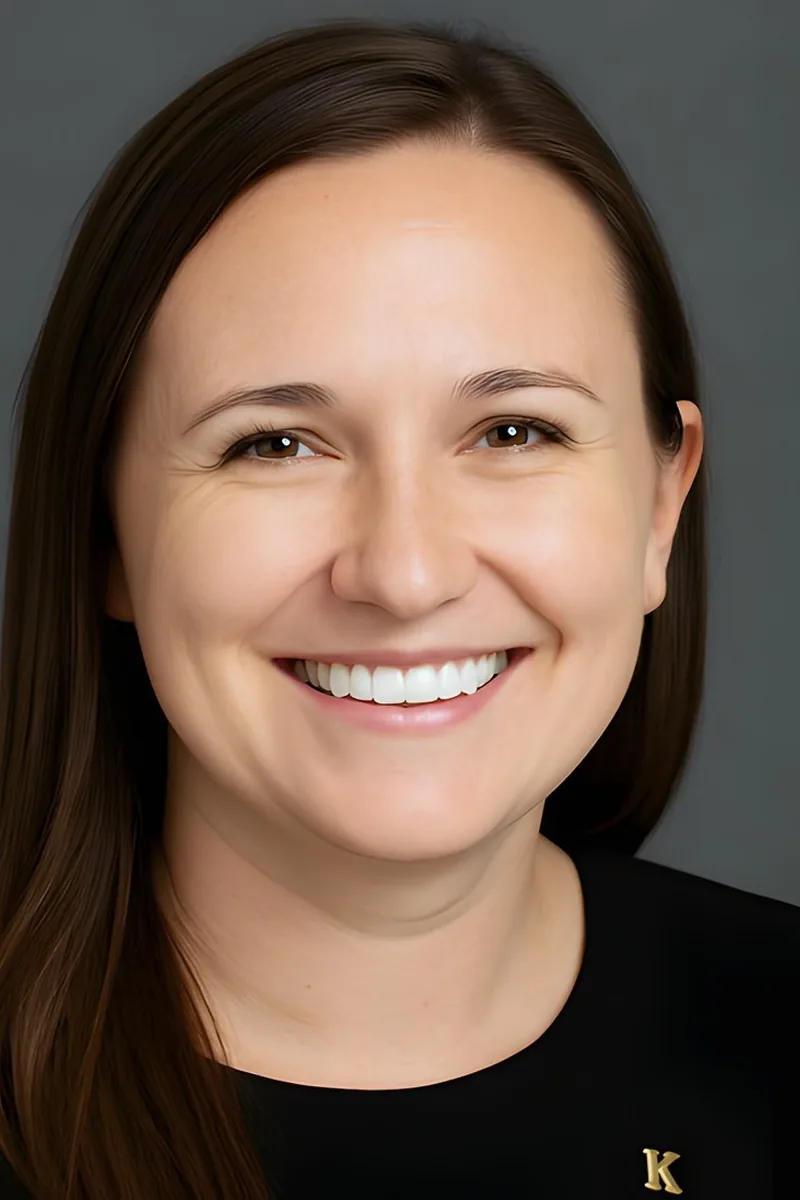
Laura's economics background might seem like an odd fit for AP Bio, but it actually sharpens one of the exam's trickiest skills: interpreting data sets, reading graphs under pressure, and constructing logical arguments from evidence — exactly what the free-response section demands. She also tutors the SAT Bio Subject Test and college biology, so she's comfortable with content from ecology and population dynamics to cellular processes. Rated 5.0 by students.

AP Biology's shift toward data analysis and experimental design catches many students off guard — it's no longer enough to memorize cell structures and metabolic pathways. Noel's policy-analysis training at the University of Chicago sharpened his ability to interpret graphs, evaluate experimental controls, and construct evidence-based arguments, which maps directly onto the AP exam's free-response demands. He pairs content review with targeted practice on the analytical skills the College Board actually tests.
Cornell's biological engineering program forced Tina to learn biology the way the AP exam actually tests it — not as isolated facts, but as interconnected systems where a change in gene expression ripples through cellular processes, organism physiology, and even population dynamics. That engineering lens is especially useful for the data-interpretation and experimental-design questions, since her coursework centered on quantitative analysis of biological systems rather than memorization. Rated 5.0 by students.
Kristen's chemical-biological engineering degree means she didn't just study AP Biology topics like cellular respiration and gene expression — she applied them in engineering contexts where precision matters. She breaks down complex processes like signal transduction and enzyme kinetics into mechanistic steps, treating each pathway as a logic problem rather than a memorization exercise.
Earning honors in biological sciences at Brown means Paul didn't just pass AP-level biology content — he went well beyond it into primary literature and lab research. He tackles the toughest AP Bio units, from signal transduction and gene regulation to experimental design questions, with the kind of depth that turns a 3 into a 5.
A chemistry major who also studied English literature at McGill, Nicole brings an unusual double lens to AP Bio — she can explain the biochemistry behind photosynthesis and cellular respiration with real depth, then help students articulate those processes in the precise, evidence-based writing the free-response section demands. Her AmeriCorps teaching experience across K-12 settings means she's practiced at adjusting explanations on the fly, whether a student needs the molecular details slowed down or the big-picture ecology concepts tied together. Rated 5.0 by students.
Nicole is currently in Duke's Cellular and Molecular Biology PhD program, which means she's doing graduate-level research on the exact molecular and cellular processes that AP Bio's toughest units cover — gene expression, cell communication, and the central dogma. That depth lets her unpack concepts like signal transduction cascades or the regulation of transcription in ways that go well beyond what a textbook offers, giving students the mechanistic detail they need for free-response answers. Rated 4.9 by students.
Ibi's post-bac premedical coursework means she's currently studying biochemistry, cell biology, and genetics at the college level — the same content that forms AP Bio's backbone, but with the added depth that comes from tackling it alongside organic chemistry and physiology. Her anthropology background also gives her an unusual edge on the evolution and ecology units, where understanding how populations change over time and interact within environments is second nature rather than something learned from scratch.
I am also a first year medical student at the Tufts University School of Medicine in Boston. I have extensive experience with premedical classes and have taken and tutored the MCAT exam. I placed in the 97th percentile of the MCAT exam and I understand what the test takers want students to know and how to bridge the gap between knowing the material and doing well on the test. I am always excited when a student finally has that "ah-ha" moment and declares that they now can see how all of these seemingly separate scientific topics are actually all related. The MCAT no longer seems scary, but turns into a means of truly learning this material and providing a strong foundation for the future.
Eunice is pursuing a combined Biology and Computer Science degree at Northeastern, which means she's actively taking the upper-level bio courses — genetics, cell biology, ecology — that the AP curriculum draws from. That dual major also gives her a computational angle on topics like data analysis in ecology labs and statistical reasoning in genetics problems, where many AP Bio students lose points on the exam. Rated 5.0 by students.
Jasmine's biology degree from Boston College and current biomedical sciences master's at Boston University mean she's studied AP Bio's core content — from gene expression and cellular energetics to animal physiology — at increasing depth across two programs. She's especially strong on the anatomy and physiology side, where students need to explain how organ systems maintain homeostasis through feedback mechanisms, because that's the material she's actively working through in her graduate coursework. Rated 5.0 by students.
The free-response questions on the AP Bio exam constantly ask students to explain biological mechanisms in writing — tracing how a mutation affects protein folding, or why a specific hormone triggers a feedback loop — and Jennifer's dual background in biomedical and mechanical engineering means she thinks about those cause-and-effect chains with an engineer's precision. Her graduate research required mastering cell physiology, biomechanics, and molecular signaling at a level where she can teach students to construct the kind of stepwise, mechanistic arguments that earn full credit.
As a molecular biology and biochemistry major at Wesleyan — and a member of the Science Outreach program — Tahmid lives inside the content that AP Biology tests: cellular respiration pathways, gene regulation, evolutionary mechanisms, and experimental design. He knows which free-response topics the exam leans on hardest and teaches students to construct the kind of evidence-based explanations that earn full credit. Rated 5.0 by students.
As a Harvard Medical School student, Zoe knows AP Biology's toughest units — cell signaling, gene expression and regulation, ecology dynamics — from both the exam side and the research side. She teaches students to think like scientists, connecting molecular-level details to big-picture biological systems the way the AP exam's free-response questions demand.
AP Bio's free-response questions demand more than recall — they want students to design experiments, interpret data tables, and connect molecular processes to organism-level outcomes. As an exercise biology graduate now in a graduate program, Emma knows the content deeply and teaches students to think like the exam expects: across biological scales, from gene expression to ecological dynamics.
The AP Biology exam tests whether students can interpret experimental data, reason through evolutionary mechanisms, and connect molecular processes to organism-level outcomes. Patrick lives in that world — his PhD research in cellular and molecular biology and his current postdoctoral work at Harvard Medical School mean he can walk through topics like gene expression, cell signaling, and ecology with the depth the redesigned exam expects. He holds a 5.0 rating from students.
Lauren earned her PhD in Genetics and Molecular Biology, which means the AP Bio units on heredity, gene expression, and the central dogma aren't abstract textbook topics for her — they're the research she lived daily. She's especially sharp at teaching students how to unpack experimental design questions, the kind where you're handed a gel electrophoresis result or a gene knockout scenario and need to reason through what the data actually shows.
Biomedical engineering at the undergraduate level and biophysics at the graduate level (Harvard) means Fernando has encountered AP Bio's molecular and cellular content from both the engineering and pure science sides — protein structure, membrane dynamics, and cellular energetics aren't abstract textbook topics for him but tools he's used in research contexts. That dual perspective is especially useful for the exam's data-interpretation questions, where students need to read graphs about enzyme kinetics or gene expression and explain the biology driving the numbers. Rated 4.9 by students.
Claire's chemistry degree from Amherst gives her an unusual edge in AP Bio — she teaches the biochemistry-heavy units like enzyme kinetics, photosynthesis, and cellular respiration by grounding them in the actual chemistry students are often told to just memorize. That molecular-level fluency carries over when she unpacks topics like protein folding or membrane transport, where understanding intermolecular forces makes the biology click instead of feeling arbitrary. Rated 5.0 by students.
I am a freshman at Northeastern University. I am currently studying Psychology on a Pre-Med track. Even though my studies are heavily science-based, I enjoy all other subjects, as well. I tutored in high school as Vice-President of the National Honor Society and I am looking forward to continuing my passion for helping others through tutoring.
Three years in a biology research lab at Northeastern gave Hussein firsthand experience with the cellular processes, genetics, and ecological concepts that dominate the AP Biology exam. He digs into the trickiest free-response question types — experimental design, data analysis, and cross-topic connections between evolution and molecular biology — so students walk into the exam knowing how to think like a scientist, not just recall vocabulary.
Studying behavioral neuroscience at Northeastern means Jeremiah is currently knee-deep in the biology that AP Bio students find trickiest — neural signaling, cellular communication, and how organisms respond to environmental stimuli. He brings that real-time coursework into tutoring sessions, breaking down concepts like action potentials and feedback mechanisms with the clarity of someone who just learned to explain them at the college level. Rated 4.8 by students.
Studying biochemistry and molecular biology as an undergrad means Darian is currently knee-deep in the same protein structures, enzyme kinetics, and gene regulation pathways that show up in AP Bio's most challenging units. That real-time coursework is especially useful for the biochemistry-heavy material — like how changes in pH or temperature alter enzyme activity — where students need to explain the why behind experimental data, not just identify the right answer.
Sarah scored well on the AP Biology exam and then spent her undergraduate years at Northeastern going deeper into the same material — cell signaling, gene expression, ecology, and evolution — at the college level. That dual perspective means she knows exactly which free-response question traps to watch for and how to connect big biological ideas across all four AP units. She treats AP Bio prep as a thinking course, not a memorization marathon.
Studying biochemistry at Tufts and preparing for medical school, Suraj lives in the molecular details that AP Bio students often find most intimidating — protein structure, metabolic pathways, and the interplay between DNA replication and gene expression. He zeroes in on where a student's reasoning breaks down during multi-step problems, then asks targeted questions that rebuild the logic from that exact point. Rated 5.0 by students.
Most AP Bio tutors come from a science major — Olivia's International Relations background at Tufts means she learned to read dense, argument-driven texts and synthesize complex systems, which turns out to be exactly what the exam's data-interpretation and free-response questions demand. She's particularly effective at teaching students how to construct written explanations that earn full marks, breaking down what the rubric actually wants when it asks you to describe, say, how a feedback mechanism maintains homeostasis. Rated 5.0 by students.
Having earned her biology degree and studied for the MCAT, Cassie knows AP Biology's curriculum inside and out — from the details of cellular respiration and photosynthesis to the big-picture reasoning the exam demands in ecology and evolution. She teaches students to interpret experimental data and construct free-response arguments the way the College Board actually scores them, not just recall vocabulary.
Smith College's biological sciences program has Louisa actively studying genetics, evolution, and botany right now — meaning the AP Bio curriculum on heredity, natural selection, and plant biology isn't something she's recalling from years past but material she's working through at the college level in real time. She's especially strong at unpacking the plant biology and ecology content that many students skim over, like transpiration, photoperiodism, and energy flow through ecosystems, which reliably show up on the exam and catch underprepared students off guard.
Few tutors bring a neuroscience specialization to AP Biology, which means Jhonatan can unpack signal transduction, membrane potentials, and nervous system physiology with a depth most students never get in the classroom. He also tackles the broader curriculum — from cellular respiration energetics to Hardy-Weinberg equilibrium — by tying each unit back to the four Big Ideas the exam is built around.
Between her teaching assistant role for introductory biology at Cornell and her active cancer immunotherapy research on melanoma, Annie lives the material that AP Biology tests. She digs into the toughest units — cell signaling, gene expression and regulation, energy pathways — with the kind of mechanistic detail that earns 4s and 5s on the exam.
A neuroscience degree plus a master's in biotechnology means Rithi has spent serious time with the molecular and cellular content that trips up most AP Bio students — think signal transduction pathways, gene regulation, and how neurons actually fire. She's now in medical school at Robert Wood Johnson, so she's applying these concepts daily at a level well beyond what the exam demands, which makes her especially sharp at unpacking the mechanistic "explain how" questions the free-response section loves to ask.
As a biology major at Washington University in St. Louis who served as a teaching assistant for an upper-level biology course, Alexander knows AP Bio from both sides — the content and the exam. He digs into the trickiest units, like cell signaling pathways and gene regulation, by mapping out the logic visually rather than relying on rote memorization. His approach emphasizes the data-analysis and experimental-design questions that carry heavy weight on the AP exam.
Cellular respiration, genetics, and evolution each require a different kind of thinking — sometimes quantitative, sometimes conceptual, sometimes both at once. Nima breaks down processes like the electron transport chain or Hardy-Weinberg equilibrium into logical steps, drawing on the same analytical rigor that earned him a full merit scholarship to Duke.
Cell and molecular biology was Emily's concentration at Duke, where she graduated summa cum laude — so the AP Bio units on gene expression, cell communication, and the central dogma aren't review material she's recalling vaguely, they're concepts she studied at an advanced level and now revisits daily as a Columbia medical student. She's especially sharp at teaching students to diagram signal transduction pathways and trace how a single mutation can ripple through protein function, cell behavior, and organism-level phenotype — the kind of multi-scale reasoning that separates 4s from 5s on the exam. Rated 5.0 by students.
Teaching 10th-grade Biochemistry at a competitive Philadelphia magnet school means Kathleen lives in the overlap between biology and chemistry that defines the AP Bio exam. She digs into the molecular details — enzyme kinetics, cellular respiration energetics, gene expression regulation — with the depth the College Board expects on free-response questions. Rated 5.0 by students.
Ellie's biomedical engineering coursework at Yale — plus her autism research in the School of Medicine — means she's working with the molecular and cellular biology that AP Bio tests at a level where she can explain not just what happens during signal transduction or gene regulation, but why it matters in a living system. She also tutors a Differential Equations course weekly, so she's comfortable with the quantitative reasoning behind chi-square problems and data analysis that trips up students on the exam's free-response sections. Rated 5.0 by students.
Biophysics at Rice means Aadith studies biological systems through a quantitative lens — analyzing protein folding energetics, membrane dynamics, and molecular interactions — which gives him an unusual edge on AP Bio's units covering macromolecule structure, enzyme kinetics, and cellular energetics. He's also actively taking biochemistry coursework alongside his physics major, so he can explain concepts like the chemiosmotic mechanism or allosteric regulation with the kind of molecular-level precision that earns full credit on free-response questions.
Between his neuroscience research at the Jungers Center and molecular biology work at the Oregon Stem Cell Center, Daniel has lived the content that shows up on the AP Biology exam — from cellular signaling pathways to gene expression and evolution. He teaches the free-response section by connecting big biological ideas to the experimental design skills the College Board actually tests for.
As a neuroscience major on the pre-med track at Vanderbilt, Eileen lives inside the material AP Biology tests: cell signaling, gene expression, metabolic pathways, and evolutionary mechanisms. She unpacks dense topics like the lac operon or oxidative phosphorylation by sketching out each step visually, turning overwhelming detail into a logical sequence students can actually reconstruct on exam day.
Stanford's Human Biology program with a bioinformatics and stem cell science concentration meant Matthew spent his coursework at the intersection of computation and living systems — analyzing gene expression data, studying cell differentiation pathways, and thinking about biology as information processing. That lens is especially useful for AP Bio's molecular biology and genetics units, where students need to trace how information encoded in DNA gets read, regulated, and occasionally misread. Rated 4.9 by students.
Testimonials
Because the right AP Biology tutor makes all the difference.
Average Session Rating – Based on 3.4M Learner Ratings
Practice AP Biology
Free practice tests, flashcards, and AI tutoring for AP Biology
Nearby AP Biology Tutors
Other Barnstable Tutors
Related Science Tutors in Barnstable
Frequently Asked Questions
Varsity Tutors matches Barnstable students with expert AP Biology tutors for 1-on-1 instruction. We pair each student with a tutor based on their specific needs, learning style, and goals.
Whether you need homework help, exam prep, or want to get ahead, our AP Biology tutors are ready to help.
Common challenges include gaps from earlier material, difficulty with specific concepts, and trouble applying learning to new problems. These issues can snowball quickly in AP Biology.
A tutor identifies where you're stuck, fills in gaps, and provides targeted practice. The 1-on-1 format means you get help exactly where you need it.
Tutors work with your student's actual coursework—homework assignments, class notes, and upcoming tests. This keeps tutoring directly relevant to what's happening in the classroom.
When you share information about your student's school and curriculum, we can match you with a tutor who has relevant experience.
All tutors complete background checks, credential verification, and teaching evaluation. Many of our AP Biology tutors hold advanced degrees or have years of teaching experience.
You can review tutor profiles to find someone with the right background for your student's level and needs.
Many students see improved grades within a few weeks, along with better understanding of AP Biology concepts and more confidence tackling challenging material.
Tutors track progress and adjust their approach to ensure continued improvement.
Most students benefit from 1-2 sessions per week. More frequent sessions help if your student is significantly behind or has an important exam coming up.
Your tutor can recommend a schedule based on your student's specific situation and goals.
Tutoring is purchased in packages of hours, with rates varying by tutor experience. Varsity Tutors offers several options to fit different budgets and needs.
You can discuss pricing during your consultation to find what works best.
Your tutor will assess where your student is, discuss goals, and start working on priority areas. Most students bring current homework or upcoming test material to focus on.
By the end, you'll have a clear sense of how the tutor can help and a plan for moving forward.
Let’s find your perfect tutor
Answer a few quick questions. We’ll recommend the right plan and match you with a top 5% tutor.