Award-Winning Geometry Tutors
serving Fort Wayne, IN
Geometry
Tutors in Fort Wayne
Private 1-on-1 tutoring, weekly live classes for academic support, test prep & enrichment, practice tests and diagnostics, and more to elevate grades and test scores.
Based on 3.4M Learner Ratings
UniversitiesSchools & Universities
DeliveredHours Delivered
ProficiencyGrowth in Proficiency
Who needs tutoring?
No obligation. Takes ~1 minute.

Proofs are usually the first time a math class asks students to explain *why* something is true, not just compute an answer — and that shift can be jarring. Aidan walks through geometric proofs as logical arguments, teaching students to identify given information, choose the right theorem, and build a chain of reasoning. His computing background reinforces that same structured, step-by-step thinking.
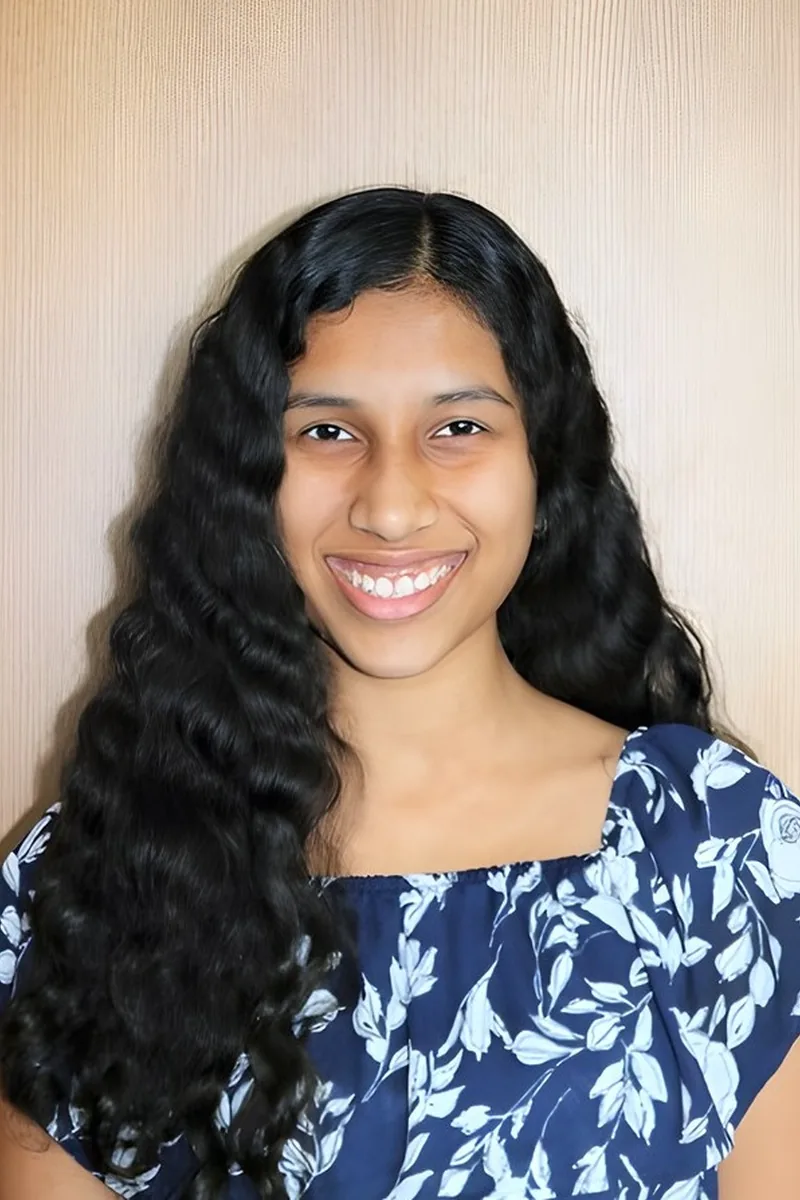
Proofs are usually the first time a math student has to construct a logical argument instead of just computing an answer, and that shift trips up a lot of people. Amy tackles geometry by teaching students how to read a diagram strategically — identifying congruence shortcuts, angle relationships, and parallel-line properties before writing a single step. Her experience instructing all ages at Mathnasium means she's seen every common misconception and knows how to address each one.
Proofs are where most geometry students panic, and Ben tackles them by teaching a structured, step-by-step reasoning process rather than expecting students to see the answer all at once. His background in history — a discipline built on constructing arguments from evidence — translates surprisingly well to writing logical geometric proofs. He also covers angle relationships, triangle congruence, and coordinate geometry.
Proofs are usually where geometry students panic, but they're really just structured arguments — and Alexandra approaches them that way, teaching students to identify given information, spot congruence or similarity relationships, and build a logical chain one statement at a time. As an engineering major at Notre Dame, she also connects geometric reasoning to spatial thinking skills that show up well beyond the classroom.
I enjoy helping students learn more about math. It is a great feeling to see the "light bulb" turn on. I have been a math teacher and tutor for over 10 years, which includes teaching secondary, collegiate, and graduate courses. I earned a B.S. in mathematics from the University of Notre Dame. I also have an M.B.A. in quantitative business analysis from Indiana University and earned my secondary mathematics teaching license/certification at Indiana Wesleyan University.
Proofs are where most geometry students panic — they know the theorems but freeze when asked to build a logical argument from scratch. Victoria's computer science training at WashU is essentially proof-writing in another language, and she applies that same structured, step-by-step reasoning to triangle congruence, circle theorems, and coordinate geometry problems.
Proofs are usually the sticking point in geometry — students can calculate angles and areas but freeze when asked to logically justify why something is true. Ritik tackles this by teaching geometric reasoning as a step-by-step argument, similar to how engineers verify that a design actually works. His background in aerospace at Purdue means spatial thinking and logical structure are second nature to him.
I'm currently a Process Assistant at an Amazon warehouse, which is like an assistant manager. My job is interesting, active, and varied, but I missed tutoring and want to make math and other subjects as easy as possible to approach and grasp for students. With the right time and a commitment to tailoring a tutoring style for the person being assisted, any student can pass their classes and retain lifelong knowledge and experience. I'm looking forward to working with you!
Proofs are where most geometry students hit a wall — the logic feels completely different from anything they've done in math before. Joubert teaches students to think through each proof as a chain of reasoning, connecting postulates and theorems step by step instead of guessing at the structure. His engineering background makes him especially sharp on spatial reasoning and applied measurement problems.
A math major at Notre Dame with a 35 ACT, Matthew brings the kind of formal precision to geometric proofs that most sophomores are still developing — he treats each two-column proof like a chain where every link has to justify itself. He's especially effective on the logic-heavy side of the course, connecting postulates about parallel lines and triangle congruence into arguments that hold up under scrutiny.
Proofs are usually the first place geometry students feel lost, because the subject suddenly asks them to justify every step instead of just computing an answer. Om teaches students to read a diagram like a scientist reads data — identifying what's given, what's implied, and what still needs to be shown — which makes even two-column proofs feel manageable.
Proofs are usually the first place Geometry students panic, but they're really just structured arguments — and Satvik teaches them that way, walking through the logic of congruence, similarity, and circle theorems step by step. His Science Olympiad coaching background means he's used to explaining spatial reasoning to students who think visually and students who think algebraically. He adapts his approach depending on which style makes a concept land.
Proofs trip up a lot of geometry students because they demand a completely different kind of thinking than arithmetic or algebra ever did. Abby approaches them as logical arguments: she walks through how to identify what's given, choose the right postulate or theorem, and build a chain of reasoning step by step. Her background in applied mathematics gives her a knack for making abstract spatial relationships click.
Working alongside geometry students at Carmel High School as an instructional assistant gave Victor a front-row seat to exactly where students get stuck — proofs, angle relationships, and the leap from memorizing theorems to applying them in multi-step problems. His engineering background at Purdue means spatial reasoning and logical structure come naturally to his teaching style.
Legal training is essentially proof-writing in a different language — Bill's Juris Doctor taught him to build airtight chains of reasoning from premises to conclusions, which maps directly onto two-column and paragraph proofs involving congruence, similarity, and angle relationships. His lifelong love of math means he also handles the computational side comfortably, from area and volume calculations to coordinate geometry problems. Rated 4.9 by students.
A human biology background might seem unrelated to geometry, but Jessica's anatomy coursework — mapping out skeletal structures, understanding joint angles, visualizing three-dimensional organ systems — built exactly the kind of spatial reasoning that makes geometric thinking intuitive. She teaches students to sketch and label diagrams as a first step on every problem, especially when working through circle theorems and polygon properties where the visual setup determines whether the logic falls into place. Rated 5.0 by students.
Proofs are usually the first place geometry students feel stuck, because the logic feels completely different from arithmetic. Lauren approaches them as structured arguments, breaking down how to connect postulates and theorems step by step. Her math minor and tutoring background give her a toolbox for making spatial reasoning and formal logic feel less intimidating.
Proofs are usually the first place geometry students feel lost — suddenly math requires logical arguments instead of just calculations. Christopher eases that transition by teaching students to identify congruence and similarity relationships step by step, building the reasoning skills that make two-column and paragraph proofs manageable. His prior tutoring work at both Mathnasium and Kumon gave him plenty of practice making spatial concepts click for visual and non-visual learners alike.
Every mechanical engineering project Lisa tackles at Purdue starts with the same skill geometry students are building — looking at a shape and understanding what's structurally true about it before doing any math. She's a visual thinker who turns abstract problems about parallel lines, angle bisectors, and triangle properties into diagrams students can actually reason through. Her 31 ACT reflects the kind of precise, methodical problem-solving she brings to the subject.
Actuarial science is built on quantifying risk, but the spatial reasoning behind it — understanding how shapes, areas, and proportions relate — starts in geometry. Jonathan uses that quantitative lens to teach topics like circle theorems and properties of polygons, connecting each theorem to a logical chain rather than asking students to memorize disconnected rules. His 32 ACT composite speaks to the kind of cross-subject problem-solving that makes geometry's mix of algebra and visual reasoning click.
I am a professional tutor with years of experience. I have helped students jump letter grades and improve as much as 8 composite points on the ACT and 200 points on the SAT. I have over 6 years and 1000 hours of test prep experience and over 6 years of experience tutoring math up to and including calculus, various science subjects, English, and Spanish. I like to meet all the tutoring needs of a student. This includes covering not only the academic subjects (including math, science, and language) and test prep (ACT and SAT) but also assisting with study skills and organization. I also have experience in working with students with various learning disabilities, including ADD/ADHD. I have helped students in all levels of courses, including honors and AP levels.
Proofs are usually the first place geometry students feel lost, because suddenly math asks them to argue logically instead of just compute. Aditeya approaches geometric reasoning by connecting angle relationships, congruence criteria, and triangle properties to visual intuition before formalizing anything on paper. His 4.9 rating speaks to how well that method clicks with students.
Proofs are usually the first time math asks students to build an argument instead of just finding an answer, and that shift trips up a lot of people. Darren approaches geometry by teaching the reasoning structure behind each proof — how to identify what's given, what's needed, and which theorem bridges the gap. His math background means he treats proof-writing as a skill to develop, not a mystery to survive.
Proofs are usually the make-or-break moment in geometry, and Brian teaches students to construct them by thinking like a detective — identifying what's given, what's needed, and which theorems bridge the gap. His Caltech training in analytical reasoning sharpens how he explains congruence, similarity, and circle theorems, turning proof-writing from intimidating to methodical.
Proofs are where most geometry students panic — the logic feels nothing like the arithmetic they're used to. Pinelopi breaks two-column and paragraph proofs into small reasoning steps, treating each one like a mini-argument rather than a memorization exercise. Her Duke psychology training actually lends itself well to teaching logical structure.
Proofs are usually the first place geometry students get stuck, because suddenly math requires structured argumentation instead of computation. Sami approaches geometric reasoning the way he learned to build logical arguments in computer science at Duke — step by step, with each claim justified before moving to the next. He covers everything from triangle congruence to circle theorems with that same emphasis on clear, connected thinking.
Proofs trip up most geometry students because they demand a completely different kind of thinking than computation does. Phillip approaches them as logical arguments: identifying what's given, what's needed, and which theorems bridge the gap. His engineering training at Brown means spatial reasoning and geometric relationships are second nature to him.
Proofs are where most geometry students start to struggle, because suddenly math requires building logical arguments instead of just computing answers. Margaret's background in both computer science and political science at Stanford means she thinks in structured logic all day — and she brings that same rigor to angle relationships, congruence, and circle theorems.
A chemistry major at Harvard, James is used to thinking in three dimensions — molecular geometries, orbital shapes, bond angles — which gives him a natural fluency with the spatial reasoning geometry requires. He tackles circle theorems and polygon properties by encouraging students to sketch, label, and reason through diagrams before jumping to formulas, building the kind of geometric intuition that makes even multi-step problems feel manageable. Rated 4.9 by students.
Proofs are usually the first place geometry students get stuck, because suddenly math asks them to argue logically instead of just compute. Ian approaches proof-writing the way he approaches physics derivations at Yale — step by step, with each claim grounded in a specific theorem or postulate. He also covers triangle congruence, circle theorems, and coordinate geometry with the same structured clarity.
Proofs are where most geometry students freeze up — the leap from calculating angles to constructing logical arguments feels like a different subject entirely. Paula bridges that gap by connecting each theorem back to something visual and concrete, whether it's triangle congruence or parallel line relationships. Her psychology background gives her a sharp read on where a student's reasoning breaks down.
In biomedical engineering, Ingrid regularly works with geometric concepts that most students only see in textbooks — calculating cross-sections, modeling curved surfaces, and reasoning about spatial relationships in 3D-printed structures she designs as president of her university's 3D printing club. That constant hands-on application gives her a practical vocabulary for teaching circle theorems, arc length, and solid geometry that connects the abstract to something students can actually visualize.
Proofs are where most geometry students get stuck — the leap from calculating angles to constructing logical arguments feels like a different subject entirely. Jonathan breaks that transition down by teaching students to identify given information, spot congruence relationships, and build each proof step by step. His 4.9 rating speaks to how well that structured approach clicks.
Neurobiology at Harvard meant Emma spent years interpreting complex diagrams of neural pathways and brain structures — skills that translate directly to reading the dense, multi-layered figures in geometry where you have to pull out the right angle relationship or identify similar triangles buried inside a larger shape. She tackles the subject from the logic side, treating each proof like a scientific hypothesis that needs step-by-step evidence. Rated 5.0 by students.
Holding dual degrees from UCLA in biology and mathematics-economics, Vinay brings an unusual ability to toggle between abstract reasoning and concrete problem-solving — exactly what geometry demands when a student has to move from reading a diagram to constructing a formal proof. He unpacks circle theorems and polygon properties by tying them back to the algebraic foundations students already have, closing gaps before they compound. Rated 5.0 by students.
Testimonials
Because the right Geometry tutor makes all the difference.
Average Session Rating – Based on 3.4M Learner Ratings
Practice Geometry
Free practice tests, flashcards, and AI tutoring for Geometry
Nearby Geometry Tutors
Other Fort Wayne Tutors
Related Math Tutors in Fort Wayne
Frequently Asked Questions
Varsity Tutors matches Fort Wayne students with expert Geometry tutors for 1-on-1 instruction. We pair each student with a tutor based on their specific needs, learning style, and goals.
Whether you need homework help, exam prep, or want to get ahead, our Geometry tutors are ready to help.
Common challenges include gaps from earlier material, difficulty with specific concepts, and trouble applying learning to new problems. These issues can snowball quickly in Geometry.
A tutor identifies where you're stuck, fills in gaps, and provides targeted practice. The 1-on-1 format means you get help exactly where you need it.
Tutors work with your student's actual coursework—homework assignments, class notes, and upcoming tests. This keeps tutoring directly relevant to what's happening in the classroom.
When you share information about your student's school and curriculum, we can match you with a tutor who has relevant experience.
All tutors complete background checks, credential verification, and teaching evaluation. Many of our Geometry tutors hold advanced degrees or have years of teaching experience.
You can review tutor profiles to find someone with the right background for your student's level and needs.
Many students see improved grades within a few weeks, along with better understanding of Geometry concepts and more confidence tackling challenging material.
Tutors track progress and adjust their approach to ensure continued improvement.
Most students benefit from 1-2 sessions per week. More frequent sessions help if your student is significantly behind or has an important exam coming up.
Your tutor can recommend a schedule based on your student's specific situation and goals.
Tutoring is purchased in packages of hours, with rates varying by tutor experience. Varsity Tutors offers several options to fit different budgets and needs.
You can discuss pricing during your consultation to find what works best.
Your tutor will assess where your student is, discuss goals, and start working on priority areas. Most students bring current homework or upcoming test material to focus on.
By the end, you'll have a clear sense of how the tutor can help and a plan for moving forward.
Let’s find your perfect tutor
Answer a few quick questions. We’ll recommend the right plan and match you with a top 5% tutor.