Award-Winning Geometry Tutors
serving Indianapolis, IN
Geometry
Tutors in Indianapolis
Private 1-on-1 tutoring, weekly live classes for academic support, test prep & enrichment, practice tests and diagnostics, and more to elevate grades and test scores.
Based on 3.4M Learner Ratings
UniversitiesSchools & Universities
DeliveredHours Delivered
ProficiencyGrowth in Proficiency
Who needs tutoring?
No obligation. Takes ~1 minute.

Proofs are where most geometry students panic, and Ben tackles them by teaching a structured, step-by-step reasoning process rather than expecting students to see the answer all at once. His background in history — a discipline built on constructing arguments from evidence — translates surprisingly well to writing logical geometric proofs. He also covers angle relationships, triangle congruence, and coordinate geometry.
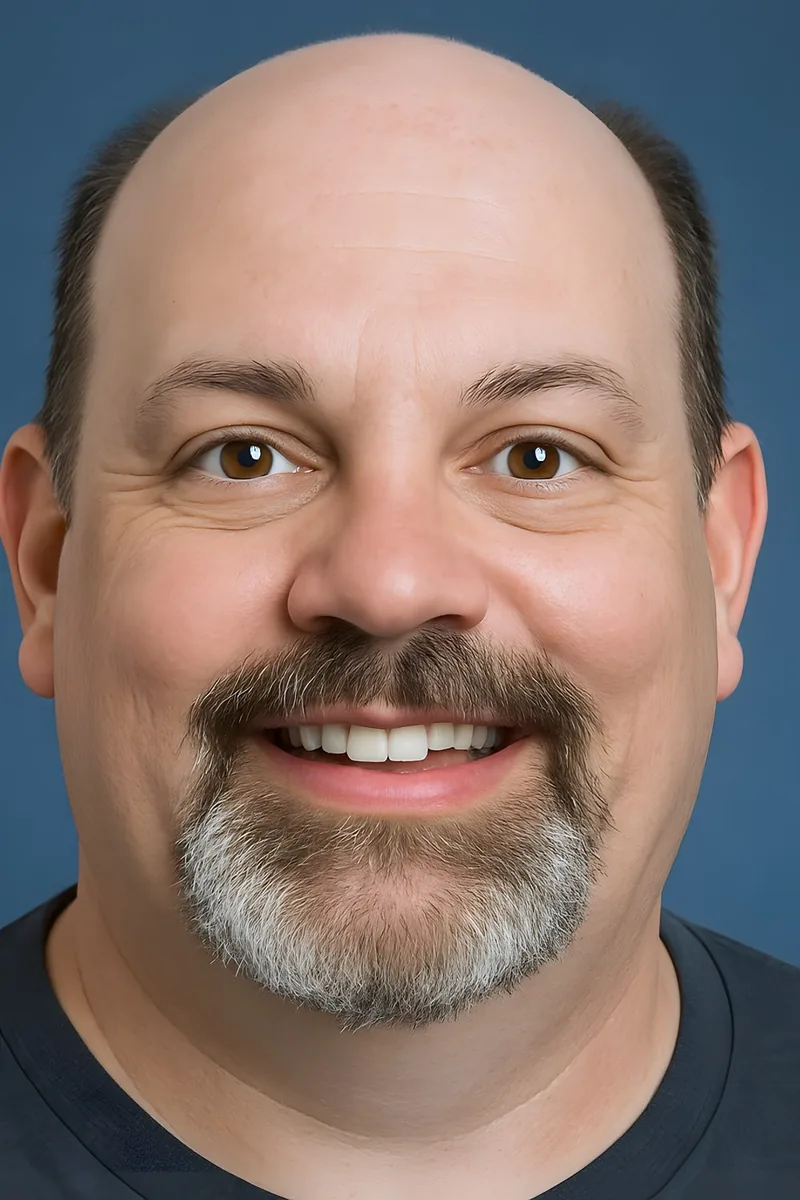
I enjoy helping students learn more about math. It is a great feeling to see the "light bulb" turn on. I have been a math teacher and tutor for over 10 years, which includes teaching secondary, collegiate, and graduate courses. I earned a B.S. in mathematics from the University of Notre Dame. I also have an M.B.A. in quantitative business analysis from Indiana University and earned my secondary mathematics teaching license/certification at Indiana Wesleyan University.
Proofs are where most geometry students hit a wall — the logic feels completely different from anything they've done in math before. Joubert teaches students to think through each proof as a chain of reasoning, connecting postulates and theorems step by step instead of guessing at the structure. His engineering background makes him especially sharp on spatial reasoning and applied measurement problems.
I'm currently a Process Assistant at an Amazon warehouse, which is like an assistant manager. My job is interesting, active, and varied, but I missed tutoring and want to make math and other subjects as easy as possible to approach and grasp for students. With the right time and a commitment to tailoring a tutoring style for the person being assisted, any student can pass their classes and retain lifelong knowledge and experience. I'm looking forward to working with you!
Legal training is essentially proof-writing in a different language — Bill's Juris Doctor taught him to build airtight chains of reasoning from premises to conclusions, which maps directly onto two-column and paragraph proofs involving congruence, similarity, and angle relationships. His lifelong love of math means he also handles the computational side comfortably, from area and volume calculations to coordinate geometry problems. Rated 4.9 by students.
Proofs are usually the first place geometry students feel stuck, because the logic feels completely different from arithmetic. Lauren approaches them as structured arguments, breaking down how to connect postulates and theorems step by step. Her math minor and tutoring background give her a toolbox for making spatial reasoning and formal logic feel less intimidating.
I am a professional tutor with years of experience. I have helped students jump letter grades and improve as much as 8 composite points on the ACT and 200 points on the SAT. I have over 6 years and 1000 hours of test prep experience and over 6 years of experience tutoring math up to and including calculus, various science subjects, English, and Spanish. I like to meet all the tutoring needs of a student. This includes covering not only the academic subjects (including math, science, and language) and test prep (ACT and SAT) but also assisting with study skills and organization. I also have experience in working with students with various learning disabilities, including ADD/ADHD. I have helped students in all levels of courses, including honors and AP levels.
Proofs are usually the first time math asks students to build an argument instead of just finding an answer, and that shift trips up a lot of people. Darren approaches geometry by teaching the reasoning structure behind each proof — how to identify what's given, what's needed, and which theorem bridges the gap. His math background means he treats proof-writing as a skill to develop, not a mystery to survive.
Proofs are usually the first time a math class asks students to explain *why* something is true, not just compute an answer — and that shift can be jarring. Aidan walks through geometric proofs as logical arguments, teaching students to identify given information, choose the right theorem, and build a chain of reasoning. His computing background reinforces that same structured, step-by-step thinking.
Proofs are usually the first time a math student has to construct a logical argument instead of just computing an answer, and that shift trips up a lot of people. Amy tackles geometry by teaching students how to read a diagram strategically — identifying congruence shortcuts, angle relationships, and parallel-line properties before writing a single step. Her experience instructing all ages at Mathnasium means she's seen every common misconception and knows how to address each one.
Proofs are usually where geometry students panic, but they're really just structured arguments — and Alexandra approaches them that way, teaching students to identify given information, spot congruence or similarity relationships, and build a logical chain one statement at a time. As an engineering major at Notre Dame, she also connects geometric reasoning to spatial thinking skills that show up well beyond the classroom.
Proofs are where most geometry students panic — they know the theorems but freeze when asked to build a logical argument from scratch. Victoria's computer science training at WashU is essentially proof-writing in another language, and she applies that same structured, step-by-step reasoning to triangle congruence, circle theorems, and coordinate geometry problems.
Proofs are usually the sticking point in geometry — students can calculate angles and areas but freeze when asked to logically justify why something is true. Ritik tackles this by teaching geometric reasoning as a step-by-step argument, similar to how engineers verify that a design actually works. His background in aerospace at Purdue means spatial thinking and logical structure are second nature to him.
A math major at Notre Dame with a 35 ACT, Matthew brings the kind of formal precision to geometric proofs that most sophomores are still developing — he treats each two-column proof like a chain where every link has to justify itself. He's especially effective on the logic-heavy side of the course, connecting postulates about parallel lines and triangle congruence into arguments that hold up under scrutiny.
Proofs are usually the first place Geometry students panic, but they're really just structured arguments — and Satvik teaches them that way, walking through the logic of congruence, similarity, and circle theorems step by step. His Science Olympiad coaching background means he's used to explaining spatial reasoning to students who think visually and students who think algebraically. He adapts his approach depending on which style makes a concept land.
Working alongside geometry students at Carmel High School as an instructional assistant gave Victor a front-row seat to exactly where students get stuck — proofs, angle relationships, and the leap from memorizing theorems to applying them in multi-step problems. His engineering background at Purdue means spatial reasoning and logical structure come naturally to his teaching style.
Proofs trip up a lot of geometry students because they demand a completely different kind of thinking than arithmetic or algebra ever did. Abby approaches them as logical arguments: she walks through how to identify what's given, choose the right postulate or theorem, and build a chain of reasoning step by step. Her background in applied mathematics gives her a knack for making abstract spatial relationships click.
Proofs are usually the first place geometry students feel lost, because the subject suddenly asks them to justify every step instead of just computing an answer. Om teaches students to read a diagram like a scientist reads data — identifying what's given, what's implied, and what still needs to be shown — which makes even two-column proofs feel manageable.
A human biology background might seem unrelated to geometry, but Jessica's anatomy coursework — mapping out skeletal structures, understanding joint angles, visualizing three-dimensional organ systems — built exactly the kind of spatial reasoning that makes geometric thinking intuitive. She teaches students to sketch and label diagrams as a first step on every problem, especially when working through circle theorems and polygon properties where the visual setup determines whether the logic falls into place. Rated 5.0 by students.
Proofs are usually the first place geometry students feel lost — suddenly math requires logical arguments instead of just calculations. Christopher eases that transition by teaching students to identify congruence and similarity relationships step by step, building the reasoning skills that make two-column and paragraph proofs manageable. His prior tutoring work at both Mathnasium and Kumon gave him plenty of practice making spatial concepts click for visual and non-visual learners alike.
Every mechanical engineering project Lisa tackles at Purdue starts with the same skill geometry students are building — looking at a shape and understanding what's structurally true about it before doing any math. She's a visual thinker who turns abstract problems about parallel lines, angle bisectors, and triangle properties into diagrams students can actually reason through. Her 31 ACT reflects the kind of precise, methodical problem-solving she brings to the subject.
Actuarial science is built on quantifying risk, but the spatial reasoning behind it — understanding how shapes, areas, and proportions relate — starts in geometry. Jonathan uses that quantitative lens to teach topics like circle theorems and properties of polygons, connecting each theorem to a logical chain rather than asking students to memorize disconnected rules. His 32 ACT composite speaks to the kind of cross-subject problem-solving that makes geometry's mix of algebra and visual reasoning click.
Proofs are usually the first place geometry students feel lost, because suddenly math asks them to argue logically instead of just compute. Aditeya approaches geometric reasoning by connecting angle relationships, congruence criteria, and triangle properties to visual intuition before formalizing anything on paper. His 4.9 rating speaks to how well that method clicks with students.
Proofs are usually where geometry goes from manageable to frustrating — suddenly students need to justify every step with logic instead of just calculating angles. Maggie approaches proof-writing as a skill closer to constructing an argument than solving an equation, a perspective sharpened by her dual background in science and the liberal arts. She also covers coordinate geometry, triangle congruence, and circle theorems with the same emphasis on reasoning over rote steps.
Proofs are usually the first time a geometry student has to explain *why* something is true, not just calculate an answer. Vansh teaches proof-writing as a logical argument rather than a mysterious format, walking through triangle congruence, parallel-line theorems, and circle properties with enough patience to make the reasoning feel natural.
Economics at UChicago is surprisingly proof-heavy — Ellie's coursework in mathematical economics requires the same kind of structured, step-by-step logical reasoning that geometry proofs demand. She applies that training to help untangle the visual-to-logical leap students struggle with, particularly when translating a diagram involving circle theorems or polygon properties into a written argument. Her 1520 SAT speaks to the broader math fluency she brings to the table.
Having taught Geometry at a charter high school, Wamweni knows exactly where students get stuck — whether it's writing two-column proofs, applying triangle congruence theorems, or visualizing transformations on the coordinate plane. She approaches each topic by connecting it to something concrete before moving into formal reasoning. Her 5.0 rating speaks to how well that method lands with students.
Proofs are usually where geometry stops feeling intuitive and starts feeling intimidating. Allen tackles that head-on by teaching students to read a diagram like a puzzle — identifying congruent triangles, parallel-line angle relationships, or circle theorems before writing a single line of formal reasoning. His Yale-trained analytical rigor translates well to the logical structure geometry demands.
Proofs are usually the first place geometry students get stuck, because suddenly math requires structured argumentation instead of computation. Sami approaches geometric reasoning the way he learned to build logical arguments in computer science at Duke — step by step, with each claim justified before moving to the next. He covers everything from triangle congruence to circle theorems with that same emphasis on clear, connected thinking.
Proofs and spatial reasoning make geometry feel like a different species of math compared to algebra, and that shift frustrates a lot of students. Steve tackles it by grounding geometric logic in tangible examples — angle relationships in trusses, symmetry in mechanical parts — drawing on his engineering background to make abstract theorems feel concrete.
Proofs are usually where geometry students panic — the logic feels nothing like the computation they're used to. Rachel spent her Dartmouth engineering program constructing logical arguments from axioms and constraints, so she's comfortable walking students through how to set up two-column and paragraph proofs while also tackling area, volume, and triangle congruence.
Proofs are usually the sticking point in geometry — students can calculate angles and areas but freeze when asked to construct a logical argument from postulates. Kevin tackles this by teaching proof strategy as a skill: identifying what's given, what's needed, and which theorems connect the two. His background in computational geometry and algorithmic thinking at Stanford gives him a structured approach that clicks for students who think logically.
Most geometry struggles aren't about the shapes — they're about constructing logical arguments. Writing a two-column proof or reasoning through circle theorems requires a style of thinking that Justin, trained in mathematical proof at both the undergraduate and doctoral level, breaks down into concrete steps. He treats each theorem as a claim that needs defending, which builds reasoning skills students carry into every future math class.
Proofs are usually where geometry students start to struggle, because the logic feels completely different from arithmetic. Judah approaches each proof as a puzzle, teaching students to identify the given information, spot congruence or similarity relationships, and build an argument step by step. He's patient enough to let the reasoning click on its own.
Proofs trip up a lot of geometry students because they require a completely different kind of thinking — constructing logical arguments instead of just computing answers. Kirstie's liberal arts background actually strengthens her approach here, since she treats geometric proofs the way she'd treat building a persuasive essay: claim, evidence, reasoning. She also covers the computational side, from triangle congruence to circle theorems.
Testimonials
Because the right Geometry tutor makes all the difference.
Average Session Rating – Based on 3.4M Learner Ratings
Practice Geometry
Free practice tests, flashcards, and AI tutoring for Geometry
Nearby Geometry Tutors
Other Indianapolis Tutors
Related Math Tutors in Indianapolis
Frequently Asked Questions
Many students struggle with the shift from algebra's procedural focus to geometry's emphasis on spatial reasoning and logical proof. Common pain points include visualizing 3D shapes, writing formal proofs with proper justification, and applying geometric concepts to word problems. Additionally, some students find it difficult to see how different theorems and properties connect, which makes it harder to select the right approach for unfamiliar problems.
Proofs require both conceptual understanding and strategic thinking—knowing not just what to prove, but why each step logically follows. Tutors work with you to break down the proof-writing process, helping you identify what you know, what you need to show, and which theorems or properties bridge the gap. Through guided practice with increasingly complex proofs, you'll develop confidence in your reasoning and learn to recognize patterns that apply across different proof types.
Word problems require you to translate real-world scenarios into geometric diagrams and equations—a skill that combines reading comprehension, visualization, and mathematical reasoning. Tutors help by teaching you a systematic approach: identifying what information matters, sketching accurate diagrams, and connecting the problem to relevant geometric relationships. With practice on varied problem types, you'll develop the confidence to tackle unfamiliar scenarios.
Yes. Indianapolis schools use various geometry programs, and tutors adapt their instruction to match your specific curriculum and textbook. Whether you're working with traditional geometry sequences, integrated math programs, or honors geometry, tutors understand how different approaches teach the same concepts and can help you master the material in a way that aligns with your course.
Your first session focuses on understanding where you are right now. The tutor will review recent assignments, quizzes, or problem sets to identify specific gaps—whether it's understanding angle relationships, struggling with coordinate geometry, or difficulty organizing proof steps. From there, you'll work together to create a personalized plan that targets your biggest challenges and builds toward your goals, whether that's improving your grade or preparing for an exam.
Math anxiety often stems from feeling lost or unsupported when you don't understand something immediately. Personalized 1-on-1 instruction lets you ask questions without pressure, work at your own pace, and receive immediate feedback on your thinking. As you solve problems correctly and see patterns emerge, you build confidence in your ability to tackle geometry—and that confidence carries over to how you approach challenging material.
Showing work in geometry isn't just about getting the right answer—it demonstrates your reasoning and helps teachers (and tutors) understand where your thinking might go off track. Tutors teach you how to organize your work clearly: labeling diagrams, stating which theorems or properties you're using, and explaining each logical step. This skill is essential for proofs and complex problems, and it also helps you catch your own mistakes before submitting work.
Varsity Tutors connects you with expert tutors who specialize in geometry and understand the Indianapolis area curriculum. You'll share your specific challenges and goals, and you'll be matched with a tutor whose expertise and teaching style fit your needs. From there, you can schedule sessions that work with your schedule and start getting personalized instruction right away.
Let’s find your perfect tutor
Answer a few quick questions. We’ll recommend the right plan and match you with a top 5% tutor.