Award-Winning Physics Tutors
serving Round Lake Beach, IL
Physics
Tutors in Round Lake Beach
Private 1-on-1 tutoring, weekly live classes for academic support, test prep & enrichment, practice tests and diagnostics, and more to elevate grades and test scores.
Based on 3.4M Learner Ratings
UniversitiesSchools & Universities
DeliveredHours Delivered
ProficiencyGrowth in Proficiency
Who needs tutoring?
No obligation. Takes ~1 minute.
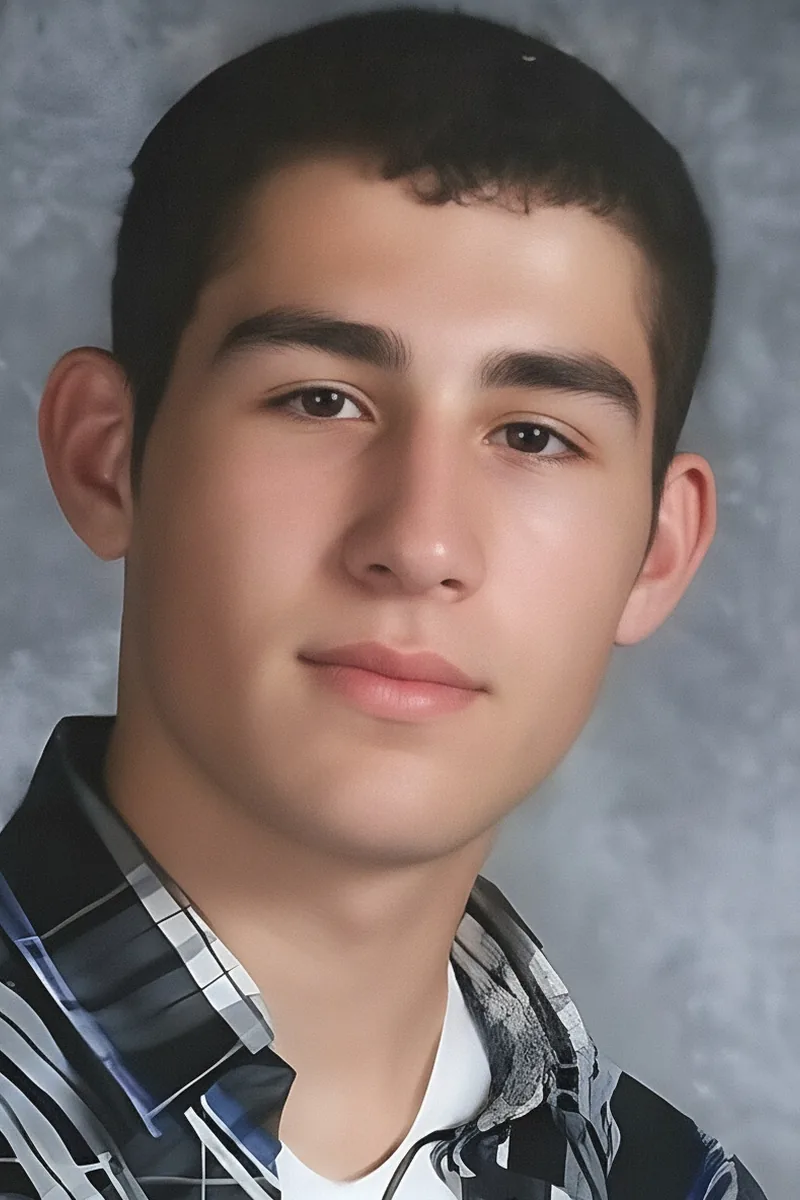
Studying mechanical engineering at Harvard means Christopher doesn't just remember physics — he's actively building on it every semester, from Newtonian mechanics and thermodynamics to electromagnetism and wave behavior. He breaks down complex problems by teaching students to draw clean free-body diagrams, identify which conservation law applies, and translate word problems into solvable equations. That systematic approach turns intimidating multi-step problems into manageable sequences.
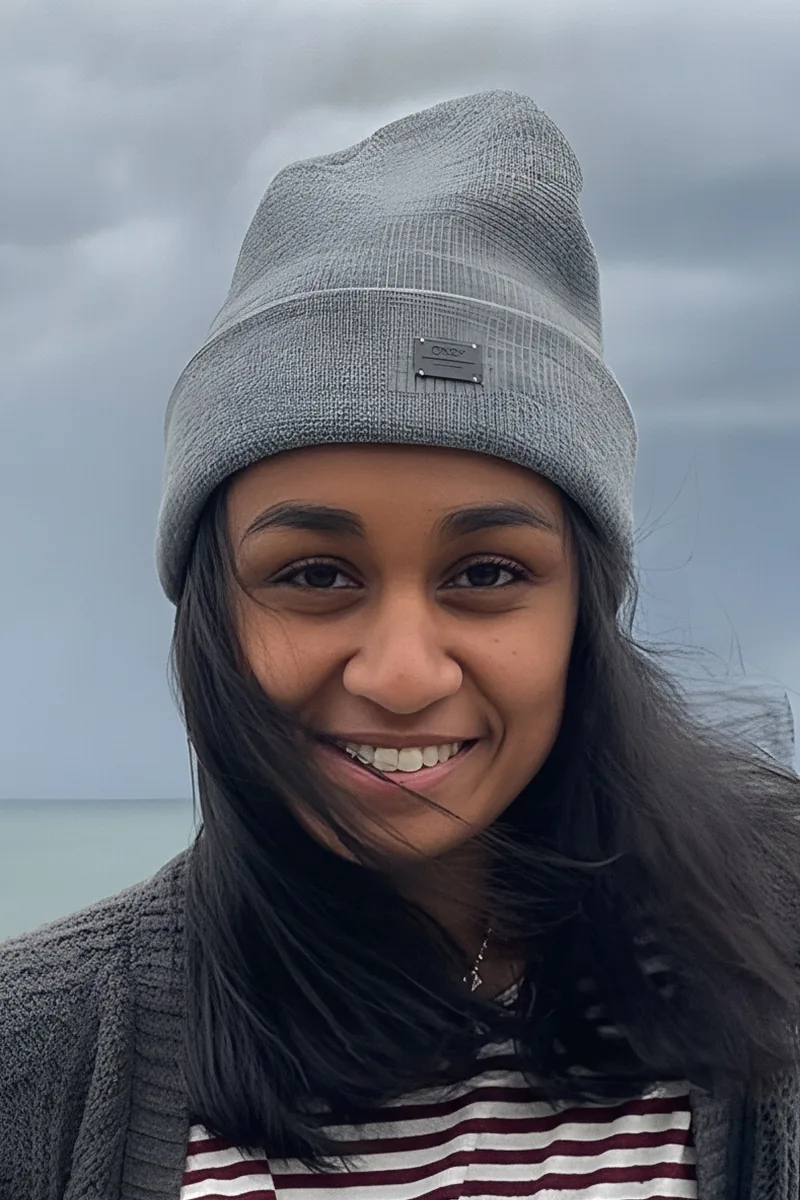
Serving as a Course Assistant for Harvard's calculus sequence means Sanjana regularly works through the exact derivatives, integrals, and differential equations that underpin every physics topic from kinematics to rotational dynamics — and she teaches AP Physics 1 through AP Physics C: E&M, so she knows where the math starts tripping students up in each course. She breaks problems down by isolating the physical principle first, then building the mathematical solution step by step so nothing feels like a leap. Rated 5.0 by students.
Benjamin's physics teaching goes beyond plugging values into kinematic equations. He digs into free-body diagrams, energy conservation, and vector decomposition by asking students to predict outcomes before calculating — a habit that builds the physical intuition textbooks often skip. His math fluency from studying economics at UChicago means the quantitative side never becomes a bottleneck.
Benjamin's finance and economics training at Notre Dame runs on the same quantitative backbone that physics demands — modeling systems, isolating variables, and reasoning through multi-step problems where one misstep cascades. He brings a toolkit of computation shortcuts and pattern-recognition tricks to kinematics and energy problems that make the math faster and less error-prone. Holds a 5.0 rating from students.
Teaching middle school math in Chicago Public Schools means Elizabeth tackles the foundational algebra and proportional reasoning that physics problems demand — and with a 34 ACT, her quantitative skills extend well beyond the middle school level. She breaks down force and motion problems by anchoring them in concrete, everyday scenarios, making the leap from intuition to equation feel natural for students who might otherwise freeze at the sight of a formula.
Siva's engineering training means he's spent years translating physical situations — projectile motion, circuit analysis, wave behavior — into mathematical models and back again. That translation skill is exactly what physics students need when a free-body diagram or energy conservation problem refuses to click. He earned a 1560 SAT and 35 ACT, so standardized problem formats are second nature too.
Kruti's genetics and genomics training at Northwestern required working through biophysics problems — from modeling molecular forces to understanding energy states in cellular systems — so introductory mechanics and thermodynamics concepts aren't far from her daily thinking. As a medical student, she routinely applies fluid dynamics and pressure relationships in clinical contexts, which gives her concrete examples to anchor abstract physics ideas. She's especially effective at teaching students to map a word problem into a clear physical picture before reaching for any formula.
TA-ing an upper-level biology course at WashU meant Alexander regularly worked through the biophysics side — membrane potentials, fluid dynamics in circulatory systems, and the thermodynamics of metabolic processes — so the bridge between biology and physics is one he crosses constantly. He leans on that interdisciplinary perspective when tackling mechanics and energy problems, grounding abstract force diagrams and conservation laws in physical systems students can actually picture.
A PhD in Physics means Jonathan has spent years not just studying but actively doing physics — designing experiments, deriving equations from first principles, and connecting abstract theory to measurable phenomena. He unpacks topics like Newton's laws, energy conservation, and electromagnetism by building intuition for why the equations take the form they do. Students walk away understanding the physics, not just surviving the problem sets.
Engineering is applied physics, and Sparsh spent four years at Vanderbilt living inside force diagrams, energy conservation problems, and wave mechanics as part of his biomedical engineering coursework. He teaches physics by tying every equation to a physical situation students can picture — a ball on a ramp, a circuit in a hospital device, a satellite in orbit. That concrete-first approach turns intimidating formulas into tools that actually make sense.
I am a graduate of Cornell University's College of Arts and Sciences. I received my Bachelor of Arts in Chemistry with Distinction in 2015. Since graduation, I was a physics/chemistry teacher and soccer coach at a private school in Virginia for a year, where I led the soccer team to an undefeated season. Before teaching and coaching professionally, I was a Teaching Assistant for the Cornell Math and Physics Departments, where I taught many subjects including calculus, mechanics, electromagnetism. Throughout my time at Cornell and as a teacher, I tutored subjects ranging from the SAT to AP Physics and Algebra II, which is where my true talents lie: in small group or one-on-one settings where I can give students the full attention they deserve and tailor my approach specifically to their learning styles. This is why I am now pursuing tutoring as a part-time occupation at Varsity Tutors. I embrace teaching all math and science subjects, especially physics and calculus, at both the college and high school level and will go above and beyond to make sure all of my students succeed, according to their definition of success. In my spare time, I enjoy playing league soccer, basketball, tennis and guitar, and also like to travel and see as much of the world as I can.
I am a recent graduate of Princeton University's Mechanical and Aerospace Engineering Department. I am passionate about teaching and mentoring and have done so in multiple capacities over the last four years, including a fellowship during which I taught pre-algebraic math to a group of middle school students from traditionally underserved backgrounds in Saint Paul, MN. I love interacting with students and seeing them grow over the course of their studies. I'm ecstatic at the opportunity to learn alongside them as we venture into educational rabbit holes and uncover key concepts about math, science, and everything else.
Studying physics at Penn means Max isn't just recalling textbook definitions — he's actively working through Lagrangian mechanics, electromagnetism, and wave theory in his own coursework. He unpacks problems by teaching students to diagram forces and identify constraints before touching an equation, which builds the physical intuition that makes harder topics accessible.
I am a student at the University of Chicago majoring in mathematics & comparative human development. I sing in an acapella group, play violin, and on weekends I love to go for bike rides or long runs, see local theater and music performances, and explore the city of Chicago. Through my studies and bike rides and runs, I enjoy working hard and building personalized, step-by-step plans for pursuing the goals I set. Nonetheless, I also believe in the importance of having fun and finding enjoyment in my day-to-day life, which I do through music and geographic exploration. I believe that this enthusiasm, curiosity, and steady work ethic are the keys to achieving goals once thought impossible, and I hope to inspire such a mindset in the people with whom I work.
One of Claire's favorite things about physics is that a single problem — say, a block on a ramp — can be solved through free-body diagrams, energy conservation, or component analysis, and each method reveals something different. She tutored math and physics during her undergraduate years at Emory and developed a habit of presenting multiple solution paths until one clicks with the student. Her chemistry and pre-med coursework also means she's comfortable with electricity, waves, and thermodynamics beyond the introductory level.
Amber's biology concentration in genetics and genomics required serious fluency in the physics underlying molecular techniques — from the optics of fluorescence microscopy to the electrostatics driving gel electrophoresis — so she approaches physics as a set of principles with tangible applications rather than isolated formulas. She teaches students to map out what's physically happening in a problem before reaching for equations, building the kind of conceptual clarity that makes kinematics and energy questions feel manageable. Her 32 ACT composite reflects strong quantitative reasoning across subjects.
Kathryn entered college on an engineering track after completing her high school's inaugural STEM program, which means she learned physics as a working toolkit rather than a list of formulas. She unpacks problems in kinematics, forces, and energy conservation by emphasizing free-body diagrams and unit analysis — skills that transfer across every physics topic. A 35 ACT composite reflects the analytical rigor she brings to quantitative problem-solving.
Evan's statistics graduate work gives him a quantitative fluency that translates directly to physics — particularly in mechanics and electromagnetism, where setting up the right equation from a word problem is half the battle. He breaks down force diagrams and energy conservation problems into clear, repeatable steps so the logic behind each solution becomes obvious.
Connie's math-heavy coursework at Dartmouth — including Probability and Linear Algebra — gives her the quantitative fluency that physics demands, especially when problems involve vector decomposition or differential equations. She teaches students to set up free-body diagrams and energy conservation equations systematically before touching a calculator. That structured approach turns intimidating multi-step problems into manageable sequences.
A neuroscience major at Brown doesn't just memorize physics — James applies mechanics, electricity, and wave behavior in coursework that demands real problem-solving fluency. He unpacks force diagrams and energy conservation problems step by step, making sure the math and the physical intuition develop together.
Three associates of science degrees mean Felix has taken the full introductory physics sequence — mechanics, electricity, and waves — multiple times across different programs, giving him an unusual familiarity with where students consistently get stuck on free-body diagrams and energy conservation setups. He pairs that repetition with a 1540 SAT-level quantitative instinct, breaking problems down to their core physical relationships before letting any math take over. Rated 5.0 by students.
Biomedical engineering demands a deep command of physics — from fluid dynamics in blood flow to the mechanics of prosthetic joints — and Maggie has spent years applying these principles in both coursework and research. As a current PhD student, she breaks down force diagrams, energy conservation, and wave behavior by connecting them to real systems students can visualize.
Bioengineering grad school is essentially applied physics — fluid dynamics, biomechanics, thermodynamics — so Mark teaches physics concepts from the perspective of someone who solves real problems with them. He's particularly effective at connecting free-body diagrams and energy conservation to the math behind them, since students often understand the concept but freeze when setting up equations. That dual comfort with theory and calculation makes a noticeable difference in problem-solving speed.
Pre-dental coursework at UIC puts Kheya through the same mechanics, energy, and wave problems that define introductory physics — and her 34 ACT confirms she handles the quantitative reasoning these topics demand. She slows problems down deliberately, diagramming each scenario and working through practice variations until the underlying logic sticks rather than just the formula.
As a Rice physics undergrad who also teaches through AP Physics C: Mechanics and E&M, Will tackles problems across the full introductory sequence — from rotational dynamics to Gauss's law — with the depth that comes from working through these topics in his own coursework right now. His approach starts with a general principle, then walks through its applications step by step, so students internalize the reasoning behind each equation rather than pattern-matching to memorized setups.
Gabriel's philosophy training actually translates well to physics problem-solving — breaking a complex argument into premises and conclusions isn't far from decomposing a multi-step mechanics problem into free-body diagrams and conservation laws. He teaches both calculus and physics, so when a student's real stumbling block turns out to be the math underneath a torque or projectile problem, he catches it immediately. Rated 4.7 by students.
Designing robots and solar-powered race cars at Northwestern means Michael doesn't just know physics equations — he applies Newton's laws, energy conservation, and rotational dynamics to real systems every week. He teaches students to diagram a problem physically before touching any math, which builds the kind of problem-solving instinct that carries through mechanics, electricity, and beyond.
Studying physics at Northwestern means Darren solves problems every day where a free-body diagram or a conservation law is the difference between a clean solution and a dead end. He brings that same discipline to tutoring — teaching students to set up problems systematically before ever touching an equation. His 5.0 rating speaks to how clearly he communicates even the trickiest concepts in mechanics, thermodynamics, and waves.
Engineering is applied physics, and Lee spent two degrees applying it — from Newtonian mechanics and circuit analysis to thermodynamics and wave behavior. He breaks down complex problems by teaching students to draw free-body diagrams and identify which principles actually govern a given scenario before reaching for equations. That problem-solving framework transfers across every unit in a physics course.
Engineering training at the graduate level means Moe doesn't just know physics formulas — he knows where they break down and why the assumptions behind them matter. From Newtonian mechanics through electromagnetism and wave phenomena, he unpacks each concept by building the math up from first principles so students own the reasoning, not just the equation sheet.
Kinematics equations and free-body diagrams only make sense when a student can visualize what's physically happening before jumping to math. Aleeza approaches physics problems by first sketching the scenario and identifying which principles apply — Newton's laws, energy conservation, or momentum — then translating that reasoning into equations. Her quantitative science background and 4.9 student rating show she can make that translation clear.
Kinematics and free-body diagrams trip students up not because the math is impossibly hard, but because translating a physical scenario into equations requires a specific kind of thinking. Sofia tackles that translation step explicitly — teaching students to sketch the situation, identify forces, and set up equations before touching a calculator. Her biological and physical sciences coursework at UChicago keeps her sharp on everything from Newtonian mechanics to energy conservation.
Most physics struggles trace back to one thing: students memorize equations without understanding when each one applies. Masooma teaches problem-solving by having students sketch free-body diagrams, identify which forces or energy types are in play, and then choose the right equation — turning word problems into a repeatable process. She covers everything from kinematics and Newton's laws through electricity and waves across her tutoring practice.
Thomas earned his B.S. in Physics from Notre Dame and is heading into a PhD program in electrical engineering, so the mechanics, electromagnetism, and thermodynamics in introductory physics courses are second nature to him. He tackles problems by teaching students to build a clear physical picture first — drawing force diagrams, identifying conservation laws, choosing coordinate systems — so that the math step feels like a natural follow-through rather than a guessing game. Rated 5.0 by students.
I am a sophomore at UIUC studying agricultural and biological engineering. Eventually, I hope to work on environmental engineering related projects concerning the improvement of ecosystem management and reducing the harmful effects of pollutants in the environment. As an aspiring engineer, my favorite subjects to teach students are math and science. I've been working with kids as a swim instructor and music teacher for the past six years now. As I've begun developing experience tutoring students, my favorite part about helping students learn math and science concepts is teaching them how these different concepts interconnect and later helping them to develop critical thinking skills to work through difficult material.
Understanding physics means translating real-world motion, forces, and energy into mathematical language — and then back again. Pal's training in UIC's B.S./M.D. program required rigorous physics coursework, so he can walk through everything from free-body diagrams to wave mechanics with the kind of fluency that comes from applying these principles in a science-heavy curriculum.
Jacob earned a B.S. in both Chemistry and Physics from Haverford College and has tutored collegiate-level physics for years. He tackles everything from Newtonian mechanics to electromagnetism by emphasizing how to set up problems correctly — identifying forces, choosing coordinate systems, and knowing which conservation law applies before touching an equation.
Kiara treats physics problems as puzzles that combine reading comprehension with math — identifying what a question is really asking, sketching a diagram, and then choosing the right equation. She spends extra time on the conceptual setup behind topics like kinematics and energy conservation, since getting the logic right makes the calculations almost automatic.
James holds a bachelor's degree in physics and brings that depth to every concept he teaches — from free-body diagrams and Newton's laws through energy conservation and wave mechanics. His approach breaks complex problems into physical intuition first, then translates that intuition into the math, so equations actually mean something.
Because she tackles physics and chemistry side by side at Princeton, Martina sees the connections between the two that most students miss — how energy conservation in physics maps onto enthalpy in chemistry, or how vector math reappears in molecular geometry. She walks through kinematics, force diagrams, and wave behavior with that interdisciplinary lens, making formulas feel less like isolated recipes.
Testimonials
Because the right Physics tutor makes all the difference.
Average Session Rating – Based on 3.4M Learner Ratings
Practice Physics
Free practice tests, flashcards, and AI tutoring for Physics
Nearby Physics Tutors
Other Round Lake Beach Tutors
Related Science Tutors in Round Lake Beach
Frequently Asked Questions
Varsity Tutors matches Round Lake Beach students with expert Physics tutors for 1-on-1 instruction. We pair each student with a tutor based on their specific needs, learning style, and goals.
Whether you need homework help, exam prep, or want to get ahead, our Physics tutors are ready to help.
Common challenges include gaps from earlier material, difficulty with specific concepts, and trouble applying learning to new problems. These issues can snowball quickly in Physics.
A tutor identifies where you're stuck, fills in gaps, and provides targeted practice. The 1-on-1 format means you get help exactly where you need it.
Tutors work with your student's actual coursework—homework assignments, class notes, and upcoming tests. This keeps tutoring directly relevant to what's happening in the classroom.
When you share information about your student's school and curriculum, we can match you with a tutor who has relevant experience.
All tutors complete background checks, credential verification, and teaching evaluation. Many of our Physics tutors hold advanced degrees or have years of teaching experience.
You can review tutor profiles to find someone with the right background for your student's level and needs.
Many students see improved grades within a few weeks, along with better understanding of Physics concepts and more confidence tackling challenging material.
Tutors track progress and adjust their approach to ensure continued improvement.
Most students benefit from 1-2 sessions per week. More frequent sessions help if your student is significantly behind or has an important exam coming up.
Your tutor can recommend a schedule based on your student's specific situation and goals.
Tutoring is purchased in packages of hours, with rates varying by tutor experience. Varsity Tutors offers several options to fit different budgets and needs.
You can discuss pricing during your consultation to find what works best.
Your tutor will assess where your student is, discuss goals, and start working on priority areas. Most students bring current homework or upcoming test material to focus on.
By the end, you'll have a clear sense of how the tutor can help and a plan for moving forward.
Let’s find your perfect tutor
Answer a few quick questions. We’ll recommend the right plan and match you with a top 5% tutor.