Award-Winning Statistics Tutors
serving Rockford, IL
Statistics
Tutors in Rockford
Private 1-on-1 tutoring, weekly live classes for academic support, test prep & enrichment, practice tests and diagnostics, and more to elevate grades and test scores.
Based on 3.4M Learner Ratings
UniversitiesSchools & Universities
DeliveredHours Delivered
ProficiencyGrowth in Proficiency
Who needs tutoring?
No obligation. Takes ~1 minute.
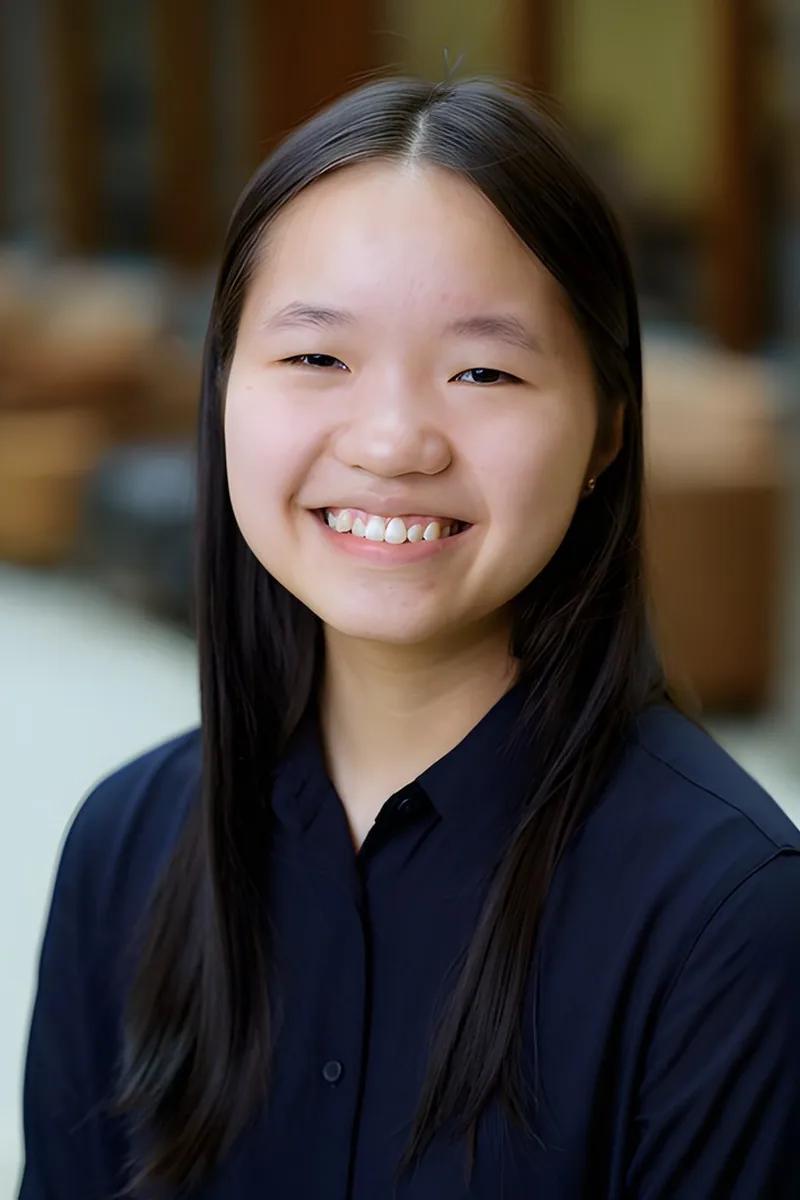
Between her biostatistics background and hands-on research experience in Northwestern's John Rogers Lab, Ingrid knows statistics as both a classroom subject and a practical tool. She walks students through concepts like hypothesis testing, confidence intervals, and probability distributions by connecting each one to what the numbers actually mean in context.
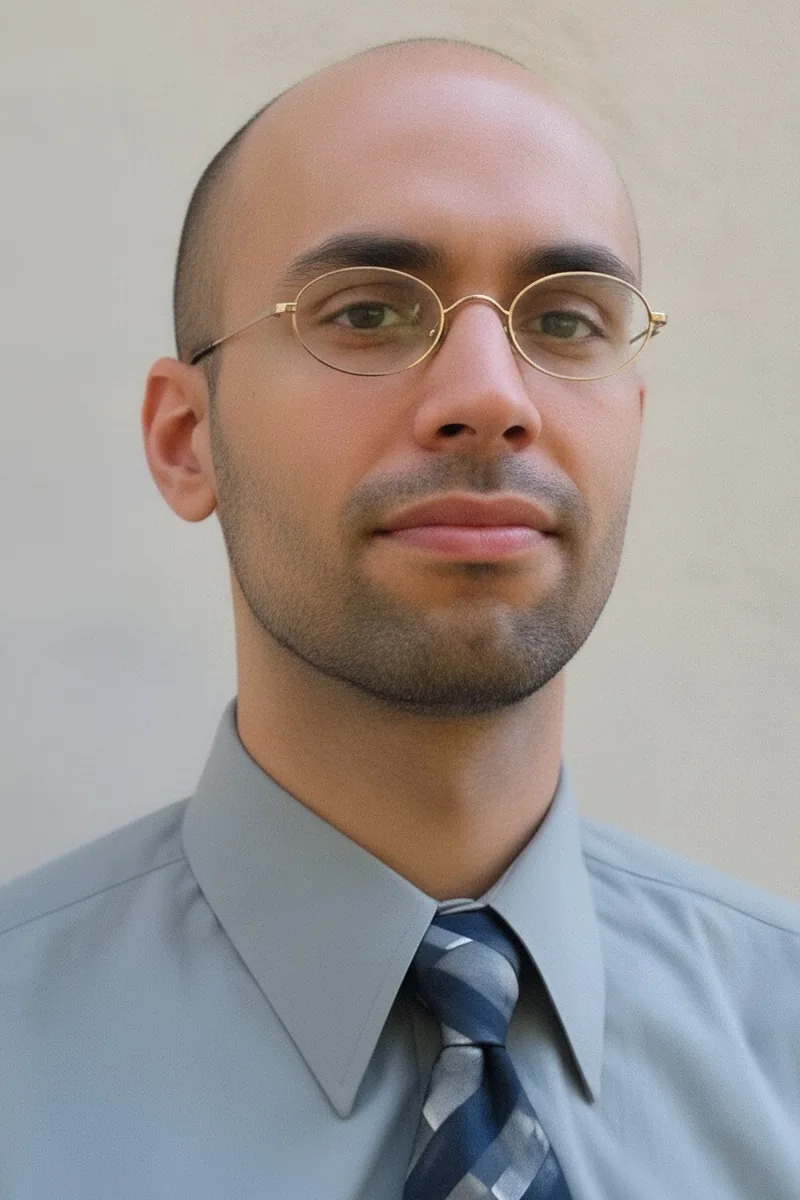
A PhD statistician who also holds a biomedical engineering degree, Sam teaches introductory and intermediate statistics with an unusual amount of real-world context. Whether the topic is hypothesis testing, confidence intervals, or regression, he unpacks the logic behind each method so students can interpret results critically, not just run calculations.
A biology degree from UIUC means Todd spent years designing experiments, interpreting data sets, and running statistical tests — skills he now brings directly to tutoring statistics. He unpacks concepts like probability distributions, hypothesis testing, and standard deviation by grounding them in real data scenarios rather than abstract formulas.
As a Statistics major at Northwestern, Jake lives in this material daily — regression analysis, probability distributions, confidence intervals, and hypothesis testing are part of his coursework, not just something he once studied for a test. That proximity to the subject means he explains concepts with the kind of fluency that comes from constant use. He holds a 5.0 client rating.
Studying Comparative Human Development at the doctoral level means Gabriel has spent years designing studies, interpreting data sets, and running statistical analyses firsthand. He teaches statistics by grounding concepts like probability distributions, hypothesis testing, and regression in real research questions rather than abstract formulas. That practical lens makes the subject click for students who struggle with the textbook approach.
I am a graduate of Cornell University's College of Arts and Sciences. I received my Bachelor of Arts in Chemistry with Distinction in 2015. Since graduation, I was a physics/chemistry teacher and soccer coach at a private school in Virginia for a year, where I led the soccer team to an undefeated season. Before teaching and coaching professionally, I was a Teaching Assistant for the Cornell Math and Physics Departments, where I taught many subjects including calculus, mechanics, electromagnetism. Throughout my time at Cornell and as a teacher, I tutored subjects ranging from the SAT to AP Physics and Algebra II, which is where my true talents lie: in small group or one-on-one settings where I can give students the full attention they deserve and tailor my approach specifically to their learning styles. This is why I am now pursuing tutoring as a part-time occupation at Varsity Tutors. I embrace teaching all math and science subjects, especially physics and calculus, at both the college and high school level and will go above and beyond to make sure all of my students succeed, according to their definition of success. In my spare time, I enjoy playing league soccer, basketball, tennis and guitar, and also like to travel and see as much of the world as I can.
Probability distributions and hypothesis testing trip students up when the notation obscures what's actually being asked. Alyssa breaks each problem into a concrete question first — what are we measuring, what's the claim, what does the data say — then maps it onto the correct formula. Her math background at Vanderbilt gives her the fluency to make statistical reasoning feel less like guesswork.
The jump from plugging numbers into a formula to actually interpreting what a p-value means or why a confidence interval matters — that's where most intro statistics students get lost. As a current graduate student in statistics, Evan teaches the reasoning behind hypothesis testing, probability distributions, and regression rather than just the mechanics. His 5.0 rating speaks to an ability to make abstract statistical concepts click.
Sam's MS in Accounting means he spent graduate-level coursework knee-deep in statistical analysis — regression, variance, hypothesis testing — applied to financial data where getting the numbers wrong has real consequences. That applied background lets him teach statistics as a decision-making toolkit, walking students through concepts like probability distributions and measures of spread with concrete examples drawn from business and finance.
Studying statistics as a full major at Carleton gives Aya depth that goes well beyond an intro course. She tackles everything from probability distributions and hypothesis testing to confidence intervals, explaining the reasoning behind each method so students can set up problems independently rather than relying on memorized steps.
Doctoral research in public policy means living inside data — designing surveys, running regressions, and interpreting significance levels for real-world policy questions. Tesa brings that hands-on statistical reasoning to topics like probability distributions, hypothesis testing, and confidence intervals, connecting each concept to what it actually means in practice.
Biomedical engineering research lives and dies by statistical analysis — hypothesis testing, regression models, confidence intervals, and knowing when a p-value actually means something. Lee brings that applied perspective to statistics tutoring, connecting each concept to how data is actually interpreted in published studies. Students walk away understanding not just the formulas but the reasoning behind choosing one test over another.
Brea is finishing her Master's in Analytics at the University of Chicago, which means she lives in data — probability distributions, hypothesis testing, regression models, and the messy real-world datasets that textbook problems only hint at. She bridges the gap between abstract formulas and practical interpretation, so students understand not just how to run a t-test but what the results actually mean. Rated 5.0 by students.
With a PhD in Mathematics and Computer Science, Irene brings the kind of theoretical depth to statistics that most tutors simply can't — she can derive the distributions students are asked to use, explain why the central limit theorem actually works, and connect probability theory to applied data analysis in a single conversation. That graduate-level perspective is especially valuable for students moving from introductory stats into more demanding coursework where formulas alone stop being enough. Rated 4.9 by students.
Sociology research runs on statistics, and Meagan's master's work gave her hands-on experience with data analysis — from calculating standard deviations to interpreting regression output and p-values. She teaches the reasoning behind each test, not just the formulas, so students can look at a dataset and know which tool actually fits the question.
I am passionate about the importance of math and science, I enjoy making them more relatable to a student by explaining their real world applications whenever possible.
An economics degree from the University of Chicago means Marvin didn't just take statistics — he lived in it, running regressions, interpreting economic data, and stress-testing models across multiple courses in one of the most quantitatively rigorous econ programs in the country. He teaches concepts like correlation, probability, and hypothesis testing by tying them back to the kinds of questions economists actually ask, which gives students a reason to care about the math.
Four years of tutoring math at every level — from pre-algebra through multivariable calculus — means Miriam can meet a statistics student exactly where their algebra or calculus skills leave gaps, which is often where confusion with formulas for variance or regression actually originates. Her science coursework at Washington University in St. Louis, particularly in chemistry and biology, keeps her grounded in how statistical methods like hypothesis testing and confidence intervals function as real analytical tools in lab settings.
Probability distributions, hypothesis testing, confidence intervals — Michael encountered all of these not in a math classroom but while analyzing real biological datasets during his master's research. That applied perspective means he can show students why a particular test matters and when to use it, making abstract formulas feel grounded in actual problem-solving.
I am a Molecular Engineering major at the University of Chicago, I am currently taking time off to focus on other aspects of my career but I don't want to stop tutoring outside college campus!. I am a child of immigrants and have spent my life tutoring my siblings and younger students, and I loved working with them! See y'all in class!
Studying finance at the university level meant Michal lived inside probability distributions, hypothesis testing, and regression analysis — not as abstract exercises, but as tools for making real decisions under uncertainty. He brings that applied perspective to statistics tutoring, connecting formulas like standard deviation and z-scores to scenarios students can actually picture.
Studying computer science means Evan lives in data — probability distributions, hypothesis testing, and interpreting variance are part of his daily coursework. He approaches statistics by connecting abstract formulas to real scenarios, like why a sample size matters or what a p-value actually tells you. That practical lens makes the subject click faster than memorizing tables ever could.
Psychology research runs on statistics, and Katherine's psych major at St. Olaf means she's worked hands-on with hypothesis testing, p-values, confidence intervals, and regression analysis in real study designs. She breaks down concepts like standard deviation and normal distributions by tying them to actual data scenarios rather than abstract formulas.
Sareen's neuroscience and psychology research training meant designing experiments and analyzing data — the kind of work where picking the wrong statistical test or misreading a confidence interval can sink an entire study. She brings that precision to teaching concepts like variability, sampling distributions, and hypothesis testing, connecting each one to the research questions that make them necessary. Rated 5.0 by students.
Probability distributions, hypothesis testing, and confidence intervals all click faster when a student understands the logic underneath the formulas. Devanshi approaches statistics the way she approaches programming — by mapping out the decision process step by step before plugging in any numbers. Her 5.0 rating speaks to how well that structured method lands with students.
Computer science training means Charles spent real time with discrete probability, combinatorics, and data analysis before ever labeling them "statistics" — so he teaches concepts like expected value and distributions with the algorithmic clarity of someone who's actually coded simulations around them. That logical, step-by-step mindset translates well when students need to move from raw formulas to understanding what a hypothesis test is really asking.
Between his engineering coursework and his MBA, Gopal has applied statistics in two very different contexts — from signal analysis to business forecasting. That dual perspective makes him especially effective at teaching concepts like hypothesis testing, probability distributions, and regression, because he can show what the numbers actually mean in practice. He walks through each problem type with enough context that students stop guessing which formula to use.
I am currently a Senior with a math major at Loyola University Chicago and have been accepted to their masters program. I also like playing tennis, whiffle ball, and writing poetry.
Probability distributions, hypothesis testing, and confidence intervals all require a kind of reasoning that feels unfamiliar to students used to getting one right answer. Shivam approaches statistics by walking through the logic behind each test before touching any formula, so students learn to interpret results instead of just computing them.
Industrial engineering is essentially applied statistics — quality control, regression modeling, probability distributions for process optimization — so Nick lives in this material daily. He unpacks concepts like hypothesis testing and expected value by tying them to real decision-making scenarios rather than leaving them as abstract formulas. Students rate him 5.0 for making the logic behind statistical methods genuinely click.
Probability distributions, hypothesis testing, and regression analysis each require a slightly different way of thinking about data. James unpacks these topics with an engineer's precision, emphasizing how to set up problems correctly and interpret results — the two steps where most statistics students lose points.
I am a 2023 graduate of the University of Notre Dame with a Finance/Economics major and a minor in Innovation and Entrepreneurship. I am a passionate student in the math and business realms, as I enjoy the intuitiveness of the former and the real-world potential of the latter. During classes in middle and high school, I developed a reputation of being a good source of help within my classes in a non-tutor capacity, and grew that into a peer tutor role a couple times a week during lunch my senior year of high school. What I hope to accomplish with my tutoring is ensure that you not only achieve your desired grade/score, but see how the different concepts relate to each other in the bigger picture. The more important part is to critically think about the subject matter in other, more unfamiliar contexts. Also, in my math subjects, I seek to provide personal secrets in realms including quicker computation strategies, unique acronyms for certain rules, and other intuitive shortcuts.
I am eager to help students wrestle with and master concepts in their math and physics classes. I have extensive experience tutoring students in both math and physics at the high school and college level in one on one and larger group settings. During my PhD I was awarded a teaching fellowship which allowed me to continue teaching while I continued to perform research and carry out my dissertation work.
I'm a rising Junior at the University of Chicago studying Computational Neurosciences and Fundamentals: Literature & Philosophy. I've tutored 7th and 8th graders in Basic Algebra and essay construction and taught undergraduates Biostatistics and the literature of Valdimir Nabokov, so I'm prepared to work with any age or skill level. When I'm not tutoring this summer, I'll be doing electrophysiological research at NYU's Center for Neural Science and preparing to write my BA on James Joyce's Ulysses. I'm extremely versatile with expertise in a range of subjects and really enjoy helping students learn. I also excel at standardized testing and am excited to share the strategies that made me successful. In my free time, some of my favorite things to do are act, play guitar, and bike along the river.
I am a junior at the University of Illinois at Chicago Honors College, where I am pursuing a Bachelor of Science in Bioengineering with a focus in cell and tissue engineering. During high school, I worked in the literacy center, where I tutored fellow classmates and helped them with any classes that they were having trouble with. I enjoy tutoring because I acknowledge the two-way nature of it. Not only does tutoring help a tutee learn certain material, it also helps me master some old concepts. While I tutor a variety of subjects, one of my favorites is mathematics. I love teaching this subject because its concrete and builds problem-solving skills. I think that education is one of the most important facets of life since it directly shapes our future. With this in mind, I attempt to teach my students to the best of my ability. During my free time, I enjoy biking, playing the violin, and watching sports.
I am a graduate from UCLA who majored in Biology and minored in Global Health. During my time at UCLA, I tutored student athletes in math, history, physics, and many more subjects. My passion from teaching was clear after I was able to see my students succeed in their college level courses. I have a lot of experience tutoring all ages of students from elementary school to college. Even in high school I was a tutor helping middle school students with pre-calculus. Right now, I am tutoring elementary school students in math, reading and English. I have all the materials ready for your elementary school student to start and improve right away! I motivate younger students by getting them excited about the content, and each of my students look forward to their sessions. I will be starting medical school in the fall, so my expertise lies with most premed courses, as well as English and Reading for personal statement writing help. I am strong in all subjects encompassing math: algebra, pre-calculus and calculus. I am an individual who truly believes that tutoring provides the extra help necessary for any student to succeed in what they put their mind to. With just a little help, only you can explore what you are truly possible of achieving. To me, there is nothing better than building a student's confidence on a subject they were not as strong in!
I am a graduate of Augustana College with a Bachelor of Arts in Geology and Environmental Studies with a minor in Mathematics. While at my undergrad, I often worked with elementary and middle school students, teaching basic science concepts and attempting to inspire and interest in all types of science and learning. I achieved my Master of Science degree in Geosciences with a concentration in Paleontology from East Tennessee State University. My research focused on Ice Age mammoth dynamics and paleobiological patterns. After my Master's I worked with the National Park Service in Alaska backpacking across remote national parks including Katmai, Bering Land Bridge, and Kobuk Valley completing field work and reports for the park service. I tutor a wide variety of subjects and am most passionate about natural sciences, math, and ArcGIS. I've always enjoyed prepping for standardized tests (ACT, GRE) and hope to help all my students reach score beyond their targets. I believe there is no single correct way to go about learning and I strive to uncover the methods that work best for each student. I enjoy teaching students of all ages, and my methods are tailored to the age and level of each student. Outside of academia, I love photography, playing basketball, and watching movies/TV shows (big Marvel fan).
I am fully invested in their progress and growth, so I care that all the material learned really clicks, makes sense, and is applicable. In addition to standardized exams, I also can help with college admissions, including editing essays.
I am a 2019 graduate of Marquette University in Milwaukee, Wisconsin. There, I received my Bachelor's of Science in Biomedical Sciences and Psychology. Currently, I am an optometry student at SUNY College of Optometry in Manhattan, NY. In my previous roles of statistics tutor and anatomy teaching assistant at Marquette, I enjoyed being both a mentor and friend to my students. Each day was a learning experience for me as much as it was for them, and I felt as though my impact extended far beyond the classroom. This is paralleled in how I intend to utilize my training to play the role of not only a healthcare provider to my future patients, but an educator. I find it immensely important to inform patients of the medicine and technology that can be adapted towards their visual impairments.
I am a graduate of Oberlin College where I studied Jazz Bass Performance and Economics. I am also a member of the Phi Beta Kappa Academic Honors Society.
Testimonials
Because the right Statistics tutor makes all the difference.
Average Session Rating – Based on 3.4M Learner Ratings
Practice Statistics
Free practice tests, flashcards, and AI tutoring for Statistics
Nearby Statistics Tutors
Other Rockford Tutors
Related Math Tutors in Rockford
Frequently Asked Questions
Varsity Tutors matches Rockford students with expert Statistics tutors for 1-on-1 instruction. We pair each student with a tutor based on their specific needs, learning style, and goals.
Whether you need homework help, exam prep, or want to get ahead, our Statistics tutors are ready to help.
Common challenges include gaps from earlier material, difficulty with specific concepts, and trouble applying learning to new problems. These issues can snowball quickly in Statistics.
A tutor identifies where you're stuck, fills in gaps, and provides targeted practice. The 1-on-1 format means you get help exactly where you need it.
Tutors work with your student's actual coursework—homework assignments, class notes, and upcoming tests. This keeps tutoring directly relevant to what's happening in the classroom.
When you share information about your student's school and curriculum, we can match you with a tutor who has relevant experience.
All tutors complete background checks, credential verification, and teaching evaluation. Many of our Statistics tutors hold advanced degrees or have years of teaching experience.
You can review tutor profiles to find someone with the right background for your student's level and needs.
Many students see improved grades within a few weeks, along with better understanding of Statistics concepts and more confidence tackling challenging material.
Tutors track progress and adjust their approach to ensure continued improvement.
Most students benefit from 1-2 sessions per week. More frequent sessions help if your student is significantly behind or has an important exam coming up.
Your tutor can recommend a schedule based on your student's specific situation and goals.
Tutoring is purchased in packages of hours, with rates varying by tutor experience. Varsity Tutors offers several options to fit different budgets and needs.
You can discuss pricing during your consultation to find what works best.
Your tutor will assess where your student is, discuss goals, and start working on priority areas. Most students bring current homework or upcoming test material to focus on.
By the end, you'll have a clear sense of how the tutor can help and a plan for moving forward.
Let’s find your perfect tutor
Answer a few quick questions. We’ll recommend the right plan and match you with a top 5% tutor.