Award-Winning Math Tutors
serving Rockford, IL
Math
Tutors in Rockford
Private 1-on-1 tutoring, weekly live classes for academic support, test prep & enrichment, practice tests and diagnostics, and more to elevate grades and test scores.
Based on 3.4M Learner Ratings
UniversitiesSchools & Universities
DeliveredHours Delivered
ProficiencyGrowth in Proficiency
Who needs tutoring?
No obligation. Takes ~1 minute.
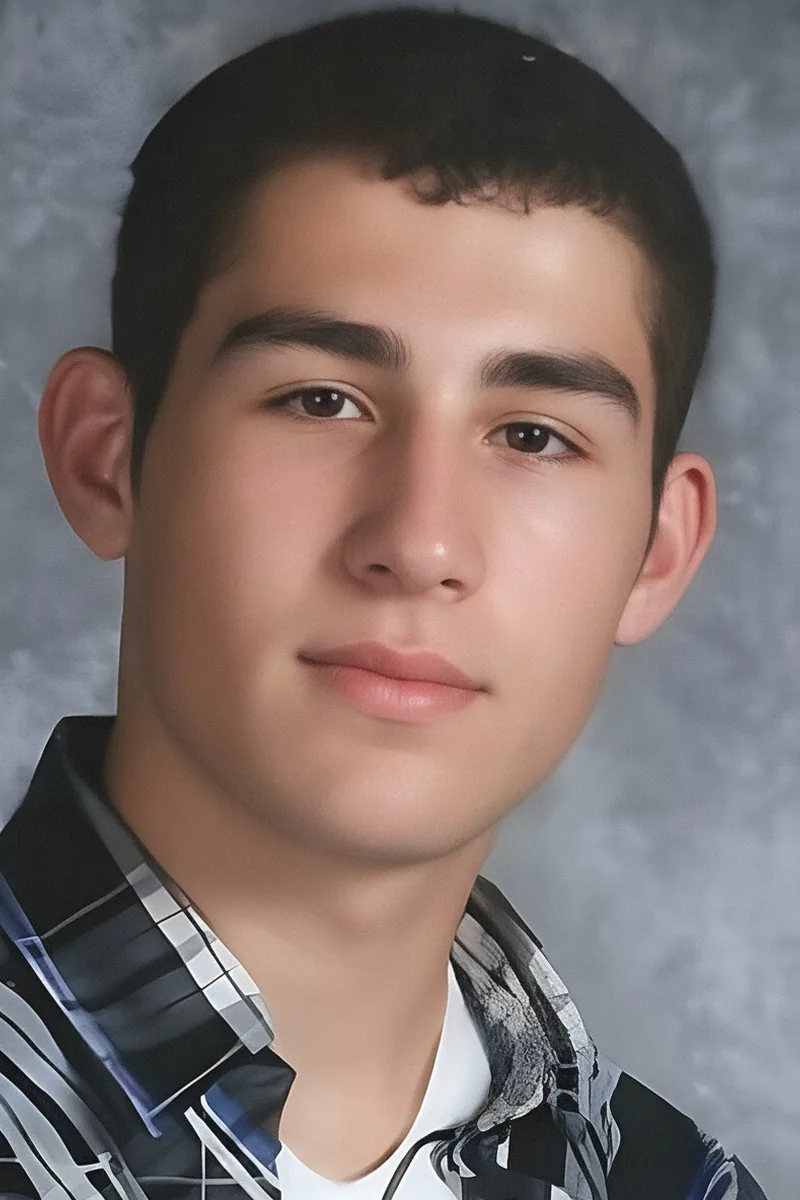
Mechanical engineering at Harvard means Christopher lives in math daily — calculus, trigonometry, and algebra aren't abstract exercises for him but tools he uses to model physical systems and solve design problems. That applied perspective lets him show students exactly where a concept like derivatives or trig identities actually goes, which tends to unlock motivation alongside understanding. He scored a 35 on the ACT and is rated 4.8 by students.
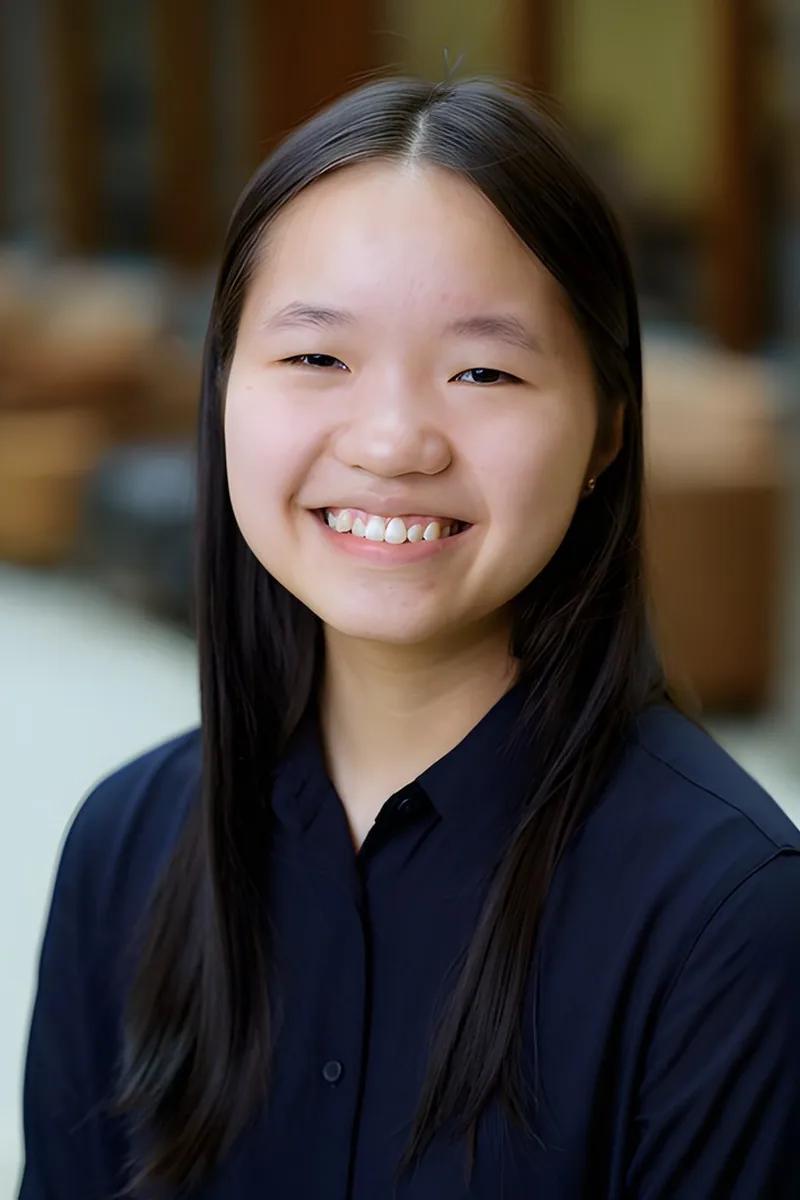
Biomedical engineering at Northwestern means Ingrid lives in math daily — calculus for modeling drug delivery kinetics, statistics for analyzing lab data, trigonometry for signal processing — so she teaches these topics as interconnected tools rather than isolated chapters. Her research experience in the John Rogers Lab grounded abstract equations in physical problems, giving her a knack for showing students what a derivative or a system of equations actually represents. She covers everything from pre-algebra through calculus 2 and brings particular clarity to the quantitative reasoning that bridges middle school math and college-level work.
A University of Chicago graduate with a 1530 SAT and 35 ACT, Asta brings sharp quantitative instincts to math topics from fractions and ratios through functions and graphing. She breaks problems into logical steps so students see the reasoning behind each procedure, not just the answer.
From pre-algebra through linear algebra and calculus, Sam covers the full math pipeline with the structural understanding that comes from a biomedical engineering degree and a statistics PhD. He's especially effective at showing how earlier concepts — like fraction operations or function behavior — connect to the harder material students will face later. That big-picture wiring makes individual topics click faster.
Law school at the University of Chicago sharpened Elena's ability to dissect complex arguments into logical steps — a habit she now applies to walking through multi-step math problems where students need to see exactly where their reasoning breaks down. Her approach is Socratic: she listens to a student talk through a problem, then asks the precise question that exposes the gap, rather than jumping straight to the correct method. She scored a 1600 on the SAT and is rated 4.9 by students.
Jeff's subject list spans calculus and algebra alongside his humanities expertise, and his 1550 SAT confirms sharp quantitative reasoning. He's particularly effective at translating word problems into mathematical setups — a skill that comes naturally to someone trained in philosophical logic and argument structure.
Medical school at Northwestern means Anna lives in quantitative reasoning daily — biostatistics, pharmacokinetics, interpreting clinical data — which keeps her math instincts sharp well beyond what she first developed earning a 36 ACT and 1590 SAT. She's particularly effective at teaching students how to set up a problem before solving it, the organizational step that separates students who get lost mid-calculation from those who move through confidently. Rated 5.0 by students.
Philosophy majors spend four years doing something most people don't associate with math: constructing airtight logical proofs where every step must follow necessarily from the last. Emily's BA in Philosophy from Northwestern built exactly that kind of sequential reasoning, which she now applies to walking through algebraic and arithmetic problems where students need to see why each operation is justified, not just what button to press. Her legal career reinforced that discipline — building a case and solving a multi-step equation aren't as different as they sound.
Not every math student needs calculus-level intensity — sometimes the gap is in foundational skills like fraction operations, proportional reasoning, or translating word problems into equations. Connor identifies exactly where the disconnect is and rebuilds confidence from that point, drawing on the quantitative rigor his dual science degrees required.
The turning point in Viktor's relationship with math came when teachers showed him that formulas aren't arbitrary — they emerge from ideas that connect to each other in deep, logical ways. With a math degree from UChicago and a perfect 1600 SAT, he unpacks everything from fraction operations to polynomial behavior by building the reasoning behind each concept so it actually sticks.
Whether a student is wrestling with fractions or working through precalculus concepts, Astoria's approach is to trace each problem back to the reasoning that makes it solvable. Her cellular and molecular biology major at WashU means she uses math daily in quantitative contexts — calculating concentrations, interpreting data sets — and she brings that practical fluency to every session.
From basic arithmetic to competition-level problem solving, Sanjana covers the full spectrum of K-12 math — and currently teaches introductory calculus as a course assistant at Harvard. She pinpoints exactly where a concept breaks down for a student, whether that's fraction operations in fifth grade or function transformations in high school, and rebuilds understanding from that point. Rated 5.0 by students.
Cognitive science training means Hannah understands how people actually learn math — where the brain gets stuck on fractions, why word problems feel harder than equations, and what makes a concept finally click. She goes slowly and deliberately through each step, whether it's building number sense in younger students or tackling proportional reasoning and pre-algebra topics. Her 34 ACT composite speaks to the kind of quantitative fluency she brings to every session.
Whether it's fraction operations tripping up a fifth grader or function notation confusing a high schooler, Pinelopi pinpoints the specific concept causing the breakdown. She covers everything from pre-algebra through pre-calculus and earned a 1530 SAT, so she can connect today's math lesson to the bigger picture of where these skills lead.
Ellie's economics training at the University of Chicago is built on applied math — regression models, optimization problems, and data analysis — so she understands how arithmetic and number sense connect to real decision-making. She's been tutoring younger students since coaching her little brother and his friends through their math homework, and she knows how to make abstract concepts click with relatable examples.
Kade's math tutoring draws on the quantitative backbone of his biology and chemistry coursework at Northwestern, where calculus and algebra show up constantly in kinetics equations and statistical analysis. He's particularly sharp at connecting abstract math concepts — like rates of change or systems of equations — to problems students can actually visualize.
Studying economics at the University of Chicago means Benjamin lives in quantitative reasoning every day — from calculus-based proofs to statistical modeling. He breaks down tricky concepts like fractions, ratios, and multi-step word problems by connecting them to real scenarios, making abstract math feel concrete and approachable. Rated 4.8 by students.
Alex's graduate work in political science required serious quantitative chops — regression analysis, statistical modeling, interpreting polling data — which means he's comfortable translating abstract math into something concrete and logical. He teaches across the full range from algebra through calculus, and his English background gives him an unusual edge with word problems: he can teach a student to parse what a question is actually asking before they ever pick up a pencil.
Elementary and middle school math is Molly's home turf — she's taught it daily across second, third, and fourth grade classrooms and holds Illinois certification through grade nine. From place value and multi-digit multiplication to fractions, ratios, and pre-algebra concepts, she knows exactly where students tend to get stuck and uses hands-on strategies to make abstract ideas concrete.
I am a recent graduate of the University of Chicago with a BA in English and a MA in the Humanities. My specialties are tutoring in test prep, writing, and reading. I am more than happy to spend time on my students outside of our organized sessions to ensure everyone meets their goals. Please do not hesitate to reach out if you have any questions. Looking forward to our tutoring sessions!
Neuroscience coursework at Vanderbilt meant Gloria couldn't avoid math — her studies required statistical analysis, data modeling, and calculus-heavy problem sets that made abstract concepts feel like tools for answering real questions about the brain. Now pursuing a Master's in Physiology, she still uses that quantitative foundation daily, which keeps her sharp when tutoring everything from algebra through calculus. Rated 5.0 by students.
From arithmetic shortcuts to algebraic reasoning to early calculus concepts, Benjamin has a toolkit of computation strategies and mental models he's been sharing with classmates since middle school. His 36 ACT composite and Notre Dame quantitative training back up what his 5.0 student rating confirms: he makes math click by revealing the patterns underneath the procedures.
From elementary arithmetic through calculus, Charles covers a wide span of math and knows where the common stumbling blocks live — fractions turning into decimals, variables appearing for the first time, or the leap from algebra into limits. He connects each new concept to something a student already understands, so the jump feels manageable rather than abstract. Rated 5.0 by his students.
A biology degree from UIUC means Todd thinks about math the way scientists actually use it — interpreting data, setting up equations from word problems, and reasoning through multi-step solutions. He teaches across the full K-12 spectrum, from foundational arithmetic and fractions through algebra and calculus, adjusting his explanations to match how each student processes numbers. Rated 5.0 by students.
From simplifying fractions to solving systems of equations, Jessica pinpoints exactly where a student's understanding breaks down and rebuilds from that point. She earned a 36 ACT and 1590 SAT — scores that required fluency across every math concept from pre-algebra through precalculus. Her approach emphasizes understanding the logic behind each step so students can adapt to unfamiliar problems on their own.
Literature majors don't usually end up on a math tutoring page, but Jacob's 35 ACT — earned across all sections, including math — reflects genuine quantitative skill that he pairs with the clear, structured communication his English training drilled into him. He's particularly good at untangling the logic of a problem out loud, walking through each step the way he'd walk through a close reading: carefully, with nothing skipped. Rated 4.8 by students.
From arithmetic fundamentals through calculus, Katie has tutored math at nearly every level, which means she knows exactly where common gaps form and how earlier misunderstandings snowball into later confusion. She walks through problems step by step, making sure students can articulate *why* a method works before moving on to the next one.
From fraction operations in middle school to derivatives in calculus, Michael covers the full spectrum of math and knows how each concept builds on the last. His materials engineering degree from Northwestern means he doesn't just teach procedures — he can show students why cross-multiplication works or how a quadratic formula is derived, which makes the ideas stick. Rated 5.0 by students.
Amanda scored a 36 on the ACT, and her math tutoring experience at Mathnasium sharpened her ability to break problems down into manageable steps for students at every level. Whether the topic is fractions, proportions, or early algebraic thinking, she pinpoints exactly where a student's reasoning goes off track and builds from there.
From fractions and ratios in elementary school to algebraic equations and beyond, Kruti adapts her teaching to match exactly where a student is struggling. Her science-heavy background at Northwestern means she naturally connects math concepts to real-world applications — showing why proportional reasoning matters in a recipe or how negative numbers work in temperature changes. She makes abstract operations feel concrete and logical.
A strong science background means Brian sees math as a toolkit — every equation has a real-world job to do. He teaches arithmetic, pre-algebra, and foundational concepts by connecting operations and number relationships to practical problem-solving, so the "why" behind each step is always clear. Students who've felt stuck on word problems or multi-step calculations tend to click with his approach.
From fractions and ratios through functions and graphing, Neha adapts her math instruction to whatever level a student is working at — she's taught everything from elementary arithmetic to calculus. Her science background means she naturally connects math concepts to real-world applications, making abstract ideas like proportional reasoning and variable manipulation click faster.
Whether it's simplifying fractions or solving for x in a multi-step equation, Zac zeroes in on the specific point where a student's understanding breaks down. His 34 ACT composite — which includes the math section — reflects genuine comfort with numbers, and he explains arithmetic and algebraic reasoning in plain language that actually sticks.
Studying Comparative Human Development at the University of Chicago means Gabriel lives in data — statistical models, quantitative research methods, and the kind of analytical reasoning that underpins everything from pre-algebra through calculus. What sets him apart is that math was the subject he genuinely loved growing up, so he teaches it with the enthusiasm of someone who chose it, not someone who tolerates it. Rated 5.0 by students.
A statistics major at Northwestern, Jake has the kind of math fluency that lets him move comfortably between arithmetic fundamentals, algebraic reasoning, and early data analysis depending on what a student needs. He's particularly good at identifying the specific concept — whether it's fractions, order of operations, or basic equations — that's creating a bottleneck and clearing it up before moving forward.
A Rice bioengineering grad who scored a 35 on the ACT, Nicolette is comfortable across the math spectrum from fraction operations through calculus concepts. She zeroes in on where a student's understanding breaks down — whether that's setting up word problems, manipulating algebraic expressions, or connecting graphs to equations — and rebuilds from that exact point.
Economics majors live inside math — Sarah's coursework at Northwestern means she's constantly working with functions, graphing, and quantitative reasoning in contexts where getting the algebra wrong means getting the economic model wrong. That applied pressure built her into someone who can pinpoint exactly where a calculation goes sideways and explain the fix clearly. She scored a 1510 on the SAT and a 34 on the ACT.
Economics majors live in math — optimization problems, marginal analysis, modeling supply and demand with functions and derivatives — so Joshua's economics degree means he's spent years using algebra and calculus as practical tools rather than abstract exercises. That applied perspective lets him show students what an equation is actually doing, which tends to make concepts like slope, rate of change, and systems of equations click faster. He scored a 1540 on the SAT.
Christine's tutoring started in an Evanston elementary school morning program, where she learned to break down arithmetic, fractions, and early word problems for young learners still building number sense. That ground-level experience means she can spot exactly where a concept stops making sense and re-explain it in a way that clicks.
Stage managing a theater production means tracking dozens of moving parts simultaneously — cue sequences, set changes, actor positions — and synthesizing them into a coherent plan, which is essentially what solving a multi-step math problem demands. Ariela applies that same organizational instinct to tutoring, teaching students how to break a messy problem into ordered pieces so nothing gets lost between steps. Her 1590 SAT score confirms the quantitative skills backing up that approach.
Testimonials
Because the right Math tutor makes all the difference.
Average Session Rating – Based on 3.4M Learner Ratings
Practice Math
Free practice tests, flashcards, and AI tutoring for Math
Nearby Math Tutors
Other Rockford Tutors
Related Math Tutors in Rockford
Frequently Asked Questions
Varsity Tutors matches Rockford students with expert Math tutors for 1-on-1 instruction. We pair each student with a tutor based on their specific needs, learning style, and goals.
Whether you need homework help, exam prep, or want to get ahead, our Math tutors are ready to help.
Common challenges include gaps from earlier material, difficulty with specific concepts, and trouble applying learning to new problems. These issues can snowball quickly in Math.
A tutor identifies where you're stuck, fills in gaps, and provides targeted practice. The 1-on-1 format means you get help exactly where you need it.
Tutors work with your student's actual coursework—homework assignments, class notes, and upcoming tests. This keeps tutoring directly relevant to what's happening in the classroom.
When you share information about your student's school and curriculum, we can match you with a tutor who has relevant experience.
All tutors complete background checks, credential verification, and teaching evaluation. Many of our Math tutors hold advanced degrees or have years of teaching experience.
You can review tutor profiles to find someone with the right background for your student's level and needs.
Many students see improved grades within a few weeks, along with better understanding of Math concepts and more confidence tackling challenging material.
Tutors track progress and adjust their approach to ensure continued improvement.
Most students benefit from 1-2 sessions per week. More frequent sessions help if your student is significantly behind or has an important exam coming up.
Your tutor can recommend a schedule based on your student's specific situation and goals.
Tutoring is purchased in packages of hours, with rates varying by tutor experience. Varsity Tutors offers several options to fit different budgets and needs.
You can discuss pricing during your consultation to find what works best.
Your tutor will assess where your student is, discuss goals, and start working on priority areas. Most students bring current homework or upcoming test material to focus on.
By the end, you'll have a clear sense of how the tutor can help and a plan for moving forward.
Let’s find your perfect tutor
Answer a few quick questions. We’ll recommend the right plan and match you with a top 5% tutor.