Award-Winning English Tutors
serving Chicago, IL
English
Tutors in Chicago
Private 1-on-1 tutoring, weekly live classes for academic support, test prep & enrichment, practice tests and diagnostics, and more to elevate grades and test scores.
Based on 3.4M Learner Ratings
UniversitiesSchools & Universities
DeliveredHours Delivered
ProficiencyGrowth in Proficiency
Who needs tutoring?
No obligation. Takes ~1 minute.
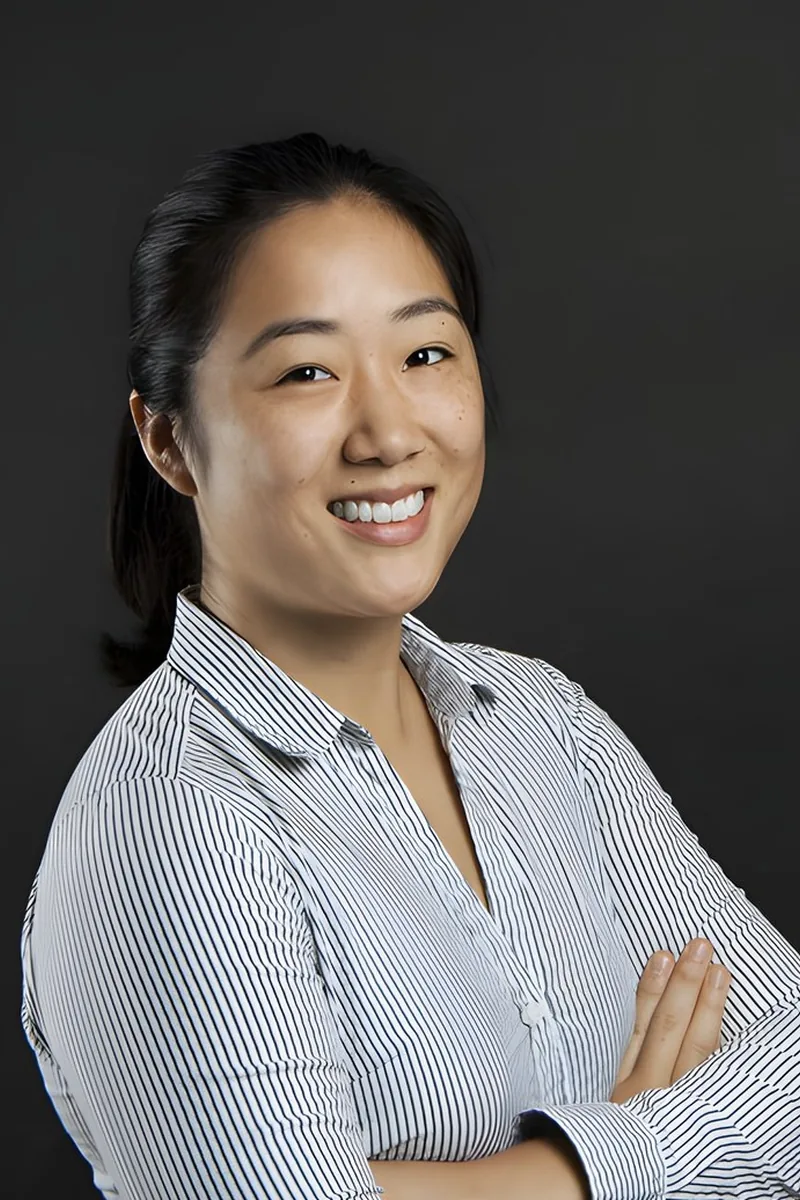
Most English tutoring boils down to two things: understanding what you read and saying what you mean in writing. Asta's background at the University of Chicago, where analytical writing was woven into every political science seminar, means she can walk students through close reading, thesis development, and evidence-based argumentation with real precision. Rated 5.0 by students.

Jeff's English teaching draws on a Princeton philosophy degree, a Berkeley history M.A., and real-world experience in book publishing — a combination that makes him especially sharp on analytical reading and thesis-driven writing. Whether a student is dissecting a passage from *The Great Gatsby* or structuring a comparative essay, he teaches them to identify an author's argument and respond to it with precision.
Strong English skills come down to two things: reading critically and writing clearly. Elena, who earned a perfect SAT score and is currently at the University of Chicago Law School, approaches both through close textual analysis — teaching students to identify an author's argument, examine word choice, and then translate that analytical thinking into well-structured essays of their own.
Medical school admissions essays, research papers, and clinical case write-ups have made Anna a relentless editor of her own prose — a habit she carries directly into teaching grammar, clarity, and argumentative structure. Her anthropology background at Northwestern also means she's comfortable with close reading and textual analysis, skills that translate naturally when students need to break down a passage and write about it with precision. Rated 5.0 by students.
Every day as a Guardian ad Litem, Emily reads dense case files, synthesizes competing accounts, and builds written arguments that hold up under scrutiny — the professional version of what English classes ask students to do with literature and essays. She teaches close reading as a skill in evidence-gathering: identifying an author's choices, tracing themes through a text, and marshaling specific passages to support an interpretation. Her curriculum development experience at a Chicago community center also shaped how she structures lessons around each student's current skill level.
A math major who also loves language, Viktor brings the same precision he applies to proofs to breaking down sentence structure, thesis development, and close reading. His UChicago education — known for its rigorous core curriculum in the humanities — means he spent years writing analytical essays and dissecting complex texts alongside his math coursework. That dual fluency lets him teach grammar and composition with unusual clarity.
Two humanities degrees gave Alex an unusually wide lens on English: literary analysis from his bachelor's, persuasive argumentation from his political science master's, and a constant thread of close reading tying it all together. He teaches students to dissect an author's choices — tone, structure, figurative language — and then use those same tools to strengthen their own essays and written arguments.
Reading and writing have been constants in Benjamin's life, and his University of Chicago coursework sharpens the close-reading and argumentation skills that high school English demands. He teaches students to move from surface-level summary to real literary analysis — identifying how an author's choices in structure, tone, or imagery build meaning on the page.
Strong English skills come down to two things: reading critically and writing clearly. Pinelopi tackles both — she teaches students to identify an author's argument and craft their own, whether they're working on a literary analysis essay or preparing for standardized reading passages. Her 1530 SAT and 5.0 tutoring rating speak to how well that approach translates to results.
Between leading a philanthropy-education program and writing extensively for her economics coursework at UChicago, Ellie has spent years constructing arguments and analyzing texts across disciplines. She teaches students to read for an author's central claim and supporting evidence, then apply that same structure when building their own essays — skills that transfer from literature analysis to persuasive writing.
I am a recent graduate of the University of Chicago with a BA in English and a MA in the Humanities. My specialties are tutoring in test prep, writing, and reading. I am more than happy to spend time on my students outside of our organized sessions to ensure everyone meets their goals. Please do not hesitate to reach out if you have any questions. Looking forward to our tutoring sessions!
Two degrees from Columbia plus a Master's in Education from Northwestern gave Molly an unusual combination: deep knowledge of literature and rhetoric paired with formal training in how people actually learn to read and write. Whether a student is building an argument for a literary analysis essay or untangling a dense passage, she teaches the specific moves — thesis construction, close reading, evidence selection — that make the difference.
Three degrees in the arts — including one specifically in Creative Writing — gave Mahalia an unusually deep command of how English works at every level, from sentence-level grammar and syntax to the larger architecture of argument and narrative. She breaks down tricky concepts like parallel structure, comma usage, and thesis development in ways that click for students whether they're drafting a personal essay or analyzing a novel. Rated 5.0 by students.
An English Literature graduate from the University of Chicago, Charlie brings genuine enthusiasm for close reading and argumentation to every session. Whether a student is unpacking symbolism in a novel or structuring a thesis statement for an analytical essay, he connects the reading and writing sides of English so that stronger interpretation feeds directly into stronger prose. Rated 5.0 by students.
Reading closely and communicating clearly are the twin engines of Ariela's Theater & Performance Studies program, where she analyzes dramatic texts and writes critical essays on a weekly basis. She applies that training to English tutoring by walking students through close-reading strategies — identifying tone, tracking figurative language, and building interpretive claims grounded in textual evidence. Her 1590 SAT, including the reading and writing sections, speaks to the depth of those skills.
Between his creative writing minor and years of essay tutoring in both high school and college settings, Nathaniel treats English as the intersection of close reading and clear expression. He tackles everything from literary analysis — identifying how an author uses motif or narrative perspective — to the practical mechanics of building a thesis-driven essay that holds together from first sentence to last.
Reading a dense passage and extracting its core argument is a skill Brian sharpened through years of medical literature review and MCAT preparation. He applies that same analytical lens to English coursework, teaching students how to identify thesis statements, evaluate an author's use of evidence, and structure written responses that make a clear claim. His tutoring in college essays and literature gives him a practical sense of what strong student writing looks like across genres.
Between degrees in English and psychology and deep experience with both American and British literature, Karishma reads texts the way a strong English class demands — analyzing tone, argument, and authorial intent rather than just summarizing plot. She's equally comfortable unpacking a Shakespeare soliloquy or workshopping a student's analytical essay from thesis statement to closing paragraph.
Studying public policy at the University of Chicago means Ethan spends most of his time constructing and dismantling written arguments — a skill that translates directly into teaching essay structure, thesis development, and close reading. He's particularly sharp at showing students how to move from a vague first draft to a polished piece with a clear argumentative thread. His background at Horace Mann and UChicago gave him deep practice in the kind of evidence-based writing that high school English courses increasingly demand.
Three degrees in the humanities — including a History and Literature BA and a PhD at the University of Chicago — mean Gabriel lives inside texts every day, from close-reading poetry to analyzing long-form nonfiction. He teaches students to move beyond plot summary and engage with authorial choices: why a writer picks one metaphor over another, how paragraph structure shapes an argument, what tone reveals about audience. Rated 5.0 by students.
Studying theatre, marketing, and Spanish at Northwestern gave Jack an unusual lens on English — he reads texts for persuasion, audience, and rhetorical structure, not just plot summaries. Whether a student is analyzing a novel's narrative voice or building an argument in an essay, Jack connects close-reading techniques to stronger, more intentional writing.
Reading a poem or short story closely enough to build an argument about it is a different skill than just understanding the plot, and that's where Grace zeroes in. Her political science training at the University of Chicago was essentially four years of analyzing dense texts and constructing evidence-driven claims — exactly the toolkit English classes require.
Strong English skills come down to two things: reading with a critical eye and writing with a clear argument. Zac digs into both — teaching students how to identify an author's rhetorical choices in a passage and then build their own thesis-driven responses. His background spans essay editing, literature analysis, and college-level writing, so he adapts to whatever a student needs most.
Teaching middle schoolers in Chicago Public Schools means Elizabeth spends every day breaking down how language actually works — from sentence structure and grammar mechanics to building clear, persuasive arguments in writing. She brings that same directness to English tutoring, tackling everything from reading comprehension strategies to thesis development with a no-nonsense clarity that clicks. Rated 5.0 by students.
Between college essays, literature, essay editing, and standardized test reading sections, Brett has taught nearly every dimension of English — but his real strength is connecting the analytical side with the creative side. He teaches students to read a passage for structure and argument, then turn that same awareness toward their own writing, whether it's a literary analysis or a personal narrative. Rated 5.0 by students.
Ruthie's degree in Biological Basis of Behavior required constant scientific writing — translating complex research into clear, structured prose with precise language. That training in organizing evidence and building arguments transfers directly to essay writing, grammar, and reading comprehension, especially for students who think of themselves as 'science people' rather than English people. Rated 5.0 by students.
Two degrees in English literature from Vanderbilt gave Jacob an unusually deep well to draw from when teaching everything from essay structure to literary analysis of poetry, drama, and prose. He approaches each assignment by asking what argument a student is actually trying to make, then reshapes their thesis, evidence, and transitions around that core claim.
Between literature analysis, essay writing, and creative work, Dylan's English tutoring pulls from a broad UChicago humanities education where close reading and persuasive argumentation are everyday skills. He digs into thesis development and textual evidence with students, teaching them to build essays that actually say something specific rather than circling a topic with filler.
Between a literature-and-philosophy major, a BA thesis on Joyce's Ulysses, and experience teaching Nabokov to undergraduates, Gabriel lives inside challenging texts. He unpacks everything from close reading and literary analysis to crafting thesis-driven essays — and his 1590 SAT shows he can translate that depth into standardized-test performance when needed. Rated 5.0 by students.
Jonathan's experience writing and defending a doctoral dissertation gave him a deep appreciation for clear, well-organized English — from constructing a thesis statement to supporting it with textual evidence. He tackles reading comprehension, analytical writing, and vocabulary development by connecting each skill to a student's actual coursework rather than abstract exercises.
Between her IB Diploma coursework and UChicago's writing-intensive curriculum, Zo has spent years dissecting arguments in literature and constructing her own on the page. She tackles everything from close-reading poetry to structuring a five-paragraph essay, teaching students how to identify an author's choices and articulate why those choices matter.
Scientific writing demands clarity — every sentence needs a purpose, and every claim needs evidence. Jhonatan applies that same discipline to English tutoring, teaching students how to build thesis-driven essays, tighten paragraph transitions, and revise their own work with a critical eye rather than waiting for someone else to catch the problems.
Between a dual bachelor's degree in history, a law degree from Washington University in St. Louis, and a bilingual upbringing, Camilla has spent years dissecting texts across genres — from literary analysis to persuasive argumentation. She's especially effective at teaching students how to build a thesis, organize supporting evidence, and revise their own writing with a critical eye.
Reading critically and writing persuasively are skills Nicki sharpened through years of academic research and publication at George Washington University. She teaches students to dissect an author's argument, identify rhetorical strategies, and build their own essays with clear thesis statements and textual evidence — the kind of structured thinking that transfers across every English assignment.
Between evaluating hundreds of fellowship candidates' writing and studying literature at both Villanova and Cambridge, Will developed a sharp eye for how strong essays actually work — from thesis construction to close reading of complex texts. He unpacks everything from rhetorical analysis to argument structure, giving students concrete tools for tackling any English assignment. Rated 5.0 by students.
I am a recent graduate of Princeton University's Mechanical and Aerospace Engineering Department. I am passionate about teaching and mentoring and have done so in multiple capacities over the last four years, including a fellowship during which I taught pre-algebraic math to a group of middle school students from traditionally underserved backgrounds in Saint Paul, MN. I love interacting with students and seeing them grow over the course of their studies. I'm ecstatic at the opportunity to learn alongside them as we venture into educational rabbit holes and uncover key concepts about math, science, and everything else.
Whether a student is struggling with reading comprehension, essay organization, or literary analysis, Ilana brings a structured approach that treats English as a set of learnable skills rather than a talent you either have or don't. Her Northwestern humanities training and writing-intensive coursework gave her deep experience with close reading, argument construction, and revision. She holds a 5.0 student rating.
I am a graduate of Cornell University's College of Arts and Sciences. I received my Bachelor of Arts in Chemistry with Distinction in 2015. Since graduation, I was a physics/chemistry teacher and soccer coach at a private school in Virginia for a year, where I led the soccer team to an undefeated season. Before teaching and coaching professionally, I was a Teaching Assistant for the Cornell Math and Physics Departments, where I taught many subjects including calculus, mechanics, electromagnetism. Throughout my time at Cornell and as a teacher, I tutored subjects ranging from the SAT to AP Physics and Algebra II, which is where my true talents lie: in small group or one-on-one settings where I can give students the full attention they deserve and tailor my approach specifically to their learning styles. This is why I am now pursuing tutoring as a part-time occupation at Varsity Tutors. I embrace teaching all math and science subjects, especially physics and calculus, at both the college and high school level and will go above and beyond to make sure all of my students succeed, according to their definition of success. In my spare time, I enjoy playing league soccer, basketball, tennis and guitar, and also like to travel and see as much of the world as I can.
Between a German double major and years of academic writing in the sciences, Amber approaches English from two angles most tutors can't: she understands narrative and literary analysis, but she also knows how to build a clear, evidence-driven argument. She tackles everything from close reading and thesis development to the revision process that turns a rough draft into a polished essay.
Between winning Emory's Carlos C. Rojas Excellence in Writing Award, editing for an undergraduate research journal, and authoring peer-reviewed papers at Northwestern, Richard has spent over a decade crafting and polishing prose across genres. He teaches students to build arguments with clear thesis statements, integrate textual evidence, and revise at the sentence level — skills that transfer from a seventh-grade book report to a college application essay. Rated 5.0 by students.
Testimonials
Because the right English tutor makes all the difference.
Average Session Rating – Based on 3.4M Learner Ratings
Nearby English Tutors
Other Chicago Tutors
Related English Tutors in Chicago
Frequently Asked Questions
Chicago students often struggle with reading comprehension, essay writing structure, and grammar mechanics—especially as texts become more complex in middle and high school. With an average student-teacher ratio of 17.7:1 across Chicago's 12 school districts, many students don't get individualized feedback on their writing or reading strategies. Personalized tutoring addresses these gaps by targeting your specific weaknesses, whether that's analyzing literature, organizing arguments, or mastering punctuation.
Your first session focuses on understanding your current level, learning goals, and specific challenges—whether you're working on essay writing, test preparation, or reading comprehension. The tutor will assess your strengths and areas for growth, then develop a personalized plan aligned with your school's curriculum and your academic goals. This foundation ensures every session that follows targets what matters most to your success.
Varsity Tutors connects you with expert tutors who understand Illinois Learning Standards and the specific curricula used across Chicago's school districts. Whether your school emphasizes Common Core reading and writing standards or follows a particular literature-based approach, tutors tailor instruction to complement what you're learning in class. This alignment means tutoring reinforces classroom lessons while filling gaps and accelerating your progress.
Personalized instruction breaks essay writing into manageable steps: thesis development, paragraph organization, evidence integration, and revision. Rather than receiving a single grade on a finished essay, you get real-time feedback and coaching on your process, helping you understand why certain structures work and how to apply those skills to future assignments. Most students see measurable improvement in clarity, organization, and confidence within a few weeks of consistent tutoring.
Yes. Tutors teach evidence-based reading strategies—like annotating text, identifying main ideas, and making connections between themes—that help you engage more deeply with literature and informational texts. Whether you're reading Shakespeare, contemporary fiction, or nonfiction articles, personalized instruction helps you move beyond surface-level understanding to analyze author's purpose, character development, and textual evidence. This builds skills that apply across all your classes.
Yes. Tutors prepare students for standardized tests like the SAT, ACT, and AP English exams, as well as state assessments required by Illinois schools. Test prep focuses on the specific reading and writing skills each exam measures, timed practice, and strategies to manage test anxiety. Personalized instruction means you focus on the question types and content areas where you need the most help, rather than reviewing material you've already mastered.
Tutors work with students from elementary through high school, covering foundational skills like phonics and sentence structure, as well as advanced concepts like rhetorical analysis, research writing, and literary criticism. Whether your student is building reading fluency, mastering grammar, preparing for AP Literature, or developing college-ready writing skills, Varsity Tutors connects you with a tutor experienced in your specific grade level and English focus.
In a classroom of 20+ students, teachers can't provide detailed feedback on every essay or adjust pacing to each student's learning speed. Personalized tutoring gives you one-on-one attention, allowing the tutor to identify exactly where you're struggling—whether it's organizing ideas, using transitions, or supporting claims—and spend focused time on those areas. This targeted approach typically accelerates progress and builds confidence faster than classroom instruction alone.
Let’s find your perfect tutor
Answer a few quick questions. We’ll recommend the right plan and match you with a top 5% tutor.