Award-Winning IB Chemistry Tutors
serving Savannah, GA
IB Chemistry
Tutors in Savannah
Private 1-on-1 tutoring, weekly live classes for academic support, test prep & enrichment, practice tests and diagnostics, and more to elevate grades and test scores.
Based on 3.4M Learner Ratings
UniversitiesSchools & Universities
DeliveredHours Delivered
ProficiencyGrowth in Proficiency
Who needs tutoring?
No obligation. Takes ~1 minute.
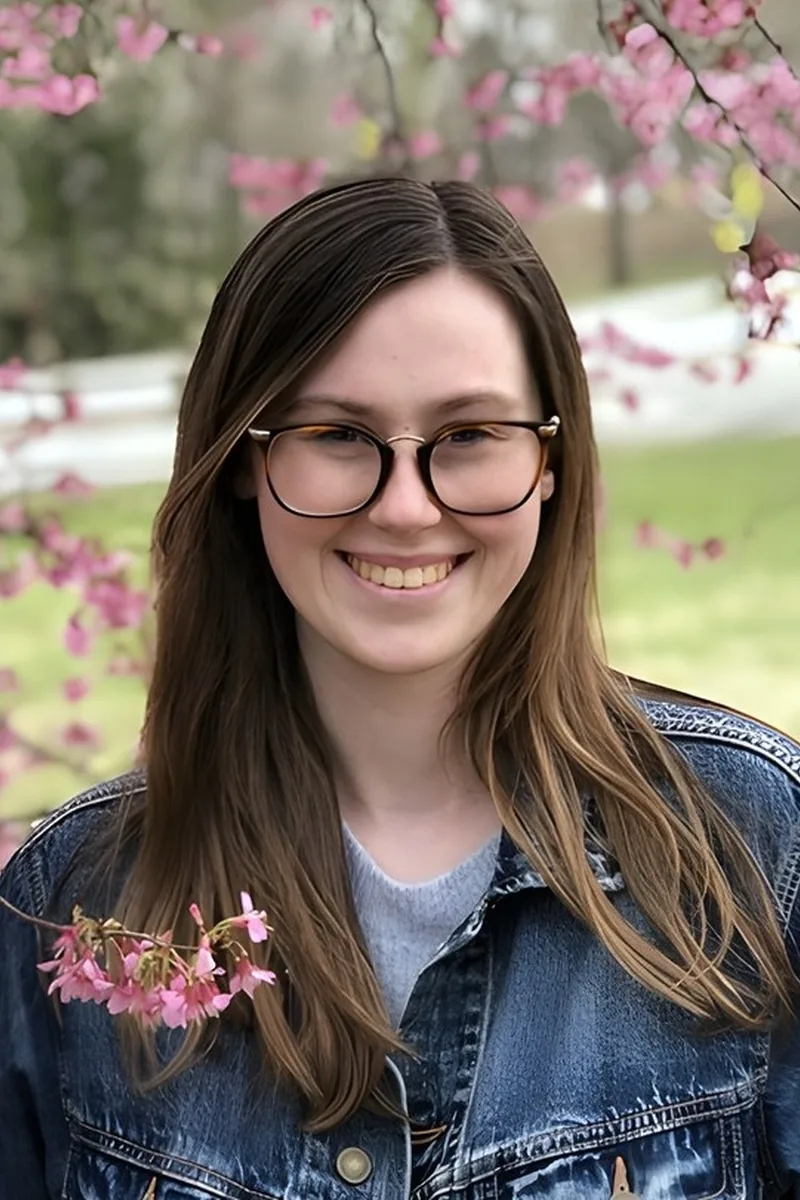
Mechanical engineering at UGA means Kayla has worked through thermodynamics, reaction kinetics, and materials chemistry at a level that maps directly onto IB Chemistry's most calculation-heavy SL and HL content — particularly energetics and equilibrium. She's especially comfortable with the quantitative side, turning multi-step problems like enthalpy cycles into clear, methodical sequences that match how IB mark schemes actually award points. Rated 5.0 by students.
Teaching and tutoring both general and organic chemistry at the University of Tennessee gave Taylor a front-row seat to exactly where students lose the thread — and IB Chemistry's HL syllabus hits many of those same trouble spots, from reaction mechanisms to stoichiometric reasoning. Her B.S. in Chemistry from Georgia College means she can unpack the logic behind multi-step problems rather than just drilling procedures, which matters when IB Paper 2 asks students to justify and explain. Rated 5.0 by students.
IB Chemistry's internal assessment and extended essay components demand a level of experimental reasoning that goes beyond standard test prep. Marlow tackles both the quantitative rigor — equilibrium constants, redox balancing, energetics calculations — and the scientific communication skills IB examiners specifically look for. A 5.0 student rating speaks to how well that approach lands.
IB Chemistry's internal assessment and data-analysis questions ask students to think like working scientists — designing experiments, propagating uncertainty, and drawing conclusions from imperfect data. Devin's engineering lab experience at NC State gives him a practical handle on these skills, and he connects IB topics like energetics and bonding to the quantitative chemistry he studies daily.
Between a biochemistry degree and a Ph.D. in environmental science, Karista has worked through chemistry at every level — from general stoichiometry and bonding up through the kinetics and thermodynamic modeling that IB HL leans on hardest. She's also taught undergraduate biology, genetics, and molecular biology labs, so she's used to translating dense quantitative material into something students can actually reason through on exam day. Rated 5.0 by students.
Neuroscience at Duke means Michelle spends her coursework deep in the chemistry that underpins biological systems — reaction kinetics, thermodynamics, and the molecular interactions that IB Chemistry tests heavily at both SL and HL. She brings that applied perspective to topics like equilibrium and energetics, connecting abstract calculations to the biological contexts that make them easier to internalize. Rated 5.0 by students.
Mechanical engineering at the University of Toronto means Hazem works through thermodynamics, stoichiometry, and equilibrium problems daily in contexts that go well beyond what IB Chemistry demands — which gives him a practical fluency with the quantitative side of the syllabus that's hard to fake. He's especially sharp on energetics calculations and the physics-chemistry overlap that shows up in kinetics and gas law questions, areas where his engineering intuition turns multi-step problems into manageable sequences. Rated 5.0 by students.
IB Chemistry's breadth is what trips students up — one week it's periodicity, the next it's energetics, then suddenly you're writing a lab report on kinetics. Asad's chemistry degree from Rice gives him the depth to connect these topics into a coherent story, and he's comfortable tackling both SL and HL content including options like medicinal chemistry. His 4.7 rating speaks to how well that approach translates for students.
Having taken IB Chemistry herself just a couple of years ago and scored a 36 ACT, Sreya knows exactly which HL topics — like stoichiometry, bonding, and organic mechanisms — feel manageable in class but fall apart under exam conditions. She's now a chemistry major at the University of Michigan, which means she can teach the deeper reasoning behind those concepts instead of just drilling past papers. Rated 5.0 by students.
Two semesters as a learning assistant for general and organic chemistry gave Preston a sharp sense of where students get stuck — and IB Chemistry's HL topics like energetics, redox balancing, and reaction mechanisms hit many of those same pain points. His chemical engineering coursework at Penn State means he's worked through these concepts at a level well beyond what IB demands, so he can explain the reasoning behind each step rather than just walking through formulas.
I'm a current medical student at VCU School of Medicine, and a graduate of Johns Hopkins University. I received my Bachelor of Science in Molecular and Cellular Biology. I've had the pleasure of tutoring a diverse range of students for 5 years; while I tutor a broad set of subjects, I'm most passionate about biology, psychology, and chemistry. I'm a big proponent of ensuring understanding over memorization and teaching concepts that last for years to come (particularly for other students interested in medicine!) In my free time, I love to write poetry, edit essays, and gush about game writing with friends.
Shawn's M.S. in Chemistry means he's worked through the advanced theory behind every IB topic — from bonding models and redox processes to the organic mechanisms that HL students find most demanding — at a level well beyond what the syllabus requires. That depth lets him explain *why* a concept works rather than just drilling the procedure, which is exactly what IB Paper 2 and 3 questions test. Rated 4.9 by students.
A Cornell Chemistry & Chemical Biology graduate (magna cum laude), Michael has the depth to tackle IB Chemistry's trickiest areas — from periodicity trends and molecular geometry at SL to the HL organic synthesis and equilibrium problems that demand real conceptual fluency. He also tutors organic chemistry and AP Chemistry, so he's used to scaling explanations up or down depending on what the syllabus actually requires. Rated 5.0 by students.
Madhura's master's degree in chemistry and experience teaching at both the high school and university level means she's encountered IB Chemistry's trickiest content — periodicity, kinetics, organic nomenclature — from multiple angles and at multiple depths. That dual vantage point is particularly useful for HL students who need to move fluidly between conceptual understanding on Paper 1 and the structured, multi-step calculations Paper 2 demands.
Between the HL/SL content split, IA lab work, and the exam's emphasis on applying concepts to unfamiliar reactions, IB Chemistry can overwhelm students fast. Diptesh teaches the subject as a chemistry concentrator at NYU, which means topics like equilibrium, energetics, and periodicity trends are part of his daily coursework. He knows which concepts the IB examiners test hardest and how to structure answers that earn full marks.
Testimonials
Because the right IB Chemistry tutor makes all the difference.
Average Session Rating – Based on 3.4M Learner Ratings
Nearby IB Chemistry Tutors
Other Savannah Tutors
Related Science Tutors in Savannah
Frequently Asked Questions
Varsity Tutors matches Savannah students with expert IB Chemistry tutors for 1-on-1 instruction. We pair each student with a tutor based on their specific needs, learning style, and goals.
Whether you need homework help, exam prep, or want to get ahead, our IB Chemistry tutors are ready to help.
Common challenges include gaps from earlier material, difficulty with specific concepts, and trouble applying learning to new problems. These issues can snowball quickly in IB Chemistry.
A tutor identifies where you're stuck, fills in gaps, and provides targeted practice. The 1-on-1 format means you get help exactly where you need it.
Tutors work with your student's actual coursework—homework assignments, class notes, and upcoming tests. This keeps tutoring directly relevant to what's happening in the classroom.
When you share information about your student's school and curriculum, we can match you with a tutor who has relevant experience.
All tutors complete background checks, credential verification, and teaching evaluation. Many of our IB Chemistry tutors hold advanced degrees or have years of teaching experience.
You can review tutor profiles to find someone with the right background for your student's level and needs.
Many students see improved grades within a few weeks, along with better understanding of IB Chemistry concepts and more confidence tackling challenging material.
Tutors track progress and adjust their approach to ensure continued improvement.
Most students benefit from 1-2 sessions per week. More frequent sessions help if your student is significantly behind or has an important exam coming up.
Your tutor can recommend a schedule based on your student's specific situation and goals.
Tutoring is purchased in packages of hours, with rates varying by tutor experience. Varsity Tutors offers several options to fit different budgets and needs.
You can discuss pricing during your consultation to find what works best.
Your tutor will assess where your student is, discuss goals, and start working on priority areas. Most students bring current homework or upcoming test material to focus on.
By the end, you'll have a clear sense of how the tutor can help and a plan for moving forward.
Let’s find your perfect tutor
Answer a few quick questions. We’ll recommend the right plan and match you with a top 5% tutor.