Award-Winning AP US History Tutors
serving Savannah, GA
AP US History
Tutors in Savannah
Private 1-on-1 tutoring, weekly live classes for academic support, test prep & enrichment, practice tests and diagnostics, and more to elevate grades and test scores.
Based on 3.4M Learner Ratings
UniversitiesSchools & Universities
DeliveredHours Delivered
ProficiencyGrowth in Proficiency
Who needs tutoring?
No obligation. Takes ~1 minute.
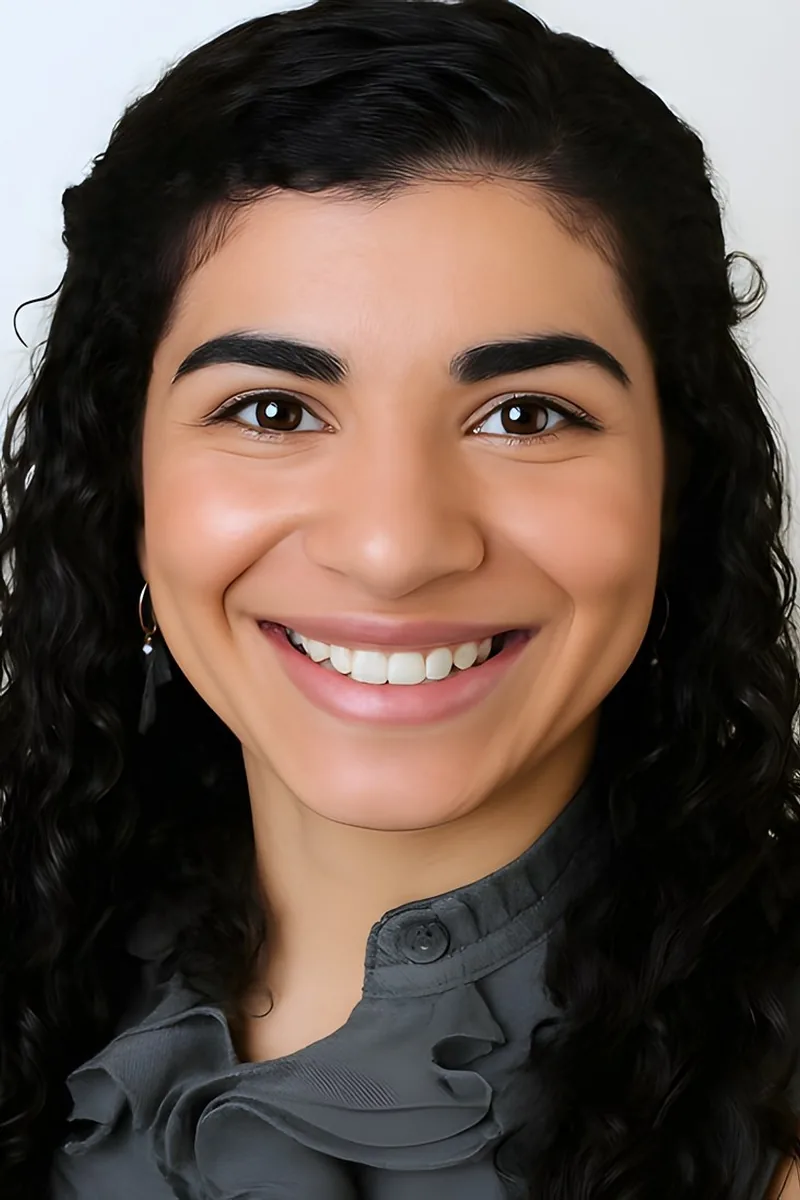
A psychology and communication studies background gives Paula a dual lens that's particularly useful for APUSH's trickiest essay prompts — the ones asking students to analyze how rhetoric, propaganda, and public persuasion shaped movements from the Revolution through the Cold War. She teaches document analysis as an exercise in reading audience and intent, skills her communication training made second nature. Rated 4.8 by students.

AP US History's Document-Based Questions are really argumentation exercises disguised as history prompts, and Jean's legal background makes her a natural fit for teaching them. She earned her BA in History from Duke and unpacks how to synthesize primary sources into a coherent, evidence-driven essay under time pressure. Her approach to periodization and causation gives students the analytical vocabulary the exam rewards.
Studying religion and psychology alongside Spanish gave Sydney an unusual toolkit for APUSH — she reads primary sources through the lens of cultural belief systems and social motivation, which is exactly what document-based questions reward when they ask about audience, purpose, and historical context. Her CLEP prep across American government, American literature, and humanities means she's already fluent in the political and cultural turning points the exam covers most heavily. Rated 4.9 by students.
APUSH isn't Manideep's core discipline — his Northwestern pre-med track centers on biological sciences — but the analytical reading and evidence-based argumentation he practices daily in science translate surprisingly well to document analysis and thesis construction on the DBQ. He breaks down primary sources the way he'd break down a research paper: identifying the author's purpose, evaluating the evidence, and building a logical case. Rated 5.0 by students.
A political science degree from UGA plus a history minor means Matt spent his undergraduate years immersed in exactly the institutional conflicts, constitutional debates, and policy shifts that APUSH tests hardest — and law school at Emory has only sharpened his ability to build arguments from source material under pressure. He teaches the DBQ as a lawyerly exercise: identify what each document proves, anticipate the counterargument, and structure the essay around a defensible claim rather than a chronological summary.
The AP US History exam tests whether students can do something most find unnatural: turn a pile of primary documents into a coherent, evidence-driven argument under time pressure. David approaches DBQ and LEQ prep by teaching students to identify historiographic tension — what's actually being debated — before they start writing. His English and philosophy background makes him especially sharp on the argumentative writing that earns top scores.
The AP US History exam rewards students who can do something specific: connect evidence to a historical argument under time pressure. Chandler, who scored a 1560 on the SAT and holds a Master of Arts in Teaching, tackles the DBQ and LEQ by drilling the skill of turning primary source details into analytical claims rather than narrative summaries.
The AP US History exam tests whether students can build an argument from documents under time pressure, not whether they memorized every date. Caitlyn breaks down the DBQ and LEQ formats so students know exactly how to connect evidence to a thesis within the scoring rubric. Her background in reading comprehension and analytical writing translates directly to the skills the exam actually measures.
Volunteering at a refugee tutoring center for two years gave Akshadha firsthand experience explaining American political and social history to people encountering it for the first time — the kind of from-scratch contextualization that APUSH's document-based questions actually test. Her biology training reinforces a habit of tracing cause-and-effect chains, which she applies to helping students connect evidence across periods in their DBQ and LEQ essays. Rated 4.9 by students.
A history degree gives Ethan the chronological backbone APUSH demands, but it's his teaching across AP World, AP European, and AP Government that sharpens his ability to show students how American events fit into wider political and economic patterns — the kind of contextualization that earns top marks on the DBQ. He zeroes in on building students' skill at sourcing documents quickly, identifying author purpose and historical situation so the analysis paragraphs practically write themselves. His 32 ACT reflects solid timed-test instincts that carry over to coaching the exam's tight essay windows.
Cognitive science trains you to think about how people reason, form beliefs, and respond to cultural pressures — a framework that sharpens analysis of APUSH themes like ideological shifts, reform movements, and the psychology behind political realignments from the Great Awakening through the Cold War. Victor uses that interdisciplinary lens to teach students how to build causation arguments in DBQs, where connecting a document's purpose to its broader historical context matters more than recalling every date.
Samantha's strength in APUSH comes from treating history as narrative rather than chronology — she teaches students to trace cause-and-effect chains that turn isolated events like Shays' Rebellion or the Compromise of 1850 into turning points within a larger story. Her writing and literature background across multiple grade levels means she's especially sharp at coaching the essay mechanics that separate a 3 from a 5, particularly structuring thesis statements that actually address the prompt's historical thinking skill. Rated 5.0 by students.
A history degree and a law career give Ryan an unusual double lens for AP US History — he treats the DBQ and LEQ not as history assignments but as legal arguments that need evidence, reasoning, and airtight structure. He digs into the kind of causation and contextualization skills that separate a 3 from a 5, especially in periods like Reconstruction and the New Deal where students tend to oversimplify.
Engineering students at Georgia Tech don't just solve equations — they learn to trace how systems evolve under competing pressures, which is surprisingly close to how APUSH expects students to analyze political, economic, and social forces across American periods. Christopher applies that systems-thinking approach to essay prep, teaching students to map cause-and-effect chains through events like industrialization or Cold War escalation rather than treating each era as an isolated unit. Rated 5.0 by students.
The AP US History exam rewards students who can build an argument fast — synthesizing documents, identifying historical context, and writing a coherent DBQ under tight time constraints. Kenan's own success on the SAT US History subject test and his economics-oriented understanding of policy debates give him a useful lens for connecting political, social, and economic themes across periods.
Studying molecular biology at Yale might seem unrelated to APUSH, but Maxwell's scientific training sharpens exactly the kind of evidence-based reasoning the exam demands — evaluating sources, identifying patterns across data, and defending a thesis. He applies that analytical rigor to helping students dissect documents for context and purpose, particularly in periods where science, policy, and society collide, like industrialization or Cold War-era politics. Rated 5.0 by students.
AP U.S. History isn't just about knowing what happened — it's about constructing arguments around change over time, causation, and historical context under exam pressure. Ethan's public policy degree required deep engagement with American political and environmental history, giving him a strong command of the thematic threads the AP exam emphasizes. He teaches students to write DBQs that actually answer the prompt instead of just listing facts.
A senior thesis on the Byzantine Basilica of San Vitale taught Elena to read historical sources the way APUSH expects — analyzing context, audience, and purpose rather than just summarizing what happened. Her double background in Art History and History from Washington University in St. Louis means she's practiced at connecting cultural evidence to broader political and social narratives, which is exactly the skill that separates strong DBQ and LEQ essays from mediocre ones.
A European history major at Johns Hopkins who also tutored AP US and World History for years, Alexander knows exactly where the overlap between these curricula pays off — students who can trace how Enlightenment thought shaped the Declaration of Independence or how WWI's aftermath drove American isolationism earn the cross-period connections APUSH essays reward. He zeroes in on the causation and contextualization skills that turn a content-dump essay into one that actually scores well on the DBQ and LEQ. Rated 4.7 by students.
As a first-generation college student who graduated cum laude from UCLA with a biology degree and Asian Languages minor, Abrahim brings an outsider's analytical eye to American history — he learned to question assumptions rather than take narratives at face value. That mindset translates well to APUSH's emphasis on sourcing and contextualization, where students need to interrogate *why* a document was created, not just what it says. Rated 5.0 by students, he approaches each historical period as a puzzle to decode rather than a list to memorize.
A University of Chicago political science degree means Asta spent four years immersed in the kind of rigorous argument-building and source analysis that APUSH essays demand — Chicago's core curriculum doesn't let you coast on surface-level claims. Her experience preparing international students in Hong Kong for U.S. college admissions also sharpened her ability to make American political and cultural context explicit, which is exactly what strong DBQ contextualization paragraphs require. Rated 5.0 by students.
The AP US History exam rewards students who can construct a defensible thesis under time pressure — not just recall facts but deploy them as evidence in a DBQ or LEQ. Aaron unpacks primary documents with students, teaching them to identify point of view, purpose, and historical context before writing a single sentence. His interdisciplinary background in geology and biochemistry also brings an unusual lens to topics like industrialization and environmental policy.
The IB program's emphasis on extended essays and Theory of Knowledge — where students defend interpretive claims with structured evidence — builds the exact muscles APUSH's DBQ and LEQ require. Dalton completed the full IB diploma and now draws on that training to teach how to frame a historical argument around periodization or causation rather than just retelling events. His 35 ACT and 4.9 rating speak to the timed analytical performance the exam rewards.
The AP US History exam rewards students who can do two things fast: identify historical causation and write a thesis-driven essay under time pressure. Scott tackles both by teaching students to read documents like an anthropologist — pulling out perspective, audience, and purpose before jumping to conclusions. His deep background in social studies and essay writing makes the DBQ and LEQ feel far less intimidating.
Document-Based Questions are where most AP US History students lose points — not because they lack knowledge, but because they don't know how to contextualize a source and weave it into an argument. Hannah holds a bachelor's degree in History and an MFA in Creative Writing, which means she tackles both the content (from colonial mercantilism through the Civil Rights era) and the writing skills the exam actually rewards.
Studying both biology and philosophy at Boston College means Andrew spends his days toggling between empirical evidence and argumentative reasoning — the exact combination APUSH essays demand when students must marshal specific historical evidence into a persuasive thesis. He's particularly strong on causation and contextualization questions, where his philosophy training kicks in to untangle why events unfolded as they did rather than just when. Rated 5.0 by students.
Testimonials
Because the right AP US History tutor makes all the difference.
Average Session Rating – Based on 3.4M Learner Ratings
Practice AP US History
Free practice tests, flashcards, and AI tutoring for AP US History
Nearby AP US History Tutors
Other Savannah Tutors
Related Social Studies Tutors in Savannah
Frequently Asked Questions
Varsity Tutors matches Savannah students with expert AP US History tutors for 1-on-1 instruction. We pair each student with a tutor based on their specific needs, learning style, and goals.
Whether you need homework help, exam prep, or want to get ahead, our AP US History tutors are ready to help.
Common challenges include gaps from earlier material, difficulty with specific concepts, and trouble applying learning to new problems. These issues can snowball quickly in AP US History.
A tutor identifies where you're stuck, fills in gaps, and provides targeted practice. The 1-on-1 format means you get help exactly where you need it.
Tutors work with your student's actual coursework—homework assignments, class notes, and upcoming tests. This keeps tutoring directly relevant to what's happening in the classroom.
When you share information about your student's school and curriculum, we can match you with a tutor who has relevant experience.
All tutors complete background checks, credential verification, and teaching evaluation. Many of our AP US History tutors hold advanced degrees or have years of teaching experience.
You can review tutor profiles to find someone with the right background for your student's level and needs.
Many students see improved grades within a few weeks, along with better understanding of AP US History concepts and more confidence tackling challenging material.
Tutors track progress and adjust their approach to ensure continued improvement.
Most students benefit from 1-2 sessions per week. More frequent sessions help if your student is significantly behind or has an important exam coming up.
Your tutor can recommend a schedule based on your student's specific situation and goals.
Tutoring is purchased in packages of hours, with rates varying by tutor experience. Varsity Tutors offers several options to fit different budgets and needs.
You can discuss pricing during your consultation to find what works best.
Your tutor will assess where your student is, discuss goals, and start working on priority areas. Most students bring current homework or upcoming test material to focus on.
By the end, you'll have a clear sense of how the tutor can help and a plan for moving forward.
Let’s find your perfect tutor
Answer a few quick questions. We’ll recommend the right plan and match you with a top 5% tutor.