Award-Winning College Chemistry Tutors
serving Bridgeport, CT
College Chemistry
Tutors in Bridgeport
Private 1-on-1 tutoring, weekly live classes for academic support, test prep & enrichment, practice tests and diagnostics, and more to elevate grades and test scores.
Based on 3.4M Learner Ratings
UniversitiesSchools & Universities
DeliveredHours Delivered
ProficiencyGrowth in Proficiency
Who needs tutoring?
No obligation. Takes ~1 minute.
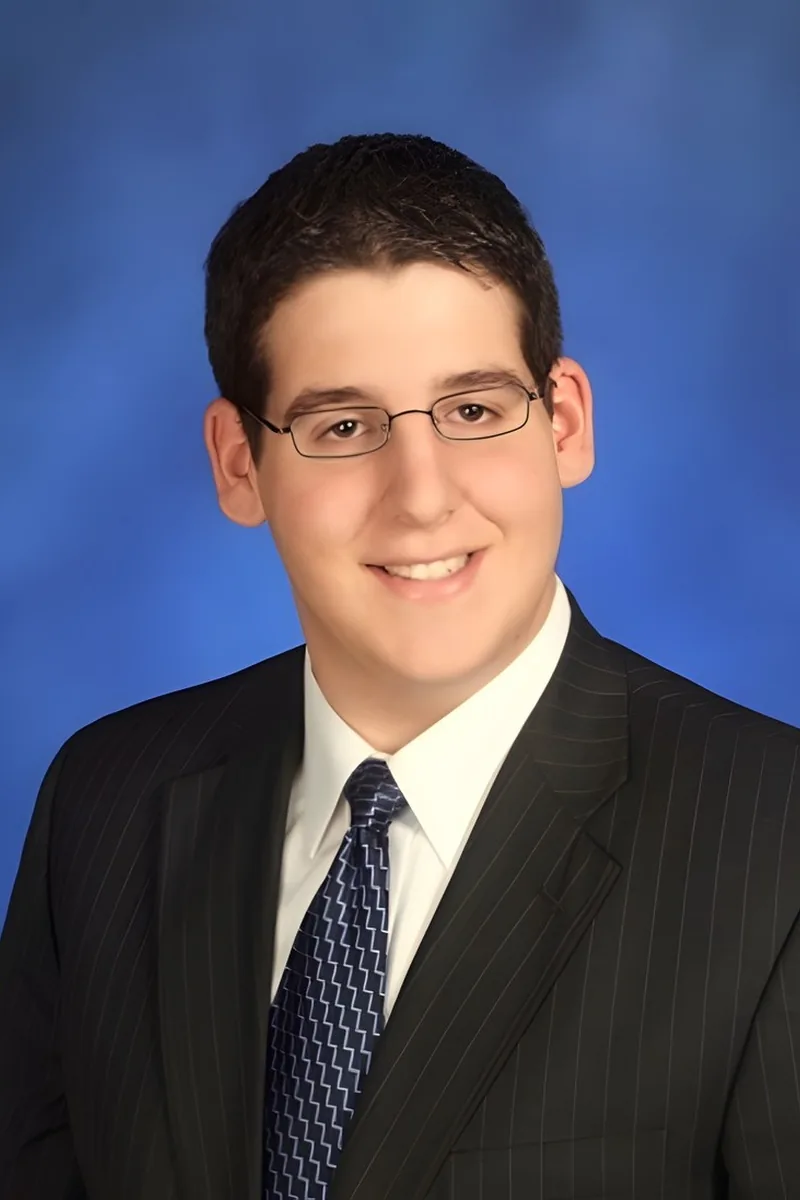
Having scored a 36 on the ACT and taught honors chemistry alongside AP-level math and statistics, Ethan brings a quantitative sharpness to college chemistry that's especially useful when students hit the calculation-dense stretches — gas law problems, enthalpy calculations, solution stoichiometry. His environmental science background also means he can ground abstract topics like chemical kinetics and equilibrium in real-world systems where those principles visibly play out. Rated 5.0 by students.

Most college chemistry students don't expect a math major to be the one who makes electron configurations or equilibrium expressions click — but Tessa's mathematics training at Yale means she can cleanly separate the quantitative mechanics of a problem from the chemical reasoning, which is exactly where most gen chem confusion hides. She also scored a 36 ACT and holds a 4.9 rating, though what matters more is her knack for showing students the logical structure underneath topics that otherwise feel like pure memorization.
I am a PhD student in Inorganic Chemistry at Yale University. I've been spreading my love of chemistry for the past several years as a TA for general chemistry, and I'm excited to share my passion with you! Prior to Yale, I got my B.S. in chemistry from Caltech, where I also served as a TA for both general chemistry lab and advanced inorganic chemistry. Outside of teaching and research, I enjoy fencing, reading, and playing piano.
Premed coursework at Yale put Kaitlin through the full gauntlet of gen chem — from electron configurations and VSEPR theory to equilibrium and electrochemistry — alongside some of the most rigorous problem sets in the country. She picked up study strategies along the way that turn dense material into something manageable, breaking each topic into the conceptual piece and the quantitative piece so students can pinpoint exactly where they're getting stuck.
Jumping from high school chemistry to college-level coursework means suddenly dealing with quantum numbers, molecular orbital theory, and multi-step equilibrium problems that move fast. Noah has been on both sides of that transition — he earned his biochemistry degree magna cum laude and then spent two years as a university organic chemistry TA, grading exams and running review sessions. He knows precisely where college students get lost and how to get them back on track.
A molecular biology degree means Chantel spent serious time with the chemistry that underpins biological systems — electron configurations, chemical bonding, solution chemistry, and the thermodynamic principles that drive cellular reactions. She tackles gen chem problems by slowing down at the exact step where notation or logic trips a student up, rebuilding clarity before moving forward.
Having earned her B.S. in Chemistry, Sabine has the full picture of how gen chem topics like electron configuration, bonding theory, and chemical kinetics thread into upper-level coursework — so she teaches introductory material with an eye toward what's coming, not just what's on the next exam. She's especially sharp at breaking down the logic behind equilibrium expressions and redox balancing, where students often memorize steps without understanding the chemistry driving them. Rated 5.0 by students.
Ten years of tutoring chemistry while progressing through medical school and into surgical residency applications means Patrick has revisited gen chem concepts like acid-base equilibria, reaction kinetics, and thermodynamics dozens of times — each pass deepening how he explains them. He zeroes in on the specific step in a multi-part problem where a student's reasoning breaks, whether it's a conceptual misread of Le Chatelier's principle or a unit-conversion slip buried in a stoichiometry chain.
Thermodynamics, equilibrium constants, and reaction kinetics demand more than memorizing formulas — they require thinking about why a reaction proceeds the way it does. Garrett's coursework in physical chemistry and organic chemistry means he can unpack the energy landscapes and molecular interactions behind each concept. He connects general chemistry principles to their applications in biochemistry and physiology, which makes abstract ideas click faster.
Though political science was her major at the University of Chicago, Asta's tutoring work across both chemistry and quantitative subjects means she's spent real time breaking down the conceptual hurdles in gen chem — balancing equations, working through mole conversions, and making sense of reaction types. Her 5.0 rating speaks to an approach that's honest about meeting the material on its own terms rather than pretending expertise she doesn't have, which students in a tough prerequisite course tend to trust more, not less.
When college chemistry students feel overwhelmed, it's usually because topics like gas laws, equilibrium, and stoichiometry are piling up faster than they can organize the connections between them — and untangling that clutter is where Rachel excels. Her science background across biology, anatomy, and physiology means she's applied gen chem principles in multiple contexts, so she can show how a concept like acid-base behavior or molecular polarity actually functions beyond the textbook chapter it first appears in.
Neuroscience at Brown meant Crony couldn't just skim gen chem — courses in neurochemistry and cellular biology demanded real fluency with topics like electrochemistry, molecular interactions, and reaction energetics long after the introductory sequence ended. That background gives him a sharp sense of which college chemistry concepts actually need to be internalized versus merely memorized, especially for students heading into upper-level STEM work. Rated 4.6 by students.
Having studied biology alongside organic chemistry and physical chemistry, Ade knows how college chemistry concepts like electron configuration, molecular geometry, and reaction stoichiometry thread through the rest of a science degree — and where students lose the plot when those ideas get abstract. He tackles the subject by anchoring each new topic to concrete examples from the lab bench, making the jump from Lewis structures to real molecular behavior feel less like a leap of faith.
General chemistry at the college level demands more than balancing equations — it requires thinking in terms of energy, equilibrium, and molecular behavior. Jhonatan approaches topics like thermodynamics, acid-base chemistry, and kinetics by grounding abstract formulas in physical intuition, drawing on the quantitative rigor he developed through his biological sciences degree. His 5.0 rating speaks to how well that approach lands with students.
Thermodynamics is Rahul's favorite corner of chemistry — and as a Cornell chemical engineering graduate (magna cum laude), he's applied concepts like enthalpy, Gibbs free energy, and reaction spontaneity far beyond the gen chem textbook, through upper-level coursework in physical chemistry and process design. He pushes students to grasp the conceptual reasoning behind each problem before touching the math, so topics like calorimetry and equilibrium stop feeling like disconnected formula exercises. Rated 4.9 by students.
Pre-med bio-psychology coursework at UCSB means Aaron has pushed through college chemistry the same way his students are — as a high-stakes prerequisite where every gap in stoichiometry or equilibrium shows up again in upper-division science courses. He talks through problems conversationally, pressing students to explain the reasoning back to him, which exposes shaky understanding far faster than just re-solving practice sets. Holds a 5.0 rating.
Between his physics training and years of hands-on biochemistry research, Matthew tackles college chemistry from both the theoretical and applied sides. He's especially effective with thermodynamics, molecular orbital theory, and kinetics — topics where students often struggle to bridge lecture material and problem sets. His lab experience at Columbia gives him concrete examples that make abstract concepts like enthalpy and entropy click.
General chemistry at the college level lives or dies on whether you actually understand what's happening at the molecular level — equilibrium shifts, thermodynamic spontaneity, orbital hybridization — or just memorize formulas. Mosab's health sciences graduate work means he uses these concepts constantly and can connect them to real biochemical applications. Rated 5.0 by students.
Pursuing a Doctorate of Physical Therapy means James encounters chemistry in a context most gen chem tutors don't — understanding how buffer systems maintain blood pH, how electrolyte concentrations drive cellular processes, and how thermodynamic principles govern metabolic reactions. His economics background also gave him strong quantitative reasoning, so he's comfortable walking through the math-heavy side of topics like stoichiometry and gas laws without losing sight of what the numbers actually represent. Rated 4.9 by students.
A chemistry minor at Duke alongside her biology major, Lenique spent years working through thermodynamics, equilibrium, and reaction kinetics at a level that prepared her for the rigors of medical school at Yale. She breaks down tough concepts like molecular orbital theory and acid-base chemistry by connecting them to real biological systems, which makes abstract ideas click faster.
Testimonials
Because the right College Chemistry tutor makes all the difference.
Average Session Rating – Based on 3.4M Learner Ratings
Nearby College Chemistry Tutors
Other Bridgeport Tutors
Related Science Tutors in Bridgeport
Frequently Asked Questions
College Chemistry usually covers atomic structure, bonding, stoichiometry, thermodynamics, equilibrium, acid-base chemistry, and oxidation-reduction reactions. Many courses also include laboratory work where you'll conduct experiments to reinforce theoretical concepts and develop hands-on scientific skills. The curriculum builds from foundational principles to more complex problem-solving, so a strong grasp of early topics like balancing equations and unit conversions is essential for success later in the course.
Balancing equations requires understanding both the symbolic language of chemistry and the conservation of atoms—it's easy to get overwhelmed by the mechanics without grasping the underlying principle. Many students try to memorize patterns instead of understanding that you're simply ensuring equal numbers of each element on both sides. Personalized 1-on-1 instruction helps you develop a systematic approach, practice with varied examples, and build confidence so equations become intuitive rather than frustrating.
Yes. Tutors can help you understand the scientific method, prepare for experiments by reviewing the underlying chemistry concepts, and work through data analysis and lab report writing after you've completed your work. They can also help you visualize what's happening at the molecular level during reactions, which deepens your understanding of both the experiment and the broader chemistry concepts it illustrates. This support strengthens both your technical skills and your ability to think like a scientist.
Unit conversions and stoichiometry are about building a reliable system—converting between moles, grams, liters, and other units using dimensional analysis. The key is practice with immediate feedback so you catch errors early and understand where mistakes happen. Personalized tutoring lets you work through problems at your own pace, ask questions when you're stuck, and develop the problem-solving strategies that make these calculations feel manageable instead of overwhelming.
Abstract chemistry concepts become clearer when you can visualize what's happening at the atomic and molecular level. Tutors use diagrams, models, and real-world examples to help you see how electrons behave in bonding, how energy flows in reactions, and why certain processes are spontaneous. By connecting theory to tangible examples—like why salt dissolves in water or how a battery works—you develop genuine understanding rather than just memorizing definitions.
Your first session is about understanding where you are right now—what concepts feel solid, where you're struggling, and what your goals are for the course. Tutors will likely review some foundational material, assess your problem-solving approach, and identify patterns in any mistakes you've been making. From there, you'll work together to create a personalized plan that targets your specific challenges and builds toward mastery of College Chemistry.
Varsity Tutors connects you with tutors who have strong backgrounds in chemistry and experience helping students succeed in College Chemistry courses. When you reach out, you can specify your course level, the topics you need help with, and your learning style—and you'll be matched with someone who's a good fit. Tutors work with students across the Bridgeport area and tailor their approach to your specific needs and schedule.
College Chemistry requires real understanding—memorizing formulas won't help you apply them to new problems or explain why reactions happen the way they do. Tutors focus on building your conceptual foundation by asking you questions, having you work through problems, and connecting ideas across topics. This approach develops your scientific reasoning skills so you can tackle unfamiliar problems with confidence, which is what College Chemistry exams actually test.
Let’s find your perfect tutor
Answer a few quick questions. We’ll recommend the right plan and match you with a top 5% tutor.