Award-Winning High School Chemistry Tutors
serving Fort Collins, CO
High School Chemistry
Tutors in Fort Collins
Private 1-on-1 tutoring, weekly live classes for academic support, test prep & enrichment, practice tests and diagnostics, and more to elevate grades and test scores.
Based on 3.4M Learner Ratings
UniversitiesSchools & Universities
DeliveredHours Delivered
ProficiencyGrowth in Proficiency
Who needs tutoring?
No obligation. Takes ~1 minute.

Balancing equations, stoichiometry, and periodic trends all start making sense once a student grasps why atoms behave the way they do. Oliver minored in chemistry at CU Boulder alongside his biochemistry major, so he tackles high school chemistry from both the quantitative and conceptual sides — whether that means working through mole conversions or explaining why electronegativity matters for molecular polarity.
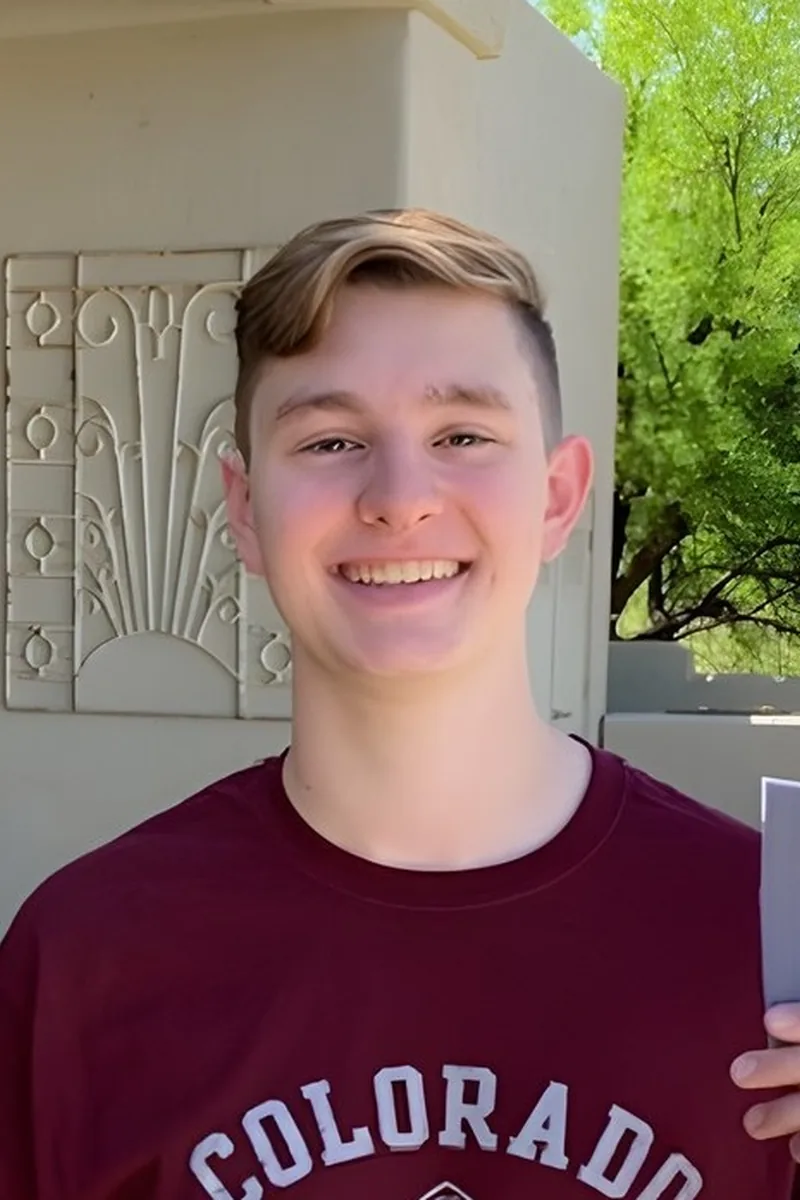
Studying Engineering Physics at Colorado School of Mines means Jude uses chemistry concepts daily — from thermodynamics and reaction kinetics to electrochemistry and molecular bonding. He treats chemistry sessions like conversations, asking targeted questions that push students to reason through stoichiometry or equilibrium problems rather than passively copying solutions. Rated 4.9 by students.
The jump from memorizing element names to actually solving stoichiometry and equilibrium problems trips up a lot of high school chemistry students. Colton approaches each topic by anchoring it to something concrete — mole ratios become recipes, gas laws become tire pressure — so the math feels less abstract. His engineering background means he's comfortable with both the conceptual and quantitative sides of the course.
I am a student at the Georgia Institute of Technology studying Chemical Engineering. For the past several years, I have worked with students extensively. Through hosting events for younger kids to learn about STEM and for older teens to practice empathetic design, I know the importance of teaching students in ways that engage them rather than frustrate them, which I apply to my teaching. I have tutored high school students in a drop-in resource center in various subjects including math of all levels, chemistry, and English, making me adequately equipped in a variety of topics. I have also tutored several students long-term. Establishing relationships with students and exploring their unique learning styles is my favorite part of tutoring. I prioritize helping students discover HOW to learn in a manner that is the most effective for them, so they can begin to use those skills on their own throughout their education. Learning is a lifelong skill that requires practice for improvement; I strive to help my students gain confidence in their ability to learn.
Chemistry wasn't Marcus's primary degree, but his Biological Sciences coursework at Arizona State required a deep dive into general chemistry — balancing equations, understanding molar relationships, and applying stoichiometry to lab problems. He approaches high school chemistry by tying abstract concepts like electron configuration and periodic trends back to tangible biological processes students can visualize.
A biology major doesn't get through college without serious chemistry coursework, and Michelle's training at Trinity University covered general and organic chemistry alongside her core science classes. She's especially effective at teaching stoichiometry, balancing equations, and mole conversions — topics where a disorganized approach leads to constant errors. Her method is to build a clear problem-solving framework students can apply to any calculation, not just the ones on tonight's homework.
Chemistry often feels like a foreign language, which is actually where Carson has an edge — his English background gives him a knack for translating abstract ideas like mole ratios, electron configurations, and reaction balancing into plain, logical steps. He treats each problem type as a reading exercise first, making sure students understand what's being asked before diving into calculations.
Stoichiometry, equilibrium, and electron configurations each demand a slightly different kind of thinking, and Emily switches between them fluidly thanks to her science-heavy coursework at Cornell. Her biology concentration means she often connects chemistry concepts to real biochemical contexts — why buffer systems matter, how thermodynamics drives reactions — which tends to make the material click faster for students who need more than rote formulas.
Chemistry clicked for Christopher when he stopped treating it as memorization and started seeing it as a logic puzzle — balancing equations, predicting reaction products, and connecting periodic trends to real behavior. His engineering background at Harvard reinforces that analytical approach, especially when tackling stoichiometry and gas laws.
Fourth-year medical students don't usually think about stoichiometry or gas laws anymore, but Michael's path through Albert Einstein College of Medicine — plus his biology degree earned summa cum laude — means he's built on those high school chemistry foundations repeatedly in biochemistry, pharmacology, and physiology. He also spent time tutoring Regents-level chemistry and teaching MCAT prep for Kaplan, so he knows exactly where the gaps tend to form around topics like nomenclature, mole calculations, and balancing equations, and how to close them quickly.
Chemistry has always been one of Samantha's favorite subjects to teach — she earned her degree in Chemistry & Chemical Biology from Cornell and genuinely enjoys unpacking topics like stoichiometry, molecular geometry, and acid-base equilibria. She's a visual teacher who sketches out Lewis structures, orbital diagrams, and reaction maps so that abstract concepts become something students can actually picture. Her 5.0 rating speaks to how well that approach lands.
Pre-med coursework and MCAT preparation mean Mosab has worked through chemistry concepts like stoichiometry, gas laws, and equilibrium recently enough that he remembers exactly where the confusion hits — and what finally made each idea click. He walks through the quantitative reasoning behind problems step by step, connecting the math to the underlying chemical behavior so it stops feeling like arbitrary formula work. Holds a 5.0 rating.
Three science bachelor's degrees — including one specifically in chemistry — mean Sung has spent serious time with everything from electron orbitals to thermochemistry, not just at the introductory level but across multiple disciplinary angles. He digs into the "why" behind concepts like periodic trends and reaction energetics so students can reason through unfamiliar problems on exams instead of relying on memorized shortcuts. Rated 5.0 by students.
This isn't Hasan's core area — his degrees are in Literary Arts and Visual Arts from Brown — but his role as a lead teacher at a classical academy means he regularly supports students across subjects, including chemistry fundamentals like nomenclature, dimensional analysis, and basic stoichiometry. He's strongest at teaching students how to read and dissect word-heavy chemistry problems, applying the same close-reading instincts from his literary training to pull apart what a question is actually asking.
Serving as an undergraduate teaching assistant for introductory biochemistry at Cornell gave Josef a clear picture of where students first lose the thread in chemistry — usually right around stoichiometry and the mole concept, when the math suddenly feels disconnected from what's happening at the molecular level. He bridges that gap by tying quantitative problems back to the reaction logic, so balancing equations and calculating yields feel like extensions of chemical reasoning rather than standalone arithmetic exercises. Holds a 5.0 rating.
Chemistry clicks when students see the logic underneath the formulas — why electron configurations predict reactivity, or how stoichiometry is really just bookkeeping for atoms. Dennis earned his Masters in Chemical and Physical Biology at Vanderbilt, so he teaches concepts like equilibrium, thermodynamics, and bonding from a place of deep daily familiarity rather than rote textbook review. Rated 5.0 by students.
Balancing equations, mole conversions, and electron configurations all follow patterns that become obvious once someone lays them out clearly. Tim's experience teaching chemistry at a STEM camp means he's practiced at breaking these topics down for students encountering them for the first time. His quantitative training at MIT keeps him sharp on the math-heavy units — gas laws, enthalpy, and solution chemistry — where many high schoolers hit a wall.
At a preparatory school where she manages and teaches daily, Moriah has spent real time walking students through science material one-on-one — including the kind of systematic problem setup that chemistry demands for topics like stoichiometry and dimensional analysis. Her strength is reading how a student processes information and adjusting the explanation on the spot, which matters in a subject where one shaky concept (like mole ratios) can derail an entire unit. Rated 5.0 by students.
Most high school Chemistry struggles come down to one thing: the periodic table is supposed to be a cheat sheet, but nobody taught students how to read it. Sharan connects trends like electronegativity and atomic radius to actual behavior in reactions, so predicting whether a bond is ionic or covalent stops being a guessing game. She's earned a 5.0 rating tutoring science subjects alongside her premed studies at Cornell.
Testimonials
Because the right High School Chemistry tutor makes all the difference.
Average Session Rating – Based on 3.4M Learner Ratings
Nearby High School Chemistry Tutors
Other Fort Collins Tutors
Related Science Tutors in Fort Collins
Frequently Asked Questions
Varsity Tutors matches Fort Collins students with expert High School Chemistry tutors for 1-on-1 instruction. We pair each student with a tutor based on their specific needs, learning style, and goals.
Whether you need homework help, exam prep, or want to get ahead, our High School Chemistry tutors are ready to help.
Common challenges include gaps from earlier material, difficulty with specific concepts, and trouble applying learning to new problems. These issues can snowball quickly in High School Chemistry.
A tutor identifies where you're stuck, fills in gaps, and provides targeted practice. The 1-on-1 format means you get help exactly where you need it.
Tutors work with your student's actual coursework—homework assignments, class notes, and upcoming tests. This keeps tutoring directly relevant to what's happening in the classroom.
When you share information about your student's school and curriculum, we can match you with a tutor who has relevant experience.
All tutors complete background checks, credential verification, and teaching evaluation. Many of our High School Chemistry tutors hold advanced degrees or have years of teaching experience.
You can review tutor profiles to find someone with the right background for your student's level and needs.
Many students see improved grades within a few weeks, along with better understanding of High School Chemistry concepts and more confidence tackling challenging material.
Tutors track progress and adjust their approach to ensure continued improvement.
Most students benefit from 1-2 sessions per week. More frequent sessions help if your student is significantly behind or has an important exam coming up.
Your tutor can recommend a schedule based on your student's specific situation and goals.
Tutoring is purchased in packages of hours, with rates varying by tutor experience. Varsity Tutors offers several options to fit different budgets and needs.
You can discuss pricing during your consultation to find what works best.
Your tutor will assess where your student is, discuss goals, and start working on priority areas. Most students bring current homework or upcoming test material to focus on.
By the end, you'll have a clear sense of how the tutor can help and a plan for moving forward.
Let’s find your perfect tutor
Answer a few quick questions. We’ll recommend the right plan and match you with a top 5% tutor.