Award-Winning High School Chemistry Tutors
serving Denver, CO
High School Chemistry
Tutors in Denver
Private 1-on-1 tutoring, weekly live classes for academic support, test prep & enrichment, practice tests and diagnostics, and more to elevate grades and test scores.
Based on 3.4M Learner Ratings
UniversitiesSchools & Universities
DeliveredHours Delivered
ProficiencyGrowth in Proficiency
Who needs tutoring?
No obligation. Takes ~1 minute.

Balancing equations, stoichiometry, and periodic trends all start making sense once a student grasps why atoms behave the way they do. Oliver minored in chemistry at CU Boulder alongside his biochemistry major, so he tackles high school chemistry from both the quantitative and conceptual sides — whether that means working through mole conversions or explaining why electronegativity matters for molecular polarity.
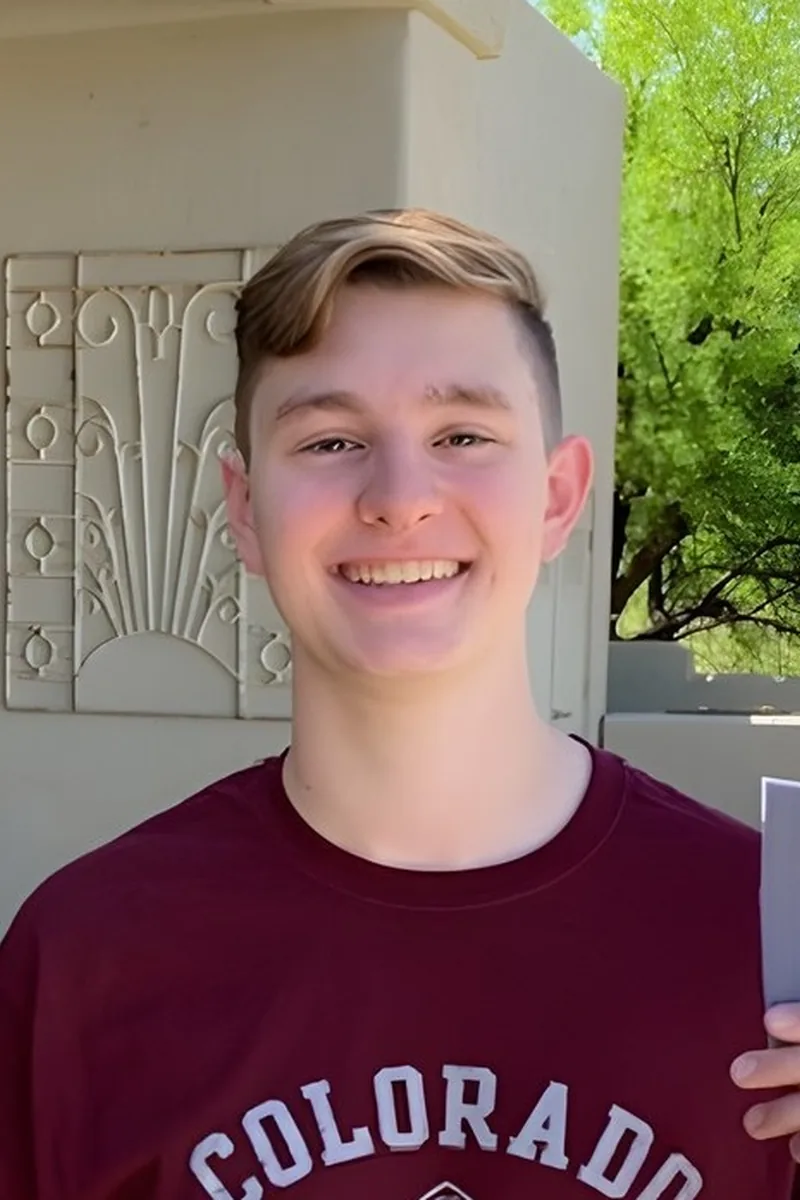
Studying Engineering Physics at Colorado School of Mines means Jude uses chemistry concepts daily — from thermodynamics and reaction kinetics to electrochemistry and molecular bonding. He treats chemistry sessions like conversations, asking targeted questions that push students to reason through stoichiometry or equilibrium problems rather than passively copying solutions. Rated 4.9 by students.
The jump from memorizing element names to actually solving stoichiometry and equilibrium problems trips up a lot of high school chemistry students. Colton approaches each topic by anchoring it to something concrete — mole ratios become recipes, gas laws become tire pressure — so the math feels less abstract. His engineering background means he's comfortable with both the conceptual and quantitative sides of the course.
I am a student at the Georgia Institute of Technology studying Chemical Engineering. For the past several years, I have worked with students extensively. Through hosting events for younger kids to learn about STEM and for older teens to practice empathetic design, I know the importance of teaching students in ways that engage them rather than frustrate them, which I apply to my teaching. I have tutored high school students in a drop-in resource center in various subjects including math of all levels, chemistry, and English, making me adequately equipped in a variety of topics. I have also tutored several students long-term. Establishing relationships with students and exploring their unique learning styles is my favorite part of tutoring. I prioritize helping students discover HOW to learn in a manner that is the most effective for them, so they can begin to use those skills on their own throughout their education. Learning is a lifelong skill that requires practice for improvement; I strive to help my students gain confidence in their ability to learn.
Chemistry wasn't Marcus's primary degree, but his Biological Sciences coursework at Arizona State required a deep dive into general chemistry — balancing equations, understanding molar relationships, and applying stoichiometry to lab problems. He approaches high school chemistry by tying abstract concepts like electron configuration and periodic trends back to tangible biological processes students can visualize.
A biology major doesn't get through college without serious chemistry coursework, and Michelle's training at Trinity University covered general and organic chemistry alongside her core science classes. She's especially effective at teaching stoichiometry, balancing equations, and mole conversions — topics where a disorganized approach leads to constant errors. Her method is to build a clear problem-solving framework students can apply to any calculation, not just the ones on tonight's homework.
Chemistry often feels like a foreign language, which is actually where Carson has an edge — his English background gives him a knack for translating abstract ideas like mole ratios, electron configurations, and reaction balancing into plain, logical steps. He treats each problem type as a reading exercise first, making sure students understand what's being asked before diving into calculations.
Chemistry clicks when students see the logic underneath the formulas — why electron configurations predict reactivity, or how stoichiometry is really just bookkeeping for atoms. Dennis earned his Masters in Chemical and Physical Biology at Vanderbilt, so he teaches concepts like equilibrium, thermodynamics, and bonding from a place of deep daily familiarity rather than rote textbook review. Rated 5.0 by students.
Balancing redox reactions, predicting products, and navigating the mole concept are the places where most high school chemistry students get stuck. Noel's college-prep teaching background means he's seen these sticking points up close and tackles them by walking through the reasoning step by step rather than handing students a shortcut to memorize.
This isn't Hasan's core area — his degrees are in Literary Arts and Visual Arts from Brown — but his role as a lead teacher at a classical academy means he regularly supports students across subjects, including chemistry fundamentals like nomenclature, dimensional analysis, and basic stoichiometry. He's strongest at teaching students how to read and dissect word-heavy chemistry problems, applying the same close-reading instincts from his literary training to pull apart what a question is actually asking.
Three science bachelor's degrees plus a medical doctorate means Sydny has taken chemistry at every level — from introductory courses through the biochemistry and pharmacology that med school demands daily. She unpacks topics like stoichiometry and gas laws by connecting them to the biological and medical contexts where those calculations actually do something, which tends to make the abstract feel worth learning.
Chemistry has always been one of Samantha's favorite subjects to teach — she earned her degree in Chemistry & Chemical Biology from Cornell and genuinely enjoys unpacking topics like stoichiometry, molecular geometry, and acid-base equilibria. She's a visual teacher who sketches out Lewis structures, orbital diagrams, and reaction maps so that abstract concepts become something students can actually picture. Her 5.0 rating speaks to how well that approach lands.
Chemical engineering at Vanderbilt means Greg doesn't just know stoichiometry and equilibrium — he uses them daily in reactor design and thermodynamics coursework. That applied perspective lets him show students why balancing equations or calculating molarity actually matters beyond the textbook. Rated 5.0 by students.
Most high school chemistry students hit a wall somewhere around mole conversions or balancing redox reactions — the point where the subject stops feeling like science and starts feeling like math. Jessica approaches those sticking points by explaining the underlying logic first, then layering on the calculations. Her background in medicine keeps her grounded in why this chemistry actually matters.
Balancing equations and stoichiometry trip up most high school chemistry students because the logic feels invisible at first. Garrett teaches the mole concept by tying it to tangible quantities — grams on a scale, liters of gas — so the math stops feeling arbitrary. His background in biology and physical chemistry also lets him show students where these reactions actually matter in living systems.
Stoichiometry and gas laws tend to feel like arbitrary math until someone connects them back to what's actually happening at the molecular level — and Nishad's pre-med training means he's spent years building that connection across chemistry, biology, and anatomy courses. He teaches students to trace the logic from balanced equations through to mole ratios and limiting reagents, so the calculations follow naturally from understanding rather than formula memorization.
Cognitive studies at Vanderbilt might not scream chemistry, but Vy's science coursework and her 35 ACT mean she's no stranger to reasoning through problems involving moles, gas laws, or balancing equations. She's especially effective at teaching students how to read what a chemistry problem is really asking — a skill she honed tutoring algebra and science in under-resourced schools where clear, patient explanation wasn't optional.
Stoichiometry, equilibrium, and acid-base reactions make more sense when a student can see where they lead. Bidyut ties high school chemistry concepts to biomedical applications he's encountered at Johns Hopkins, turning mole calculations and reaction balancing into something more tangible than textbook exercises.
Running an immunology lab at Columbia means Matthew uses chemistry daily — from buffer calculations to understanding reaction kinetics in biological systems. For high school students tackling stoichiometry, equilibrium, or electron configurations, he explains the logic behind each concept rather than handing out shortcuts that fall apart on harder problems. Rated 5.0 by students, he makes the quantitative side of chemistry far less intimidating.
Testimonials
Because the right High School Chemistry tutor makes all the difference.
Average Session Rating – Based on 3.4M Learner Ratings
Nearby High School Chemistry Tutors
Other Denver Tutors
Related Science Tutors in Denver
Frequently Asked Questions
High school chemistry requires balancing abstract thinking with practical problem-solving. Students often struggle with visualizing molecular structures and bonding, mastering stoichiometry and unit conversions, and understanding why chemical reactions happen the way they do. Many students memorize formulas without grasping the underlying concepts, which makes it harder to apply knowledge to new problems. Personalized tutoring helps bridge the gap between memorization and true understanding, so concepts stick long-term.
Yes. Expert tutors can help you understand the scientific method, predict lab outcomes before you conduct experiments, interpret your results, and connect lab observations to theoretical concepts. This deeper understanding makes lab reports stronger and helps you develop the scientific reasoning skills that chemistry teachers emphasize. Whether you're struggling with a specific lab or want to strengthen your overall experimental thinking, tutoring can make a real difference.
Balancing equations is often the first major hurdle in chemistry, but it's very teachable with the right approach. A tutor can break down the systematic process, help you recognize patterns in different equation types, and give you targeted practice until the skill becomes automatic. Rather than just showing you answers, tutors guide you through the reasoning so you can tackle unfamiliar equations with confidence.
Your first session is about understanding where you are and what you need. A tutor will ask about your current unit, specific topics that are confusing, upcoming tests or assignments, and your learning style. They'll likely work through a problem or concept with you to see how you think through chemistry, then create a personalized plan to address your biggest gaps. This foundation helps tutors tailor every future session to your goals.
Denver's 9 school districts follow Colorado state standards for high school chemistry, which cover atomic structure, bonding, reactions, stoichiometry, thermodynamics, and equilibrium. Tutors familiar with these standards know exactly what concepts are emphasized and how they build on each other. Whether you're in a traditional public school or charter program, personalized instruction can be tailored to match your specific curriculum and pacing.
Chemistry involves thinking about things you can't see—atoms, electrons, molecular bonds—which is genuinely difficult. Expert tutors use multiple strategies to make the abstract concrete: drawing and labeling molecular structures, using analogies to everyday examples, working through step-by-step diagrams, and connecting formulas back to what's actually happening at the particle level. When you can visualize what's happening in a reaction, balancing equations and predicting outcomes becomes much clearer.
Tutors help you move beyond cramming by building deep understanding throughout the year, which is the foundation for strong exam performance. For regular unit tests, they focus on the specific topics being covered and practice problem-solving under timed conditions. For AP Chemistry, tutors can guide you through the full curriculum, help you master the types of questions on the exam, and develop test-taking strategies. Consistent, personalized preparation leads to better retention and higher scores.
Varsity Tutors connects you with expert tutors who specialize in high school chemistry and understand the Denver area's curriculum. You can describe your specific needs—whether it's help with a particular unit, test prep, or building overall chemistry skills—and get matched with a tutor whose expertise and teaching style fit your goals. The process is straightforward, and you can start personalized instruction quickly.
Let’s find your perfect tutor
Answer a few quick questions. We’ll recommend the right plan and match you with a top 5% tutor.