Award-Winning Geometry Tutors
serving Fort Collins, CO
Geometry
Tutors in Fort Collins
Private 1-on-1 tutoring, weekly live classes for academic support, test prep & enrichment, practice tests and diagnostics, and more to elevate grades and test scores.
Based on 3.4M Learner Ratings
UniversitiesSchools & Universities
DeliveredHours Delivered
ProficiencyGrowth in Proficiency
Who needs tutoring?
No obligation. Takes ~1 minute.
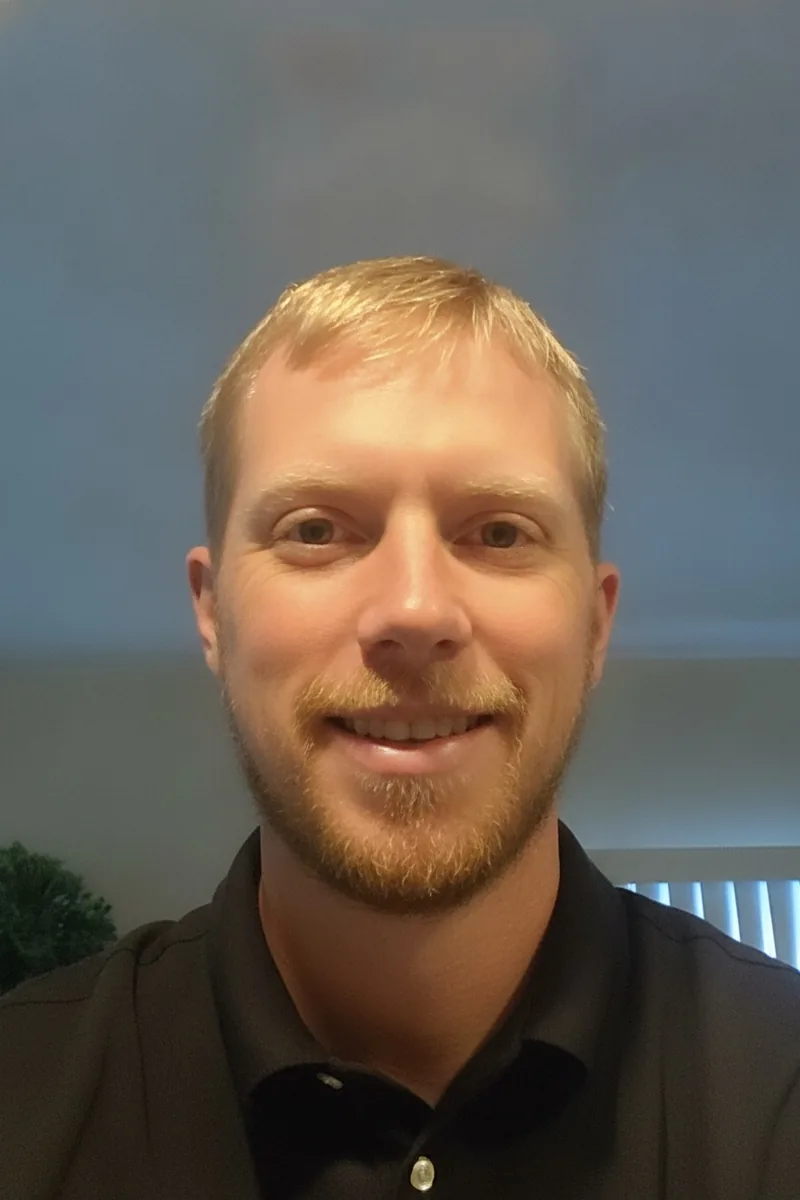
A Masters in Applied Statistics might seem far from geometry, but Ed's daily work with data visualization and spatial modeling builds the same intuition students need when interpreting diagrams, reasoning about symmetry, and connecting geometric properties to real measurements. He approaches the subject through its practical side — area, perimeter, and volume calculations grounded in the kind of concrete, applied problems he encountered during lumber sales, where getting dimensions wrong meant wasting real materials.
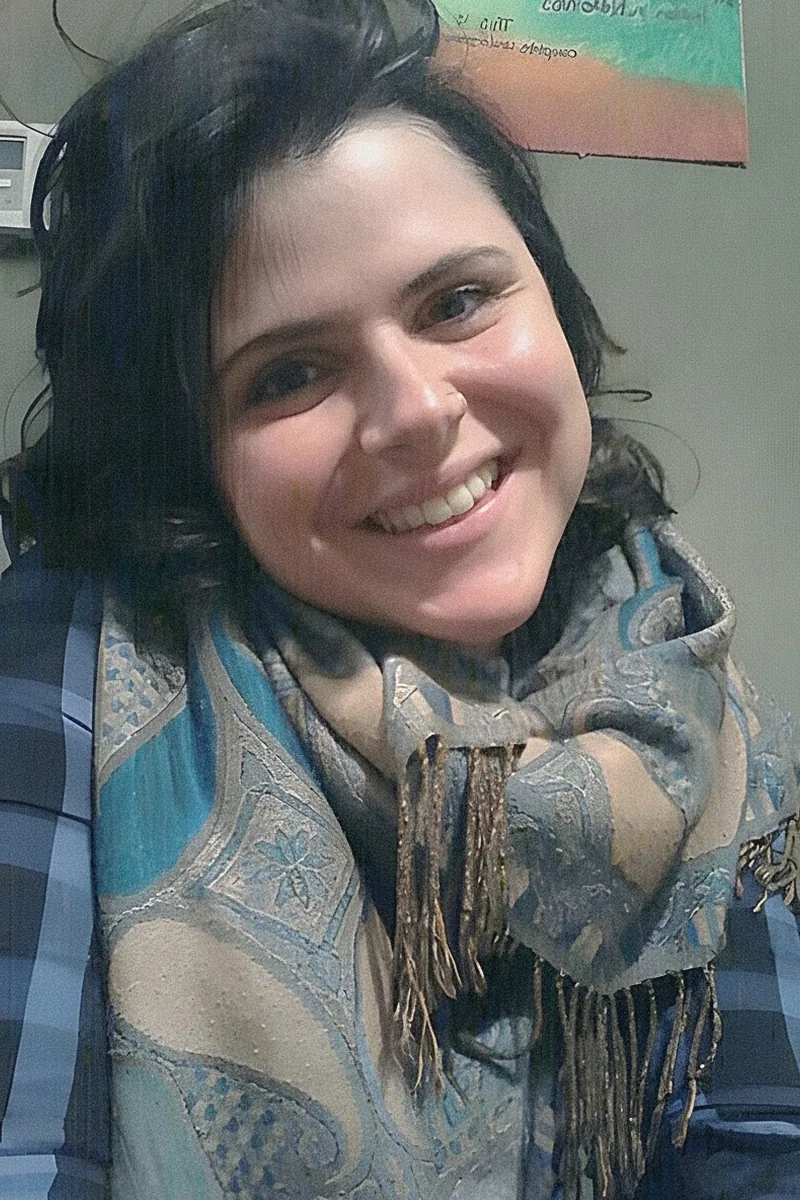
An urban studies degree means Hannah spent years reading maps, analyzing spatial layouts of cities, and thinking about how physical space is organized — skills that translate directly to reasoning about shapes, angles, and geometric relationships. She approaches the subject from a practical, visual angle, breaking down problems involving area, perimeter, and transformations by connecting them to the real-world spatial thinking she uses daily. Rated 5.0 by students.
Most geometry struggles come down to proofs: knowing a theorem is one thing, but constructing a logical argument from given information to conclusion is a genuinely different skill. Zofia teaches proof-writing as a structured process — identifying what's given, spotting congruence or similarity shortcuts, and building the chain of reasoning — rather than treating each problem as a unique puzzle to solve from scratch.
Mechanical engineering students live in a world of geometric constraints — every part Christian designs involves angles, tolerances, and spatial relationships that have to fit together precisely. That daily practice makes him especially effective at teaching triangle properties, angle theorems, and the logic behind geometric proofs, since he can show students how these ideas actually function beyond the textbook. Rated 5.0 by students.
Most geometry struggles come down to one thing: students can follow a proof line by line but can't figure out where to start one on their own. Paul tackles that gap by teaching students to identify which theorems — triangle congruence, parallel line properties, circle angle relationships — actually apply to a given diagram. He approaches each problem as a puzzle to decode, which makes the logical reasoning click.
Proofs are where most geometry students get stuck — the leap from calculating angles to constructing logical arguments feels like a completely different subject. Jude treats each proof as a puzzle, teaching students to identify which theorems and postulates apply before writing a single line. His engineering physics training at Colorado School of Mines means spatial reasoning is second nature to him.
Proofs are usually the first thing that makes geometry students panic — suddenly math requires written arguments instead of just calculations. Lena walks through the logic of each proof step by step, showing how postulates and theorems connect like building blocks. She also covers the computational side, from triangle congruence to circle theorems and coordinate geometry.
Biomedical engineering at UVA meant Colton spent four years translating between spatial models and mathematical formulas — exactly the kind of thinking geometry demands when students move from memorizing angle rules to applying them in unfamiliar figures. He breaks down transformations, similarity, and coordinate geometry problems by teaching students to sketch first, label what they know, and identify which relationships actually matter before writing anything formal.
Proofs tend to be the part of geometry that trips students up most, because suddenly math requires written logical arguments instead of just calculations. Heidi's IB background trained her in structured reasoning, and she applies that same step-by-step logic to walk through angle relationships, triangle congruence, and formal proof writing.
Proofs are where most geometry students get stuck, because suddenly math requires written logical arguments instead of just computation. Graham tackles proofs by teaching students to map out their reasoning step by step — identifying given information, choosing the right postulate or theorem, and building a chain of logic that holds up. His 4.0 GPA in a rigorous STEM program reflects the kind of precision that geometry demands.
Proofs are usually the stumbling block in geometry — students can calculate angles and areas but freeze when asked to construct a logical argument about congruence or similarity. Cody's unusual combination of engineering physics and graduate-level philosophy means he's spent years building rigorous, step-by-step arguments in both formal logic and mathematical contexts. He teaches students to treat each proof like a chain of small, defensible claims rather than a mysterious block of reasoning.
An environmental biology degree means Rosemary spent years interpreting field data through maps, transects, and spatial sampling grids — skills that translate directly into geometric reasoning about area, perimeter, and proportional relationships in figures. She teaches students to read diagrams the way a field scientist reads a landscape: identifying what's given, what's implied, and what measurements you can derive from the shapes in front of you.
Proof-based reasoning is the part of geometry that throws most students off, especially when they've spent years in math classes where there was always one right procedure to follow. Brenna walks through each proof as a logical argument, teaching students to identify what's given, what's needed, and which theorems bridge the gap. She keeps the focus on spatial reasoning skills that carry into higher math.
Proofs are where most geometry students panic — the idea of constructing a logical argument feels completely different from solving equations. Carson's English background gave him years of practice building structured, evidence-based arguments, and he applies that same reasoning framework to angle relationships, congruence proofs, and triangle theorems. He teaches students to read a proof the way you'd outline an essay: claim, evidence, conclusion.
Computer science at KU means Austin thinks in terms of logic and structure — skills that map directly onto geometric proofs, where every statement needs a justified reason and every argument has to hold up step by step. He tackles the subject from the proof-writing and reasoning side, breaking down how to connect given information about triangles, angles, and parallel lines into a clean logical chain. Holds a 5.0 rating from students.
Between aerospace engineering and materials science, Anthony's academic work revolves around understanding how shapes behave under real physical constraints — how cross-sections bear loads, how angles determine structural integrity, how surface geometry affects airflow. That background makes him especially fluent in the measurement and calculation side of geometry, from volume and surface area of solids to applying properties of similar and congruent figures in multi-step problems. Rated 5.0 by students.
Proofs are usually the first time a math student has to explain *why* something is true, and that shift from computation to logical argument is where most geometry struggles begin. Evan walks through each proof step as a chain of reasoning rather than a memorization exercise, connecting triangle congruence, parallel line theorems, and circle properties to a coherent logical framework. His physics training gave him years of practice building exactly that kind of structured argument.
I am a student at the Georgia Institute of Technology studying Chemical Engineering. For the past several years, I have worked with students extensively. Through hosting events for younger kids to learn about STEM and for older teens to practice empathetic design, I know the importance of teaching students in ways that engage them rather than frustrate them, which I apply to my teaching. I have tutored high school students in a drop-in resource center in various subjects including math of all levels, chemistry, and English, making me adequately equipped in a variety of topics. I have also tutored several students long-term. Establishing relationships with students and exploring their unique learning styles is my favorite part of tutoring. I prioritize helping students discover HOW to learn in a manner that is the most effective for them, so they can begin to use those skills on their own throughout their education. Learning is a lifelong skill that requires practice for improvement; I strive to help my students gain confidence in their ability to learn.
An MIT math major doing research in Spectral Graph Theory, Enrico brings a deep comfort with spatial structures and relationships that makes geometry's core ideas — congruence, similarity, transformations — feel like natural extensions of logical thinking rather than a pile of disconnected rules. He emphasizes building intuition around definitions so that when a problem asks students to prove two triangles congruent or reason about angle bisectors, the right approach surfaces on its own. Rated 5.0 by students.
Mechanical and aerospace engineering at Princeton means Matthew lives in a world of geometric constraints — fitting components into tight spaces, calculating load-bearing angles, reasoning about three-dimensional shapes on paper before they ever get built. He brings that same step-by-step precision to teaching triangle properties, angle relationships, and the logic behind constructions, typically demonstrating a technique and then handing students progressively harder problems until the reasoning becomes automatic.
Proofs are usually the make-or-break moment in geometry, and Brian teaches students to construct them by thinking like a detective — identifying what's given, what's needed, and which theorems bridge the gap. His Caltech training in analytical reasoning sharpens how he explains congruence, similarity, and circle theorems, turning proof-writing from intimidating to methodical.
Proofs are usually where geometry students start to struggle, because the logic feels completely different from arithmetic. Judah approaches each proof as a puzzle, teaching students to identify the given information, spot congruence or similarity relationships, and build an argument step by step. He's patient enough to let the reasoning click on its own.
Proofs are usually the first place Geometry students feel lost, because the subject suddenly asks them to justify every step rather than just compute an answer. Christopher teaches students to treat each proof like an engineering problem: identify what's given, figure out what's needed, and build a logical bridge between the two using congruence, similarity, and angle relationships. His structured approach has earned him a 4.8 rating from students.
A chemistry major at Harvard, James is used to thinking in three dimensions — molecular geometries, orbital shapes, bond angles — which gives him a natural fluency with the spatial reasoning geometry requires. He tackles circle theorems and polygon properties by encouraging students to sketch, label, and reason through diagrams before jumping to formulas, building the kind of geometric intuition that makes even multi-step problems feel manageable. Rated 4.9 by students.
Proofs are where most geometry students freeze up — the leap from calculating angles to constructing logical arguments feels like a different subject entirely. Paula bridges that gap by connecting each theorem back to something visual and concrete, whether it's triangle congruence or parallel line relationships. Her psychology background gives her a sharp read on where a student's reasoning breaks down.
Proofs are usually where geometry students panic, so Samantha teaches them as structured arguments rather than mysterious rituals — each statement earns its place with a reason. She also digs into the spatial reasoning behind congruence, similarity, and circle theorems, connecting diagrams to the algebra students already know. Her Duke science background means she's comfortable making abstract relationships concrete.
Proofs trip up a lot of geometry students because they require a completely different kind of thinking — constructing logical arguments instead of just computing answers. Kirstie's liberal arts background actually strengthens her approach here, since she treats geometric proofs the way she'd treat building a persuasive essay: claim, evidence, reasoning. She also covers the computational side, from triangle congruence to circle theorems.
An English major might seem like an unlikely geometry tutor, but Ayako's 1540 SAT score speaks to serious quantitative chops — and she approaches geometric reasoning the way she approaches a close reading, breaking a complex figure into its component parts and asking what each piece tells you. She's especially effective at teaching students how to extract usable information from dense diagrams involving circles, inscribed angles, and overlapping triangles. Rated 5.0 by students.
Proofs are usually where geometry goes from manageable to frustrating — suddenly students need to justify every step with logic instead of just calculating angles. Maggie approaches proof-writing as a skill closer to constructing an argument than solving an equation, a perspective sharpened by her dual background in science and the liberal arts. She also covers coordinate geometry, triangle congruence, and circle theorems with the same emphasis on reasoning over rote steps.
A political science degree from the University of Chicago means Asta spent four years constructing airtight arguments from premises to conclusions — exactly the skill that makes geometric proofs click. She applies that structured reasoning to two-column proofs and logical chains involving congruence, triangle properties, and circle theorems, treating each one like a case to be built rather than a formula to memorize. Rated 5.0 by students.
Testimonials
Because the right Geometry tutor makes all the difference.
Average Session Rating – Based on 3.4M Learner Ratings
Practice Geometry
Free practice tests, flashcards, and AI tutoring for Geometry
Nearby Geometry Tutors
Other Fort Collins Tutors
Related Math Tutors in Fort Collins
Frequently Asked Questions
Varsity Tutors matches Fort Collins students with expert Geometry tutors for 1-on-1 instruction. We pair each student with a tutor based on their specific needs, learning style, and goals.
Whether you need homework help, exam prep, or want to get ahead, our Geometry tutors are ready to help.
Common challenges include gaps from earlier material, difficulty with specific concepts, and trouble applying learning to new problems. These issues can snowball quickly in Geometry.
A tutor identifies where you're stuck, fills in gaps, and provides targeted practice. The 1-on-1 format means you get help exactly where you need it.
Tutors work with your student's actual coursework—homework assignments, class notes, and upcoming tests. This keeps tutoring directly relevant to what's happening in the classroom.
When you share information about your student's school and curriculum, we can match you with a tutor who has relevant experience.
All tutors complete background checks, credential verification, and teaching evaluation. Many of our Geometry tutors hold advanced degrees or have years of teaching experience.
You can review tutor profiles to find someone with the right background for your student's level and needs.
Many students see improved grades within a few weeks, along with better understanding of Geometry concepts and more confidence tackling challenging material.
Tutors track progress and adjust their approach to ensure continued improvement.
Most students benefit from 1-2 sessions per week. More frequent sessions help if your student is significantly behind or has an important exam coming up.
Your tutor can recommend a schedule based on your student's specific situation and goals.
Tutoring is purchased in packages of hours, with rates varying by tutor experience. Varsity Tutors offers several options to fit different budgets and needs.
You can discuss pricing during your consultation to find what works best.
Your tutor will assess where your student is, discuss goals, and start working on priority areas. Most students bring current homework or upcoming test material to focus on.
By the end, you'll have a clear sense of how the tutor can help and a plan for moving forward.
Let’s find your perfect tutor
Answer a few quick questions. We’ll recommend the right plan and match you with a top 5% tutor.