Award-Winning AP Chemistry Tutors
serving Thousand Oaks, CA
AP Chemistry
Tutors in Thousand Oaks
Private 1-on-1 tutoring, weekly live classes for academic support, test prep & enrichment, practice tests and diagnostics, and more to elevate grades and test scores.
Based on 3.4M Learner Ratings
UniversitiesSchools & Universities
DeliveredHours Delivered
ProficiencyGrowth in Proficiency
Who needs tutoring?
No obligation. Takes ~1 minute.
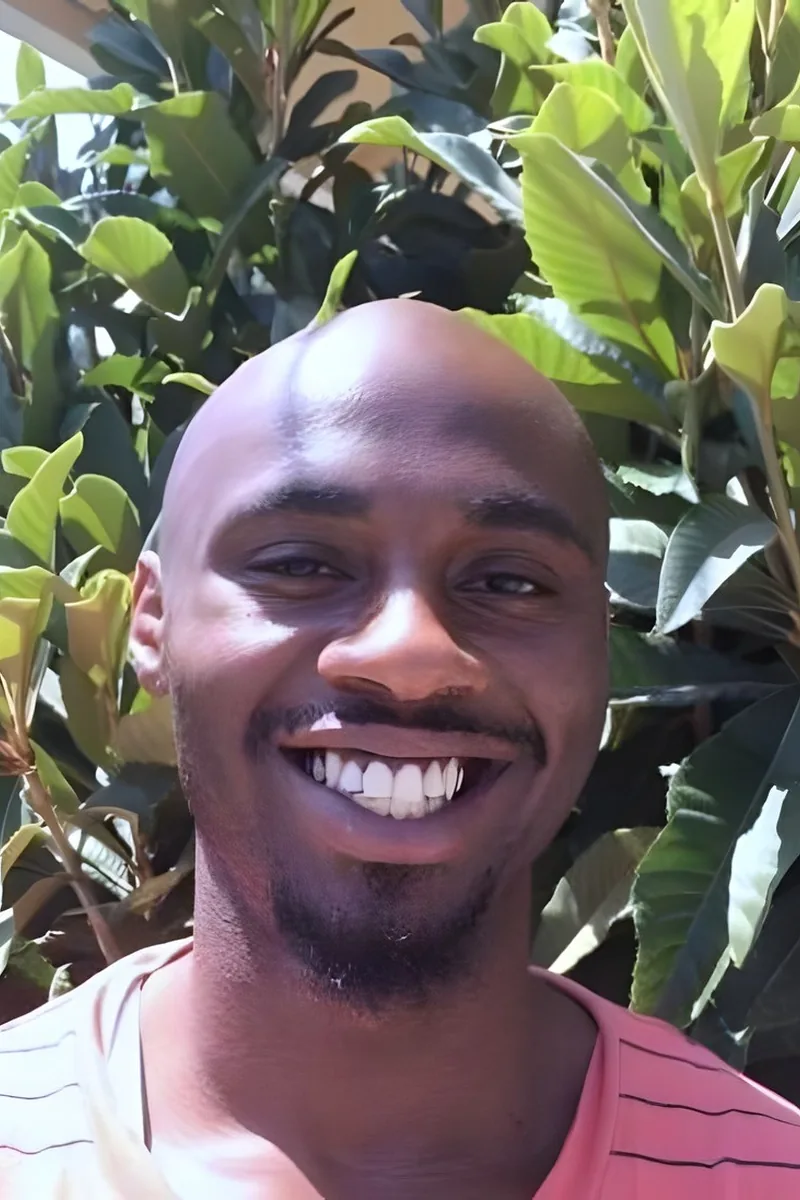
AP Chemistry's toughest sections — equilibrium, thermodynamics, electrochemistry — demand both conceptual understanding and fast quantitative reasoning. Brian brings strong analytical instincts from his Caltech science training, where rigorous problem-solving across disciplines was the norm. He breaks down multi-step free-response problems into the kind of logical chains that earn full credit on exam day.

AP Chemistry's jump from memorizing formulas to applying thermodynamic and equilibrium concepts trips up most students around Unit 5 or 6. Nicole's pre-med science preparation at UCLA gave her deep practice with these exact topics — stoichiometry, reaction kinetics, and acid-base equilibria — and she teaches students to reason through multi-step problems rather than hunt for a formula to plug into.
As a chemistry major at Occidental College, Chandler is working through the same material AP Chemistry covers — but at the college level, where concepts like Le Chatelier's principle and reaction spontaneity get tested in lab settings, not just on paper. That firsthand experience means he can unpack the logic behind free-response questions, particularly those involving equilibrium shifts and enthalpy diagrams, in ways that stick. His 34 ACT and 4.5 rating back up a sharp, methodical approach to exam prep.
Thermodynamics, equilibrium, and electrochemistry each layer new math onto already complex chemical concepts — and AP Chemistry tests all of it under time pressure. Justin's dual background in neuroscience and physiology means he spent years applying stoichiometry, acid-base chemistry, and kinetics in lab settings before ever tutoring them. He teaches students to read AP-style problems strategically, identifying what's actually being asked before diving into calculations.
Stoichiometry, equilibrium, and thermodynamics each demand a different kind of thinking — quantitative precision, conceptual flexibility, and the ability to link microscopic behavior to macroscopic observations. Jack tackles AP Chemistry by identifying which of those skills a student needs to sharpen, then drilling into that area with targeted problem sets. His science coursework at UC Berkeley, spanning biology, physics, and chemistry, gives him a cross-disciplinary perspective that clarifies why each concept matters.
I'm an affable chemistry-loving person whose joy come from delivering knowledge :D
Equilibrium expressions, thermodynamics, and electrochemistry all demand comfort with both conceptual reasoning and quantitative precision. JF's math and computational science background at Stanford makes the mathematical side of AP Chem — ICE tables, rate law calculations, stoichiometric conversions — second nature, freeing up mental energy for the deeper conceptual understanding the exam rewards. Rated 5.0 by students.
A biophysics major and premed student at Johns Hopkins, Czarina is currently deep in the college chemistry sequence that AP Chemistry is designed to preview — so she knows exactly which concepts, like molecular orbital theory and colligative properties, carry the most weight on the exam versus which ones fade into background noise. She earned a 770 on the SAT Chemistry Subject Test and teaches the subject by linking quantitative problem-solving to the physical intuition behind each reaction. Rated 5.0 by students.
Thermodynamics, equilibrium, and electrochemistry each require a different way of reasoning, and AP Chemistry punishes students who try to memorize their way through. Lauren minors in chemistry at Duke and uses her lab experience to ground abstract ideas — like Gibbs free energy or reaction kinetics — in tangible processes students can actually visualize.
Pratik's strongest subject is chemistry, and it shows — he tutors it at both the high school and college level from his home base as a premed biology major at Cornell. He digs into the conceptual logic behind equilibrium, thermodynamics, and electrochemistry so that students can reason through unfamiliar free-response prompts instead of relying on memorized shortcuts.
Studying cellular and molecular biology at Yale on the pre-med track, Shreya has gone deep into the chemistry that underpins life at the molecular level — making topics like intermolecular forces, Lewis structures, and VSEPR geometry feel less like abstract rules and more like tools for understanding how molecules actually behave. She teaches AP Chemistry's conceptual questions by grounding them in the molecular reasoning she uses daily in her own coursework. Rated 5.0 by students with a 36 ACT.
Thermodynamics, equilibrium, and electrochemistry each require a different style of problem-solving, and AP Chemistry crams all of them into one exam. Andrew's biochemistry degree and lab research give him deep fluency with these concepts at the molecular level, so he can unpack why Le Chatelier's principle works or how entropy drives spontaneity — not just which formula to plug numbers into.
Forty-plus AP and general chemistry students have worked through thermodynamics, electrochemistry, and equilibrium calculations with Amy, and her 5.0 rating speaks to the results. Her master's in environmental toxicology keeps her deeply connected to the material — she teaches AP concepts like Gibbs free energy and kinetics as tools scientists actually use, not just formulas to memorize for the exam.
AP Chemistry's toughest stretch for most students is the leap from stoichiometry into equilibrium, thermodynamics, and electrochemistry, where conceptual reasoning matters as much as calculation. Jhonatan's extensive lab science background in biological sciences means he thinks about chemical principles in applied contexts — reaction kinetics, buffer systems, Gibbs free energy — and explains them with that same concreteness.
Few AP Chemistry tutors have actually written and graded college chemistry exams for years. Jeremy, a Yale-trained Ph.D. who has taught General Chemistry at the college level many times, knows precisely how equilibrium, thermodynamics, and kinetics questions are designed to test conceptual understanding versus rote calculation. He breaks down free-response strategies and teaches students to connect the big ideas the exam rewards.
Stoichiometry, equilibrium, and thermodynamics each demand a different kind of thinking, and AP Chemistry throws all of them at students in one year. Nova's strong science background at Brown — spanning both biology and chemistry — means she can unpack reaction mechanisms and dimensional analysis with the precision this exam requires.
Eric earned his master's in inorganic chemistry and scored a 1500 on the SAT, so he knows both the content depth and the test-taking stamina that AP Chemistry demands. He digs into the trickiest parts of the exam — equilibrium calculations, electrochemistry, and thermodynamic reasoning — with the kind of precision that turns 3s into 5s. His 5.0 client rating speaks to how well that approach lands.
Computational biology at Cornell means Emily lives at the intersection of quantitative reasoning and molecular science — she's worked through the same college-level chemistry that AP students are preparing for, but with the added demand of modeling chemical systems computationally. She teaches topics like equilibrium and reaction energetics by emphasizing the mathematical structure underneath, so students learn to read what equations are actually telling them about molecular behavior. Rated 4.9 by students.
Testimonials
Because the right AP Chemistry tutor makes all the difference.
Average Session Rating – Based on 3.4M Learner Ratings
Practice AP Chemistry
Free practice tests, flashcards, and AI tutoring for AP Chemistry
Nearby AP Chemistry Tutors
Other Thousand Oaks Tutors
Related Science Tutors in Thousand Oaks
Frequently Asked Questions
Varsity Tutors matches Thousand Oaks students with expert AP Chemistry tutors for 1-on-1 instruction. We pair each student with a tutor based on their specific needs, learning style, and goals.
Whether you need homework help, exam prep, or want to get ahead, our AP Chemistry tutors are ready to help.
Common challenges include gaps from earlier material, difficulty with specific concepts, and trouble applying learning to new problems. These issues can snowball quickly in AP Chemistry.
A tutor identifies where you're stuck, fills in gaps, and provides targeted practice. The 1-on-1 format means you get help exactly where you need it.
Tutors work with your student's actual coursework—homework assignments, class notes, and upcoming tests. This keeps tutoring directly relevant to what's happening in the classroom.
When you share information about your student's school and curriculum, we can match you with a tutor who has relevant experience.
All tutors complete background checks, credential verification, and teaching evaluation. Many of our AP Chemistry tutors hold advanced degrees or have years of teaching experience.
You can review tutor profiles to find someone with the right background for your student's level and needs.
Many students see improved grades within a few weeks, along with better understanding of AP Chemistry concepts and more confidence tackling challenging material.
Tutors track progress and adjust their approach to ensure continued improvement.
Most students benefit from 1-2 sessions per week. More frequent sessions help if your student is significantly behind or has an important exam coming up.
Your tutor can recommend a schedule based on your student's specific situation and goals.
Tutoring is purchased in packages of hours, with rates varying by tutor experience. Varsity Tutors offers several options to fit different budgets and needs.
You can discuss pricing during your consultation to find what works best.
Your tutor will assess where your student is, discuss goals, and start working on priority areas. Most students bring current homework or upcoming test material to focus on.
By the end, you'll have a clear sense of how the tutor can help and a plan for moving forward.
Let’s find your perfect tutor
Answer a few quick questions. We’ll recommend the right plan and match you with a top 5% tutor.