Award-Winning Statistics Graduate Level Tutors
serving Oakland, CA
Statistics Graduate Level
Tutors in Oakland
Private 1-on-1 tutoring, weekly live classes for academic support, test prep & enrichment, practice tests and diagnostics, and more to elevate grades and test scores.
Based on 3.4M Learner Ratings
UniversitiesSchools & Universities
DeliveredHours Delivered
ProficiencyGrowth in Proficiency
Who needs tutoring?
No obligation. Takes ~1 minute.

Graduate-level statistics demands comfort with proofs and derivations that most intro courses skip — maximum likelihood estimation, Bayesian inference, and the mathematical foundations behind common tests. Brian's Caltech background in economics and computer science gave him deep exposure to these methods in both theoretical and applied contexts, and he breaks down dense notation into intuitive steps.
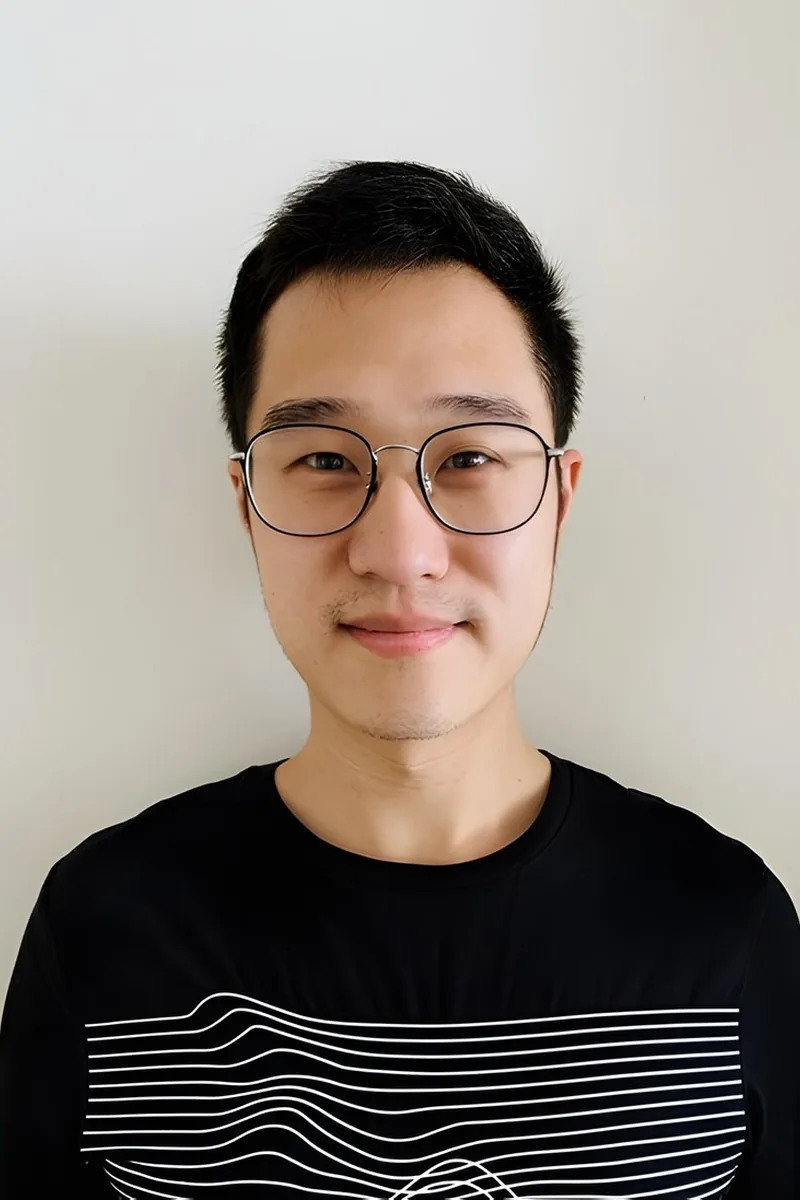
Graduate-level statistics demands fluency with concepts like maximum likelihood estimation, Bayesian inference, and multivariate distributions that go far beyond introductory coursework. Yuanxin's master's in financial engineering at USC required exactly this depth — she built and analyzed stochastic models where getting the statistics wrong meant getting the entire financial model wrong.
Currently, I am a student at the University of Windsor, pursuing a PhD of Mechanical Engineering under the supervision of Dr. Altenhof. In 2005, I earned a Bachelor of Science degree in Mechanical Engineering from Azad University. The undergraduate curriculum in Mechanical Engineering introduced me to a wide variety of subjects, providing me with a strong foundation in the theoretical concepts of this major. Since I was interested in expanding my knowledge, acquiring skills in new technologies and methods, and opening pathways into additional employment opportunities, I applied for a master's degree in Solid Mechanic Engineering at Azad University. In 2006, I got admitted to the MSc program in Solid Mechanic Engineering at Azad University. During the first year, the coursework helped me to obtain a more in-depth understanding of the field. I engaged in research projects, presentations, and report submissions in the second year. In addition, as a Teaching Assistant, I developed pedagogical knowledge and skills. My MSc thesis project, "Experimental and numerical study of in-plane loading of thin-walled tubes," exposed me to new skills in experimental testing and software programs (LS- DYNA). I successfully earned my MSc in 2008 and ranked in the top 10% of students in my class. This two-year graduate program not only made me an expert in the field but also enhanced my critical thinking, analytic abilities, time management, and research skills. In 2009, Azad University of Tuyserkan offered me a Lecturer position. As a researcher who couldn't leave the dynamic atmosphere of the scholastic world and as a potential teacher who was constantly engaged in critical reflection, I accepted the offer. In the beginning, I took "Assessment & Evaluation in Higher Education" and " University Teaching Skills" courses to be eligible for teaching. These two mandatory courses increased my knowledge of evaluation methods, testing, and measurement in education. I learned how to motivate and activate students, encourage personal initiative and choose the most suitable teaching style. As a lecturer, I gained a great experience in teaching. I have taught Statics, Strength of Materials, and Design of machine elements courses at the undergraduate level. I believe that it has been an excellent opportunity to provide a great learning experience for a diverse group of students. As a faculty member, I have worked cooperatively and collaboratively with the campus community, including faculty members, employees, students, and others. I have contributed to the field as a researcher by conducting scholarly activities. I received two research grants from the university, conducted research and published three papers in prestigious ISI journals, and presented my research at 20 national and international conferences on Mechanical Engineering. I have valuable experience in optimizing energy absorption in thin-walled aluminum and composite tubes. I am also experienced working with Hopkinson instruments and gas gun testing equipment. In addition, I have significant experience working with the Santam instrument and the Instron testing machine. This machine can obtain the tensile and compressive strength of the specimens, input for LS Dyna software. I also became interested in Metal Matrix Composite after designing and manufacturing diffusion instruments to prepare metal matrix composite productions. As a faculty member, I provided administrative services. In 2011, I was appointed as the head of the Mechanical Engineering department for two years. I was responsible for faculty recruitment and development, faculty evaluation, program development, program review, curriculum development, class schedule planning, etc. In 2013, I was appointed as the "Vice Chancellor for Academic Affairs" for three years. In this position, I was the chair of the Academic Affairs committee. I was responsible for planning, developing, organizing, directing, and evaluating academic programs, policies, procedures, and guidelines. These two administrative services enhanced my management skills, such as strategic thinking, planning, communication, decision-making, motivating, and interpersonal skills. Driven by my dedication to sustainable engineering, I decided to pursue a Ph.D. in mechanical engineering overseas. My goal is to expand my expertise and confront fresh challenges in the realm of composite materials. If granted the chance to engage with Long Fiber Thermoplastic (LFT) composite materials during this internship, I am excited to explore industrial-scale manufacturing and design processes. I look forward to collaborating closely with fellow research engineers, anticipating that such collaboration will significantly enhance my skills and knowledge in the field. S
Graduate-level statistics can feel like a different language — survival analysis, multivariate regression, Bayesian inference — especially for students outside traditional math backgrounds. Kimberly runs these methods daily in her Columbia MPH program, where biostatistics is central to public health research. She breaks down the logic behind each technique so students can apply it confidently in their own coursework and thesis work.
Victor earned his B.S. in Economics with a statistics concentration from Purdue, where he tackled regression analysis, hypothesis testing, and probability distributions as core coursework. That quantitative foundation, combined with his time as a Supplemental Instruction Leader, means he can unpack dense concepts like multivariate analysis or ANOVA in ways that actually click. Rated 5.0 by students.
Graduate-level statistics demands fluency with theory — sufficiency, maximum likelihood estimation, Bayesian inference, and the mathematical underpinnings that introductory courses skip. Bahaeddine earned his PhD in Statistics and teaches at the university level, so he can walk through measure-theoretic probability or asymptotic theory with the rigor a graduate program expects.
Graduate-level statistics lives at the intersection of Laura's two degrees — her IT background covers the computational side (Python, data mining, regression modeling), while her MBA sharpened her ability to interpret results in a business context. She digs into topics like hypothesis testing, ANOVA, and multivariate analysis with an emphasis on knowing which test to run and why the output matters.
Graduate-level statistics throws students into maximum likelihood estimation, Bayesian inference, and multivariate analysis — territory where intuition from introductory courses often breaks down. Irene holds a Ph.D. in Mathematics and Computer Science, which means she can unpack the measure-theoretic foundations behind concepts like convergence in distribution or sufficiency. She's particularly effective at bridging the gap between abstract proofs and applied problem sets.
I am listening to and learning about him or her as an individual. I can also discover what motivates the student during this conversation and plan for how to frame future tutoring sessions in terms of what the student already knows and enjoys.
Graduate-level statistics often demands fluency with multivariate analysis, mixed models, and experimental design — topics Dan tackled extensively during his Master's in Plant Biology and Conservation, where statistical modeling was central to his research. He breaks down the logic behind tests like ANOVA, regression diagnostics, and maximum likelihood estimation so the methodology clicks, not just the software output. Rated 5.0 by students.
Graduate-level statistics demands comfort with mathematical proofs and distributional theory that go far beyond introductory courses — maximum likelihood estimation, Bayesian inference, and multivariate analysis all require real mathematical maturity. Yasaman's Ph.D. research in Electrical and Computer Engineering at McMaster has her working with advanced statistical methods regularly, so she can unpack both the theory and the computational implementation behind each technique.
Graduate-level statistics demands fluency with concepts like maximum likelihood estimation, Bayesian inference, and multivariate analysis — not just running software but understanding the theory underneath. Michelle brings a quantitative biology perspective to these methods, having applied advanced statistical frameworks to biological data throughout her science training. Rated 4.9 by students.
Graduate-level statistics demands more than plugging numbers into SPSS — it requires understanding why you'd choose a hierarchical regression over a standard multiple regression, or when MANOVA assumptions break down. James applies these methods daily in his Ph.D. program in School Psychology at the University of Arizona, where his own research involves complex statistical designs. Rated 5.0 by students, he walks through everything from structural equation modeling to effect size interpretation.
Testimonials
Because the right Statistics Graduate Level tutor makes all the difference.
Average Session Rating – Based on 3.4M Learner Ratings
Nearby Statistics Graduate Level Tutors
Other Oakland Tutors
Related Math Tutors in Oakland
Frequently Asked Questions
Varsity Tutors matches Oakland students with expert Statistics Graduate Level tutors for 1-on-1 instruction. We pair each student with a tutor based on their specific needs, learning style, and goals.
Whether you need homework help, exam prep, or want to get ahead, our Statistics Graduate Level tutors are ready to help.
Common challenges include gaps from earlier material, difficulty with specific concepts, and trouble applying learning to new problems. These issues can snowball quickly in Statistics Graduate Level.
A tutor identifies where you're stuck, fills in gaps, and provides targeted practice. The 1-on-1 format means you get help exactly where you need it.
Tutors work with your student's actual coursework—homework assignments, class notes, and upcoming tests. This keeps tutoring directly relevant to what's happening in the classroom.
When you share information about your student's school and curriculum, we can match you with a tutor who has relevant experience.
All tutors complete background checks, credential verification, and teaching evaluation. Many of our Statistics Graduate Level tutors hold advanced degrees or have years of teaching experience.
You can review tutor profiles to find someone with the right background for your student's level and needs.
Many students see improved grades within a few weeks, along with better understanding of Statistics Graduate Level concepts and more confidence tackling challenging material.
Tutors track progress and adjust their approach to ensure continued improvement.
Most students benefit from 1-2 sessions per week. More frequent sessions help if your student is significantly behind or has an important exam coming up.
Your tutor can recommend a schedule based on your student's specific situation and goals.
Tutoring is purchased in packages of hours, with rates varying by tutor experience. Varsity Tutors offers several options to fit different budgets and needs.
You can discuss pricing during your consultation to find what works best.
Your tutor will assess where your student is, discuss goals, and start working on priority areas. Most students bring current homework or upcoming test material to focus on.
By the end, you'll have a clear sense of how the tutor can help and a plan for moving forward.
Let’s find your perfect tutor
Answer a few quick questions. We’ll recommend the right plan and match you with a top 5% tutor.