Award-Winning Statistics Graduate Level Tutors
serving Long Beach, CA
Statistics Graduate Level
Tutors in Long Beach
Private 1-on-1 tutoring, weekly live classes for academic support, test prep & enrichment, practice tests and diagnostics, and more to elevate grades and test scores.
Based on 3.4M Learner Ratings
UniversitiesSchools & Universities
DeliveredHours Delivered
ProficiencyGrowth in Proficiency
Who needs tutoring?
No obligation. Takes ~1 minute.

Graduate-level statistics demands comfort with proofs and derivations that most intro courses skip — maximum likelihood estimation, Bayesian inference, and the mathematical foundations behind common tests. Brian's Caltech background in economics and computer science gave him deep exposure to these methods in both theoretical and applied contexts, and he breaks down dense notation into intuitive steps.
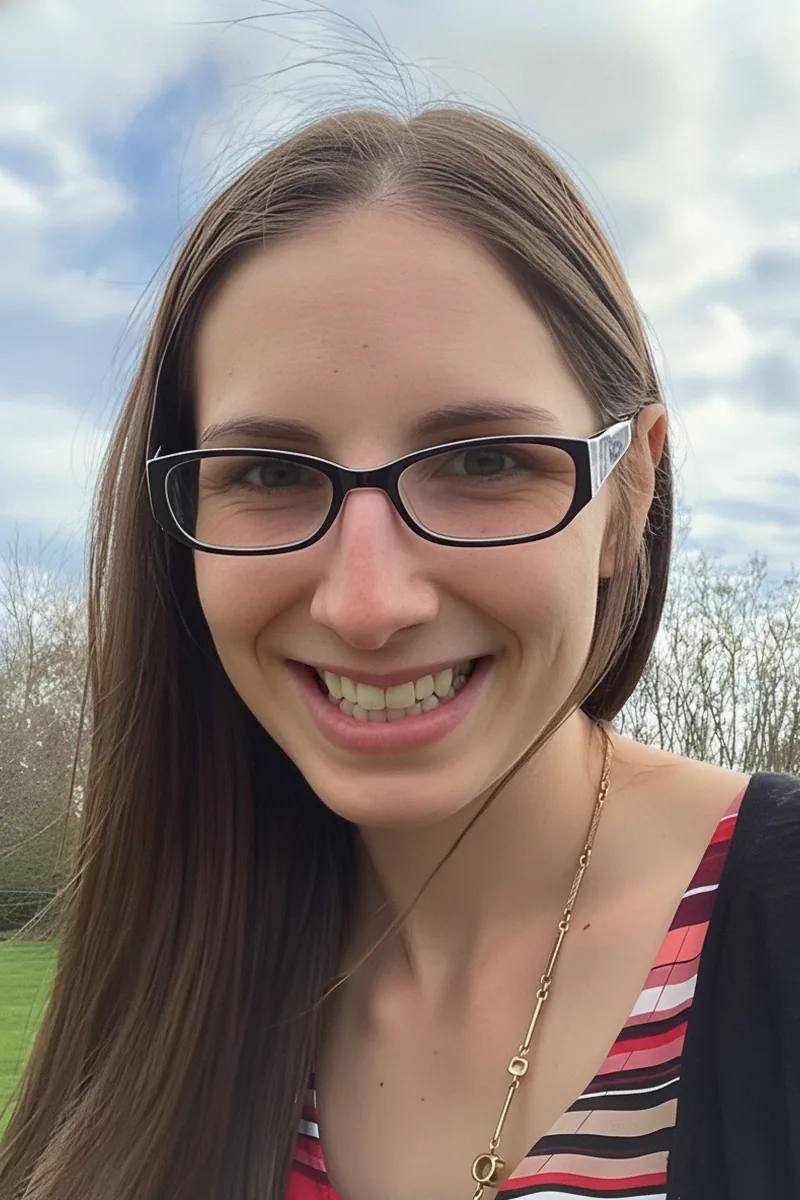
I am also interested in tutoring college students preparing for the GRE general test. For test preparation, I assign a decent amount of homework each week and I spend the majority of my sessions going over the questions my students answer incorrectly.
Graduate-level statistics demands fluency with concepts like maximum likelihood estimation, Bayesian inference, and multivariate analysis — not just running software but understanding the theory underneath. Michelle brings a quantitative biology perspective to these methods, having applied advanced statistical frameworks to biological data throughout her science training. Rated 4.9 by students.
Holding a Master's in Statistics, Adam digs into the graduate-level material that trips students up most — maximum likelihood estimation, Bayesian inference, multivariate distributions, and the theoretical underpinnings of hypothesis testing. He's taught and tutored across university settings, so he knows how to bridge the gap between abstract proofs and applied problem sets. Rated 4.9 by students.
Graduate-level statistics demands fluency with theory — sufficiency, maximum likelihood estimation, Bayesian inference, and the mathematical underpinnings that introductory courses skip. Bahaeddine earned his PhD in Statistics and teaches at the university level, so he can walk through measure-theoretic probability or asymptotic theory with the rigor a graduate program expects.
Graduate-level statistics demands comfort with proofs and distributions that most intro courses barely touch — moment-generating functions, maximum likelihood estimation, and Bayesian inference all require a different kind of mathematical maturity. Liban's dual training in mathematics and economics gives him fluency in both the theoretical framework and the applied modeling that graduate programs expect. Rated 4.8 by students, he brings the rigor without losing the intuition.
Graduate-level statistics demands comfort with proofs and derivations that undergraduate courses often skip — moment-generating functions, maximum likelihood estimation, and the theoretical machinery behind hypothesis testing. Aaron brings a PhD mathematician's rigor to these topics, walking through measure-theoretic ideas and convergence arguments with the care they require.
Graduate-level statistics in the health sciences — biostatistics, survival analysis, logistic regression — requires more than formula memorization; it demands understanding which test fits which study design and why. Julia's Doctor of Science in Pharmacy means she's applied these methods firsthand in clinical research contexts, interpreting p-values and confidence intervals with real patient data on the line. She teaches students to think like researchers, connecting statistical output back to the questions driving the analysis.
Graduate-level statistics demands more than plugging data into software — it requires understanding why you'd choose a Cox regression over a logistic model, or when maximum likelihood estimation breaks down. Naushaba's Master's in Epidemiology means she learned these methods by applying them to real research questions, from survival analysis to multivariate modeling. She teaches the reasoning behind each technique so students can defend their statistical choices in dissertations and publications.
Graduate-level statistics lives at the intersection of theory and application — ANOVA designs, regression diagnostics, multilevel modeling, and knowing when each tool fits. Joshua's master's work in cognitive psychology at Purdue required heavy use of these methods on real experimental data, so he teaches statistical reasoning the way researchers actually use it. He's especially sharp on translating between the math and the conceptual logic behind hypothesis testing.
Graduate-level statistics demands comfort with concepts like maximum likelihood estimation, Bayesian inference, and hypothesis testing frameworks that go well beyond intro courses. Abhi's M.S. in Data Science from UIUC and current PhD work at NYU mean he uses these tools daily in research — he teaches the theory alongside the practical intuition for when and why each method applies.
Graduate-level statistics demands comfort with proofs and distributions that undergraduate courses only sketch — maximum likelihood estimation, sufficient statistics, and the theory behind hypothesis testing. Drisana is actively completing her graduate mathematics degree, so she's immersed in the rigorous thinking these courses require and can unpack dense notation into clear reasoning.
Graduate-level statistics throws curators of data into the deep end — multivariate analysis, mixed-effects models, Bayesian inference — and Michael's biology master's work required him to live in that world daily. He teaches the logic behind each method so students can choose the right test for their research design, not just run code blindly. Rated 5.0 by students.
Testimonials
Because the right Statistics Graduate Level tutor makes all the difference.
Average Session Rating – Based on 3.4M Learner Ratings
Nearby Statistics Graduate Level Tutors
Other Long Beach Tutors
Related Math Tutors in Long Beach
Frequently Asked Questions
Graduate statistics programs usually build on foundational concepts to cover advanced topics like mathematical statistics, statistical inference, hypothesis testing, regression analysis, experimental design, and multivariate methods. Depending on your program, you might also encounter Bayesian statistics, time series analysis, or specialized areas like biostatistics or econometrics. A tutor can help you navigate your specific curriculum and connect these concepts to real-world applications.
Many graduate statistics students struggle with the shift from computational skills to theoretical understanding—knowing not just how to run a test, but why it works mathematically. Translating real-world problems into statistical models, interpreting complex proofs, and managing the heavy mathematical foundations (linear algebra, calculus, probability theory) are common pain points. Personalized tutoring helps you build conceptual clarity and see how theory connects to practice.
Statistical proofs require both mathematical rigor and clear logical thinking. The key is learning to identify proof patterns, understand why each step follows from previous ones, and practice writing proofs in your own words rather than just reading them. Expert tutors can break down complex proofs into manageable pieces, show you common proof techniques, and help you develop the confidence to tackle unfamiliar problems independently.
In your first session, a tutor will assess your current understanding of foundational concepts, learn about your specific course or research needs, and identify where you're struggling most—whether that's theory, computation, or application. From there, they'll create a personalized plan that targets your goals, whether you're preparing for exams, working through challenging problem sets, or building deeper conceptual understanding for your thesis work.
Graduate statistics demands both mathematical sophistication and practical problem-solving skills. Personalized instruction allows you to work at your own pace, ask questions without time pressure, and get targeted help on the specific concepts your program emphasizes. Whether you're at California State University, Long Beach or another local institution, connecting with an expert tutor means having someone who understands graduate-level rigor and can adapt explanations to your learning style.
The gap between understanding statistical theory and applying it to messy real-world data is where many graduate students struggle. Expert tutors can help you translate research questions into appropriate statistical models, choose the right methods for your data, interpret results critically, and troubleshoot when analyses don't go as expected. This bridges the gap between coursework and thesis research or professional practice.
Yes—many graduate statistics courses require proficiency in R, Python, SAS, or other statistical software. Tutors can help you understand both the statistical concepts behind your code and the practical implementation, whether you're debugging analyses, learning new packages, or optimizing workflows. This combined approach ensures you're not just running commands, but truly understanding what your code is doing and why.
Comprehensive or qualifying exams in graduate statistics require deep conceptual understanding, quick problem-solving, and the ability to connect multiple topics under pressure. A tutor can help you identify knowledge gaps, practice problems under timed conditions, develop efficient problem-solving strategies, and build the confidence you need. Personalized preparation means focusing on your weakest areas rather than generic review materials.
Let’s find your perfect tutor
Answer a few quick questions. We’ll recommend the right plan and match you with a top 5% tutor.