Award-Winning Statistics Graduate Level Tutors
serving San Jose, CA
Statistics Graduate Level
Tutors in San Jose
Private 1-on-1 tutoring, weekly live classes for academic support, test prep & enrichment, practice tests and diagnostics, and more to elevate grades and test scores.
Based on 3.4M Learner Ratings
UniversitiesSchools & Universities
DeliveredHours Delivered
ProficiencyGrowth in Proficiency
Who needs tutoring?
No obligation. Takes ~1 minute.

Graduate-level statistics demands comfort with proofs and derivations that most intro courses skip — maximum likelihood estimation, Bayesian inference, and the mathematical foundations behind common tests. Brian's Caltech background in economics and computer science gave him deep exposure to these methods in both theoretical and applied contexts, and he breaks down dense notation into intuitive steps.
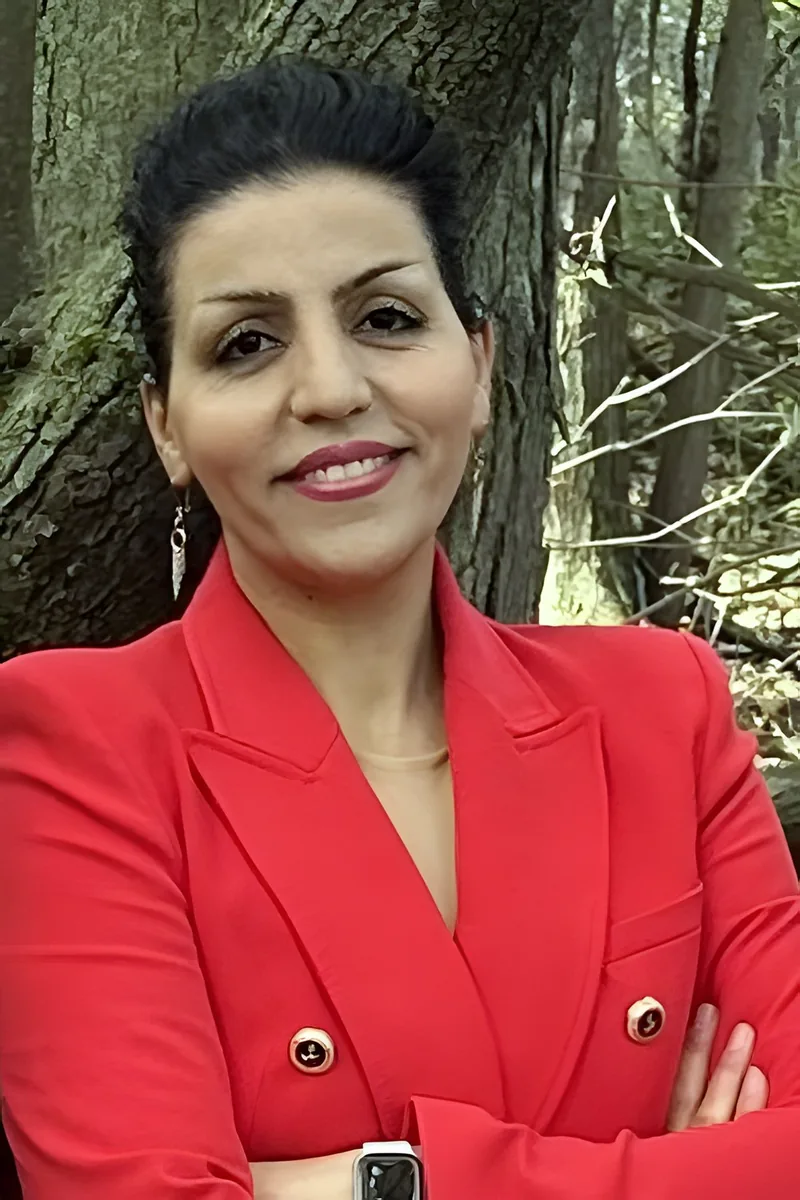
I am a graduate of the University of Waterloo, with a PhD in Geography-Water, one semester as a sessional instructor, and several semesters as a teaching assistant. I also hold a PhD in agricultural hydrology, along with five years of teaching experience as an assistant professor. These experiences have deepened my passion for teaching and my ability to communicate complex concepts effectively. I believe that while education provides knowledge, it is passion that fosters success. My mission as an educator is to make difficult subjects, such as statistics and mathematics, accessible and engaging for students. By breaking down complex ideas, I aim to create a learning environment where students feel confident and inspired. I am also enthusiastic about teaching in hydrology and environmental sciences and am committed to helping students succeed in these critical areas.
Graduate-level statistics demands fluency with proofs and derivations that introductory courses barely touch — moment-generating functions, maximum likelihood estimation, and the theory behind hypothesis testing. Victor's master's in Applied Mathematics gave him direct experience with these topics, and he brings that rigor to sessions while keeping notation and logic organized. He holds a 5.0 client rating.
I am highly praised by my students and supervisors. Even today I still kept the communication with many students.
Graduate-level statistics demands comfort with proofs and distributions that most intro courses barely touch — moment-generating functions, maximum likelihood estimation, and Bayesian inference all require a different kind of mathematical maturity. Liban's dual training in mathematics and economics gives him fluency in both the theoretical framework and the applied modeling that graduate programs expect. Rated 4.8 by students, he brings the rigor without losing the intuition.
Graduate-level statistics demands fluency with concepts like maximum likelihood estimation, Bayesian inference, and multivariate analysis — not just running software but understanding the theory underneath. Michelle brings a quantitative biology perspective to these methods, having applied advanced statistical frameworks to biological data throughout her science training. Rated 4.9 by students.
Graduate-level statistics lives at the intersection of theory and application — ANOVA designs, regression diagnostics, multilevel modeling, and knowing when each tool fits. Joshua's master's work in cognitive psychology at Purdue required heavy use of these methods on real experimental data, so he teaches statistical reasoning the way researchers actually use it. He's especially sharp on translating between the math and the conceptual logic behind hypothesis testing.
Graduate-level statistics throws students into the deep end — maximum likelihood estimation, Bayesian inference, multivariate regression diagnostics — and expects fluency, not just familiarity. Evan is currently completing his own graduate work in statistics, so he's actively immersed in the theory and computation these courses demand. He also codes in Python and SQL, which means he can walk through both the mathematical proofs and the applied implementation side.
Graduate-level statistics often means wrestling with multivariate methods, hierarchical models, and software like SPSS, Stata, or R while simultaneously trying to apply them to a thesis or dissertation dataset. Hidefusa's doctoral work in clinical neuropsychology gave him hands-on experience designing studies, running complex analyses, and interpreting output — skills he now breaks down for other graduate students navigating their own research.
Seven years of experimental psychology research means Anna doesn't just teach graduate statistics — she uses it daily, from designing multivariate models to running hierarchical regressions and interpreting interaction effects. Her PhD work at Saint Louis University required mastering advanced techniques like structural equation modeling and mediation analysis, so she teaches these methods with the fluency of someone who actually applies them. Rated 4.9 by students.
Graduate-level statistics lives and dies in the details — knowing when to apply a two-way ANOVA versus a mixed-effects model, or interpreting interaction terms in a multivariate regression. William's MBA training grounded him in applied statistical methods, from hypothesis testing and confidence intervals to the kind of real-world data analysis that thesis committees actually scrutinize. He breaks down output from SPSS or Excel so students understand what every p-value and coefficient truly means.
Graduate-level statistics demands more than plugging data into software — it requires understanding why you'd choose a Cox regression over a logistic model, or when maximum likelihood estimation breaks down. Naushaba's Master's in Epidemiology means she learned these methods by applying them to real research questions, from survival analysis to multivariate modeling. She teaches the reasoning behind each technique so students can defend their statistical choices in dissertations and publications.
I am listening to and learning about him or her as an individual. I can also discover what motivates the student during this conversation and plan for how to frame future tutoring sessions in terms of what the student already knows and enjoys.
Testimonials
Because the right Statistics Graduate Level tutor makes all the difference.
Average Session Rating – Based on 3.4M Learner Ratings
Nearby Statistics Graduate Level Tutors
Other San Jose Tutors
Related Math Tutors in San Jose
Frequently Asked Questions
Graduate statistics programs usually build on foundational probability and inferential statistics to cover advanced topics like mathematical statistics, multivariate analysis, Bayesian methods, experimental design, and statistical computing. The specific curriculum varies by program, so connecting with a tutor who understands your institution's approach—whether it emphasizes theoretical foundations, applied methods, or computational techniques—ensures targeted support for your coursework.
Graduate statistics often requires shifting from computational procedures to deeper conceptual understanding of probability theory, mathematical proofs, and why methods work—not just how to apply them. Students frequently struggle with translating real-world problems into formal statistical frameworks, interpreting complex derivations, and connecting theory to practice. Personalized tutoring helps you build the conceptual foundation needed to move beyond memorization and develop genuine problem-solving confidence.
Many graduate statistics courses require understanding mathematical proofs—from deriving distributions to proving properties of estimators. A tutor can break down complex derivations step-by-step, help you see the logical structure behind each argument, and show you how to approach unfamiliar proofs by identifying key patterns and techniques. This builds your ability to not just follow a proof, but to construct your own and understand why statistical methods are valid.
Yes. Graduate statistics requires both theoretical rigor and practical application—understanding why a method works mathematically and when to use it on real data. Tutors can help you work through statistical software (R, Python, SAS), interpret output in context, design analyses for your research, and connect abstract concepts to concrete problems. This bridge between theory and practice is essential for success in coursework and research.
Your first session is about understanding your specific needs—which courses you're taking, which topics are most challenging, and what your goals are (passing exams, understanding theory, completing research projects). The tutor will assess your current understanding, identify gaps, and create a personalized plan. Come prepared with your syllabus, course materials, or specific problem sets so the tutor can tailor support to your actual coursework.
If probability, linear algebra, or calculus feel shaky, addressing those gaps early makes graduate statistics much more manageable. A tutor can help you review essential prerequisites while you're taking your graduate course, building confidence in foundational concepts without falling behind. This targeted review, combined with current coursework support, prevents small gaps from becoming major obstacles in advanced topics.
Absolutely. Many graduate students need support designing analyses for their research, selecting appropriate statistical methods, interpreting results, and communicating findings clearly. Tutors can help you think through research questions, choose between competing methods, troubleshoot data analysis, and understand output from statistical software—all critical skills for independent research.
Varsity Tutors connects you with expert tutors for students in San Jose who specialize in graduate statistics. When you get matched with a tutor, you can discuss your specific program, institution, and course requirements to ensure they have the expertise you need. Look for tutors with graduate-level mathematics or statistics background and experience supporting advanced students—they'll understand both the rigor and the real-world applications your program emphasizes.
Let’s find your perfect tutor
Answer a few quick questions. We’ll recommend the right plan and match you with a top 5% tutor.