Award-Winning College Physics Tutors
serving Avondale, AZ
College Physics
Tutors in Avondale
Private 1-on-1 tutoring, weekly live classes for academic support, test prep & enrichment, practice tests and diagnostics, and more to elevate grades and test scores.
Based on 3.4M Learner Ratings
UniversitiesSchools & Universities
DeliveredHours Delivered
ProficiencyGrowth in Proficiency
Who needs tutoring?
No obligation. Takes ~1 minute.
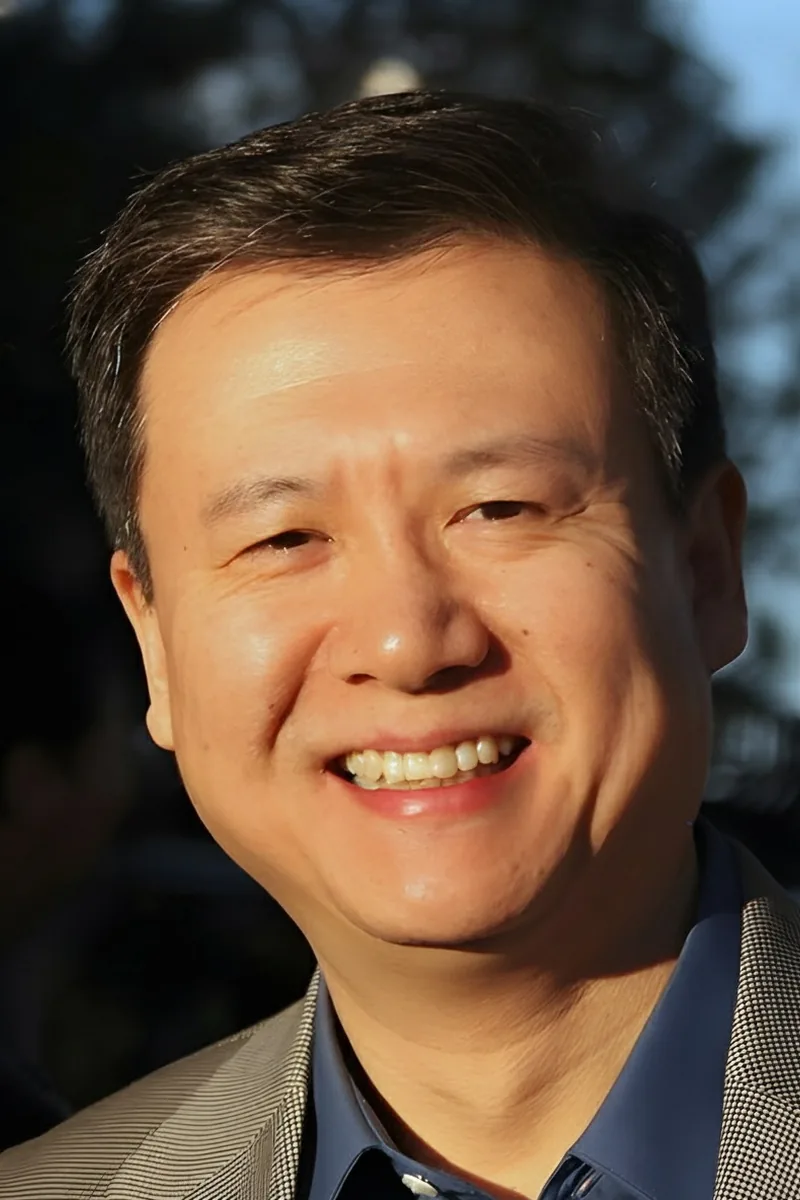
Twenty-five years of engineering work means Tim hasn't just solved college physics problems — he's built systems where getting the physics wrong had real consequences, from electromagnetic interference in circuit designs to thermal management in hardware. His B.S. in Physics gives him the theoretical backbone, while decades of applied work sharpen his ability to walk students through the calculus-heavy portions of mechanics and E&M with concrete, practical intuition behind every derivation.

Before pivoting to tech and co-founding a SaaS company, John earned a 1490 SAT largely on the strength of his quantitative reasoning — the same skill that carries students through force diagrams, energy conservation setups, and the vector math that makes college physics problems click. His law training also sharpened a habit of building arguments step by step, which translates surprisingly well to structuring multi-part physics solutions where one wrong assumption cascades through everything. Rated 5.0 by students.
Cadaver labs, organic chemistry TA sections, and a full medical school curriculum at Creighton — Elise has encountered college physics concepts embedded in every stage of her training, from force vectors in gross anatomy to fluid dynamics in cardiovascular physiology. That medical lens makes her particularly effective at teaching mechanics, waves, and thermodynamics to pre-med students who need to understand the physics inside the biology. Rated 4.9 by students.
I am Arizona born and raised, my education includes an NYC law school degree with an undergraduate BS degree from University of Miami. In college I majored in Health Sciences with minors in Psychology and Public Health while in law school I leaned into corporate law and finance. Between law school and college I've pretty much covered every topic under the sun! In my spare time, I enjoy reading (especially mystery novels), pretending I'm a chef, and meditating.
Chemical engineering coursework at ASU Barrett is essentially college physics with the volume turned up — fluid mechanics, heat transfer, thermodynamics, and transport phenomena all demand the same calculus-based reasoning that fills introductory physics problem sets. Alex tackles those overlapping concepts daily as a grad student, which means he can walk through force balances, energy conservation, and pressure-driven systems with the fluency of someone who actually uses them. Rated 5.0 by students.
Building high-powered lab lasers as a hobby — aligning optics, designing driver circuits, managing thermal dissipation — means Sam regularly applies the same physics that fills college problem sets, from electromagnetic wave behavior to circuit theory to heat transfer. His dual bachelor's in physics and mathematics gives him the formal grounding to walk through calculus-heavy derivations while keeping the physical intuition front and center. Holds a 5.0 rating.
Gordon's biology degree from Arizona State required the full algebra-based physics sequence — mechanics, thermodynamics, waves, electromagnetism — which means he tackled these courses alongside the same premed and life-science students he now tutors. That shared experience makes him particularly good at spotting where conceptual gaps hide, especially in topics like energy conservation and fluid dynamics where students often grab the right formula but set up the problem wrong. His additional comfort with calculus through BC level lets him bridge the gap when courses shift from algebra-based to calculus-based reasoning.
Few college physics tutors have launched their careers programming trajectory models for NASA's Cassini and Galileo missions. Chris brings that applied astrophysics background — plus a University of Arizona degree in the field — to topics like electromagnetism, thermodynamics, and classical mechanics. He connects textbook derivations to how they're actually used in research, which makes dense material far more intuitive.
Designing houses for a living means Aaron thinks in forces, loads, and material behavior every day — the same physics principles that show up in college mechanics and thermodynamics problem sets, just applied to beams, foundations, and thermal envelopes instead of textbook blocks on ramps. His architectural engineering degree grounds his teaching in physical intuition, so he walks students through why a free-body diagram should look a certain way before they ever touch an equation. Rated 5.0 by students.
Pursuing dual degrees in physics and mathematics at Emory gives Yurok the unusual ability to teach the physics and the underlying calculus as a single coherent language — so when a problem requires setting up a line integral for a magnetic field or deriving equations of motion from energy methods, he doesn't skip the math or treat it as a separate obstacle. He's tutored extensively at both the AP and college level, and his 4.9 rating suggests students leave sessions with sharper problem-solving instincts, not just worked examples to mimic.
Mechanical engineering coursework at Arizona State is essentially college physics on repeat — Nitesh has solved force equilibrium problems, worked through thermodynamic cycles, and applied fluid dynamics principles semester after semester in contexts that demand real understanding, not just formula substitution. He's particularly strong at walking through free-body diagrams and energy methods, breaking multi-step mechanics problems into clear, sequential reasoning. Rated 4.9 by students.
Every circuit Ajay designed during his electrical engineering degree started with the same physics — Kirchhoff's laws, Ohm's law, electromagnetic induction — so when college physics courses hit electricity and magnetism, he's working from years of hands-on application rather than textbook familiarity alone. He also brings strong mechanics fundamentals and a 1590 SAT that speaks to his quantitative precision, making him effective across the full range of calculus-based physics topics.
College-level physics demands more than plugging numbers into formulas; it requires setting up problems from scratch using calculus-based reasoning. Arpita's pre-med track at Emory put her through rigorous physics coursework alongside organic chemistry and biology, so she understands how to connect mathematical tools like integration and vector decomposition to physical scenarios in mechanics and electromagnetism. She's earned a 5.0 rating teaching science at this level.
Being midway through medical school means Hanna is actively applying physics to the human body — pressure gradients in blood flow, lever mechanics in the musculoskeletal system, optics in clinical imaging — which keeps these concepts vivid rather than dusty. Her premed coursework at Arizona State covered the full calculus-based sequence, and her tutoring background through differential equations means she's comfortable walking through the math-heavy derivations that make or break a problem set. Rated 5.0 by students.
Geology is essentially physics applied to the Earth — wave propagation through rock layers, gravitational field modeling, fluid dynamics in groundwater systems — so Paul's geological sciences degree gave him hands-on experience with the mechanics and thermodynamics concepts that fill college physics problem sets. He breaks down force diagrams and energy conservation problems by connecting them to physical scenarios he's actually worked through, which makes abstract setups feel more concrete.
A biochemistry degree means Charles has already worked through the physics that underpins molecular behavior — thermodynamics governing reaction spontaneity, electrostatics driving protein folding, and fluid dynamics in biological systems. He leans on that applied context to make college physics problems feel less abstract, walking students through force diagrams and energy calculations with concrete examples rather than isolated equations.
Hi, I recently earned my Ph.D. in Organic Chemistry from Purdue University and have entered the private sector. In my program, I found that teaching and instructing students was very enjoyable and I wish to continue that by being a tutor. I have been a successful tutor for over a decade and know how to instruct to a variety of different skill sets and learning abilities.
Aerospace engineering at Georgia Tech means Naveen's entire curriculum runs on physics — orbital mechanics, fluid dynamics, thermodynamics, structural loads — so the concepts in a college physics course are tools he uses in his own coursework every week. He's particularly strong at breaking down force and motion problems by walking through free-body diagrams step by step, making sure the physical picture is clear before any math starts.
College-level physics ramps up quickly, and Maurice's strength across calculus, trigonometry, and statistics means he can keep pace with courses that integrate heavy math into topics like electromagnetic fields, oscillatory motion, and thermodynamic processes. He walks through derivations step by step, making sure students understand the reasoning behind each line rather than just copying solutions. His adaptive teaching style — shaped by graduate work in Special Education — translates well to the varied demands of university coursework.
A mechanical engineering degree means Daniel didn't just take college physics — he spent four years applying it, from free-body diagrams in statics to heat transfer in thermodynamics to stress analysis in materials science. He breaks down calculus-based problems by starting with the physical intuition behind them, so students learn to reason through a scenario before defaulting to equation sheets. His 34 ACT reflects the kind of quantitative sharpness that keeps up with fast-paced, problem-heavy physics courses.
Pursuing a dual degree in biology and history at the University of Houston, Pooja regularly encounters physics in biological contexts — fluid dynamics in circulatory systems, optics in microscopy, and energy transfer in metabolic processes — which gives her a practical anchor for the concepts that often feel purely abstract in a lecture hall. She's especially attentive to the problem-setup phase, teaching students to sketch the scenario and identify governing principles before jumping to equations. Rated 5.0 by students.
Co-teaching an organic chemistry lab at UC Berkeley meant Yuxuan regularly explained physical concepts — heat transfer in reflux setups, pressure changes during distillations, light absorption in spectroscopy — to students who needed the physics to make sense right then, not just on an exam. That biochemistry foundation gives her a practical grip on thermodynamics, optics, and fluid behavior that translates directly to college physics problem sets. Rated 4.9 by students.
Statics, dynamics, and structural loading aren't textbook abstractions for Emeka — they're the core of his civil engineering degree from the University of Pittsburgh and his daily work as a practicing architect and engineer. That professional fluency means he can walk students through force equilibrium, stress-strain relationships, and energy methods with real structural examples that make the physics stick. Rated 5.0 by students.
Pre-med students often hit a wall in college physics because the course feels disconnected from the biology they actually care about — Musa bridges that gap, drawing on his biological sciences degree at ASU to tie concepts like fluid dynamics to circulatory systems or wave behavior to diagnostic imaging. His year at ASU's tutoring center means he's seen where physics students get stuck repeatedly, especially on force diagrams and energy conservation problems, and he's built clear explanations around those exact sticking points. Rated 5.0 by students.
Working at an ExxonMobil refinery before MIT Sloan meant Caroline spent years applying thermodynamics, fluid mechanics, and force analysis to real industrial systems — the same physics that fills college problem sets, except with actual consequences for getting the math wrong. Her mechanical engineering M.S. from WashU (magna cum laude) gave her deep fluency with calculus-based derivations, so she can walk through everything from torque problems to heat transfer without skipping the steps that textbooks gloss over. Rated 5.0 by students.
TA-ing MIT's Physics II course gave Cori front-row experience with the stumbling blocks college students face — from applying Maxwell's equations to navigating multi-step problems in mechanics and thermodynamics. She approaches each topic by building physical intuition first, then layering on the math. Her engineering background means she can also show how these principles appear in real material systems and design problems.
Studying applied physics at Cornell means Ritesh isn't just teaching college physics concepts — he's actively using them in coursework and research. He digs into the areas that trip up most introductory students, like applying Newton's laws to rotational systems, working through Gauss's law problems, or connecting energy conservation to real circuits. His 4.6 rating speaks to his ability to make those connections click.
Three years of tutoring introductory physics while completing dual bachelor's degrees in physics and mathematics gave Justin a detailed map of exactly where students lose the thread — the jump from one-dimensional kinematics to rotational analogs, the shift from intuitive force reasoning to formal energy methods. His PhD in Computational Mathematics at the University of Chicago deepened that foundation, adding fluency with the differential equations and vector calculus that make the leap from algebra-based to calculus-based physics so steep. Rated 5.0 by students.
Biomedical engineering at Johns Hopkins means Christine solves physics problems daily that most students only see in textbooks — fluid dynamics in blood flow, pressure gradients across membranes, mechanics of prosthetic joints — giving her a concrete, application-heavy lens for the material. She's particularly strong on the thermodynamics and mechanics portions of college physics, where her coursework overlaps most directly with standard problem sets. Holds a 5.0 rating.
Two physics degrees — a B.S. and a PhD — mean Zhengdong has worked through every layer of the college physics sequence, from introductory Newtonian mechanics all the way to quantum theory and advanced electrodynamics. He's particularly effective at teaching students to translate a physical scenario into the right mathematical framework, whether that's setting up free-body diagrams in mechanics or applying Gauss's law to symmetric charge distributions. Rated 4.8 by students.
Having served as a teaching assistant for Differential Equations and Mechanics at Notre Dame, Jeffrey has already spent time explaining the exact concepts — torque, oscillations, coupled systems — that trip up students in university physics courses. His mechanical engineering PhD work at Rice deepens that fluency, especially in thermodynamics and rotational dynamics where the math gets dense fast. He's rated 4.9 by students.
Thermodynamics is where Rahul lights up — it was his favorite corner of Cornell's chemical engineering program, and that enthusiasm shows when he's walking someone through heat engines, entropy, or the first and second laws in a college physics context. His engineering training means he treats every problem as a physical system first and an equation second, pushing for the conceptual reasoning behind each step rather than formula-matching. Rated 4.9 by students.
A computer science degree from UCLA means Michael spent semesters deep in the physics that underpins simulation and graphics — kinematics, force modeling, energy systems — and his 1560 SAT confirms the quantitative chops to handle calculus-based problem solving. He teaches students to treat each physics problem like debugging code: isolate what you know, identify the governing principle, then execute step by step until the answer falls out.
Three science-focused bachelor's degrees — including biology — meant Garrett sat through the full calculus-based physics sequence and kept coming back to it in physiology and physical chemistry, where concepts like fluid dynamics, pressure gradients, and energy transfer show up again and again. That repeated exposure across disciplines gives him an intuitive feel for when to apply conservation of energy versus momentum, or how to reason through a thermodynamics problem without getting lost in the formalism. His 1530 SAT speaks to the quantitative sharpness he brings to each session.
Premed coursework and a computing degree at Notre Dame meant Aidan sat through the full sequence of calculus-based physics — mechanics, E&M, waves — while simultaneously learning to think algorithmically about complex problems. That combination is particularly useful when students hit the wall where physics stops being plug-and-chug and starts requiring multi-step reasoning, like connecting free-body diagrams to energy methods or translating a word problem into the right integral. His 35 ACT speaks to the quantitative fluency he brings to those tougher setups.
Predentistry requires a deep pass through college physics — optics, fluid dynamics, mechanics of materials — and Erica tackled that coursework at Harvard alongside a History of Science degree that gave her an unusual ability to explain *where* physical concepts come from and how they evolved into the frameworks students use today. She breaks down problem-solving by connecting the conceptual narrative to the math, so students aren't just plugging into formulas but understanding the physics driving each step. Rated 4.9 by students.
Testimonials
Because the right College Physics tutor makes all the difference.
Average Session Rating – Based on 3.4M Learner Ratings
Other Avondale Tutors
Related Science Tutors in Avondale
Frequently Asked Questions
Varsity Tutors matches Avondale students with expert College Physics tutors for 1-on-1 instruction. We pair each student with a tutor based on their specific needs, learning style, and goals.
Whether you need homework help, exam prep, or want to get ahead, our College Physics tutors are ready to help.
Common challenges include gaps from earlier material, difficulty with specific concepts, and trouble applying learning to new problems. These issues can snowball quickly in College Physics.
A tutor identifies where you're stuck, fills in gaps, and provides targeted practice. The 1-on-1 format means you get help exactly where you need it.
Tutors work with your student's actual coursework—homework assignments, class notes, and upcoming tests. This keeps tutoring directly relevant to what's happening in the classroom.
When you share information about your student's school and curriculum, we can match you with a tutor who has relevant experience.
All tutors complete background checks, credential verification, and teaching evaluation. Many of our College Physics tutors hold advanced degrees or have years of teaching experience.
You can review tutor profiles to find someone with the right background for your student's level and needs.
Many students see improved grades within a few weeks, along with better understanding of College Physics concepts and more confidence tackling challenging material.
Tutors track progress and adjust their approach to ensure continued improvement.
Most students benefit from 1-2 sessions per week. More frequent sessions help if your student is significantly behind or has an important exam coming up.
Your tutor can recommend a schedule based on your student's specific situation and goals.
Tutoring is purchased in packages of hours, with rates varying by tutor experience. Varsity Tutors offers several options to fit different budgets and needs.
You can discuss pricing during your consultation to find what works best.
Your tutor will assess where your student is, discuss goals, and start working on priority areas. Most students bring current homework or upcoming test material to focus on.
By the end, you'll have a clear sense of how the tutor can help and a plan for moving forward.
Let’s find your perfect tutor
Answer a few quick questions. We’ll recommend the right plan and match you with a top 5% tutor.