Award-Winning Pre-Calculus Tutors
serving Mobile, AL
Pre-Calculus
Tutors in Mobile
Private 1-on-1 tutoring, weekly live classes for academic support, test prep & enrichment, practice tests and diagnostics, and more to elevate grades and test scores.
Based on 3.4M Learner Ratings
UniversitiesSchools & Universities
DeliveredHours Delivered
ProficiencyGrowth in Proficiency
Who needs tutoring?
No obligation. Takes ~1 minute.
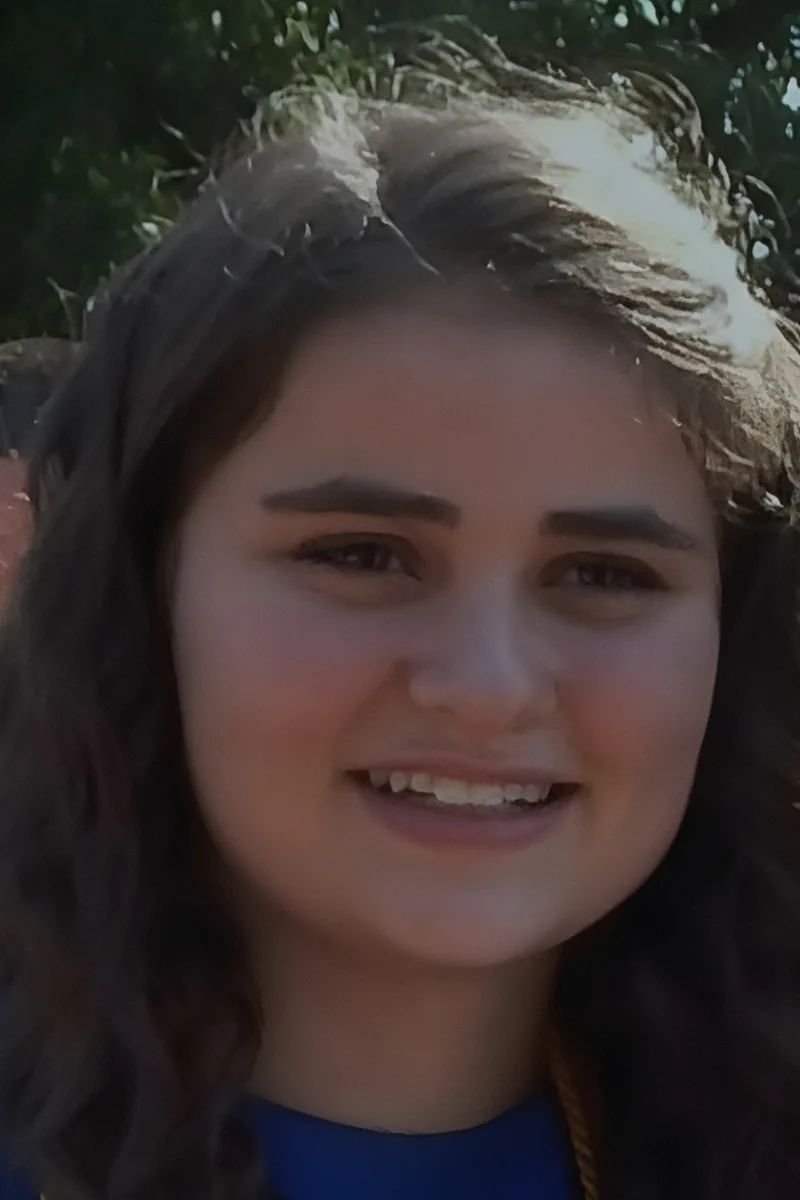
Everything in Pre-Calculus — trig identities, polar coordinates, sequences and series — exists to set up the ideas students will need in calculus, but that bigger picture often gets lost in the details. Rosalyn connects each topic to what's coming next, so the material feels purposeful rather than arbitrary. She's a math major at Amherst College with a 5.0 tutoring rating.
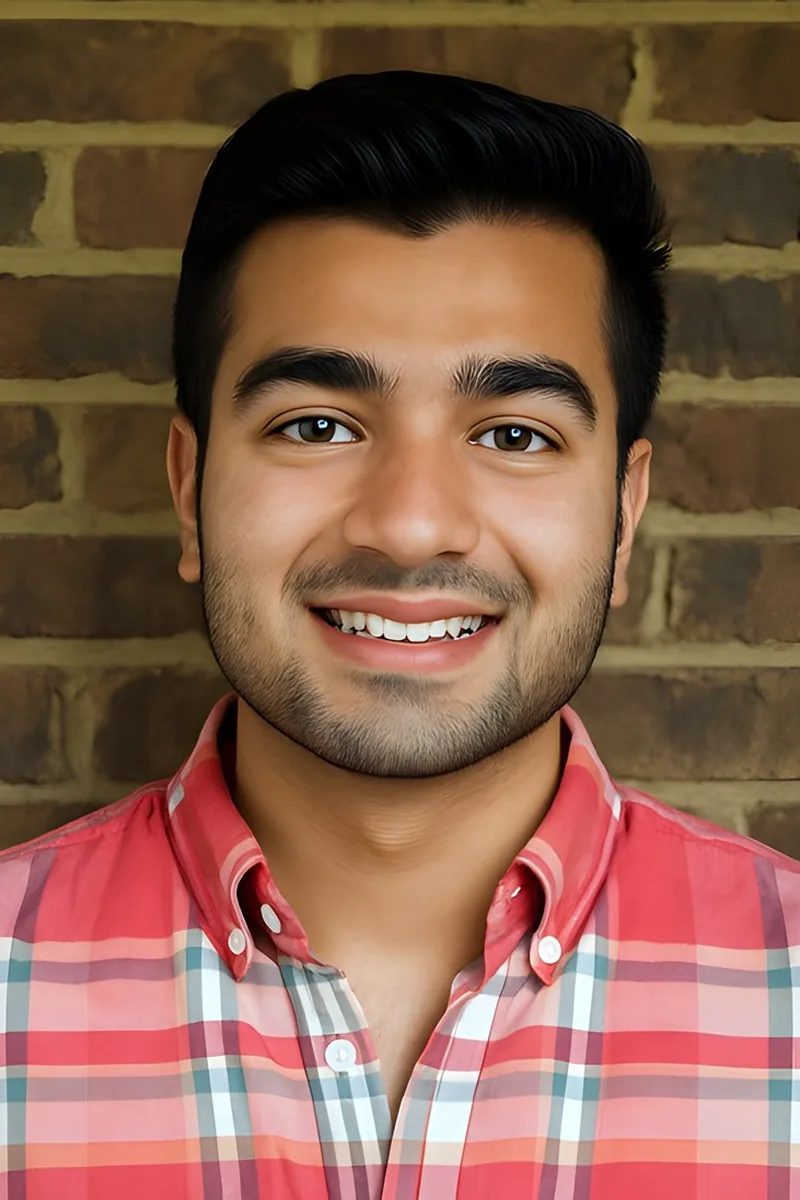
The leap from trig identities to limits can feel enormous without someone who sees the thread connecting them. As a math major at Vanderbilt, Mustafa teaches Pre-Calculus as the bridge it's meant to be — unpacking rational functions, polar coordinates, and sequences in ways that set students up for calculus rather than just checking boxes. His 5.0 rating speaks to how well that approach lands.
As a former IB student, my love for knowledge runs deep. I majored in Biomedical Engineering at the University of Alabama at Birmingham, graduating in December 2015 with honors (BME honors and Science and Technology Honors program) and going on to earn a Master's degree in Management Information Systems from the same university in 2019. I am currently pursuing a Master of Engineering in Artificial Intelligence and Machine Learning from the University of Illinois at Chicago and hope to start a career in data science and analytics. I greatly enjoy helping others learn and tutored throughout high school and college; I love seeing the light flash on in a student's eyes when they finally understand something they had been struggling with or when they easily solve a problem. I have tutored both young children as well as high school and college students, in just about every subject. I particularly enjoy language tutoring; I am fluent in Arabic and French and I love literature and poetry. I also love to tutor math and science subjects. My tutoring style is very much student-first; I listen and observe to determine the best approach for each individual student and what methods or strategies will be most helpful for you specifically. I am not averse to making a fool of myself with song or dance if it will help! I enjoy what I do and I want the students I work with to enjoy learning as well.
Trig identities, polar coordinates, and limits previews all converge in pre-calculus, and the jump in abstraction catches a lot of students off guard. Emma's aerospace engineering background at Georgia Tech means she works with these exact tools regularly, so she can show students not just how to manipulate the formulas but why each concept matters once calculus begins.
Trig identities, limits, and the behavior of rational functions all land at once in pre-calculus, and students who try to memorize without understanding get buried fast. Darcey approaches each topic by connecting it to the graphical intuition underneath — showing why an asymptote appears or how a unit circle actually generates sine and cosine values.
I am an aerospace engineering student. I am very passionate about teaching math, physics, and chemistry. I realized tutoring was my calling while working as a tutor at my school. Seeing students gain a greater understanding of the subject was the highlight of my day while working there.
Mechanical and aerospace engineering at Princeton means Matthew is constantly applying the trigonometric relationships, parametric equations, and function transformations that pre-calculus introduces — they're the building blocks of orbital mechanics and fluid dynamics problems he tackles in coursework. His teaching style is deliberately hands-on: he walks through a concept step by step, then puts students in the driver's seat with progressively harder problems, catching misunderstandings in real time. A 34 ACT confirms the quantitative instincts behind that approach.
Having scored 5s on both AP Calculus BC and AP Physics C while at a Harvard-track pace of 16 AP courses, Derek built the kind of deep pre-calculus fluency — limits of rational expressions, trigonometric manipulation, composite function analysis — that only comes from leaning on those tools constantly across multiple disciplines. His computer science major adds a distinctive angle: he teaches sequences, recursive definitions, and function behavior through the algorithmic thinking that makes those concepts precise rather than fuzzy. A 1550 SAT and 4.9 rating round out the picture.
A dual BS in physics and math plus a PhD in economics at Yale means Anthony has moved through pre-calculus material from every possible direction — trigonometric reasoning in mechanics, function composition in mathematical proofs, exponential and logarithmic models in econometric analysis. He teaches the course as someone who knows exactly which skills carry forward and which shortcuts collapse under pressure in later coursework. Holds a 5.0 rating and a 1560 SAT.
A PhD in statistics and a biomedical engineering degree mean Sam has spent years where pre-calculus isn't a course — it's the scaffolding holding together regression models, signal processing, and experimental design. He digs into the transition points that trip students up most, like moving from polynomial arithmetic to analyzing rational function behavior or connecting trig identities to their geometric origins. Rated 4.9 by students.
The jump into pre-calculus is really about learning to think in terms of functions — how they behave, transform, and connect to each other across trigonometric, polynomial, and rational families. Dane's engineering coursework at Duke means he uses these tools daily and can show students how concepts like limits, composite functions, and unit circle values actually build toward calculus rather than existing as isolated topics.
The jump to pre-calculus trips up a lot of students because it's the first time they need to think about functions as objects — transforming them, composing them, analyzing their behavior. Christine's engineering coursework at Johns Hopkins required fluency with trigonometric identities, polar coordinates, and limits, so she teaches these topics with the confidence of someone who uses them daily.
Competition math throughout high school taught Tracy to see pre-calculus topics like sequences, series, and trigonometric manipulations as puzzles with elegant internal logic — not just procedural hurdles before calculus. Her triple economics degree means she also knows how these tools land in practice, since exponential models and rate-of-change reasoning show up constantly in economic analysis. A 36 ACT and 4.9 rating confirm she delivers on both the conceptual and practical sides.
Researching cosmic ray acceleration at Princeton's astrophysics department meant Dennis had to model particle behavior using the exact toolkit pre-calculus teaches — parametric equations, vector components, and the interplay between exponential and trigonometric functions. He brings that research intuition to sessions, breaking down how and why transformations reshape a graph or how polar and rectangular forms connect, so the material clicks as a coherent system rather than a checklist. A 36 ACT and 4.7 rating back up the depth of understanding he brings.
After studying economics and computer science at Caltech, Brian developed a habit of thinking about functions as machines — inputs transform into outputs through a chain of operations, and pre-calculus is where that mechanical intuition gets built. He digs into the transition points that trip students up most, like moving from polynomial behavior to rational functions where asymptotes and holes suddenly matter. His 1580 SAT reflects the kind of precision he brings to breaking down each concept.
The jump into Pre-Calculus trips up a lot of students because it's the first time they need to think about functions as objects — transforming them, composing them, analyzing their behavior. Ainsley breaks down topics like trigonometric identities and rational functions by connecting each one to the bigger picture of what calculus will eventually demand. Her Rice physics background means she's used these tools constantly and can show students why they matter beyond the textbook.
The jump to pre-calculus often trips students up at trigonometric identities and the shift from algebraic to function-based thinking. Ellie's biomedical engineering coursework at Yale runs on these exact tools — polar coordinates, parametric equations, and limits all show up in her daily problem sets. Rated 5.0 by students, she connects each pre-calc concept to the bigger mathematical picture so the material actually sticks.
Mechanical engineering at Harvard means Christopher spends most of his time in calculus and differential equations — but he knows exactly which pre-calculus skills hold that work together, especially fluency with trigonometric graphs, composite functions, and the algebraic manipulation that makes limits possible later. He teaches each topic by gradually removing scaffolding until a student can tackle problems independently, flagging the specific mistakes that tend to snowball in calculus. His 35 ACT and 4.8 rating reflect a tutor who's recently built the same bridge his students are crossing now.
Testimonials
Because the right Pre-Calculus tutor makes all the difference.
Average Session Rating – Based on 3.4M Learner Ratings
Practice Pre-Calculus
Free practice tests, flashcards, and AI tutoring for Pre-Calculus
Nearby Pre-Calculus Tutors
Other Mobile Tutors
Related Math Tutors in Mobile
Frequently Asked Questions
Varsity Tutors matches Mobile students with expert Pre-Calculus tutors for 1-on-1 instruction. We pair each student with a tutor based on their specific needs, learning style, and goals.
Whether you need homework help, exam prep, or want to get ahead, our Pre-Calculus tutors are ready to help.
Common challenges include gaps from earlier material, difficulty with specific concepts, and trouble applying learning to new problems. These issues can snowball quickly in Pre-Calculus.
A tutor identifies where you're stuck, fills in gaps, and provides targeted practice. The 1-on-1 format means you get help exactly where you need it.
Tutors work with your student's actual coursework—homework assignments, class notes, and upcoming tests. This keeps tutoring directly relevant to what's happening in the classroom.
When you share information about your student's school and curriculum, we can match you with a tutor who has relevant experience.
All tutors complete background checks, credential verification, and teaching evaluation. Many of our Pre-Calculus tutors hold advanced degrees or have years of teaching experience.
You can review tutor profiles to find someone with the right background for your student's level and needs.
Many students see improved grades within a few weeks, along with better understanding of Pre-Calculus concepts and more confidence tackling challenging material.
Tutors track progress and adjust their approach to ensure continued improvement.
Most students benefit from 1-2 sessions per week. More frequent sessions help if your student is significantly behind or has an important exam coming up.
Your tutor can recommend a schedule based on your student's specific situation and goals.
Tutoring is purchased in packages of hours, with rates varying by tutor experience. Varsity Tutors offers several options to fit different budgets and needs.
You can discuss pricing during your consultation to find what works best.
Your tutor will assess where your student is, discuss goals, and start working on priority areas. Most students bring current homework or upcoming test material to focus on.
By the end, you'll have a clear sense of how the tutor can help and a plan for moving forward.
Let’s find your perfect tutor
Answer a few quick questions. We’ll recommend the right plan and match you with a top 5% tutor.