Award-Winning Pre-Calculus Tutors
serving Montgomery, AL
Pre-Calculus
Tutors in Montgomery
Private 1-on-1 tutoring, weekly live classes for academic support, test prep & enrichment, practice tests and diagnostics, and more to elevate grades and test scores.
Based on 3.4M Learner Ratings
UniversitiesSchools & Universities
DeliveredHours Delivered
ProficiencyGrowth in Proficiency
Who needs tutoring?
No obligation. Takes ~1 minute.
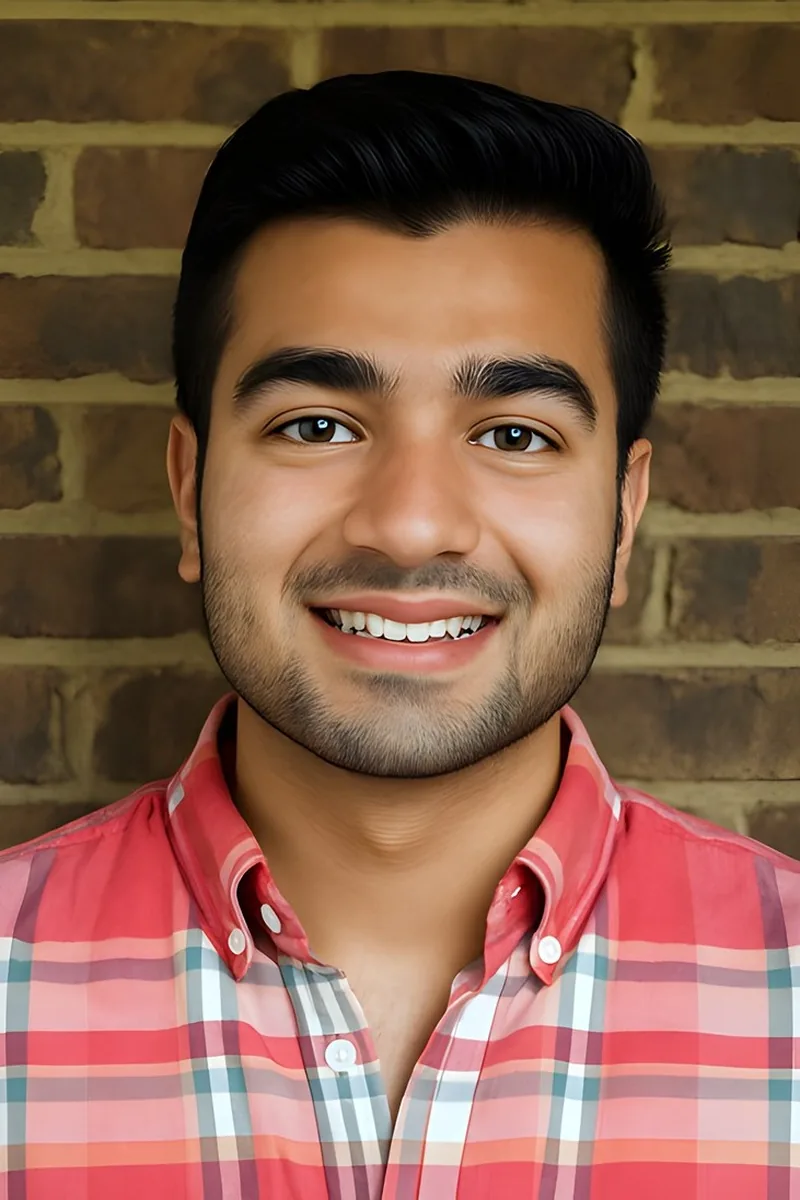
The leap from trig identities to limits can feel enormous without someone who sees the thread connecting them. As a math major at Vanderbilt, Mustafa teaches Pre-Calculus as the bridge it's meant to be — unpacking rational functions, polar coordinates, and sequences in ways that set students up for calculus rather than just checking boxes. His 5.0 rating speaks to how well that approach lands.

Everything in Pre-Calculus — trig identities, polar coordinates, sequences and series — exists to set up the ideas students will need in calculus, but that bigger picture often gets lost in the details. Rosalyn connects each topic to what's coming next, so the material feels purposeful rather than arbitrary. She's a math major at Amherst College with a 5.0 tutoring rating.
Trig identities, polar coordinates, and limits previews all converge in pre-calculus, and the jump in abstraction catches a lot of students off guard. Emma's aerospace engineering background at Georgia Tech means she works with these exact tools regularly, so she can show students not just how to manipulate the formulas but why each concept matters once calculus begins.
Trig identities, limits, and the behavior of rational functions all land at once in pre-calculus, and students who try to memorize without understanding get buried fast. Darcey approaches each topic by connecting it to the graphical intuition underneath — showing why an asymptote appears or how a unit circle actually generates sine and cosine values.
I am an aerospace engineering student. I am very passionate about teaching math, physics, and chemistry. I realized tutoring was my calling while working as a tutor at my school. Seeing students gain a greater understanding of the subject was the highlight of my day while working there.
The jump to pre-calculus is where students suddenly need to think about trigonometric identities, limits of sequences, and polar coordinates all at once. Margaret tackles each of these by connecting them back to algebraic reasoning students already have, rather than treating every unit as brand new. Rated 4.9 by students, she's especially effective at demystifying the transition into calculus-level thinking.
Tutoring calculus students at Penn's Tutoring Center taught Brittany exactly which pre-calculus skills matter most — she saw firsthand where gaps in trigonometric reasoning or shaky function manipulation derailed students in Gen Chem and Physics. Her psychology training also gives her a sharp read on how students get stuck, letting her adjust explanations of topics like polynomial end behavior or composite functions on the fly. She's been teaching math since her Mu Alpha Theta days in high school and hasn't stopped since.
The jump to pre-calculus is where many students first encounter limits of their algebraic intuition — rational functions behave strangely, trigonometric identities pile up, and sequences suddenly matter. Emily tackles these topics by emphasizing the graphical and conceptual logic underneath, drawing on a math background that earned her a 1590 SAT and a 36 ACT.
The jump into limits, trigonometric identities, and composite functions can feel overwhelming without someone who knows how to sequence the ideas clearly. Pinelopi has tutored math from pre-algebra through calculus, which means she can pinpoint exactly which earlier concept a student is missing when pre-calc material stops making sense. Rated 5.0 by students.
The moment pre-calculus shifts from familiar algebra into rational functions, sequences, and trigonometric identities, many students lose their footing — Vansh tackles that transition by making each new concept feel like a natural extension of what came before. His finance background at WashU means he thinks in terms of models and projections built on the same exponential and logarithmic frameworks students are learning to navigate. A 1550 SAT and 4.8 rating confirm he delivers on that approach.
The jump to pre-calculus trips up a lot of students because it's the first time they need to think about functions as objects — transforming them, composing them, analyzing their behavior. Christine's engineering coursework at Johns Hopkins required fluency with trigonometric identities, polar coordinates, and limits, so she teaches these topics with the confidence of someone who uses them daily.
A dual BS in physics and math plus a PhD in economics at Yale means Anthony has moved through pre-calculus material from every possible direction — trigonometric reasoning in mechanics, function composition in mathematical proofs, exponential and logarithmic models in econometric analysis. He teaches the course as someone who knows exactly which skills carry forward and which shortcuts collapse under pressure in later coursework. Holds a 5.0 rating and a 1560 SAT.
Mechanical and aerospace engineering at Princeton means Matthew is constantly applying the trigonometric relationships, parametric equations, and function transformations that pre-calculus introduces — they're the building blocks of orbital mechanics and fluid dynamics problems he tackles in coursework. His teaching style is deliberately hands-on: he walks through a concept step by step, then puts students in the driver's seat with progressively harder problems, catching misunderstandings in real time. A 34 ACT confirms the quantitative instincts behind that approach.
An applied mathematics degree from Stanford means Alex didn't just pass through pre-calculus — he built an entire major on top of it, so he knows exactly which concepts in trigonometric reasoning, function transformations, and limit intuition carry the most weight later. He teaches the course as a bridge rather than a checklist, connecting each new idea back to the algebra underneath it and forward to the calculus ahead. His 35 ACT and 4.8 rating reflect a tutor who's still close enough to the material to remember where it gets confusing.
Second-year medical school at Baylor means Michelle is neck-deep in the quantitative reasoning that pre-calculus builds — rate-of-change intuition for physiology, logarithmic models for acid-base chemistry, and exponential functions for everything from bacterial growth to drug clearance. Her biochemistry degree from Rice cemented the algebraic and trigonometric groundwork she now draws on daily, so she teaches these topics as someone who genuinely needed them to stick. A 1570 SAT confirms the mathematical precision behind her approach.
Everything in Pre-Calculus — trigonometric identities, rational functions, limits intuition — exists to set students up for calculus, but most courses don't make that connection explicit. Annie does, because she's already on the other side of it: her engineering program at Cornell showed her exactly which Pre-Calc skills matter most and where gaps tend to cause trouble later.
Andrew's PhD in biomedical engineering means he's pushed well past calculus into differential equations and multivariable territory — so he teaches pre-calculus with a clear map of where every topic is headed and why it matters. He's particularly sharp on the transition points that trip students up, like moving from memorizing trig ratios to actually understanding the unit circle as a geometric argument. Rated 4.9 by students.
Testimonials
Because the right Pre-Calculus tutor makes all the difference.
Average Session Rating – Based on 3.4M Learner Ratings
Practice Pre-Calculus
Free practice tests, flashcards, and AI tutoring for Pre-Calculus
Nearby Pre-Calculus Tutors
Other Montgomery Tutors
Related Math Tutors in Montgomery
Frequently Asked Questions
Varsity Tutors matches Montgomery students with expert Pre-Calculus tutors for 1-on-1 instruction. We pair each student with a tutor based on their specific needs, learning style, and goals.
Whether you need homework help, exam prep, or want to get ahead, our Pre-Calculus tutors are ready to help.
Common challenges include gaps from earlier material, difficulty with specific concepts, and trouble applying learning to new problems. These issues can snowball quickly in Pre-Calculus.
A tutor identifies where you're stuck, fills in gaps, and provides targeted practice. The 1-on-1 format means you get help exactly where you need it.
Tutors work with your student's actual coursework—homework assignments, class notes, and upcoming tests. This keeps tutoring directly relevant to what's happening in the classroom.
When you share information about your student's school and curriculum, we can match you with a tutor who has relevant experience.
All tutors complete background checks, credential verification, and teaching evaluation. Many of our Pre-Calculus tutors hold advanced degrees or have years of teaching experience.
You can review tutor profiles to find someone with the right background for your student's level and needs.
Many students see improved grades within a few weeks, along with better understanding of Pre-Calculus concepts and more confidence tackling challenging material.
Tutors track progress and adjust their approach to ensure continued improvement.
Most students benefit from 1-2 sessions per week. More frequent sessions help if your student is significantly behind or has an important exam coming up.
Your tutor can recommend a schedule based on your student's specific situation and goals.
Tutoring is purchased in packages of hours, with rates varying by tutor experience. Varsity Tutors offers several options to fit different budgets and needs.
You can discuss pricing during your consultation to find what works best.
Your tutor will assess where your student is, discuss goals, and start working on priority areas. Most students bring current homework or upcoming test material to focus on.
By the end, you'll have a clear sense of how the tutor can help and a plan for moving forward.
Let’s find your perfect tutor
Answer a few quick questions. We’ll recommend the right plan and match you with a top 5% tutor.