Award-Winning Spanish Tutors
serving Atlanta, GA
Spanish
Tutors in Atlanta
Private 1-on-1 tutoring, weekly live classes for academic support, test prep & enrichment, practice tests and diagnostics, and more to elevate grades and test scores.
Based on 3.4M Learner Ratings
UniversitiesSchools & Universities
DeliveredHours Delivered
ProficiencyGrowth in Proficiency
Who needs tutoring?
No obligation. Takes ~1 minute.

Studying Latin American history at Duke meant Jean spent years reading Spanish-language primary sources — colonial documents, political speeches, literary texts — and building fluency that goes well beyond classroom drills. She teaches grammar and vocabulary in context, connecting verb tenses and sentence structures to how Spanish is actually used in writing and conversation.
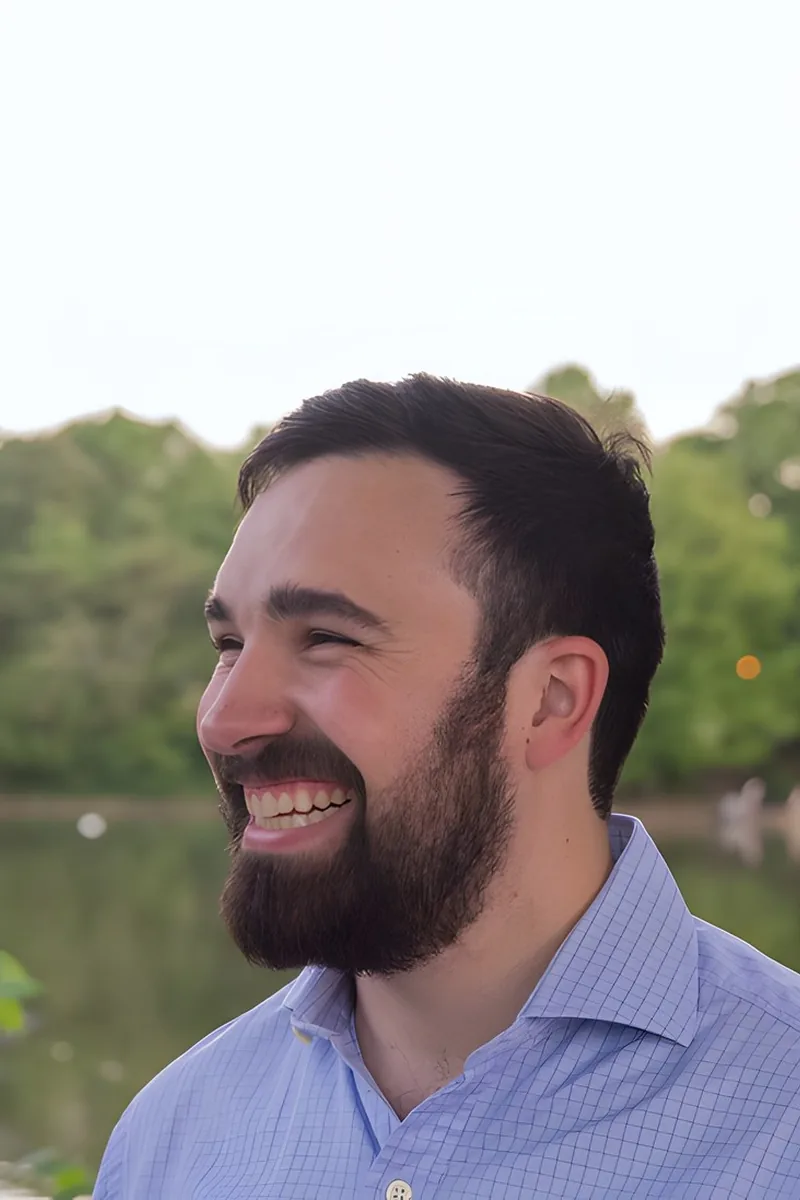
Having studied Spanish through multiple levels, Matthew understands the grammar hurdles — ser versus estar, subjunctive triggers, preterite versus imperfect — that stall students at each stage. He teaches conjugation patterns and vocabulary in context so that rules stick through usage rather than rote charts. His structured, analytical approach is especially useful for students who think of themselves as "math people" struggling with a language requirement.
I am working as a program manager at a local non-profit organization in Miami. Outside of academia and work my interests are singing karaoke with friends, swimming, watching movies, and reading about environmental and social justice issues. In the past I have tutored public health topics (including epidemiology) online, taught environmental science and history courses, and tutored students in-person on ACT prep, biology, voice lessons, and Spanish language. My clients have been middle school, high school, university, and graduate students. My favorite subjects to tutor are those that I myself had to work the hardest to conquer (ACT, Spanish fluency, epidemiology and chemistry)! I love teaching these subjects because through my own struggle to achievement I have developed especially effective methods for my clients to succeed as well. My teaching style is based upon working with clients to develop individualized study methods. I am a tutor who is patient, caring, and committed to seeing you exceed your goals. Don't hesitate to contact me if you are searching for a tutor with these qualities.
Marlow teaches Spanish across all four levels, which means understanding exactly where the jump from conjugating regular verbs to navigating the subjunctive mood trips students up. That continuity across levels lets each session build logically on what a student already knows rather than starting from scratch with disconnected grammar rules.
I am excited to be back in Atlanta and continuing to work with students!
I am law student at Georgia State University. I have a B.S. in Management with a Certificate in Marketing from Georgia Tech, where I was in the Co-op Program and the Honors Program. I sing and play the Flute. I grew up playing softball, and also played lacrosse and tennis. I am a huge football fan. I love to travel and have traveled extensively in Europe and Australia, as well as around the US.
I grew up speaking Spanish, then I studied it from 6th grade until the end of my college years. I majored in Spanish and Education for my B.A. from Fisk University and furthered my studies to include Humanities for my M.A. from Old Dominion University. I love teaching Spanish, which is what I currently do in four schools and tutor in my off time. I love to read books, crochet, and play with my toy poodles. Education is very important to me and I love to help people understand how to speak, read, and write Spanish.
Learning Spanish clicks faster when grammar rules connect to real usage — why the subjunctive shows up in certain emotional expressions, or how reflexive verbs change meaning in everyday conversation. Rebecca teaches across four levels of Spanish and uses that range to meet each student at their current stage, building verb conjugation and sentence structure into contexts that actually stick.
Saniya's academic background is in neuroscience and chemistry, not Spanish — but her English minor at Rhodes College sharpened her ability to dissect grammar, syntax, and the mechanics of how language communicates meaning. She applies that structural literacy to Spanish, breaking down conjugation rules and sentence patterns with the same precision she'd bring to analyzing a scientific text.
Conversational fluency and grammatical accuracy don't have to be at odds — Bona approaches Spanish by weaving verb conjugation drills and sentence structure into real dialogue practice. She emphasizes the patterns behind tense usage so students can construct new sentences on their own instead of relying on memorized phrases.
Learning Spanish well means moving past vocabulary drills and into the logic of the language — why the subjunctive exists, how object pronouns restructure a sentence, when ser and estar actually differ in meaning. Morgan tackles grammar with the same structural precision that comes from studying English literature and linguistics at Washington University in St. Louis.
Emily earned her bachelor's degree in Spanish, which means she doesn't just know the grammar rules — she understands the underlying logic of verb conjugations, subjunctive triggers, and pronoun placement well enough to explain why they work. She teaches across all levels, from foundational vocabulary and sentence structure through advanced reading and composition.
Earning a bachelor's degree in Spanish means Sydney spent years inside the language — not just conjugation drills, but literary analysis, advanced composition, and the cultural contexts that shape how the language actually works. She's particularly sharp on the grammar and reading comprehension side, drawing on her background in literature and writing to teach students how Spanish sentences are built and why certain structures behave the way they do. Rated 4.9 by students.
Living and studying entirely in Spanish for a year at the University of Puerto Rico — taking courses in linguistics, law, and business — gave Chiquita the kind of immersive fluency that makes grammar explanations intuitive rather than mechanical. She later earned a graduate certificate in Spanish Interpretation and Translation from UCLA, so she can unpack verb tenses, subjunctive triggers, and sentence structure at whatever level a student needs.
Conversational practice is where Rinky shines in Spanish — she emphasizes building comfort with speaking and listening so that grammar rules stop feeling like abstract charts and start clicking in real dialogue. She tackles verb conjugations, sentence structure, and vocabulary acquisition through repetition and context rather than rote drills alone.
Learning a language requires real conversation, and Sahar brings that philosophy to every Spanish session — whether it's drilling verb conjugations in the preterite vs. imperfect or building the vocabulary needed to hold a fluid discussion. As a polyglot who speaks five languages, she understands the specific stumbling blocks English speakers face with gendered nouns, ser vs. estar, and indirect object pronouns.
Katia teaches Spanish from the fundamentals through intermediate levels, covering verb conjugation patterns, pronoun usage, and sentence construction that students can actually use in conversation. Her approach connects grammar rules to practical contexts so that concepts like ser versus estar or preterite versus imperfect stop feeling arbitrary and start making intuitive sense.
Dhruv's public health studies mean he regularly encounters Spanish in real-world contexts — research papers, community health materials, patient communication frameworks — which grounds his teaching in how the language is actually used outside the classroom. He's especially sharp on building reading comprehension and written accuracy in areas like formal verb tenses and vocabulary that overlaps with medical and scientific terminology. Rated 4.9 by students.
Medical school at the Medical College of Georgia keeps Vraj reading dense scientific literature — a discipline that sharpens the same skills needed to parse unfamiliar Spanish texts and pick apart sentence structure. His biology background at Emory means he's comfortable with Latin-rooted terminology, which gives him a practical shortcut for teaching Spanish vocabulary and word roots that many language tutors don't naturally reach for. Rated 4.9 by students.
Two years of tutoring refugees — many of whom were learning English and Spanish simultaneously — gave Akshadha a practical understanding of how people absorb a new language when the stakes are real and immediate. She leans on that experience to break down Spanish grammar and vocabulary into concrete, repeatable patterns, especially for students who need structure before they can build confidence. Rated 4.9 by students.
Victor's Spanish instruction zeroes in on grammar structures like preterite vs. imperfect and subjunctive mood, areas where English speakers tend to stumble hardest. His cognitive science training at UGA included studying how the brain acquires language, which shapes how he sequences lessons to make tricky conjugation patterns and vocabulary actually stick.
Listing Spanish among his most studied subjects alongside biology and literature, Ibaad approaches the language as a pre-med student at Emory who understands how disciplined repetition and structured practice — the same skills that get you through organic chemistry — lock in conjugation patterns and vocabulary for the long term. He's comfortable covering Spanish 1 through Spanish 3 material, with a particular knack for breaking down verb tenses into clear, rule-based progressions that build on each other. Rated 4.9 by students.
Theater training sharpens something most people overlook in language learning — the ability to inhabit a voice, commit to unfamiliar sounds, and perform without overthinking. Andrew's BFA in Acting means he coaches Spanish pronunciation and conversational practice the way he'd coach a scene: getting students to stop translating in their heads and start producing the language out loud with confidence. Rated 5.0 by students.
I am a recent graduate from Mercer University where I majored in Spanish and was Pre-Medicine, minoring in Chemistry and Biology. I love sharing my interest in the Spanish language with others, and after studying in Spain I value the importance of conversational learning. I like to make learning a foreign language fun while stressing the importance of a broad vocabulary and proper grammar. I am also very strong in mathematics, and have worked with students to improve their math skills. As a recent graduate, I am incredibly familiar with the common struggles of students. Also, I have taken many standardized tests and am currently preparing for the MCAT so I would love to help others prepare for the SAT or ACT. I look forward to working with all kinds of students!
Hello! My name is Natalia Gonzalez Giraldo, and I am a student at the University of Notre Dame studying Architecture. I am passionate about education, mentorship, and helping students gain confidence in their academic abilities. Through my academic experiences and leadership roles, I have developed strong communication, organization, and problem-solving skills that allow me to connect with students and support their learning in a meaningful way. I tutor elementary through high school students in subjects including math, reading, English, study skills, and Spanish. My goal is to help students not only improve their grades and understanding of the material, but also develop confidence, independence, and effective study habits that will benefit them long-term. I believe every student learns differently, which is why I tailor my teaching approach to each individual's needs, learning style, and goals. I strive to create a supportive and encouraging environment where students feel comfortable asking questions, making mistakes, and growing as learners. As a fluent Spanish speaker, I am also able to support bilingual students and families. Mi objetivo es ayudar a los estudiantes a desarrollar confianza en s mismos mientras alcanzan sus metas acadmicas y descubren el valor del aprendizaje. Whether your student needs help mastering a challenging subject, preparing for exams, improving study skills, or building academic confidence, I am committed to helping them succeed. I look forward to working with students from diverse backgrounds and supporting them on their educational journey.
I am working towards becoming fluent in Spanish and hope to live abroad after I graduate.
I'm a current Emory undergrad and Economics major in the Athens area.
I am a graduate of the University of Florida, where I majored in English and minored in Linguistics. I truly love writing and have a passion for spelling and grammar. I am confident that I can help any student become a better writer.
Conjugation tables are easy to memorize and easy to forget — Dalton instead teaches Spanish grammar through pattern recognition, showing students how verb tenses relate to each other so that irregular forms start making sense. He covers everything from foundational topics like ser vs. estar to more advanced concepts like the subjunctive mood. His approach builds reading and writing skills alongside speaking confidence.
Lucas teaches Spanish with an emphasis on building conversational confidence alongside grammatical structure — verb conjugations, pronoun placement, and sentence formation in real-world contexts. His experience with ESL learners gives him a sharp sense of how language acquisition actually works, which he applies in reverse when English speakers are tackling Spanish.
Diana's TESOL training gave her deep expertise in how languages are structured and acquired, which she applies directly to Spanish instruction. She breaks down verb conjugation patterns, pronoun placement, and sentence-building in ways that make the grammar feel logical rather than arbitrary. Students in Spanish 1 or 2 especially benefit from her ability to explain why the language works the way it does.
Tony earned his bachelor's degree in Spanish and continued using the language throughout his Latin American Studies master's program, so his command of the language spans academic writing, literary analysis, and everyday conversation. He tackles tricky grammar concepts like the subjunctive mood and ser-versus-estar distinctions by grounding them in real usage patterns rather than rote conjugation charts. Rated 5.0 by students.
Six months living in Spain turned Rebecca from a classroom Spanish learner into a fluent speaker, and that transition shapes how she teaches the language now. She breaks down verb conjugations, pronoun placement, and subjunctive triggers by connecting them to how Spanish is actually spoken in daily life — not just how it appears in a textbook. Rated 4.5 by students.
Heather's Spanish teacher trusted her enough to ask her to tutor a classmate — which says more about her command of the language than any credential list. She breaks down verb conjugations, sentence structure, and vocabulary acquisition in ways that stick, whether a student is just starting with present tense or wrestling with the subjunctive mood.
Learning Spanish as a cognitive science student gave Adam an unusual advantage: he understands how the brain acquires a second language and uses that knowledge to make vocabulary and grammar stick faster. His Spanish minor at Rice covered everything from verb conjugation patterns to conversational fluency. Whether a student is wrestling with the subjunctive mood or building everyday speaking confidence, Adam tailors the approach to how they learn best.
Learning Spanish verb conjugations in isolation rarely sticks — Gabriel instead anchors grammar concepts like the subjunctive and preterite/imperfect distinction in real reading passages and conversation so students see how the language actually works. His background spans Spanish 2 through AP-level coursework, and his humanities PhD at the University of Chicago keeps him immersed in multilingual scholarship.
Learning Spanish means internalizing patterns — verb conjugation systems, pronoun placement, the subjunctive triggers that trip up English speakers. David has taught every level from Spanish 1 through AP and knows exactly where students tend to stall out, whether it's ser vs. estar or navigating preterite and imperfect in the same paragraph.
Learning Spanish grammar isn't just about conjugation tables — it's understanding why the subjunctive appears after certain triggers, or how ser and estar change a sentence's entire meaning. Renee earned both a BA and a PhD centered on Spanish, giving her the kind of deep structural knowledge that lets her explain the 'why' behind tricky rules. She's taught Spanish at multiple levels, from private tutoring to formal academic settings.
Teaching elementary school in diverse classrooms gave Victoria daily practice communicating in Spanish with students and families, and she carries that real-world fluency into her tutoring. She covers verb conjugations, reading comprehension, and written composition across Spanish 1 through 4, adjusting complexity to wherever a student currently sits in the sequence.
Testimonials
Because the right Spanish tutor makes all the difference.
Average Session Rating – Based on 3.4M Learner Ratings
Nearby Spanish Tutors
Other Atlanta Tutors
Related Languages Tutors in Atlanta
Frequently Asked Questions
In a typical Atlanta classroom with a 12.7:1 student-teacher ratio, students get limited one-on-one speaking time. With personalized Spanish tutoring, you get dedicated conversation practice every session—a tutor who listens, corrects pronunciation in real-time, and helps you build confidence speaking naturally. This focused speaking practice is one of the biggest advantages of 1-on-1 instruction, especially for developing fluency and accent improvement.
Verb conjugation is one of the trickiest parts of Spanish grammar, but it becomes manageable with consistent practice and pattern recognition. A tutor can help you understand the logic behind conjugations (regular vs. irregular patterns) rather than just memorizing, then give you targeted practice until it becomes automatic. Most students see real progress within a few weeks of focused, personalized instruction on this skill.
The most effective approach combines spaced repetition (reviewing words at increasing intervals) with using new vocabulary in real conversations. A tutor can integrate new vocabulary into your speaking practice and personalize word lists based on your interests and goals, making the learning stick better than generic flashcard apps. This combination of active use and strategic review helps move words from short-term to long-term memory.
Fluency depends on your starting level and how much you practice, but reaching conversational proficiency typically takes 600-750 hours of study according to language learning research. With personalized tutoring combined with your own practice, you can accelerate this timeline significantly. A tutor can help you use your study time more efficiently and keep you focused on the skills that matter most for your specific goals.
Absolutely—accent and pronunciation improvement is one of the key benefits of working with a tutor one-on-one. A tutor can identify exactly which sounds you struggle with (like the rolled 'r' or the difference between Spanish 'z' and 'c'), model correct pronunciation, and give you immediate feedback as you practice. Regular, focused pronunciation work with a tutor produces noticeable improvements much faster than classroom instruction alone.
Understanding cultural context—from regional differences in Spain and Latin America to idioms and social customs—makes Spanish feel more real and memorable. A tutor can weave cultural insights into your lessons, explain why certain phrases are used, and help you communicate authentically in different contexts. This approach turns Spanish from a list of rules into a living language with depth and nuance.
Your first session is all about getting to know you and understanding your goals. A tutor will assess your current level (reading, writing, speaking, listening), learn what you want to achieve—whether that's passing an AP exam, conversational fluency, or improving a specific skill—and create a personalized plan. You'll also get a feel for how the tutor teaches and whether it's a good fit for your learning style.
Tutoring rates vary based on the tutor's experience level, your goals, and how frequently you meet. Varsity Tutors connects you with expert Spanish tutors at different price points to fit various budgets. We recommend discussing your specific needs during an initial conversation—a tutor can give you a clear sense of how many sessions you might need and what investment makes sense for your goals.
Let’s find your perfect tutor
Answer a few quick questions. We’ll recommend the right plan and match you with a top 5% tutor.